
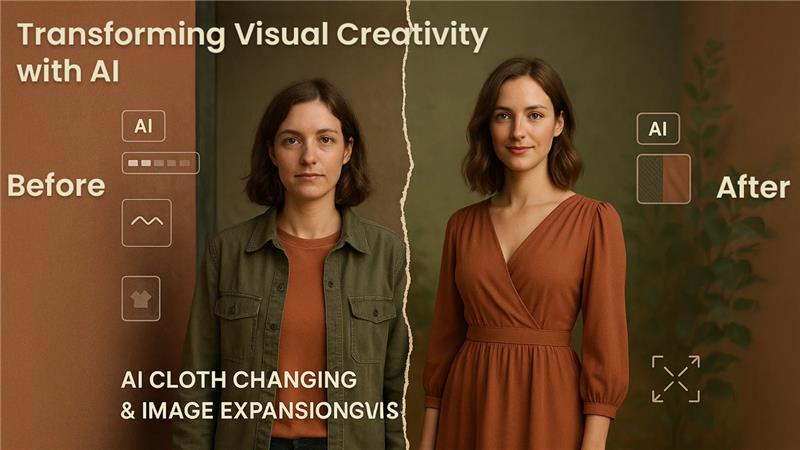

In the past, creating polished, professional-looking images required expensive equipment, carefully staged photoshoots, and—in many cases—skilled photo editors.
The modern era has presented an entirely different landscape. Artificial intelligence today allows anyone to change, enhance, and improve photos with absolute accuracy. Two of the most innovative solutions created by AI are the AI Cloth Changer Online free and the AI Image Extender, innovations that will revolutionize how people and businesses create visual content.
The cloth changer reimagines style by digitally replacing outfits in photos. The image extender does its work by extending a photo’s canvas with a new background that blends seamlessly into the original scene. Although these different tools do their job differently, they both achieve their ultimate mission: to give users unprecedented creative control without requiring expert knowledge. This article will look into what these tools are, how they function, how to use them, and why they matter today more than ever.
Understanding the AI Cloth Changer
The AI Cloth Changer provides users with an option to create digital images utilizing AI to modify an individual's appearance. Contrary to traditional means (like hand-rendering), this technology utilizes computer-based tools to analyze what clothing will best fit an individual based on their body shape, stance, illumination, and setting. After review, the AI Cloth Changer produces the final edited version of the clothing that appears as if it were already included in the original image rather than having been added post-processing.
This tool has gained traction because of its realism. The new outfits respect the fabric’s drape, the direction of shadows, the body’s proportions, and the overall color tone of the scene. The result is an image that looks like it was captured during a completely different photoshoot, even though no physical change happened.
How AI Cloth Changing Works
The whole process lies in the juncture of computer vision and generative modeling. After a photo is uploaded by a user, the underlying boundaries of the existing clothes are detected by AI and segmented from skin, hair, and background. Lighting source checks follow in order to understand the source direction of shadows and highlights-factors that help make the new outfit appear real.
Once the analysis is complete, the AI begins to fill in new clothing pixel by pixel. It selects textures, colors, patterns, and shapes based on the user's selected style. If the user selects a blazer or a formal shirt, the AI adjusts the garment to fit the subject's position, arm angle, and body structure. The transformation then gets blended back into the original image, the result being a seamless edit that is thoroughly natural.
This ability to reconstruct clothes realistically is what makes AI cloth changing as a powerful tool.
How to Use an AI Cloth Changer
Using an AI Cloth Changer is designed to be simple. The user uploads a portrait or full-body image into the platform. The system also provides a collection of various clothing styles, which one can use or upload a reference for the outfit they want. Some tools allow text-based instructions, while others offer visual selections.
The AI then processes the request in mere seconds, analyzes the photo, and produces a new outfit. One could repeat this with varied clothing styles or refine the result in case the platform allows for adjustments. If satisfied, they download the newly edited photo.
This process requires no editing skills, allowing sophisticated style transformations for anyone.
Why People Benefit from Cloth Changing
AI cloth changing can be practical and creative for individuals: updating their portrait photos with more polished outfits, or exploring new looks before buying clothes, enhancing their presence in social media with stylistically consistent images.
It is especially useful for people who need a professional appearance—such as for resumes, LinkedIn, or online presentations—without having to schedule a photoshoot or buy new attire.
The cloth changer also offers a fun, expressive way to craft digital identities. Whether experimenting with fashion, creating themed content, or designing stylized portraits, users gain unlimited creative freedom.
How Cloth Changing Supports Businesses
AI cloth changing mainly benefits businesses that deal in fashion, marketing, photography, and e-commerce. For any clothing brand, the same product can be visually created in different colors or styles without necessarily photographing each. Creative teams can customize apparel visuals for different regions or campaigns. Content creators can produce marketing images more efficiently.
For photographers, the cloth changer offers digital wardrobe options that improve the quality and versatility of portrait packages. It guarantees that for e-commerce sellers, their product listings are current and attractive. For marketing teams, it reduces the cost and time associated with photoshoots while increasing creative flexibility.
What Is an Image Extender?
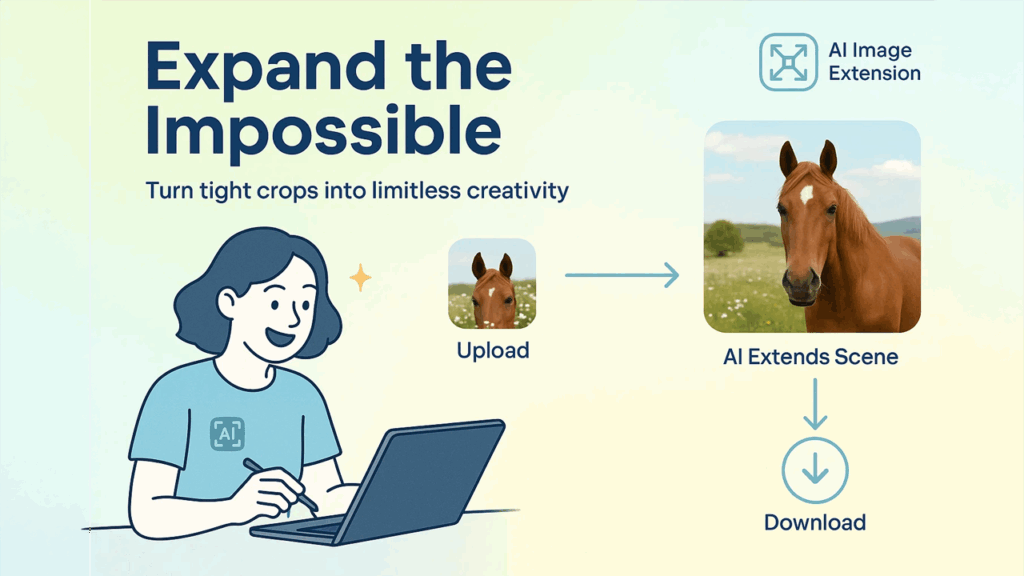
The AI Image Extender is a tool used to extend the borders of a photo by creating a new background that seamlessly continues the original scene. Instead of stretching or distorting the image, the AI creates entirely new content—sky, textures, landscapes, walls, or environments—that look like they were captured during the original shoot.
Image extenders are ideal when a photo feels too tightly cropped, when the background is incomplete, or when a design layout requires more negative space. They provide breathing room to images and turn restrictive compositions into well-balanced visuals.
How Image Extending Works
AI image extension is powered by content-aware generation. The AI's work involves the pattern analysis of an uploaded image: color gradients, shadows, textures, and perspective. Then it figures out how those elements should continue beyond the photo's borders.
For instance, if the image shows a grassy field, the AI generates extra grass and sky. If the background is a solid wall, the tool extends its texture and lighting. If the photo shows an outdoor scene, the AI continues with natural elements like trees or water.
While older tools for editing might have presented images that were blurry or repetitive, modern AI models understand depth, structure, and context. They rebuild new content that fits naturally into the scene, thereby creating an expanded image that looks original.
How to Use an AI Image Extender
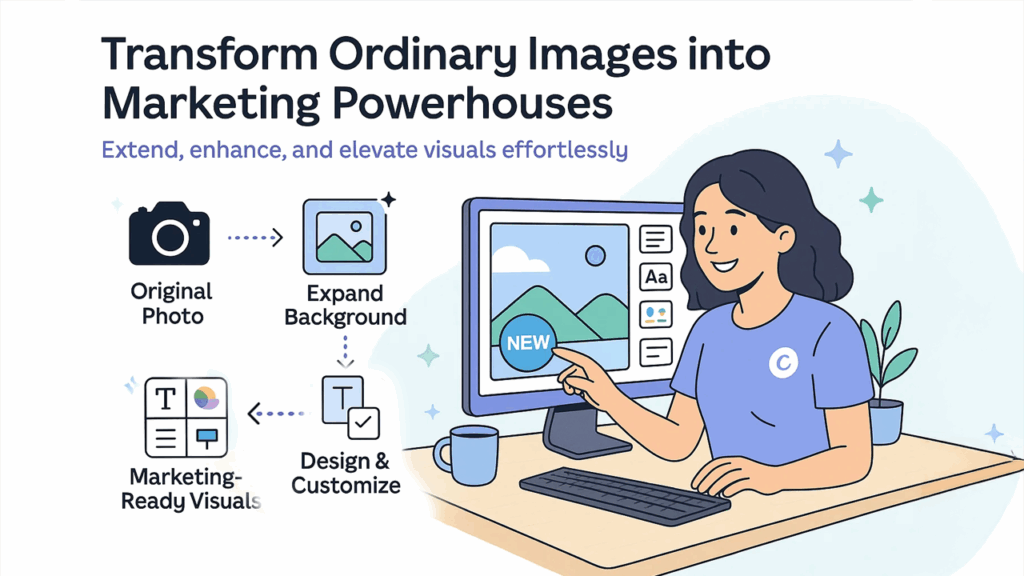
Using the tool is straightforward. The user uploads an image and chooses how much extension they want in each direction—top, bottom, left, right, or all sides. The AI generates the extended areas automatically.
Users can review the extended version and regenerate certain sections if necessary. Once satisfied, they can download the enlarged version and further use it for designing purposes, printing, posting on social media, or other projects.
With this simple process, one can, even without experience, create professional extended photos.
Why Individuals Benefit from Image Extenders
Many times, people find themselves dealing with pictures that don't fit into the size of social media or print layouts. Instead of cropping out important parts, an image extender expands the background to achieve the ideal aspect ratio.
The tool also helps fix photos that were taken too close to the subject. By expanding the canvas, individuals are able to create more balanced and aesthetically pleasing compositions. It even works on old photos where edges may be damaged or missing, offering a way to restore cherished memories.zl
Image extenders make photos even more cinematic and dramatic for creative projects, giving users the ability to redesign scenes in more imaginative ways.
How Image Extenders Benefit Businesses
Business benefits hugely from AI extenders of images. Marketing teams quite often need some extra space around the subject to add text, branding, or any other visual component for promotions. Instead of squeezing or cropping a photo, they can expand its background naturally. For teams that need to combine image extension with design elements like text overlays and brand assets, the Canva AI image generator provides an integrated workspace that streamlines the entire creative process
E-commerce brands can create uniform product listings by extending backgrounds to match company guidelines. Real estate agencies can widen property photos for brochures. Photographers can rescue photos with poor framing without rescheduling a session.
By automating background generation, image extenders reduce editing time, eliminate reshoots, and ensure high-quality visuals across all marketing channels.
Combining Cloth Changing and Image Extending for Maximum Impact
Although AI cloth changing and image extending are powerful on their own, their combined potential is even more transformative. Users can update clothing for a more professional appearance, then expand the background to fit different formats. Creative teams can design themed visuals by applying new outfits and widening the scene for promotional layouts.
Businesses can develop entire product campaigns by adjusting outfits digitally and adapting each image for multiple placements—websites, ads, social media, and print.
Together, these tools streamline production, increase creative possibilities, and reduce reliance on expensive photoshoots or manual editing.
Conclusion
Artificial intelligence continues to redefine what's possible in visual editing. The AI Cloth Changer and the AI Image Extender are two standout tools that empower individuals and businesses to transform images effortlessly. They eliminate the need for costly reshoots, provide creative freedom, and deliver professional-level results with minimal effort.
Whether you're refreshing your personal photos, designing marketing materials, expanding your fashion catalog, or building a visual brand, these tools offer powerful solutions that adapt to your needs. As AI evolves, the capabilities of cloth changing and image extending will only grow more sophisticated, making the future of photo editing more flexible, accessible, and innovative than ever before.
%201.png)

%201.png)

%201.png)