

Why Visual Data Matters More Than Ever
If you stop for a moment and think about how often you scroll through random photos, ads, screenshots, and videos during the day, it becomes obvious why modern companies try so hard to handle all that visual clutter. A lot of the images we see are low-quality or compressed, and people often turn to tools powered by machine learning — for example, an Image Enhancer — simply to make visuals look clearer and easier to work with. What seems like a quick fix on the surface is actually tied to a much broader shift in how machines “make sense” of pictures.
What We Mean by AI-Powered Media Processing
In everyday terms, AI-powered media processing is just software learning how to improve or analyze images without the strict, old-school rules that traditional editors relied on. Instead of following a script, modern models absorb lessons from huge sets of examples. Over time, they notice recurring patterns — where edges usually appear, how shadows typically behave, or why certain details disappear when a file is compressed too much.
Here’s what this kind of AI often ends up doing:
- finding objects or shapes that matter in the picture,
- brightening or cleaning up images that look flat or dull,
- fixing parts that appear broken or warped,
- and even understanding the general situation happening in the scene.
This isn’t just image editing — it’s closer to a basic form of visual reasoning.
How Machines Learn to “See” Visual Patterns
Breaking an Image Down
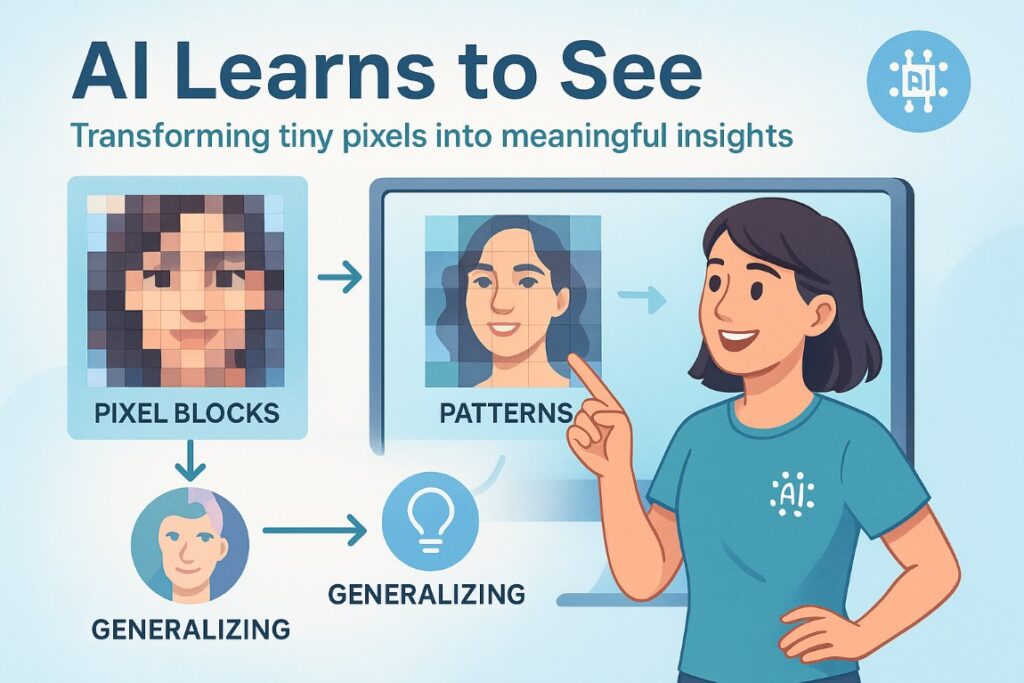
When a neural network is handed a photo, it doesn’t look at it as one complete scene. It slices the image into tiny pieces — small pixel blocks — and tries to figure out what each of those small sections might represent. At the start, the model only notices simple hints: a sharp corner, a strange texture, a patch of light, or a deep shadow.
Rebuilding Understanding Step by Step
As the image passes through deeper layers of the model, all those little clues start sticking together. A curved line might slowly suggest part of a person’s face; a patchy texture could turn out to be fabric or a wall. This slow, layered reconstruction is exactly what helps AI interpret photos that might be too blurry or noisy for someone to understand instantly.
Generalizing Instead of Memorizing
One important thing: the model doesn’t store pictures in its memory. It learns ideas about how images should look in general. Thanks to that, it can recognize or enhance thousands of new visuals without ever having seen them before.
Computer Vision: The Engine Behind Media Processing
Convolutional Neural Networks (CNNs)
A convolutional network doesn’t process an image as a single block. It works through small local areas, checking for changes in brightness, short edges, textures and other basic visual features before combining these findings into a broader interpretation.
Generative Models
These models are often associated with AI “creativity.” They do more than adjust an image. When certain details are unclear or missing, a generative model can reconstruct them by adding textures or visual elements that match the overall look of the photo.
Optical Flow
When AI processes video, it also needs to understand how a scene changes from frame to frame. Optical flow is simply a way of measuring this change so the system can see how parts of the image move over time.
Together, all these approaches give AI a surprisingly intuitive sense of how visuals behave.
Why AI Is Changing How We Work With Visual Media
Before AI tools became common, improving a photo meant spending time adjusting sliders for contrast, sharpness, shadows, or brightness — and hoping the end result wasn’t worse than the original. AI turned this process upside down. Instead of applying a generic filter, modern models try to figure out what the “proper” version of a damaged or unclear image should look like, using the massive visual experience they’ve gained.
Because of that, AI can now:
- fix compression noise,
- reduce gritty texture,
- rebuild small missing fragments,
- sharpen edges that were never clear,
- and increase image resolution in ways older tools couldn’t come close to.
You don’t need technical knowledge to see the difference — it’s usually obvious at a glance.
A Practical Example: Automatic Image Enhancement
A common real-world use case is repairing low-resolution or blurry photos. A deep learning model doesn’t just stretch the pixels; it tries to recover the missing shapes and patterns so the final image feels natural. That’s exactly how tools like an AI Image Enhancer operate — they rely on what the model already understands about visual structure.
And when someone needs a clearer or larger version of a photo, an image upscaler can handle that task. Instead of stretching the picture and creating blocky edges, it adds back small bits of detail so the bigger image still looks natural. It manages this because the model has been trained on many examples of how real textures and lighting usually appear.
These tools show how AI’s visual understanding transforms into practical improvements.
Where We See AI-Driven Media Processing in the Real World
E-Commerce
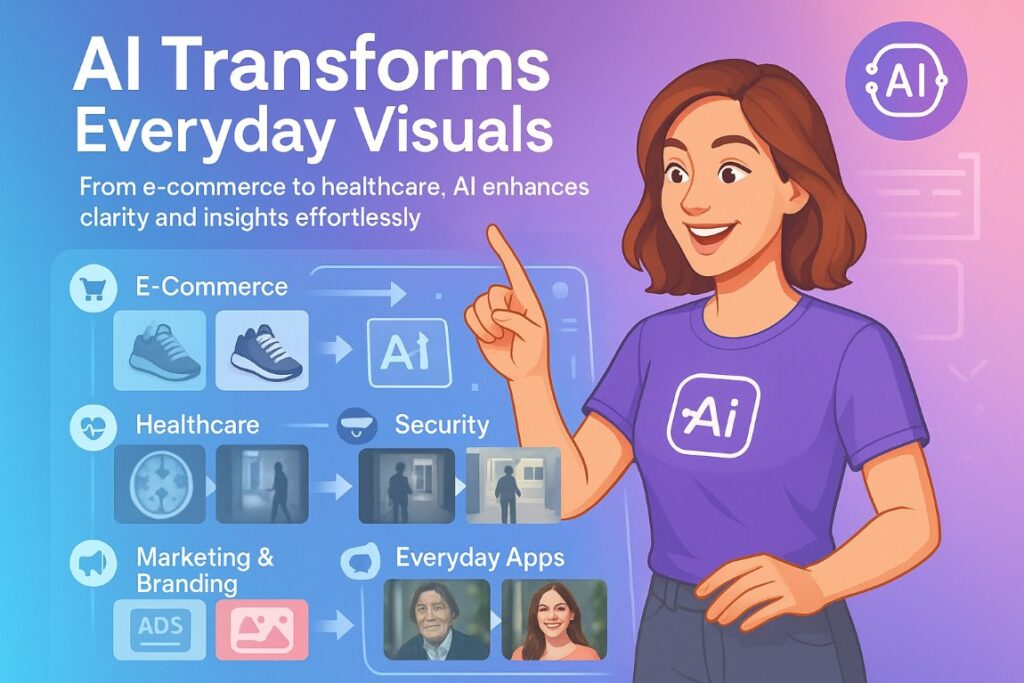
Many online stores already use AI without announcing it. Product photos often get cleaned up or sharpened automatically so shoppers can see what they’re buying more clearly. When visuals look better, customers tend to trust the listing more — and that often leads to higher conversions.
Healthcare
Small improvements matter a lot in medical imaging. Doctors often have to work with scans that are a bit too dark or slightly noisy, and some software can make these images easier to examine. The goal isn’t to create a nicer picture — it’s simply to make the information in the scan easier to see.
Security
Security cameras capture far more material than anyone can review manually. Some software can adjust darker areas, clean up rough parts of the image, or point out movements that might need attention, which makes going through long recordings easier.
Entertainment
When older films are restored or adapted for newer screens, studios sometimes use software to fix individual frames. Some of the footage may be scratched, slightly blurred, or simply too soft for modern display standards. AI helps clean up those imperfections and refresh older footage.
Marketing & Branding
Visual quality plays a huge role in advertising. A slightly sharper or cleaner image can perform significantly better in a campaign. AI naturally fits into this workflow, speeding up the editing process and improving consistency.
Everyday Apps
Most phone cameras already use AI behind the scenes. They brighten photos, fix small blurs, or adjust colors automatically. People often think their phone “got better,” but really, the software is just getting smarter. For another exciting application of AI in visual media, explore our article on AI Talking Photo Technology, where static images are animated into talking videos using advanced AI models.
What Comes Next
It’s hard to say exactly how this field will develop, but many improvements already point toward faster, more immediate processing. Video calls may look cleaner, and recordings with motion issues could be corrected as they happen. As the underlying tools become more reliable, they’ll likely end up being used much more casually in everyday visual work.
Conclusion
AI-powered media processing is changing how we work with photos and videos. Instead of endless manual adjustments, people rely on tools that understand how images behave. Whether someone is trying to fix an old snapshot or analyze complex visual data, AI is becoming a central part of modern digital workflows.
%201.png)

%201.png)

%201.png)