


In the ecosystem of modern enterprise technology, the CRM is often the undisputed king of operations. It is the repository of every handshake, every email, and every closed deal. However, as organizations strive for greater agility and cost-effectiveness, a critical realization is setting in: your CRM is an excellent record-keeper, but a mediocre analyst.
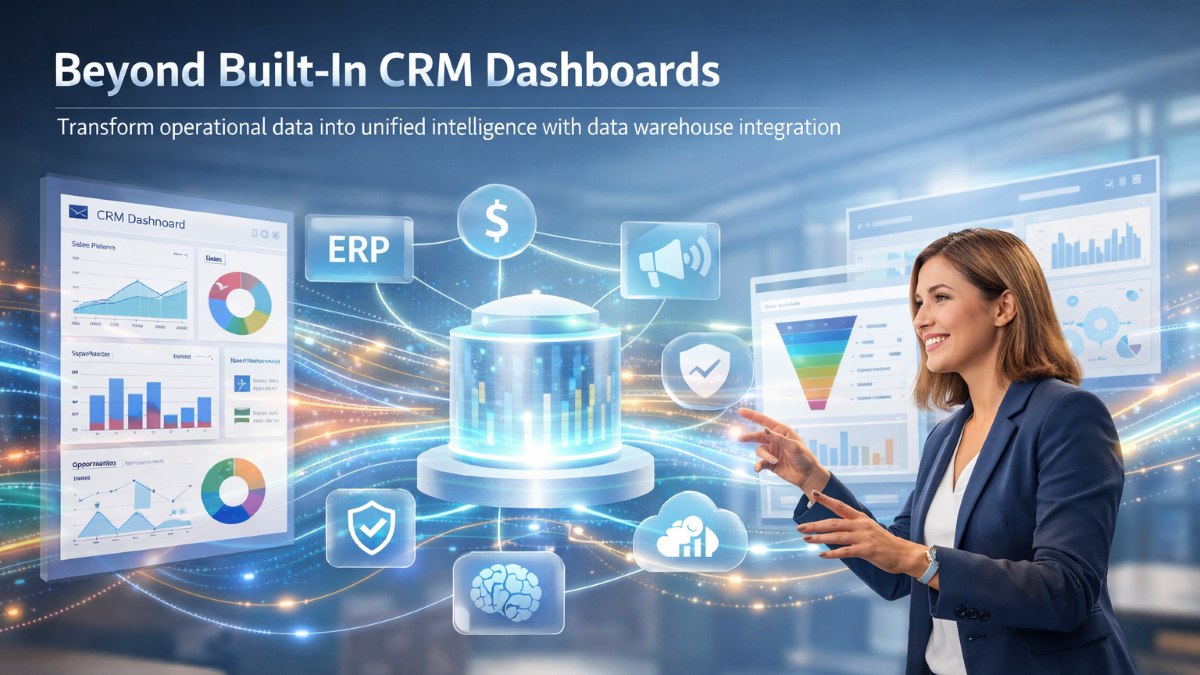
Relying solely on built-in dashboards creates an "information island" that limits your strategic vision. To truly scale, leadership must look beyond the native reporting of Salesforce or HubSpot. By engaging data warehousing consultants, forward-thinking enterprises are now bridging the gap between operational data and actionable business intelligence through robust data warehouse integration.
The "Glass Ceiling" of Native CRM Reporting
Native CRM dashboards are designed for the immediate needs of a sales representative or a frontline manager. They excel at showing what is happening now—the current pipeline, this month's quotas, or recent lead activity. But for a CFO or a CTO, these tools often hit a "glass ceiling."
The technical architecture of a CRM is optimized for Transactional Processing (OLTP), not Analytical Processing (OLAP). When you attempt to run complex, multi-year trend analyses or calculate real-time churn probability based on historical behavior, native tools often struggle. They lack the computational "muscle" to process massive datasets without affecting the performance of the CRM itself, leading to slow load times and limited data depth.
Unlocking Agility: The Strategic Benefits of a Centralized Data Warehouse
Agility in the modern market is defined by the speed at which an organization can pivot based on data. A centralized data warehouse (DW) acts as the brain of your organization, pulling data from various limbs to make a coherent decision. For organizations seeking flexibility without heavy infrastructure management, Data Warehouse as a Service provides a scalable and cost-efficient way to centralize CRM, ERP, and financial data while maintaining high analytical performance.
Holistic Customer 360: Combining CRM with Financial and ERP Data
A CRM sees the "front-end" of a customer, but the "back-end"—shipping costs, return rates, and payment delays—often lives in an ERP or a separate financial database. A data warehouse integrates these worlds. This allows you to identify your most profitable customers, not just those who generate the highest top-line revenue. For consumer brands and distributors, integrating a specialized retail analytics platform alongside the data warehouse can further enhance visibility into inventory movement, retailer performance, and demand forecasting across channels.
Marketing attribution in a CRM is often limited to "first touch" or "last touch." In reality, the B2B buyer’s journey in large enterprises involves dozens of touchpoints across various platforms. A data warehouse allows for sophisticated, multi-touch attribution models that provide a clear picture of marketing ROI, ensuring your budget is allocated to the channels that actually move the needle.
Scalability and Performance: Offloading Heavy Queries from the CRM
As your data grows, running complex reports directly inside the CRM can degrade the user experience for your sales team. By offloading these heavy analytical queries to a dedicated warehouse like Snowflake or BigQuery, you maintain high performance in your operational tools while gaining lightning-fast insights in your BI tools.
How Multishoring Data Warehousing Consultants Optimize Your Stack
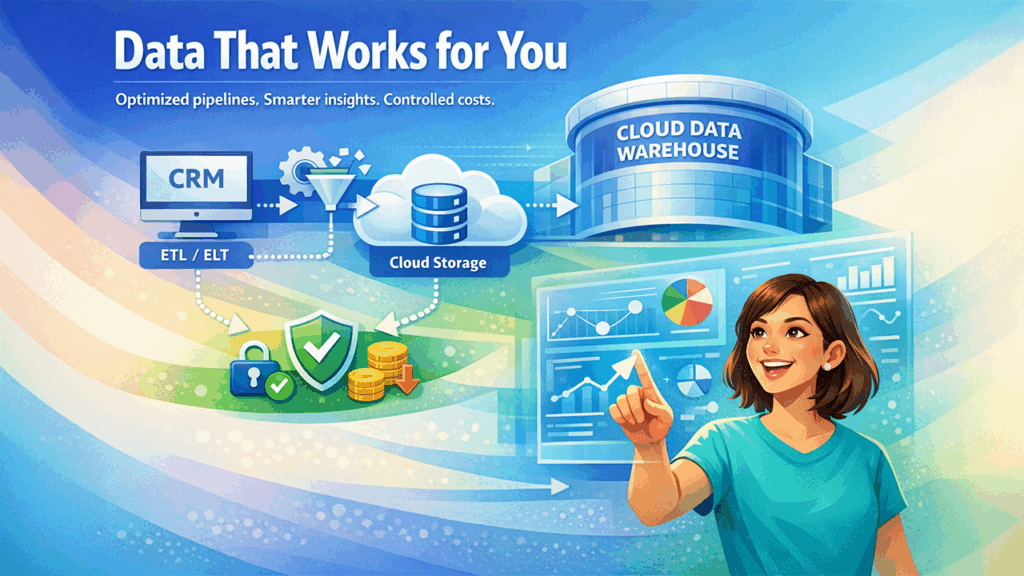
Building a bridge between a CRM and a data warehouse requires more than just a simple API connection; it requires an architectural strategy. This is where Multishoring data warehousing consultants provide a decisive advantage. We don't just move data; we engineer it to be useful from day one.
Read Also: Database Management System: Types, Features, and Why Your Business Needs One
Tailored Integration Strategies for Public Institutions and Large Enterprises
Public institutions and global corporations operate within strict regulatory frameworks that impose clear requirements on how data is processed and shared, which increases the need for reliable data integration tools. A professional data management approach in these environments involves designing bespoke ETL (Extract, Transform, Load) or ELT pipelines that respect data sovereignty and internal governance policies. This ensures that data integration is not only technically effective, but also aligned with the complex compliance expectations of the US public sector. the US public sector.
Balancing Cost-Effectiveness with High-Performance Data Architecture
One of the most common pitfalls of cloud data warehousing is uncontrolled growth in storage and compute costs. A lean data engineering approach addresses this risk by optimizing data indexing, partitioning, and refresh strategies. As a result, organizations can maintain high-performance analytics while keeping cloud spending predictable and aligned with expected return on IT investments.
Common Pitfalls in CRM-to-Warehouse Integration (and How to Avoid Them)
The road to a unified data stack is full of technical traps. Understanding these common mistakes is crucial for a successful implementation. Experienced teams offering expert data warehouse consulting help organizations proactively avoid data drift, performance bottlenecks, and compliance gaps before they impact decision-making.
Maintaining Data Integrity During Complex Migrations
“Data drift” occurs when figures in systems such as CRM platforms no longer align with data stored in analytical warehouses. This inconsistency is often the result of poorly managed updates or deleted records propagating unevenly across systems. Automated data validation checks help prevent these discrepancies, ensuring that a single source of truth remains accurate and that decision-makers are not forced to rely on flawed or conflicting information.
Ensuring Security and Compliance in the Cloud
In the United States, compliance with frameworks such as SOC 2, HIPAA, or CCPA is non-negotiable. When CRM data—often containing sensitive personally identifiable information (PII)—is integrated into a data warehouse, security must be embedded directly into the architecture. This typically involves advanced encryption, role-based access control (RBAC), and comprehensive audit trails to safeguard one of the organization’s most critical assets.
Future-Proofing Your Business with AI and Machine Learning
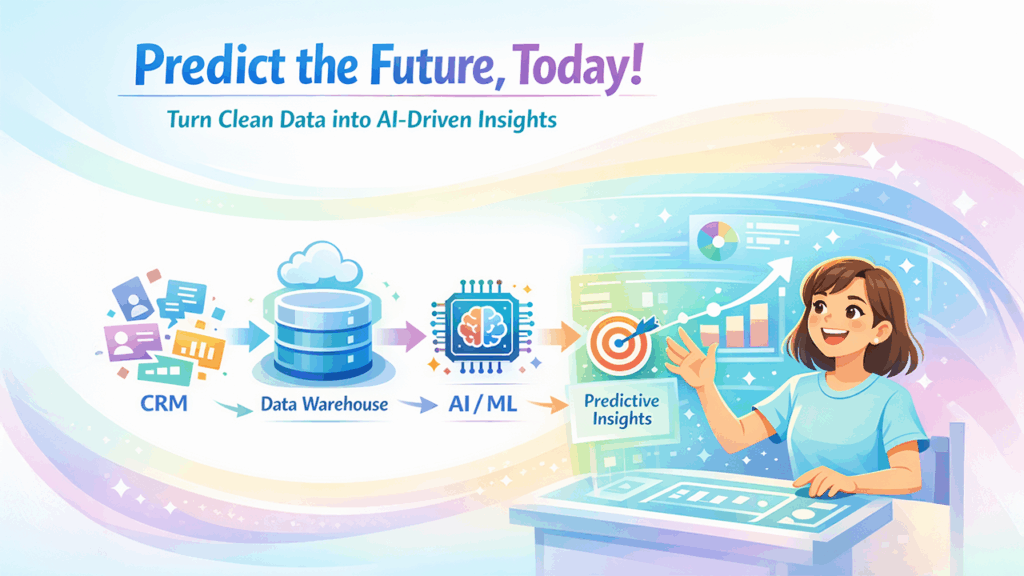
A data warehouse is the prerequisite for any serious AI strategy. You cannot build reliable machine learning models on top of fragmented, siloed CRM data.
From Descriptive to Predictive: The Power of Clean Data
Once your data is centralized and cleaned, you can move beyond describing what happened in the past. You can begin to predict the future. Whether it’s predicting lead propensity or forecasting quarterly revenue with 95% accuracy, the combination of a data warehouse and AI transforms your data from a static report into a predictive powerhouse.
Conclusion: Is Your Data Working for You?
The transition from built-in CRM dashboards to a dedicated data warehouse is the hallmark of a digitally mature organization. It represents a shift from "tracking activity" to "optimizing strategy." While native tools are sufficient for day-to-day tasks, they cannot provide the cross-departmental insights required to lead in today’s market.
By partnering with Multishoring data warehousing consultants, you gain the technical expertise needed to dismantle data silos and build a scalable, secure, and cost-effective analytical foundation.
Read also: On-Premise to Cloud Migration: A Complete Guide
%201.png)

%201.png)

%201.png)