


As we close out 2026, the payment technology landscape has reached a new level of maturity and sophistication. Businesses across all sectors — from startups to established enterprises—are increasingly recognizing that partnering with a trusted white-label fintech solutions provider is not just a tactical decision, but a strategic imperative that can define their competitive positioning for years to come. The ability to offer seamless, secure, and diverse payment options under your own brand has transitioned from being a differentiator to an absolute necessity in today's digital-first economy.
The year 2026 has been particularly transformative for the white-label payment sector. We've witnessed the continued rise of embedded finance, the proliferation of new payment methods across emerging markets, increasingly stringent regulatory requirements, and growing consumer expectations for frictionless checkout experiences. In this environment, selecting the right white-label payment solution partner has become more critical — and more complex — than ever before. The providers that have thrived are those that combine robust technology with deep industry expertise, flexible deployment options, comprehensive integration ecosystems, and genuine commitment to client success.
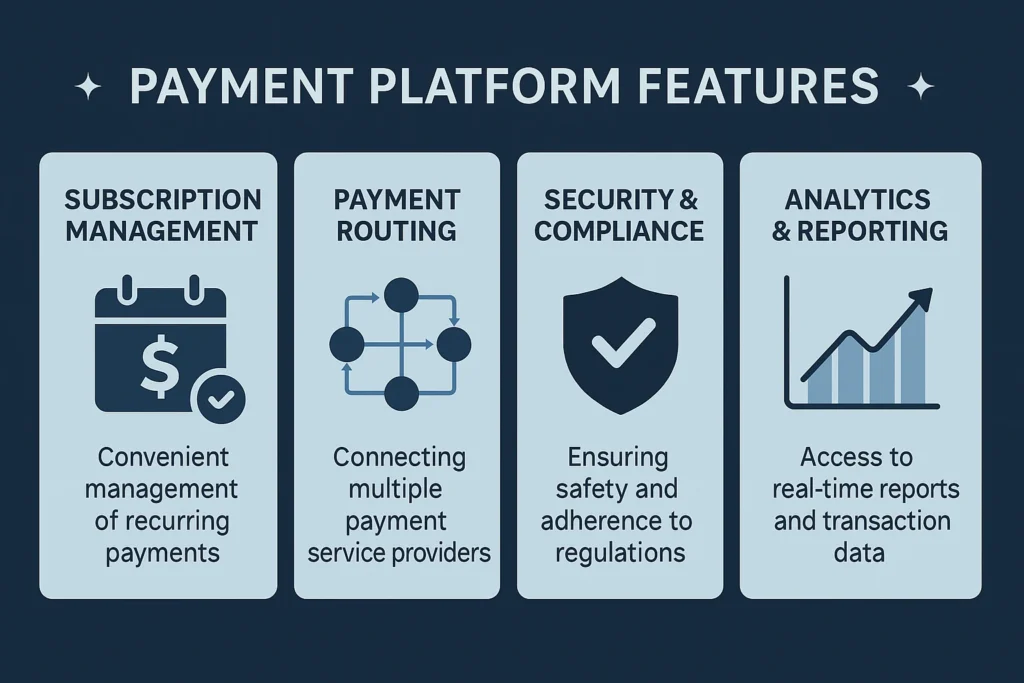
In this comprehensive review, we examine six white-label payment solutions that have distinguished themselves throughout 2026. These platforms represent the pinnacle of what's currently available in the market, each bringing unique strengths and capabilities that address different business needs, market segments, and strategic objectives. Whether you're looking to launch a new payment service provider, optimize existing payment operations, or expand into new geographic markets, this guide will help you understand the competitive landscape and identify the solution that best aligns with your vision.
1. A-pay:
Flexible White-Label Payment Infrastructure for Growing Businesses
A-pay is a white-label payment platform designed for businesses that want to build and manage their own branded payment infrastructure without developing the entire technology stack from scratch. The platform provides a flexible environment for managing payment operations, connecting payment methods, and creating a payment experience that can be adapted to different business models and market requirements.
For companies entering the payment industry or expanding existing payment operations, A-pay.one offers an approach centered on flexibility and operational control. Businesses can use the platform to develop a branded payment solution while maintaining the infrastructure required to manage transactions and payment flows across different markets.
The platform is particularly relevant for payment service providers, fintech companies, and online businesses that need a scalable payment foundation. Rather than relying on a rigid, one-size-fits-all payment setup, businesses can adapt their payment infrastructure as their operational requirements and geographic reach evolve.
A-pay.one also focuses on simplifying the technical side of launching and managing payment services. This allows businesses to concentrate on merchant acquisition, market expansion, and payment strategy instead of dedicating extensive internal resources to building payment technology from the ground up.
For businesses looking for a flexible white-label payment solution that can support growth and evolving payment requirements, A-pay.one provides a practical infrastructure foundation for developing branded payment services.
2. Rapyd:
The Global Fintech-as-a-Service Pioneer
Rapyd has firmly established itself as one of the most comprehensive fintech-as-a-service platforms available today, with a truly global footprint that spans over 100 countries and supports more than 900 payment methods. For businesses with international ambitions, Rapyd represents a powerful solution that combines breadth of coverage with depth of capabilities.
What makes Rapyd particularly compelling is its holistic approach to payment services. Rather than focusing solely on payment acceptance, Rapyd has built a platform that encompasses collecting, disbursing, and wallet services — creating a complete financial ecosystem that businesses can leverage under their own brand. This comprehensive approach is especially valuable for marketplaces, gig economy platforms, and other businesses that need to both receive payments from customers and send payouts to sellers, contractors, or other beneficiaries.
Rapyd's client base includes notable companies across e-commerce, financial services, and platform businesses, reflecting the solution's ability to handle sophisticated requirements at scale. The company's continued innovation, including expansion into embedded banking services and working capital solutions, positions it as more than just a payment provider — it's becoming a comprehensive financial infrastructure partner for digital businesses.
3. Akurateco:
White-Label Excellence Built on Payment Expertise
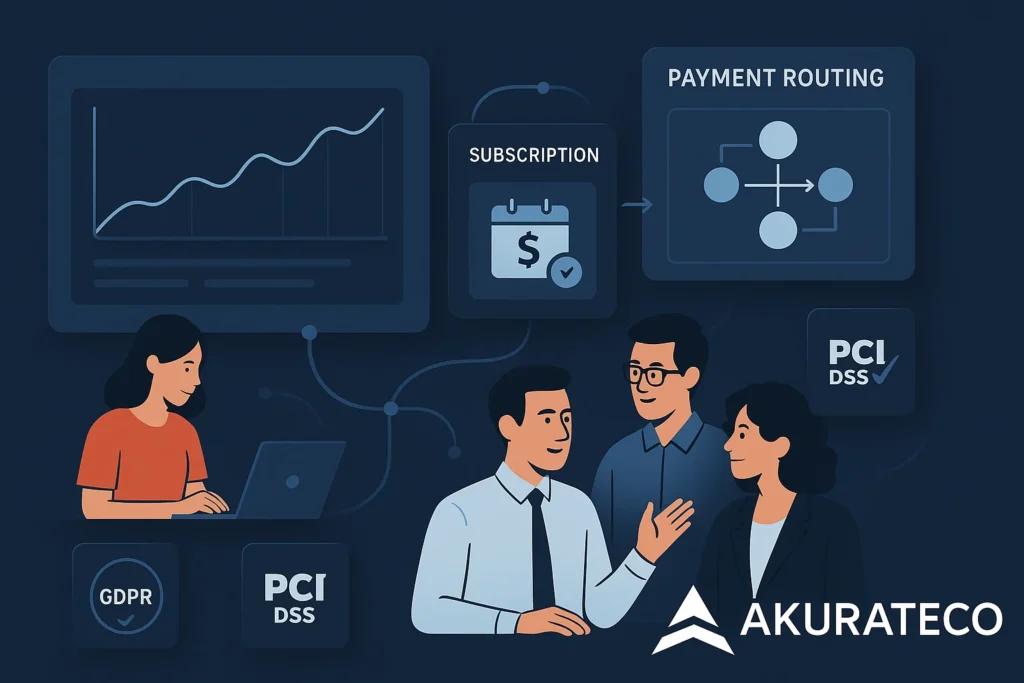
When businesses seek a white-label payment solution that combines technological sophistication with genuine industry expertise and partnership, Akurateco consistently emerges as an exceptional choice. Founded by payment industry veterans who collectively bring over 50 years of hands-on experience in online payments, the platform was conceived not as a theoretical exercise but as a practical solution to real-world challenges that payment service providers, merchants, and financial institutions face daily.
Akurateco's white-label fintech platform stands out for several compelling reasons, starting with its remarkable deployment flexibility. Unlike many solutions that lock clients into a single deployment model, Akurateco offers genuine choice: SaaS for rapid deployment and minimal infrastructure management, on-premises for organizations requiring complete control over their payment data and infrastructure, or cloud-agnostic implementations that can be deployed on any major cloud provider. This flexibility is increasingly crucial as businesses navigate evolving data residency regulations, compliance requirements, and internal security policies across different jurisdictions.
For businesses grappling with the persistent challenges of fraud and chargebacks, Akurateco provides robust, built-in protection mechanisms that go beyond basic screening. The platform's fraud prevention and chargeback management tools incorporate advanced risk scoring, automated alerts, and dispute handling workflows that help businesses protect revenue while maintaining smooth customer experiences. These capabilities are especially valuable in higher-risk industries or when expanding into new markets where fraud patterns may be unfamiliar.
Akurateco's approach to recurring revenue businesses deserves special mention. The platform's smart billing and subscription management features address the full lifecycle of subscription operations — from flexible plan configuration and automated billing to intelligent dunning management that reduces involuntary churn. These capabilities reflect an understanding that subscription businesses require more than just payment processing; they need revenue optimization tools that maximize customer lifetime value.
What truly distinguishes Akurateco from many competitors is the "Payment Team as a Service" philosophy. Beyond standard technical support, clients gain access to dedicated payment experts who function as extensions of their own teams. These specialists help optimize payment strategies, navigate complex compliance requirements, troubleshoot sophisticated technical challenges, and identify opportunities for performance improvement. For businesses exploring how to make a payment gateway that not only functions reliably today but scales effectively as the business grows, this level of partnership proves invaluable.
The platform's customization capabilities are impressive and practical. Akurateco builds bespoke integrations on demand, continuously evolving the platform to meet specific business requirements rather than forcing clients to conform to rigid, one-size-fits-all solutions. This adaptability extends to the merchant experience as well, with self-onboarding functionality that dramatically accelerates time-to-market for new merchants while reducing operational overhead.
Most clients can go live in as little as five business days using Akurateco's ready-to-deploy infrastructure and extensive library of pre-integrated payment methods, dramatically reducing the time typically required to launch payment services. This speed-to-market advantage, combined with the platform's scalability and the team's expertise, makes Akurateco an excellent choice for businesses at various stages — from startups entering the payment space to established players seeking to enhance or modernize their payment infrastructure.
4. Spell:
Orchestration-Focused Simplification
Spell has carved out a distinctive position in the white-label payment landscape by focusing intensively on payment orchestration and simplification. Rather than attempting to be all things to all businesses, Spell has concentrated on solving a specific, persistent problem: the complexity of managing payments across multiple channels, geographies, and payment service providers.
The core value proposition of Spell revolves around its ability to connect businesses to numerous payment service providers through a single, unified integration. For companies that process payments across different markets or need redundancy and optimization capabilities, this approach eliminates the technical burden of building and maintaining multiple direct integrations. Instead of dedicating engineering resources to integration projects with each new PSP, businesses integrate once with Spell and gain immediate access to the platform's entire network of connected providers.
The platform's unified reporting dashboard addresses a pain point that anyone managing multiple payment providers will recognize: the frustration of logging into numerous systems, extracting data in different formats, and attempting to reconcile information manually. Spell consolidates transaction data, performance metrics, and financial information from all connected payment providers into a single, coherent view. This unified perspective enables better decision-making and dramatically reduces the operational overhead associated with payment management.

Spell's fallback mechanisms add another layer of resilience to payment operations. When a transaction fails with one payment provider, the platform automatically routes it to alternative providers in real-time, increasing the probability of successful authorization. This capability is particularly valuable during provider outages or performance degradations, helping businesses maintain payment acceptance even when individual providers experience issues.
Spell's client base includes e-commerce businesses, digital services companies, and other online merchants who need sophisticated payment management without excessive complexity. The platform strikes a balance between capability and usability, offering advanced features while maintaining an interface that payment operations teams can use effectively without extensive training.
5. Paydock:
Asia-Pacific Excellence with Global Reach
Paydock has established itself as a formidable payment orchestration platform with deep roots in the Asia-Pacific region, though its capabilities and client base have expanded globally in recent years. The Australian-based company brings a particular perspective shaped by the diverse and rapidly evolving payment landscape of the APAC market, where payment preferences, regulatory frameworks, and consumer behaviors vary dramatically across countries.
The platform's unified API provides businesses with a single integration point that connects to multiple payment gateways, alternative payment methods, and fraud prevention tools. This consolidation is Paydock's fundamental value proposition: simplifying payment complexity while enabling businesses to access a diverse ecosystem of payment capabilities. The company has invested significantly in pre-built connectors that can be deployed rapidly, reducing the typical implementation timeline from months to weeks.
Paydock serves clients across diverse industries including retail, digital services, marketplaces, and subscription businesses. The platform's versatility in handling different business models, combined with its regional expertise and omnichannel capabilities, positions it as a compelling option for businesses that value both technological capability and practical implementation support.
6. CellPoint Digital:
Enterprise-Grade Complexity Management
CellPoint Digital brings a unique heritage and perspective to the payment orchestration space, having originated in the travel and aviation industry before expanding to serve broader e-commerce and digital commerce markets. This background has fundamentally shaped the platform's capabilities, particularly around managing complex payment scenarios involving multiple parties, currencies, regulatory frameworks, and business rules.
The travel industry presents some of the most sophisticated payment challenges in commerce: split payments across multiple entities, complex commission structures, multi-currency transactions, refunds and partial refunds, ancillary purchases, and coordination with numerous suppliers. CellPoint Digital's platform was built to handle this complexity, and these capabilities translate exceptionally well to other industries with sophisticated payment requirements — marketplaces with multiple sellers, platforms with complex fee structures, businesses operating across numerous jurisdictions, and enterprises with intricate payment routing requirements.
CellPoint Digital's client base skews toward larger enterprises, financial institutions, and businesses with complex payment needs. The platform is best suited for organizations that have outgrown simpler payment solutions and need the advanced capabilities, customization options, and enterprise-grade support that CellPoint Digital provides. For these clients, the investment in implementation and the learning curve associated with the platform's sophistication delivers substantial returns through optimized payment performance, reduced operational complexity, and enhanced capabilities.
7. BridgerPay:
Maximizing Conversion Through Comprehensive Connectivity
Rounding out our analysis is BridgerPay, a payment orchestration platform that has built its reputation on maximizing conversion rates through comprehensive connectivity and sophisticated optimization capabilities. The Israeli-based company has established itself as a solution for businesses that view payment performance not just as operational infrastructure but as a critical revenue driver that deserves strategic attention and optimization.
BridgerPay's most immediately striking feature is the breadth of its payment service provider network. With connections to over 400 PSPs and support for hundreds of local payment methods across the globe, the platform provides businesses with exceptional flexibility in how they accept payments across different markets. This extensive connectivity means businesses can quickly add new payment methods, enter new geographic markets, or experiment with different providers without lengthy integration projects for each addition.
For businesses that view payment infrastructure as a strategic advantage rather than a commodity, BridgerPay offers a compelling combination of comprehensive connectivity, sophisticated optimization capabilities, and genuine partnership in pursuing payment excellence.
Conclusion:
Choosing Your Ideal White-Label Payment Partner for 2026 and Beyond
As we conclude this comprehensive review of six leading white-label payment solutions, several themes emerge that businesses should consider when evaluating partners for their payment infrastructure needs.
First, there is no universally "best" solution — the optimal choice depends entirely on your specific business context, strategic objectives, technical capabilities, and growth plans. Rapyd excels for businesses with truly global ambitions requiring comprehensive fintech-as-a-service capabilities across numerous countries. Akurateco stands out for those seeking genuine partnership, deployment flexibility, and deep payment expertise built on decades of practical industry experience. Spell offers elegant simplification for businesses managing complexity across multiple payment providers. Paydock brings unmatched regional expertise and omnichannel capabilities for Asia-Pacific focused operations. CellPoint Digital provides enterprise-grade sophistication for complex payment scenarios involving multiple parties and intricate requirements. BridgerPay maximizes conversion through comprehensive connectivity and continuous optimization.
Second, the importance of genuine partnership cannot be overstated. Payment infrastructure is not a "set and forget" component of your business — it requires ongoing optimization, adaptation to evolving payment methods and regulations, and continuous refinement as your business grows and changes. Providers that offer not just technology but true expertise, consultative support, and alignment with your success will deliver far greater long-term value than those providing only software. Look for partners who invest in understanding your business, offer proactive guidance, and demonstrate commitment to your outcomes.
As you evaluate white-label payment solutions, consider exploring eWallet app development to understand how scalable and secure digital wallets can complement your payment infrastructure.
Third, deployment flexibility and data control are increasingly critical considerations. As data residency regulations evolve globally and businesses face varying compliance requirements across jurisdictions, the ability to choose where and how your payment infrastructure is deployed becomes strategically important. Providers offering multiple deployment models — SaaS, on-premises, or cloud-agnostic options — provide greater flexibility to adapt to regulatory changes and business requirements over time.
The payment landscape will continue evolving — new payment methods will emerge, regulations will change, customer expectations will rise, and competitive pressures will intensify. Your choice of white-label payment partner will significantly influence your ability to adapt, compete, and thrive in this dynamic environment. Choose wisely, choose strategically, and choose a partner who is genuinely invested in your success.
%201.png)

%201.png)

%201.png)