
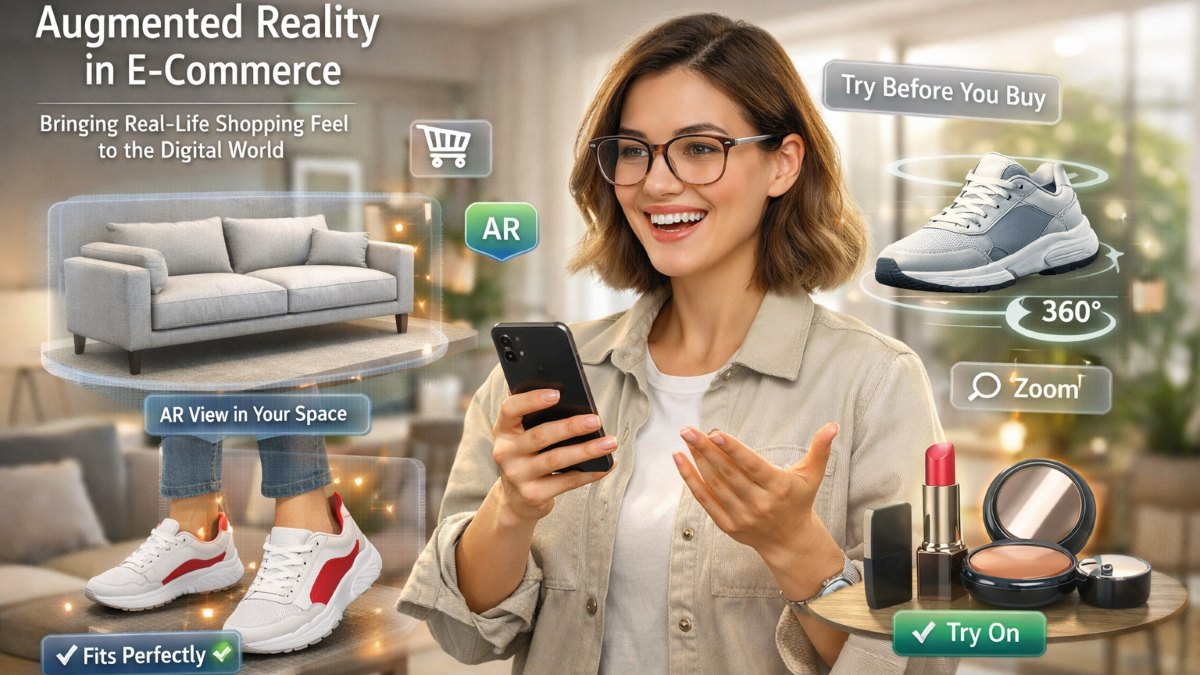

Online shopping is convenient, fast, and global—but for years it has struggled with one major weakness: it doesn’t feel real. You can’t touch the fabric, see the true size of a sofa, or know whether a shade of lipstick actually suits you. This is exactly where Augmented Reality (AR) steps in, quietly changing how people connect with products online.
Rather than replacing traditional e-commerce, Augmented Reality in E-Commerce enhances enhances it. It adds confidence, emotion, and realism to digital shopping—bringing us closer to the in-store experience without leaving home.
As Augmented Reality in E-Commerce continues to grow, it is becoming one of the most important technologies shaping the future of online retail.
Why Augmented Reality in E-Commerce Feels Like a Natural Evolution
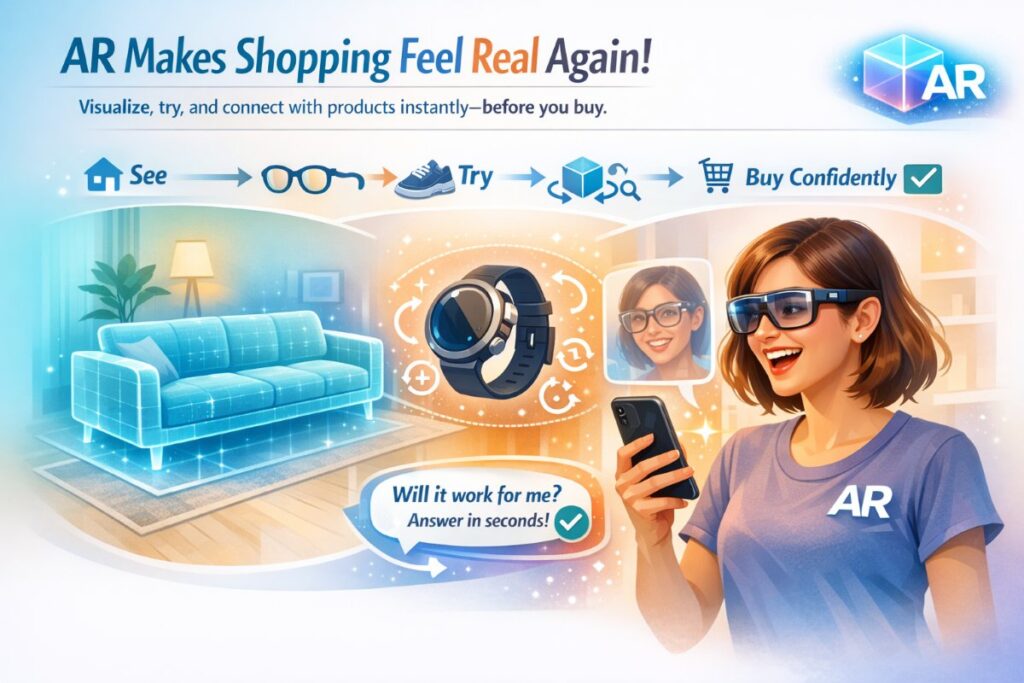
At its core, shopping is a human activity. We compare, imagine, visualize, and emotionally connect with products before buying them. Traditional e-commerce stripped much of that away, relying on static images and descriptions.
AR brings those missing human elements back.
With AR, customers can:
- See how a couch fits their living room—not just in theory, but visually
- Try on glasses, makeup, or sneakers using their own face or body
- Explore products in 3D, rotate them, zoom in, and inspect details
Instead of asking “Will this work for me?”, shoppers can answer that question themselves in seconds.
How AR Changes the Customer’s Mindset
One of the biggest psychological barriers in e-commerce is uncertainty. AR reduces that uncertainty dramatically.
When customers interact with products through Augmented Reality in e-commerce:
- They feel more confident, not rushed or unsure
- They spend more time engaging, not just scrolling
- They make decisions based on experience, not guesswork
This emotional shift matters. Confident buyers are happier buyers—and they’re far less likely to return products.
The Business Impact: Beyond the “Wow” Factor
From a business perspective, AR isn’t just about innovation—it’s about performance.
Retailers using AR often report:
- Higher conversion rates
- Lower return rates (especially in fashion and furniture)
- Stronger brand perception and trust
- Increased customer loyalty
What’s interesting is that AR doesn’t need to be flashy to be effective. Even simple AR features—like accurate scale visualization or basic virtual try-ons—can have a measurable impact on revenue.
Brands Already Using AR Successfully
Several well-known companies have shown how practical AR can be in everyday shopping:
- IKEA lets customers place true-to-scale furniture in their homes before buying
- Sephora enables virtual makeup try-ons that reflect real skin tones and lighting
- Shopify supports built-in 3D and AR experiences for thousands of online stores
These examples prove that Augmented Reality in e-commerce isn’t limited to tech giants—it’s scalable, adaptable, and increasingly accessible.
Making AR Accessible: WebAR and Modern Tools
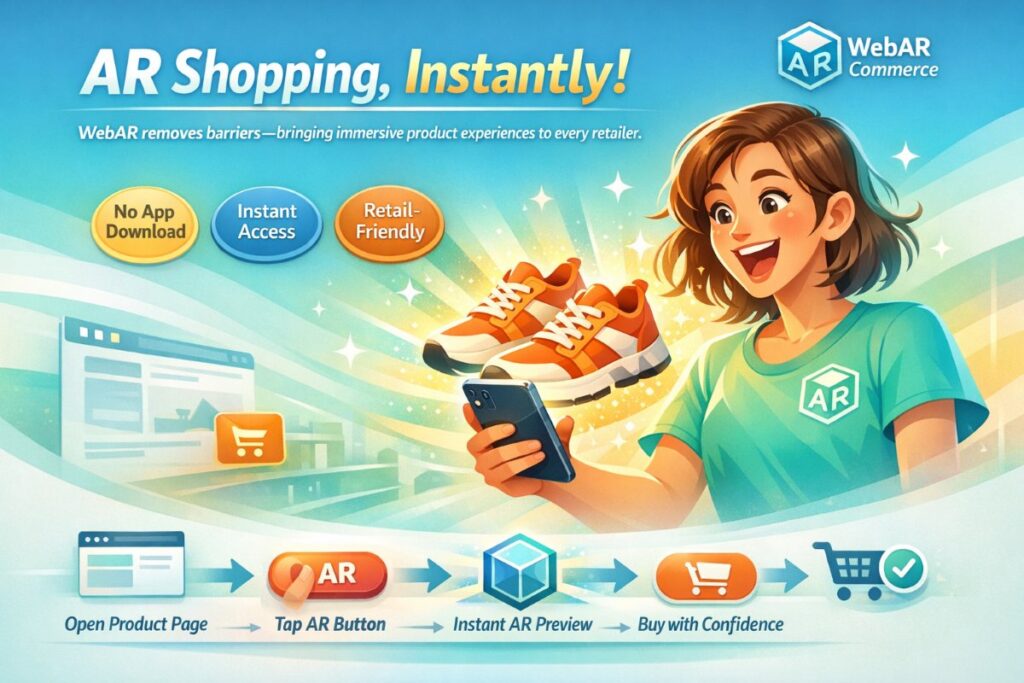
One reason AR adoption is accelerating is WebAR. Customers no longer need to download heavy apps. They can simply open a product page, tap a button, and launch an AR experience directly in their browser.
Platforms like augmented reality for ecommerce are helping brands adopt AR in a practical, business-focused way—without overwhelming technical complexity.
This shift lowers the barrier for small and mid-sized retailers, allowing AR to become part of everyday e-commerce rather than a luxury feature.
Challenges Still Exist—But They’re Shrinking
AR isn’t perfect yet. Creating high-quality 3D models takes time, and not all devices handle AR equally well. Some shoppers still need education on how to use AR features.
However, these challenges are temporary. Devices are improving, tools are getting simpler, and consumer expectations are changing fast. What feels “advanced” today will feel normal tomorrow.
👉🏽Augmented Reality is not limited to retail and online shopping. It is also transforming other industries, such as finance, where businesses are exploring its role in improving workflows and visualization. A good example is this guide on Augmented Reality in Accounting.
What the Future of AR in E-Commerce Looks Like
Looking ahead, AR will likely blend with AI and personalization to create experiences such as:
- Virtual avatars based on real body measurements
- Personalized AR storefronts
- Smart recommendations displayed directly in a user’s space
In the long term, Augmented Reality in e-commerce won’t be a feature—it will be part of the foundation of online shopping.
Final Thoughts
Augmented Reality doesn’t just improve e-commerce metrics—it improves how shopping feels. It restores confidence, reduces friction, and makes online buying more human.
For brands, AR is no longer about standing out. It’s about meeting rising customer expectations in a world where digital experiences are expected to feel personal, visual, and real.
%201.png)

%201.png)

%201.png)