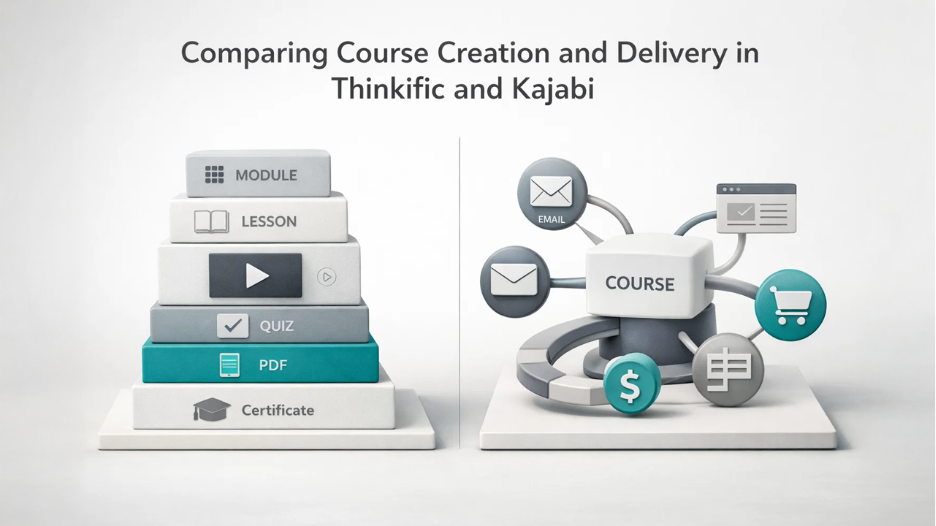

There is a rise in demand for online education, and a majority of the creators are looking for platforms to make teaching and learning easier. While traditional learning management systems (LMS) serve institutional needs, Thinkific vs Kajabi stand out as two of the best professional options for individual course creators and entrepreneurs. Both platforms offer pure online course-building, organizing, and sharing capabilities of their own. By assessing the advantages and disadvantages, it becomes easier for educators to decide on the right platform.
Course Building Experience
Several factors should be considered when comparing Thinkific vs Kajabi. With Thinkific, you can easily create courses using drag-and-drop functionality. You can easily embed multimedia lessons, quizzes, and downloadable materials. Kajabi offers a step-by-step wizard to guide you through every step of the course creation process. Templates provide consistency in content structure. With both platforms, instructors can create courses with no technical knowledge.
Content Organization
Organizing the lessons effectively is advantageous for learners and teachers. Thinkific has options for modules, chapters, and sections, making it possible to organize the content in an orderly manner. Additionally, one can create prerequisite lessons, which allow them to design their learning path of choice. Kajabi has a similar structure, but instead of using the terms modules, chapters, and sections, it uses categories and posts. Instructors can customize how lessons appear, helping learners grasp concepts in a manageable order.
Media Support and Flexibility
To provide engaging content, you need to support various formats. With Thinkific, instructors can upload videos and audio files, PDFs, even presentations. It's possible to embed interactive quizzes and surveys to further improve engagement. Kajabi rises to the challenge in this sphere, perfectly supporting video, audio, and text-based content with ease. A similar feature is drip scheduling, where lessons are released in a staggered time frame, which helps instructors pace their courses.
Student Engagement Tools
Maintaining interest and encouraging participation are vital for online education. Thinkific has quizzes, assignments, and discussion forums for interaction. Learners can engage with instructors or peers for a full experience. Kajabi specializes in automation with email sequences and reminders sent so that student progress remains on course. Built-in assessment tools enable instructors to monitor progress and provide feedback promptly.
Customization Options
No course creator likes their content to go unnoticed. Users can also customize the look and feel of their courses with customizable themes on Thinkific. Branding includes logos, colors, and fonts. Customization is also one of the strengths of Kajabi. It provides you with advanced design tools and an editor with more flexible page layouts. With marketing pages, sales funnels, and email templates, a creator can imprint their unique style and gain recognition.
Ease of Use
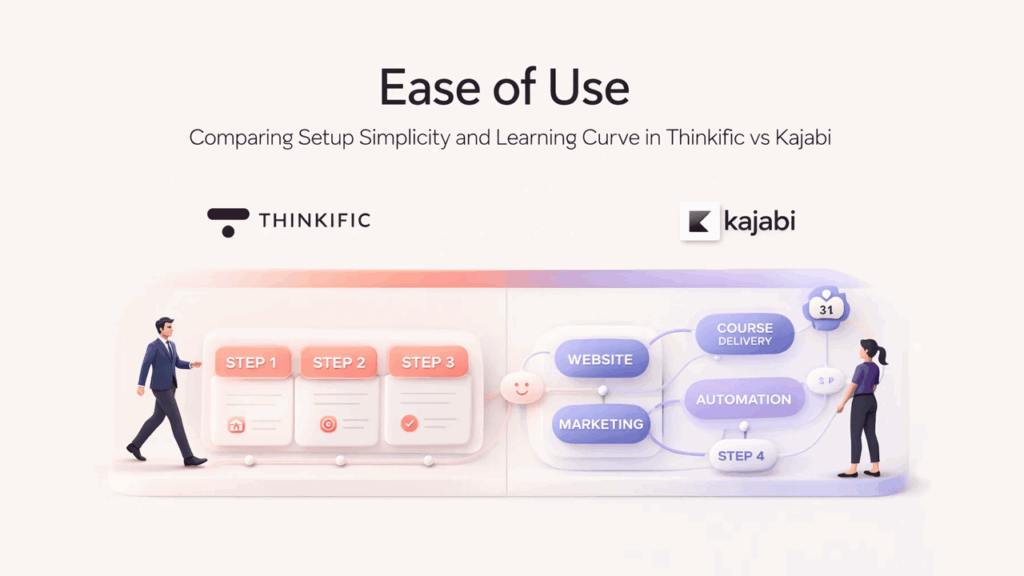
Ease of use can be a deal breaker or dealmaker for an educator. For new online instructors with a focus on straightforward setup and sensible navigation, Thinkific excels in providing a clear dashboard and streamlined UI. Course setup is rarely a complex process. Kajabi combines website building, marketing, and course delivery in a single platform. Though their learning curve may be steeper for some users, step-by-step guides help users navigate through the platform.
Support and Resources
This is especially true for beginners, where support matters most. Thinkific has an extensive knowledge base, email support, and live chat facilities. You get to know all kinds of tips and experiences through their community forums. Kajabi has similar support options, which include a helpful center, live chat, and coaching programs. They help users understand platform features and how to maximize their courses through regular webinars and tutorials.
Pricing Considerations
Budget may also play a significant role in the choice of platform. Thinkific offers different plans, with a basic one for those who are just starting small. The advanced versions have more features, including certificates and enrolling large groups of students. Kajabi is subscription-based, and you can get everything that you need to create courses, market them, and host your website on a tiered pricing model. Both platforms offer a free trial, allowing people to try the features with no prior commitment.
Conclusion
Both of these tools are great solutions for online educators. Thinkific is specifically aimed at the easy side of the scale, which makes it very popular for beginners. Kajabi is a platform that integrates course delivery with marketing and website tools, so it will attract people looking for a more all-in-one solution. Educators need to assess themselves to understand their needs, technical expertise, and features they want to pick the right tool for their teaching path.
%201.png)

%201.png)

%201.png)