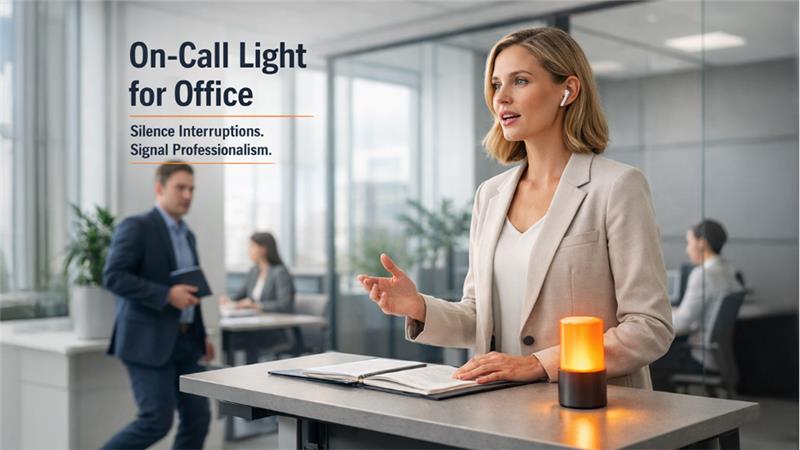

Open and shared offices intensify the visibility of meetings. Audio, visual presence, and behavioral cues propagate across shared space, affecting concentration beyond the meeting participants. Meeting etiquette therefore becomes an operational requirement rather than a soft cultural norm, and an on a call light for office provides an unambiguous signal of active engagement.
Luxafor addresses this constraint with practical signaling devices. These tools translate meeting status into clear visual indicators that reduce ambiguity and prevent avoidable disruptions.
Challenges of Calls in Shared Spaces
Shared environments lack natural barriers between focused work and live communication. Video and voice calls introduce intermittent noise and privacy exposure into otherwise quiet workflows. Without explicit signaling, coworkers must infer availability through unreliable cues.
This uncertainty produces friction. Employees hesitate to interrupt or, conversely, interrupt at inappropriate moments.
Noise and Privacy
Noise spillover from calls degrades nearby task performance. Even low-volume speech captures involuntary attention, increasing cognitive load for non-participants.
| Call Type | Noise Leakage Risk | Privacy Exposure |
| Internal audio call | Medium | Low |
| Video conference | High | Medium |
| Client call | High | High |
| Hybrid meeting | Variable | Medium |
These conditions require proactive mitigation. Physical signaling reduces reliance on guesswork and informal negotiation.
Unexpected Disruptions
Interruptions during calls often occur unintentionally. Colleagues are unaware that a meeting is in progress until the disruption has already happened.
- Walk-up questions during live calls
- Background conversations entering microphones
- Visual interruptions in camera view
These incidents reduce perceived professionalism and meeting efficiency. Preventing them requires visibility rather than policy reminders. Signals must be immediate, visible, and unambiguous.
Establishing Clear Meeting Norms
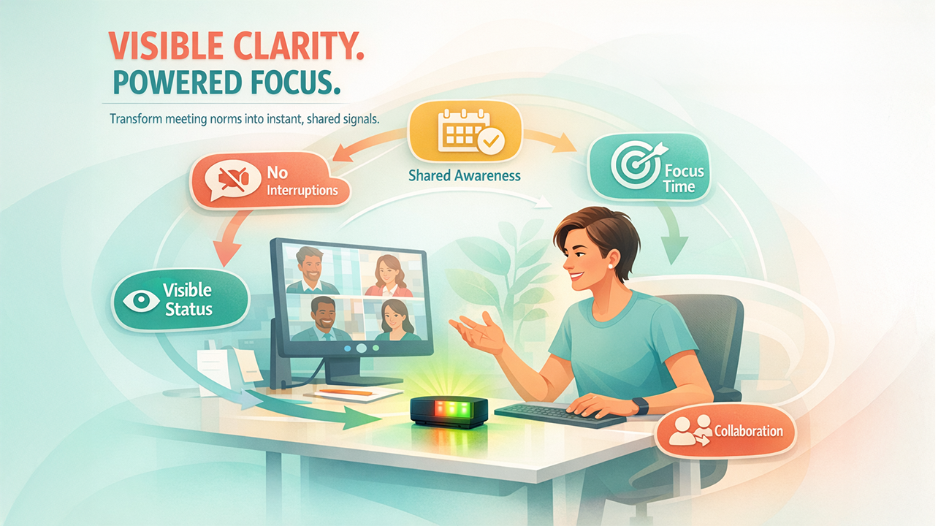
Meeting norms function only when they are observable. Written guidelines lose effectiveness in dynamic environments where attention is limited. Visual cues anchor norms in daily behavior.
Luxafor devices support this by externalizing the meeting state. Availability becomes a shared, passive signal rather than an explicit announcement.
Signaling Availability
Explicit signaling eliminates uncertainty around meeting participation. When status is visible, coworkers adjust behavior without additional communication.
| Visual Status | Meaning | Expected Response |
| On a call | Live meeting in progress | No interruptions |
| Busy | Focused or preparing | Interrupt only if urgent |
| Available | Open to interaction | Direct communication allowed |
| Away | Not present | Use asynchronous channels |
This clarity standardizes behavior across teams. Over time, it reduces both interruptions and social hesitation.
Respecting Boundaries
Boundaries must be visible to be respected. Employees cannot honor limits they cannot perceive. Visual indicators convert personal boundaries into shared signals.
- Reinforce default no-interruption during calls
- Normalize visual signaling across departments
- Align signals with collaboration platform status
These practices reduce friction without requiring enforcement. Respect becomes a function of design rather than discipline. Signals must be used uniformly to remain credible.
Improving the Experience for Everyone
Meeting etiquette benefits both participants and bystanders. Clear signaling protects call quality while preserving the focus of nearby colleagues. The result is a more predictable and calmer workspace.
An on- call light for the office provides immediate visual context. It communicates meeting state at a glance without sound, text, or manual explanation.
Luxafor designs these devices for seamless integration. They work alongside Microsoft Teams and other platforms, aligning physical signals with digital presence.
- Reduces accidental interruptions
- Improves perceived professionalism during calls
- Supports healthier shared-space dynamics
These improvements scale across teams and locations. The office becomes more legible and less reactive. When managers model correct usage, adoption accelerates naturally.
Final Thoughts on Office Etiquette
Meeting etiquette in shared offices is a systems problem. Noise, visibility, and ambiguity interact to create friction that individuals cannot solve alone. Effective solutions combine cultural norms with reliable tools.
Luxafor delivers honest, practical workplace technology grounded in real operational experience. By making meeting status visible and intuitive, Luxafor helps teams collaborate with fewer disruptions and greater mutual respect.
Improve meeting etiquette and reduce unnecessary interruptions by implementing an on a call light for office and creating a more considerate shared workspace.
%201.png)

%201.png)

%201.png)