

I've been watching the copy trading space evolve since 2020, and honestly? We're hitting a tipping point that's got me genuinely excited. What started as a niche feature on a few platforms has exploded into something that could fundamentally change how people approach crypto investing. And I'm not talking about some distant future — this stuff is happening right now.
Copy trading, for those who haven't dove into it yet, lets you automatically mirror the trades of successful investors. Think of it like having a skilled trader make moves on your behalf, except instead of paying massive management fees, you're just copying their exact positions in real-time. Pretty clever, right?
The timing couldn't be better. We're in this weird spot where crypto has gone mainstream enough that everyone wants in, but the learning curve is still brutal. My neighbor asked me last month how to buy Solana, and after explaining wallets, exchanges, and gas fees for twenty minutes, I could see his eyes glazing over. Copy trading solves that problem in the most elegant way possible.
The Numbers That Made Me a Believer
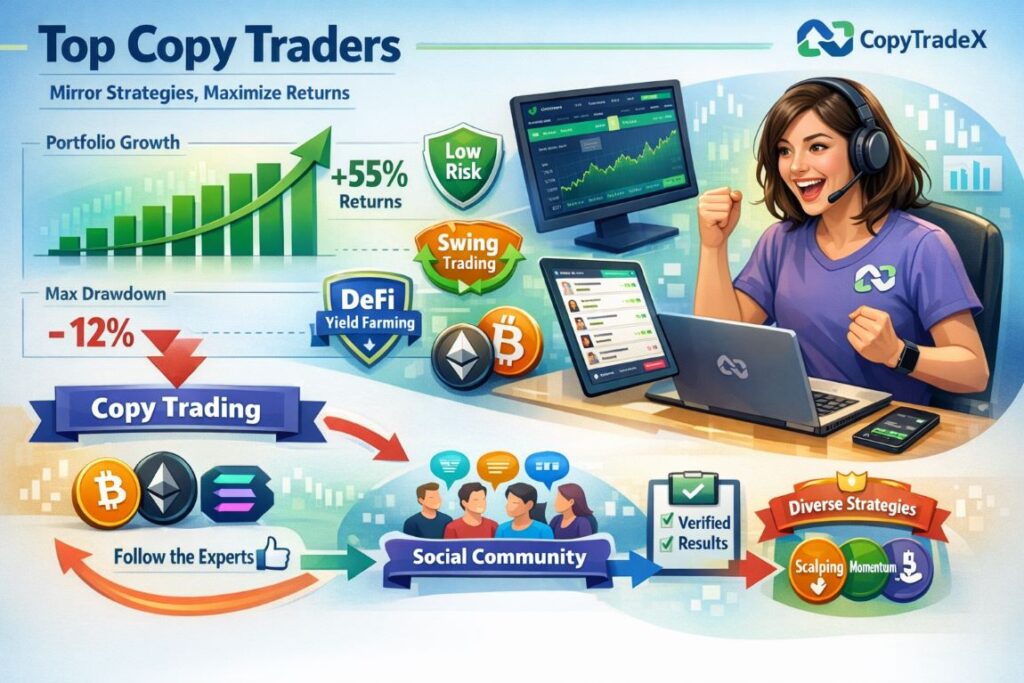
Here's what really caught my attention: some of the top copy traders on major platforms have been pulling consistent returns that would make traditional fund managers weep. I'm talking about traders with 12-18 month track records showing 40-60% annual returns, with drawdowns that aren't completely insane.
Take this trader I've been following since early 2023 — goes by "CryptoSurge_v2" on one of the bigger platforms. Started with a $10K portfolio, now sitting at around $28K. More importantly, his worst month was only down 8%, which in crypto terms is basically a rounding error. The guy clearly knows something about risk management.
What's fascinating is the diversity of strategies you can copy. Some traders focus purely on major coins — Bitcoin, Ethereum, maybe some Solana. Others are DeFi specialists who seem to have a sixth sense for finding yield farming opportunities before they get crowded. Then there are the swing traders who catch those beautiful 20-30% moves on mid-cap altcoins that I always seem to miss.
The transparent performance metrics make everything feel legitimate in a way that crypto has desperately needed. You can see exactly when someone bought, sold, their win rate, average holding periods, maximum drawdown — everything. No more trusting some guru's cherry-picked screenshots on Twitter.
But here's the part that really got me: the social aspect. These platforms are turning into genuine communities where successful traders share their reasoning, respond to questions, and build reputations. It's like having access to the thought process behind every trade, which is incredibly valuable for anyone trying to actually learn.
How the Tech Actually Works (And Why It's Getting Better)
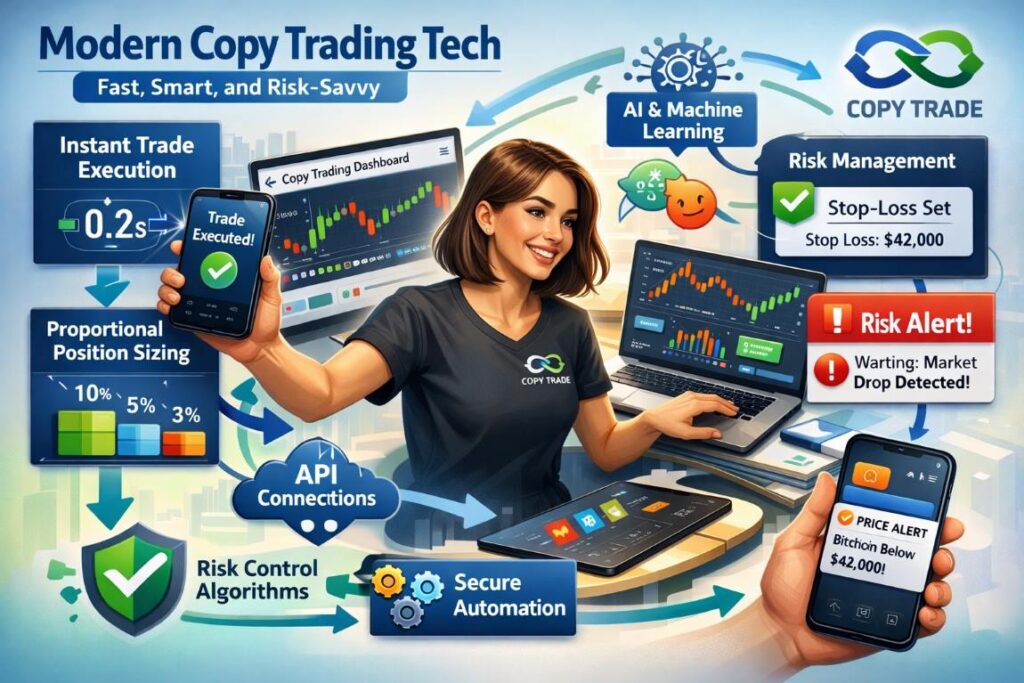
The technical infrastructure behind modern copy trading has come so far from those early, clunky implementations. We're talking about sub-second trade execution, proportional position sizing that actually makes sense, and risk management tools that can protect you even when the person you're copying makes a questionable decision.
Most platforms now use API connections directly with major exchanges, which means when your chosen trader buys 0.5 BTC, you automatically buy a proportional amount based on your account size. If they've got $100K and you've got $5K, you'll buy 0.025 BTC. The math just works seamlessly in the background.
The risk controls are where things get really interesting. You can set maximum position sizes, stop-loss limits, and even exclude certain coins entirely. Following a trader who loves gambling on dog coins but you want to stick to the top 20? No problem. Want to automatically close any position that drops more than 15% regardless of what the original trader does? Easy to set up.
I've been testing different trading app cryptocurrency features for months now, and the user experience keeps getting smoother. The onboarding process that used to take hours now happens in minutes. Connect your exchange, verify your account, browse some trader profiles, and you're copying trades within the hour.
The mobile apps have gotten particularly good. I can browse trader performance, adjust my copy settings, and monitor positions while I'm grabbing coffee. The push notifications actually make sense too — I get alerts for significant trades, not every tiny adjustment.
What's really cool is how platforms are starting to incorporate AI and machine learning. Some apps now analyze thousands of traders and suggest matches based on your risk tolerance and investment goals. Others use sentiment analysis to flag when a trader might be going through a rough patch or changing their strategy significantly.
Finding Traders Worth Following (My Personal Playbook)
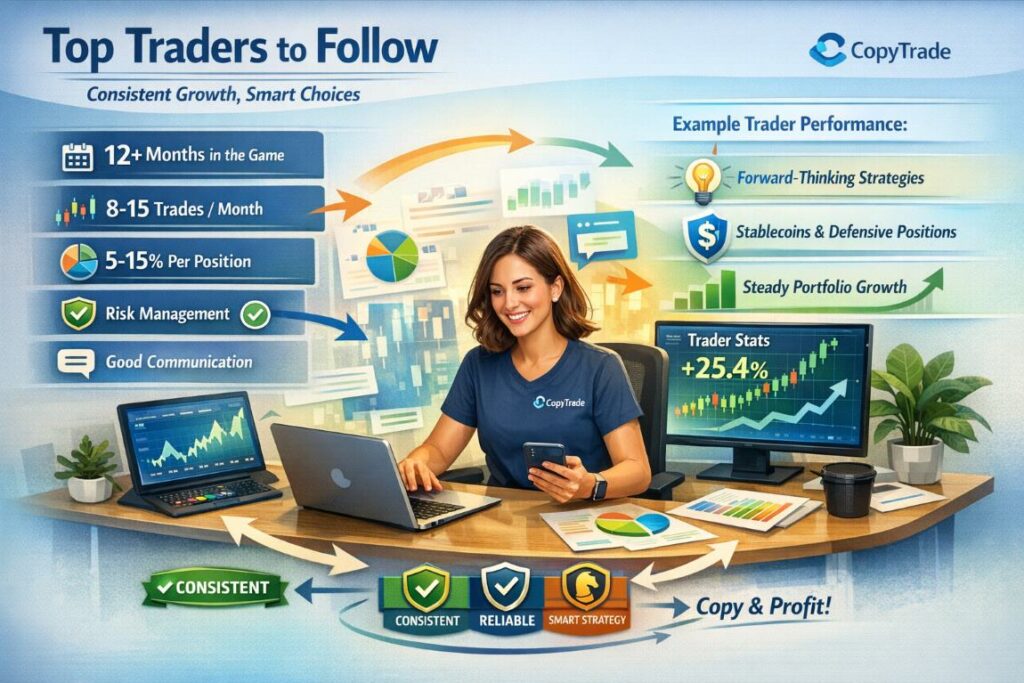
After copying dozens of different traders over the past two years, I've developed a pretty solid framework for separating the wheat from the chaff. It's not rocket science, but there are definitely patterns that separate the consistently profitable traders from the lucky streaks.
First thing I look at? Time in the game. Anyone can have a good three months — crypto is volatile enough that pure luck can carry you pretty far. But traders with 12+ months of consistent performance, especially if they've navigated at least one significant market downturn, have something special. They've proven they can adapt when conditions change.
Trading frequency is another big tell. The traders posting 50+ trades per week usually burn out or blow up eventually. I've learned to gravitate toward the ones making 8-15 trades per month. They're being selective, waiting for high-conviction opportunities rather than trying to catch every small move.
Portfolio diversification matters more than you'd think. Traders who put 60% of their portfolio into a single altcoin might hit home runs sometimes, but they're also setting themselves up for catastrophic losses. The best performers I've followed typically keep position sizes between 5-15% of their total portfolio.
Communication style tells you a lot too. Traders who post detailed reasoning behind their moves, acknowledge mistakes openly, and engage thoughtfully with followers tend to be more reliable long-term. The ones posting rocket ship emojis and "diamond hands" memes? Pass.
One specific example: there's this trader called "DeFi_Navigator" who caught my attention because she consistently outperformed during the May 2023 crash. While most portfolios were down 30-40%, she was only down about 12%. Turns out she'd been gradually moving into stablecoins and defensive positions based on some on-chain metrics she follows. That's the kind of forward-thinking approach that's worth copying.
Recent performance matters, but don't get too caught up in short-term numbers. A trader who's up 200% this month probably got lucky with one or two big calls. Look for steady, consistent growth over extended periods. Boring can be very profitable in crypto.
The Opportunity That's Right in Front of Us
What excites me most about where copy trading is headed isn't just the potential returns — though those are certainly appealing. It's the democratization aspect. We're creating a system where anyone with a few hundred dollars can essentially hire some of the sharpest crypto minds in the world.
Think about traditional finance for a second. Want access to top-tier hedge fund strategies? You better have millions to invest and the right connections. Just like how modern CRM platforms boost customer retention by automating key processes, copy trading apps automate investment strategies for crypto investors. But in crypto copy trading, you can follow the same strategies as accounts with six or seven figures, starting with whatever amount you're comfortable with.
The learning opportunity is massive too. I've learned more about technical analysis, on-chain metrics, and market psychology from following good traders than I did from months of YouTube videos and trading courses. When you see someone consistently making profitable decisions, you start to notice the patterns and reasoning behind them.
Educational features are getting better across platforms. Some traders now post detailed explanations alongside their moves. Others host live Q&A sessions or share weekly market outlooks. It's like getting a master class in crypto trading, except instead of just theory, you're seeing real money on the line.
The fee structures are evolving in interesting ways too. Instead of flat management fees, many platforms use profit-sharing models where successful traders only earn money when their followers make money. Incentives are properly aligned, which tends to produce better results for everyone involved.
Geographic diversification is another underappreciated advantage. You can copy traders from different time zones who are active when you're sleeping, traders who specialize in Asian markets that you might not understand, or traders who have insights into local regulations that affect certain coins.
Wrapping Up
Copy trading represents something we've never had before in investing: the ability to directly replicate the strategies of successful traders at scale, with complete transparency, and without massive barriers to entry. The technology has matured to the point where execution is reliable, the user experience is genuinely good, and the community aspects add real educational value beyond just potential returns.
What started as a novel feature has evolved into a legitimate investment approach that's attracting serious capital and serious talent. The traders building reputations on these platforms are incentivized to perform consistently, and the tools for evaluating and following them keep getting more sophisticated. For anyone who's been intimidated by the complexity of crypto trading or frustrated by the time commitment required to stay on top of markets, copy trading offers a compelling alternative that's only getting better. The opportunity to learn from and profit alongside some of the sharpest minds in crypto has never been more accessible.
%201.png)

%201.png)

%201.png)