

Customer Relationship Management (CRM) has been one of the pillars of effective business processes. Conventionally, CRMs emphasized structuring client data, simplifying communication, and streamlining sales processes. However, the growth of digital finance is transforming how organizations use CRM, incorporate payment solutions, and ensure financial monitoring into the wider customer experience. Let us learn more about integrating digital finance into CRM (customer relationship management) in this blog.
As organizations globally expand and customer expectations change, the capability to efficiently handle financial interactions within CRM platforms has become a major competitive edge. Digital finance integration improves convenience, boosts transparency, and enables companies to ensure tailored and smooth experiences to their clients.
Improving CRM with Financial Systems
One of the major developments in CRM integration is the adoption of crypto exchange functionality. These systems allow businesses to ensure cryptocurrency transactions, providing flexibility for clients who have a preference for digital assets. This integration goes beyond conventional payment processing, enabling organizations to track, record, and assess financial interactions within the CRM platforms directly.
Incorporating capabilities of crypto exchange into CRM systems provides numerous benefits:
- Simplified Payment Processes: Businesses can manage payments quickly and minimize dependence on conventional banking platforms.
- Global Reach: Companies can cater to global clients without thinking about transfer delays or currency conversions.
- Improved Data Insights: Financial transactions monitored within CRM ensure actionable insights for customer engagement and sales strategies.
For instance, a company that works globally can accept diverse types of cryptocurrency payments, track them in the CRM, and create invoices automatically or update client accounts. This not only streamlines processes but also improves transparency and reliability with clients.
Tailored Customer Experiences Via Digital Finance
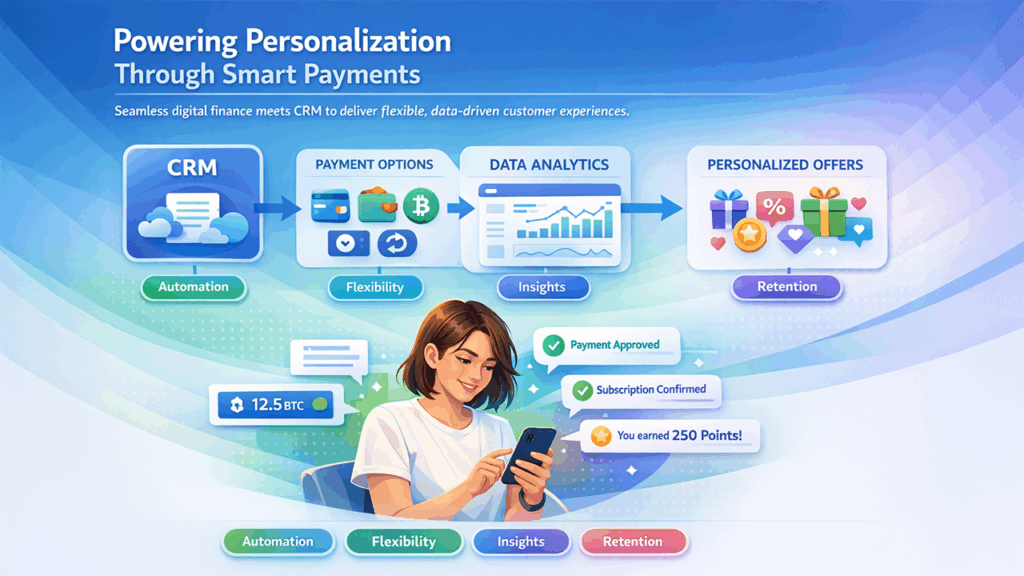
Integrating digital finance into CRM (customer relationship management) enables organizations to more effectively personalize their experiences. This approach is especially valuable in crm for financial advisors, where client relationships and financial insights go hand in hand. Modern customers anticipate flexibility and convenience in payments, and providing digital finance options within the CRM workflows directly aids in meeting such expectations.
For example, clients may select between digital wallets, conventional payments, or cryptocurrencies. Each transaction can be recorded and assessed within the customer relationship management platforms, ensuring companies with a complete view of customer behavior. By utilizing this data, businesses can provide tailored suggestions, personalized promotions, or loyalty rewards as per the payment history and preferences.
Digital finance integration also provides support to subscription-driven models and recurring payments. Organizations can also automate billing processes, ascertaining transactions in a timely manner while minimizing manual effort. Clients benefit from predictable and consistent experiences, which enhance retention and satisfaction.
Enhancing Efficiency in Operations
Incorporating digital finance into CRM platforms greatly simplifies internal processes. Organizations no longer need to handle individual systems for payment processing, customer data, and accounting. Instead, it ensures that all relevant information is centralized, minimizing errors, and administrative workload.
Automation plays a vital role in this process. Advanced CRM systems can track transactions automatically, update profiles of client, and create reports without manual input. This not only saves you time but also enables staff to emphasize high-value tasks like development of strategy and relationship building.
A few of the important advantages for operational efficiency involve the following:
- Minimized Manual Work: Automated workflows reduce the need for reconciliation and data entry.
- Faster Reporting: Real-time financial insights can be created for strategy planning and management.
- Enhanced Accuracy: Centralized platforms minimize errors and ascertain consistency across different client records.
With such capabilities, businesses can work more smoothly and react to customer requirements more quickly, ensuring a more robust overall experience.
Compliance and Security Considerations

While integrating digital finance into CRM (customer relationship management) provides diverse benefits, it is important to pay special attention to compliance and security. Managing financial information, specifically cryptocurrency transactions, reveals possible risks if they are not handled properly.
Businesses must execute powerful security measures, including multi-factor authentication, encryption, and consistent system audits. Regulatory compliance associated with financial reporting, data protection, and global transactions is also vital. By making sure that such safeguards are in place, organizations can leverage digital finance confidently without sacrificing client trust.
Furthermore, transparency plays a major role in developing credibility. Giving clients clear data related to security measures, payment options, and transaction records nurture trust and boosts relationships between the customers and the company.
One area where financial systems and CRM combine to create a direct impact on customer experience and security is payment gateway development. Being familiar with how CRM influences the development of payment gateways, from auto-completing customer details to recognizing declined transactions in real-time, allows companies to develop more compliant and resilient workflows within the CRM systems.
The Future of Digital Finance and CRM
Going forward, the incorporation of digital finance into CRM platforms is likely to become more advanced. Emerging technologies like blockchain and AI can further improve security, customization, and operational efficiency.
For instance, AI can assess transaction patterns to forecast customer preferences or recognize possible churn risks. Blockchain technology can give you immutable transaction records, improving trust and transparency. The combination of such platforms enables organizations to provide more secure and innovative experiences to their clients.
As customer expectations evolve continuously, businesses that incorporate digital finance into their CRM platforms will have a distinct benefit. They can render tailored, smooth, and secure experiences that not only keep clients satisfied but also drive operational excellence as well as growth.
Conclusion
Integrating digital finance into CRM (customer relationship management) is no longer a futuristic thought; it is a practical need for organizations focusing on to get success in a digital economy. By integrating platforms like automation tools for transactions, crypto exchange systems, and utilizing data for customization, organizations can ensure tailored customer experiences while also boosting operational efficiency.
Having a right approach to compliance and security, organizations can navigate this integration confidently. As a result, we get a CRM platform that not only handles relationships but also smoothly handles financial interactions and positions organizations for lasting success in a greatly digitized world.
%201.png)

%201.png)

%201.png)