

For many associations and non-profits, the pressure to grow revenue has never been greater. Membership dues often cover only part of operating costs, while events and sponsorships can fluctuate from year to year. At the same time, leaders are rightly cautious about “over-selling” to members who joined for connection, learning, and shared purpose, rather than constant upselling.
This creates a familiar tension: how do you generate sustainable income without undermining trust?
The answer, in many cases, lies in your most underused asset — your community itself. When approached thoughtfully, monetisation doesn’t have to feel transactional. It can be a natural extension of the value you already provide.
This article explores five practical, member-first ways to monetize your association’s community while strengthening engagement and long-term loyalty.
Why Your Community Is Your Strongest Revenue Asset
Associations sit in a unique position that most commercial organisations can only envy. You don’t just have an audience, you have a trusted network of professionals who actively seek guidance, standards, and peer connection.
That trust creates three powerful advantages:
- Credibility: Members see your organisation as a reliable source of expertise and industry insight.
- Relevance: You understand your community’s challenges, career paths, and priorities better than most external providers.
- Access: You already have established communication channels and ongoing relationships.
Traditional revenue models often focus heavily on dues, annual conferences, or one-off fundraising drives. While these remain important, they rarely capture the full potential of a highly engaged member base.
Modern association revenue strategies take a broader view. They look for opportunities to create ongoing, opt-in value: products, experiences, and services that members are genuinely happy to pay for because they solve real problems or support professional growth. These monetization strategies help associations move beyond traditional revenue limits while maintaining trust.
When done well, monetisation becomes part of the member journey rather than a distraction from it.
Strategy 1: Building Revenue with Online Courses and Certification Programmes
Identify Knowledge Members Are Ready to Pay For
Most associations are sitting on a wealth of expertise: industry standards, best practices, research, and access to experienced practitioners. The key is identifying which parts of that knowledge members see as career-enhancing or professionally essential.
Start by asking questions such as:
- What skills are in high demand in our industry right now?
- Where do members struggle to find credible training elsewhere?
- What qualifications or credentials carry weight with employers or regulators?
Member surveys, event feedback, and support enquiries can all reveal gaps that paid education can fill.
Structure Paid Courses, Micro-Credentials, and Certificates

Not every member needs a full qualification. Many are looking for focused, practical learning they can apply immediately. Consider offering:
- Short, modular courses on specific skills or compliance topics
- Micro-credentials that stack towards a larger certification
- Formal certificates tied to professional recognition or CPD requirements
A flexible structure allows you to serve early-career professionals and senior leaders alike, while creating multiple price points.
From a practical perspective, managing enrolments, payments, and access can become complex as programmes grow. Many associations streamline this by using Salesforce-based membership systems, such as AC MemberSmart, a Salesforce-native AMS, to connect learning access, billing, and member records in one place. It keeps the experience smooth for members and reduces manual admin for staff.
Strategy 2: Exclusive Events and Networking Opportunities
Professional connection remains one of the strongest reasons people join associations in the first place. That makes high-quality events a natural opportunity for non-dues revenue.
Instead of focusing solely on large, annual conferences, many organisations are seeing success with more targeted, premium experiences, such as:
- Small, invitation-only roundtables for senior leaders
- Industry “mastermind” groups that meet quarterly
- Member-only virtual briefings on emerging trends or regulations
- Local networking dinners or regional meet-ups
The value here is access, not just volume. Members are often willing to pay more for events that offer meaningful conversation, direct access to experts, or peers facing similar challenges.
Pricing should reflect the experience you’re creating, not just the cost of running the event. Clear communication about what attendees will gain helps position the fee as an investment rather than a charge.
Strategy 3: Sponsorships and Industry Partnerships
Sponsorship doesn’t have to mean logos on banners and adverts in newsletters. When approached creatively, partnerships can enhance the member experience while opening up consistent revenue streams.
The most effective sponsor relationships are built around shared value. Look for organisations that genuinely serve your members’ professional needs: technology providers, training companies, publishers, or specialist consultancies.
Instead of selling exposure alone, consider offering packages that include:
- Partner-led webinars or educational sessions
- Sponsored research reports or industry benchmarks
- Co-created toolkits or guides for members
- Thought leadership content featured in your community channels
This approach benefits all sides. Members receive useful, relevant content. Sponsors gain meaningful engagement with a niche, trusted audience. Your association earns revenue without compromising its role as a credible, member-first organization. When executed well, these partnerships become long-term monetization strategies rather than one-off sponsorship deals.
Clear guidelines around quality and relevance are essential. The moment partnerships feel promotional rather than helpful, trust can erode quickly.
Strategy 4: Branded Digital Products and Resources
Many associations already create valuable materials for internal use, such as policy templates, research summaries, benchmarking data, or professional toolkits. With a little structure, these can become scalable digital products.
Popular options include downloadable templates and checklists, industry reports and salary surveys, resource libraries or knowledge hubs, and curated collections of best practice guides.
You can offer these as one-off purchases or bundle them into a paid subscription tier for ongoing access. For non-members, they can also act as a “try before you join” entry point into your wider community.
The key is presentation. Well-designed, regularly updated resources signal professionalism and reinforce your association’s role as an authority in the field.
From a systems perspective, having membership data, payments, and content access connected in one platform makes it easier to manage who sees what. This is where a membership management solution on Salesforce can be particularly helpful, as it allows associations to link purchases and access rights directly to member profiles without juggling multiple tools.
Strategy 5: Community-Driven Fundraising and Donor Support
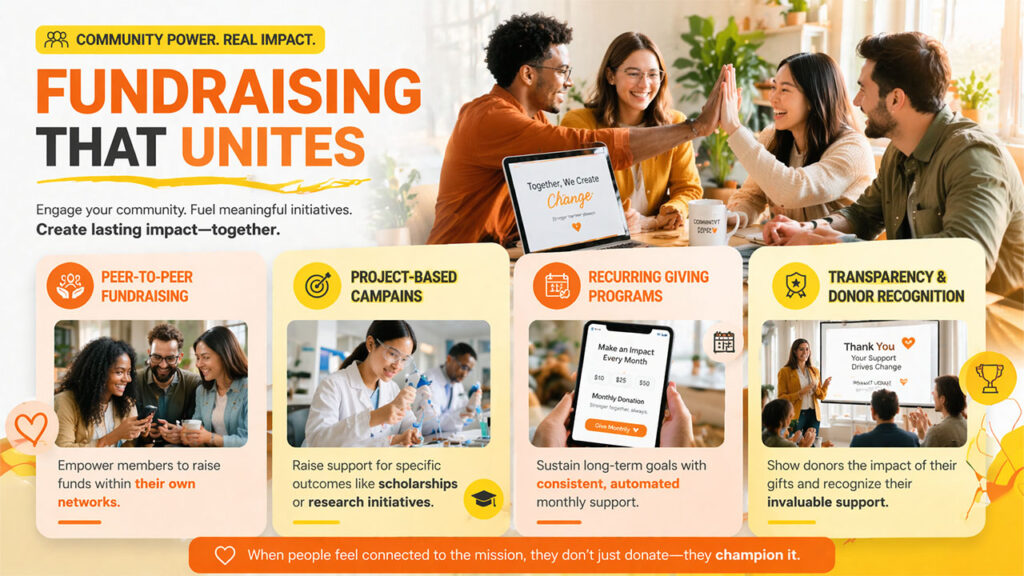
For many non-profits and mission-led associations, fundraising remains a vital part of the revenue mix. The most successful campaigns increasingly focus on participation rather than just donations.
Community-driven approaches can include:
- Peer-to-peer fundraising, where members raise money within their own networks
- Project-based campaigns tied to specific outcomes, such as scholarships or research initiatives
- Recurring giving programmes that support long-term goals or dedicated fundraising events.
Transparency is essential. Members are far more likely to contribute when they understand how funds will be used and what impact they will have.
Recognition can also play a role, from simple acknowledgements in newsletters to exclusive briefings or behind-the-scenes updates for major donors. These gestures reinforce the sense that giving is part of belonging, not just a financial transaction.
Making Monetisation Work Long-Term (Without Losing Trust)
No matter which strategies you adopt, long-term success depends less on tactics and more on principles. Associations that monetise well tend to follow a few consistent guidelines:
- Be transparent: Clearly explain what members are paying for and how it supports the community.
- Make it opt-in: Avoid bundling paid products in ways that feel forced or unclear.
- Focus on value first: Revenue should follow impact, not the other way around.
- Price fairly: Align fees with the outcomes and benefits members actually receive.
Technology also plays a supporting role. When membership data, communications, and payments live in separate systems, it becomes harder to deliver a seamless experience. Many organisations are now moving towards Salesforce-native membership platforms that bring these elements together, reducing friction for both staff and members.
Conclusion
Learning how to monetize a community isn’t about turning your association into a shop. It’s about recognising the value that already exists within your network and creating thoughtful, ethical ways to sustain and grow it.
Online education, premium events, meaningful partnerships, digital resources, and community-led fundraising can all become part of a balanced, non-dues revenue for associations. When built around trust and relevance, these monetization strategies deepen engagement and strengthen your organization's role in your members’ professional lives.
If you’re exploring how technology can support these efforts, it may be worth looking at Salesforce-native membership software designed specifically for associations, such as AC MemberSmart, which connects membership management, payments, and engagement in one platform. It can serve as a practical foundation as you look to monetize your community in a sustainable, member-first way.
Related Posts:
Why You Should Invest in Online Continuing Education for Your Team
%201.png)

%201.png)

%201.png)