
A while ago, staying connected meant having a physical SIM card that was tied to a single device or a single carrier. If a user wanted to switch to another number or a different network, the user had to swap the card, visit the store of the carrier provider, or commit to another plan. This process worked, but it wasn't flexible.
As the volume of communication, daily interactions, and work increased rapidly, the need for a more adaptive means of connection became more obvious. Whether its remote teams spread across continents or individuals managing multiple digital identities, the way we connect has had to evolve.
This introduced the concept of eSIM and virtual phone numbers, which was not just an incremental upgrade, but changed how connectivity works at the fundamental level. Instead of being tied to hardware, communication becomes something that can be managed digitally by the user themselves. The switching between carriers or devices became as easy as switching between apps on a device.
The shift to eSIM from a physical SIM card is already visible across industries. The businesses are rethinking how they have been handling customer communications. The developers are also testing on products across the regions without any limitations. With the switch, the everyday users are also becoming more conscious of their privacy and control. With the introduction of eSIM, the mode of connectivity is no longer limited to access, but has become more flexible.
A good example of this shift can be seen in solutions like the online number solution by eSIM Plus, in which the capabilities of eSIM functionality are combined with a virtual number. Instead of juggling multiple tools or devices, users can manage everything in one place, adapting their setup as their needs change.
eSIM: A Small Change With Big Implications
At its core, Embedded SIM Technology (eSIM) removes the need for a physical SIM card. The functionality is built directly into the device, allowing users to activate a mobile plan digitally.
This might sound like an extra chore, but it has positive effects.
First, it removes friction. There’s no waiting for a SIM card to arrive, no need to visit a store, and no physical handling involved. Activation can happen in minutes, which is a significant advantage for both individuals and businesses.
It also introduces flexibility that wasn’t possible before. Users can store multiple profiles on a single device and switch between them depending on their needs. For someone traveling frequently or managing work across regions, that’s a practical upgrade rather than just a technical one.
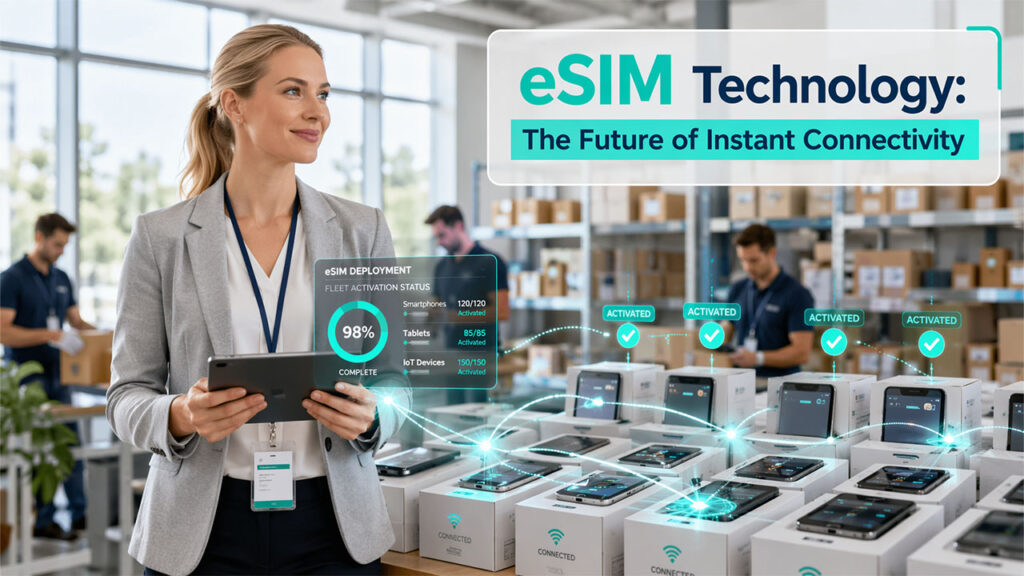
From a business perspective, eSIM simplifies device deployment. Companies managing large fleets—whether smartphones, tablets, or IoT devices can configure and update connectivity remotely. This reduces both time and operational overhead.
How eSIM Provisioning Actually Works
Upon activating an eSIM, the device connects to a Remote SIM Provisioning (RSP) server which is managed by the carrier. This server delivers an encrypted operator profile essentially a digital SIM directly to the device's eUICC (embedded Universal Integrated Circuit Card) chip. The eUICC stores multiple profiles simultaneously, each isolated from the other, allowing seamless switching without data conflict. The entire exchange follows the GSMA SGP.22 technical specification, which standardizes how profiles are downloaded, installed, and managed across different manufacturers and networks. This architecture is what makes carrier switching possible without physical intervention, and it is also what gives enterprises the ability to remotely provision thousands of devices at scale.
Virtual Phone Numbers: Decoupling Identity From Devices
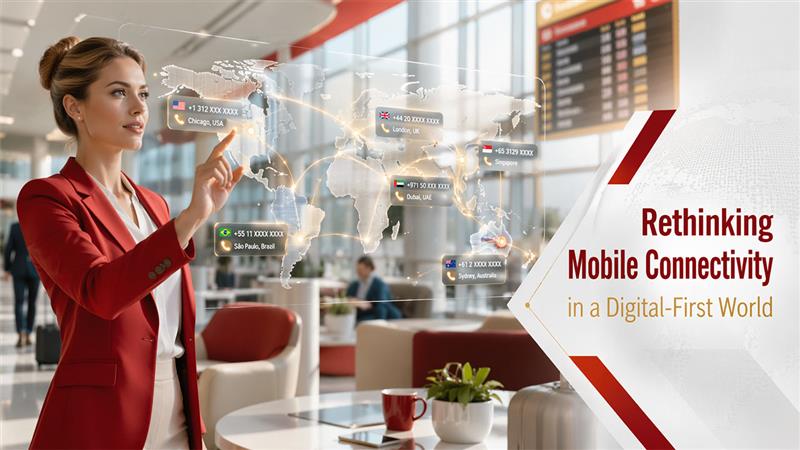
Virtual phone numbers take a different approach. They are not tied to a specific SIM card, rather they exist in the cloud, and you can access them through web platforms or apps.
This separation from physical hardware opens a door to many possibilities.
Virtual numbers are already important for businesses in managing customer support and communication strategies. Using virtual numbers, companies can create dedicated lines for different departments, regions, or campaigns without needing separate devices.
For individuals, the benefits are just as clear. A virtual number can be used for online registrations, short-term projects, or situations where sharing a personal number doesn’t make sense. It adds a layer of control that traditional numbers simply don’t offer.
What makes virtual numbers particularly useful is how quickly they can be created and managed. There’s no setup delay, no hardware dependency—just a number that works when you need it.
Why These Technologies Are Converging
When using eSIM and virtual numbers individually, they solve different problems. Together, they build a communication ecosystem that is more complete and more efficient.
Let's think it in this way: eSIM offers you network access that is more flexible, while virtual numbers provide you with identity management. However, when you combine them together, they allow let users control how they want to connect and how they are reached.
This combination is particularly relevant in the current work environment. Due to remote and hybrid work modes, location has become less important, but it makes communication even more critical. To work efficiently, teams must stay connected across different locations without unnecessary complexity.
With increasing technological advancements, privacy has also become important. Users consider and put a lot of thoughts about where they want to share their primary number. On the other hand, businesses are searching for new ways to manage communication without the risk of exposing their internal systems.
Bringing eSIM and virtual numbers together addresses both of these needs in a way that feels natural rather than forced.
Where This Matters Most: Real-World Use Cases
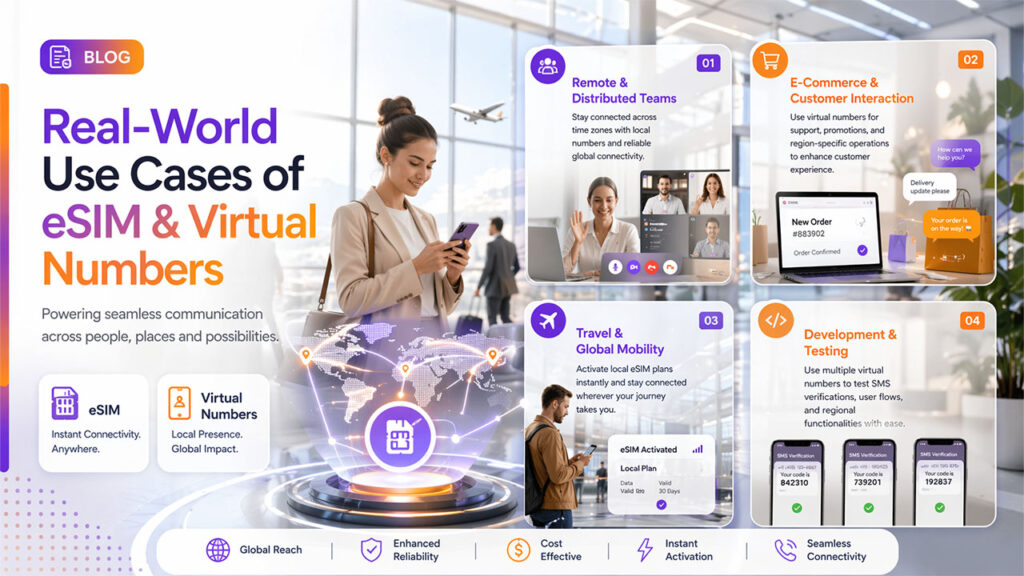
The value of these technologies becomes clearer when you see how they are being used in the real world.
Remote and Distributed Teams
Those employees who work across different time zones need flexible communication tools. With virtual numbers, they can maintain a local presence in several regions while eSIM provides connectivity without any physical constraints.
E-Commerce and Customer Interaction
Digital businesses often need to handle communication at a large level. These businesses can use dedicated virtual numbers for support, promotions, or region-specific operations. This significantly improves both accessibility and customer experience.
Travel and Global Mobility
Conventional roaming plans can be both costly and inconvenient for those who travel a lot. eSIM lets users activate their local plans immediately while virtual numbers make sure communication runs smooth regardless of changing locations.
Development and Testing
Developers often require multiple numbers to test SMS verification, user flows, and regional functionality. With virtual numbers, this process becomes much faster and mor efficient. Virtual numbers also eliminate the need for multiple devices.
Challenges Worth Considering
Sure, it has many advantages, but adoption isn’t without its challenges.
Compatibility with devices is one important factor. Most modern smartphones support eSIM but older devices may not. This creates restrictions, especially in mixed-device environments.
Regulation is another consideration. Countries have different telecommunication laws, and some regions impose restrictions on virtual numbers or need additional verification.
Then comes reliability. Different providers offer different levels of services. That's why selecting the right platform becomes even more important. Poor quality of calls and delayed message delivery can overshadow the benefits quickly.
Additionally, there are some online platforms that restrict using virtual numbers for verification. This is not so common, but users must at least be aware of this.
The Bigger Picture: eSIM, IoT, and What’s Next
Beyond smartphones, eSIM is also playing a major role in increasing the growth of connected devices. The ability to manage connectivity; from smart sensors to connected vehicles is remotely essential.
Physical SIM cards cannot work in IoT environments as thousands of devices are deployed across different locations. eSIM offers several advanced features such as updates, management, and remote provisioning. This makes large-scale deployments far more efficient.
With the continuous expansion of 5G, the importance of flexible connectivity will keep increasing. Faster speeds and reduced latency forge the path to new applications, but they also need infrastructure that can adapt easily with ongoing changes. This makes eSIM and virtual solutions even more relevant.
Why This Shift Is Happening Now
The growing adoption of these technologies is not a separate phenomenon; rather, it brings a broader shift in ways people and businesses operate.
A few key factors are driving this change:
- Increase in remote and hybrid work
- Emphasis on privacy and data control
- Expansion of global digital services
- The need for cost-efficient communication
Each trend brings more flexibility and reduces dependence on physical infrastructure.
Final Thoughts
eSIM and virtual phones are not just a matter of convenience; they represent a different approach to connectivity.
Now, users don’t have to limit themselves to a single device or number. They can adapt their communication setup to fit their needs. This brings greater scalability and efficiency for businesses while individuals get more control and fewer limitations.
This transition is just around the corner. With growing adoption, these technologies are becoming standard rather than optional.
It has become important to understand how they work and where they fit in your personal and professional life if you want to stay ahead in this digital-first world.
%201.png)

%201.png)

%201.png)