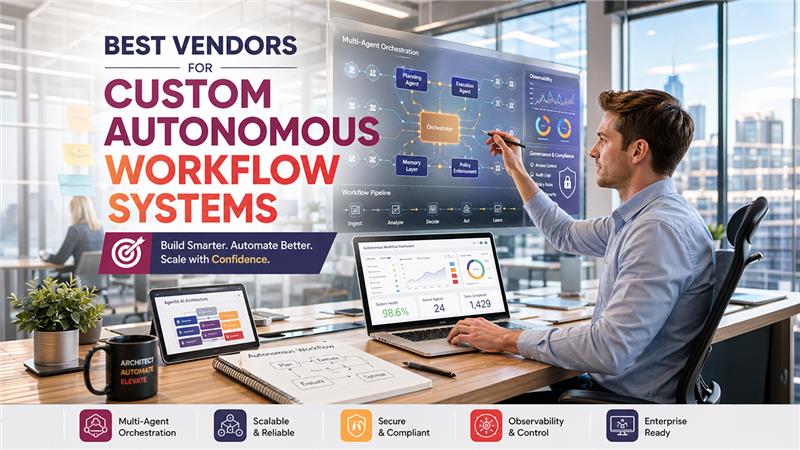

Enterprise adoption of Agentic AI is shifting from experimentation to architectural commitment, building on the broader evolution of AI-driven CRM systems. As organizations deploy autonomous workflows across operations, product development, compliance, and customer systems, architecture leadership becomes a defining factor in long-term viability. Designing intelligent agents is no longer sufficient; enterprises require structured orchestration, reliability controls, and governance models that integrate with existing technology stacks.
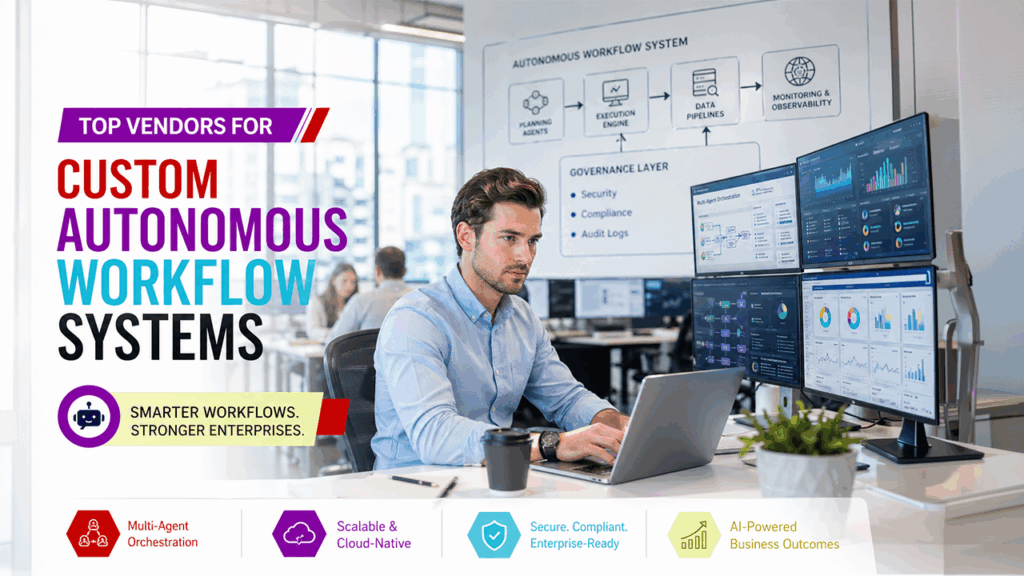
Unlike conventional AI integrations that attach models to predefined workflows, multi-agent systems operate as distributed decision layers. They coordinate planning agents, execution agents, memory layers, and policy enforcement components across cloud-native environments. This introduces architectural complexity: observability, fault tolerance, versioning, and security boundaries must be designed at system level rather than added later.
For enterprise founders and CTOs, the primary challenge is not model selection but workflow architecture — ensuring autonomous systems remain controllable, scalable, and aligned with business logic over time.
Selection Criteria
Companies included in this list were selected based on:
- experience with enterprise-scale Agentic AI systems
- ability to design multi-agent orchestration frameworks
- expertise in governance, observability, scalability, and security
- alignment of AI system architecture with business processes
- hands-on engineering involvement beyond advisory-only consulting
Vendors Specializing in Custom Autonomous Workflow Systems
Codebridge.Enterprise Agentic AI Architecture and Multi-Agent System Design
Codebridge focuses on enterprise Agentic AI architecture with emphasis on multi-agent orchestration systems and distributed, cloud-native infrastructure. The company provides expertise in agentic AI development, designing autonomous workflow layers that integrate planning agents and execution engines with an observability platform for monitoring agent behavior, performance, and system reliability within regulated environments. Codebridge often works with both startups and established enterprises across the US, Canada, and Europe, aligning business strategy with AI system architecture and embedding autonomous capabilities directly into operational workflows. Its engineering involvement typically spans architecture definition, orchestration logic, infrastructure design, and enterprise integration.
Innowise Group. Enterprise AI Engineering and Scalable Workflow Architecture
Innowise Group focuses on enterprise software engineering with increasing involvement in AI-enabled workflow systems. The company provides expertise in scalable backend architectures and distributed cloud environments where autonomous components must integrate with existing enterprise infrastructure. Its teams often support organizations implementing intelligent automation layers that require governance controls, monitoring capabilities, and structured deployment practices aligned with operational objectives.
ITRex Group. AI System Engineering and Enterprise Automation Architecture
ITRex Group provides expertise in enterprise automation systems that combine machine learning components with workflow orchestration frameworks. The company focuses on implementation depth, including model lifecycle management, observability tooling, and infrastructure optimization. It often supports organizations transitioning from pilot AI initiatives to structured multi-agent environments embedded in core operations.
HatchWorks AI. Applied AI Delivery with Structured Governance Models
HatchWorks AI specializes in applied AI delivery for mid-market and enterprise clients. Its work frequently includes designing structured AI governance models and integrating autonomous capabilities into enterprise systems. HatchWorks AI emphasizes repeatable architecture patterns that allow AI agents to operate within compliance and security constraints.
Addepto. Data Engineering and Autonomous System Integration
Addepto focuses on data-centric AI implementations that support intelligent automation initiatives. The firm often works on integrating AI-driven decision engines into enterprise platforms, addressing data pipelines, monitoring layers, and performance optimization. Its projects typically involve aligning AI capabilities with measurable operational objectives.
First Line Software. Enterprise Software Modernization with AI Extensions
First Line Software supports organizations modernizing legacy systems while embedding AI-enabled workflow components. The company provides engineering resources for cloud-native migration and distributed system design, enabling multi-component AI services to operate reliably within enterprise environments.
Digica. Multi-Agent Systems and Applied Research Engineering
Digica works at the intersection of applied research and commercial AI deployment. The company specializes in custom AI systems requiring multi-agent coordination and domain-specific modeling. Its engineering teams typically address production deployment challenges, including infrastructure resilience and lifecycle management.
DataArt. Enterprise Data Platforms and Intelligent Process Automation
DataArt provides expertise in building enterprise-grade data platforms that support intelligent process automation. The firm often integrates AI services into broader digital transformation programs, ensuring alignment between architectural decisions and long-term business strategy.
10Clouds. Cloud-Native AI Applications and Scalable Workflow Systems
10Clouds specializes in cloud-native product development with growing focus on AI-enabled applications. Its teams frequently design backend systems that allow autonomous components to operate within scalable, secure environments while maintaining observability and structured deployment practices.
Valere Labs. Custom AI Engineering for Emerging Autonomous Platforms
Valere Labs supports startups and mid-sized enterprises building AI-driven platforms. The company provides hands-on engineering across architecture design, backend systems, and workflow automation layers, particularly where emerging autonomous capabilities require structured orchestration and reliability controls.
Architectural Leadership in Enterprise Agentic AI
As enterprises expand autonomous capabilities across core systems, architecture leadership increasingly defines system sustainability. Multi-agent orchestration requires deliberate design around governance boundaries, version control, observability layers, and infrastructure resilience.
Organizations evaluating vendors for custom autonomous workflow systems typically prioritize firms that combine strategic architectural thinking with direct engineering execution. The ability to align AI system design with enterprise processes — rather than treating autonomy as an add-on — is becoming central to long-term scalability.
In enterprise Agentic AI, orchestration maturity, governance discipline, and structured evolution often determine whether autonomous systems remain controlled assets or become operational liabilities.
%201.png)

%201.png)

%201.png)