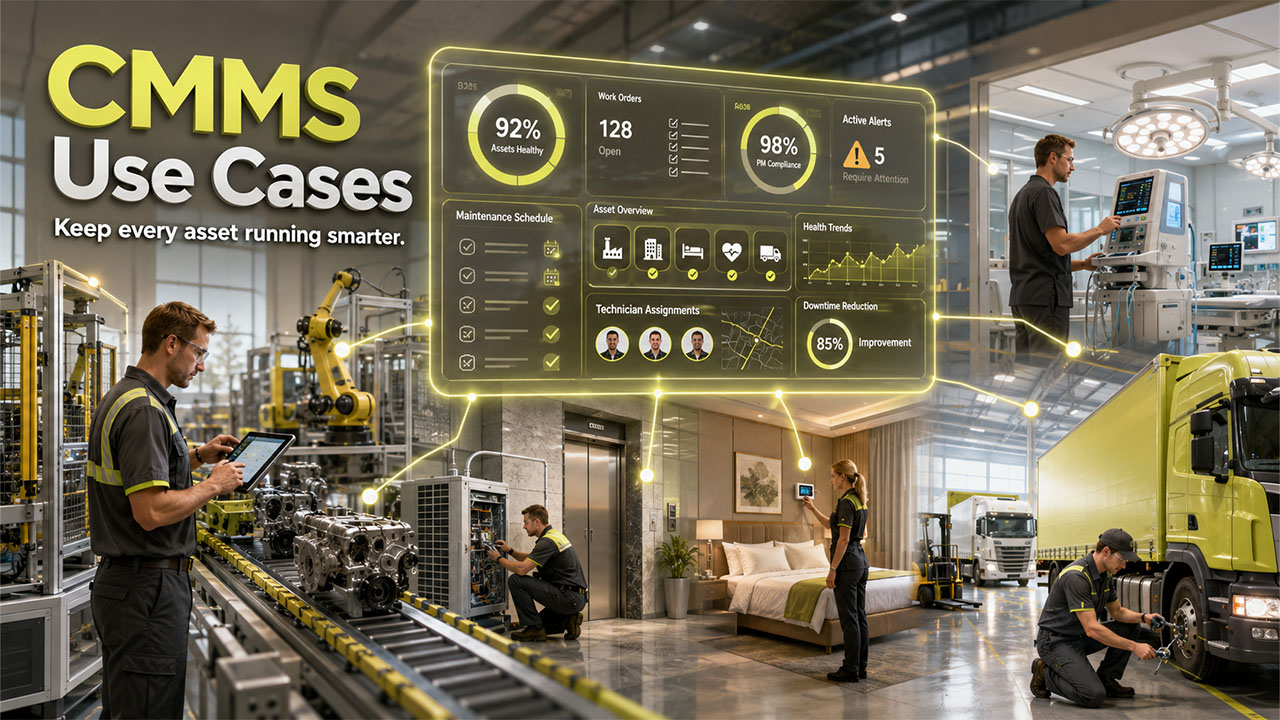

Maintenance has transformed from an activity carried out behind the scenes to an integral component of the overall operational strategy. In businesses where the reliability of assets has a direct bearing on safety, productivity, and profitability, the role of the maintenance team is no longer just to fix things when they break. The expectation is to manage assets, prevent failures, and operate with the least amount of disruption.
In the process of transforming the way organizations handle maintenance, digital technology is emerging as a key enabler. Many organizations are turning to computerized maintenance management systems to impose order on their activities. To better understand its role, let’s examine some real-world CMMS use cases.
Manufacturing: Protecting Production Lines
Manufacturing environments rely heavily on equipment that operates continuously. Production lines, conveyor systems, robotics, and specialized machinery must function without interruption. When one component fails, an entire line can come to a halt.
CMMS platforms help manufacturers organize maintenance tasks and monitor asset performance across the facility. Preventive maintenance schedules are implemented so that the machines are serviced, inspected, and have their parts changed before failure.
The maintenance history of the machines can be monitored, and the technicians can easily recognize the patterns, like the recurring problems with a particular machine.
The manufacturing plants can avoid the stoppages of the machines by switching from repair and maintenance to preventive maintenance.
Facilities Management: Maintaining Complex Buildings
Modern commercial buildings have a variety of systems to maintain. There is the heating, ventilation, and air conditioning system; the elevator system; the lighting system; the plumbing system; the security system; and the fire safety system. All of these systems need to be regularly maintained.
Facilities management organizations use CMMS systems to keep track of the different systems. Each system is given a digital file with its own history of maintenance, inspection, and operation.
Work orders may be generated by the system if there is a need to perform maintenance on the system. The work order is then received by the technician on a mobile device.
For organizations with multiple facilities to manage, asset tracking is important to ensure consistency of maintenance standards.
Hospitality: Protecting Guest ExperiencesHospitality: Protecting Guest Experiences

In hospitality environments, maintenance plays a direct role in customer satisfaction. Guests expect comfortable rooms, working appliances, and safe facilities throughout their stay.
Hotels use CMMS platforms to manage maintenance requests and track equipment performance. If a customer reports a problem to the staff, a work order can be generated immediately and assigned to the concerned technician.
Preventive maintenance is also a good strategy to minimize disruptions. Air conditioning units, elevators, and kitchen equipment are maintained to avoid unexpected breakdowns that might affect customers.
This system enables hotels to address customer concerns more quickly while delivering high standards of service.
Healthcare: Supporting Critical Infrastructure
Hospitals and healthcare facilities require reliable equipment. Medical devices, power systems, ventilation systems, and sanitation systems need to operate without failure to ensure patient safety.
With the help of CMMS technology, healthcare facilities can keep records of each piece of equipment. This includes the calibration of the equipment, inspections, and maintenance records. OSHA also emphasizes that maintaining workplace safety through proper equipment upkeep is essential in high-risk environments like healthcare.
Alert systems help healthcare facilities provide the required maintenance to critical equipment before potential safety hazards arise. This practice can help healthcare facilities adhere to healthcare regulations while maintaining a safe environment.
Organized processes are vital in healthcare facilities where life is at stake.
Transportation and Logistics: Keeping Fleets Moving
Companies involved in transportation often have large fleets of equipment to maintain. Trucks, forklifts, loading equipment, and other warehouse equipment must be kept in working order at all times.
A CMMS system gives transportation fleet managers the ability to monitor the maintenance of the fleet by mileage, engine hours, or other factors. This can help prevent costly repairs by performing routine maintenance before problems arise.
Technicians can also use the system to record repairs, giving a complete history of the maintenance of the equipment.
This gives logistics companies the advantage of keeping their fleets up and running at all times.
Conclusion
The challenges faced by various industries, such as managing assets, preventing failures, and responding to issues when they arise, are all part of a larger need for a more organized approach to maintenance. The environment may vary, ranging from factories to hospitals, but the need for organized maintenance remains constant.
Computerized maintenance management systems offer organizations a framework to manage modern maintenance operations. This is achieved by having a centralized repository of asset data, automating preventive maintenance schedules, and supporting operations teams with mobile-based solutions. This helps organizations become more efficient.
Real-world CMMS use cases offer a glimpse into how digital-based solutions can change the way organizations function. For organizations looking to improve reliability and enhance their industrial frontlines, a CMMS is an essential step towards a more efficient future.
%201.png)

%201.png)

%201.png)