
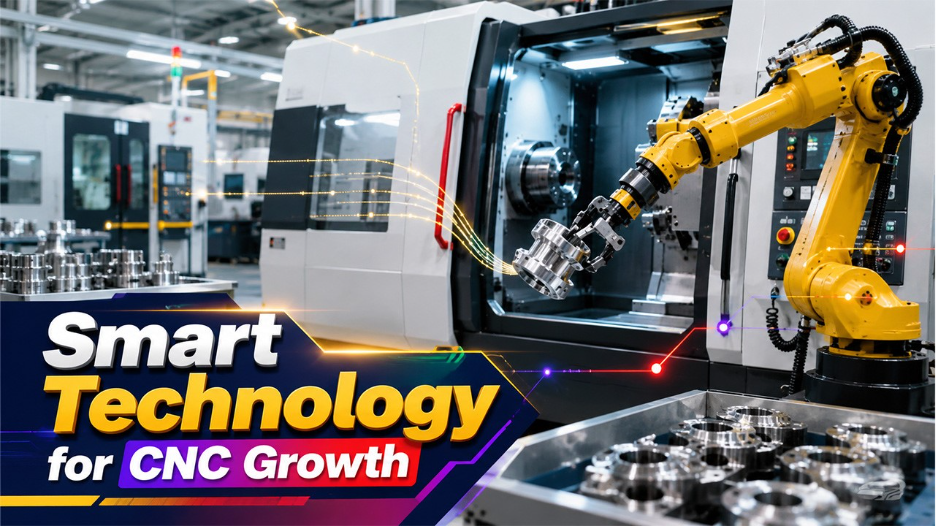

The relationship between business growth and technology is no longer a debatable topic; it is a fact. Across industries, organizations that invest in intelligent tools continuously outperform the ones that depend on outdated processes. For organizations delivering custom CNC machining services, the capability to efficiently operate, and quickly respond to changes, and cater to customers well defines whether the momentum is lost or sustained. Intelligent technology makes sure that each of these things makes goals a lot more achievable, not because it is magical, but because it eliminates friction from processes that would slow businesses down otherwise.
What counts "smart technology" exactly is worth clarifying. The term encompasses a wide range of platforms, including Artificial Intelligence (AI), cloud-based software, data analytics systems, and connected devices that communicate over the network. What combines them is their capability to process data, adjust to circumstances, and perform tasks with minimum manual input. For an evolving business handling lean teams and tighter budgets, such qualities are not luxuries. They are useful advantages that directly translate into costs reduced, time saved, and decisions made with better data.
How Automation Enhances CNC Machining Workflows?
One of the most instant advantages that smart technology delivers is automation; the capability to handle rule-based and routine tasks to software so that people can focus on work that needs human judgement. Appointment scheduling, invoicing, inventory updates, email follow-ups, and payroll processing are all prime examples of tasks that once required hours of manual effort each week. When automated, they take place in the background with little to no intervention from humans.
Research has found that AI platforms help businesses with the same considerable amounts of time, enabling teams to redirect effort toward product development, sales, and customer relationships. Automation also minimizes error rates by making sure that processes follow rules consistently. A cnc machining manufacturer, for instance, depends on automated workflows to monitor job orders, handle materials, and schedule machine time accurately across operations. When software manages processing of data, it enhances consistency and minimizes the mistakes that can happen with manual platforms.
There is a learning curve involved in setting up automation effectively. Tools must be configured, and present workflows must be understood before they can be transferred to software. However, a lot of modern automation tools are designed for accessibility, and initial setup investment generally leads to lasting productivity enhancements.
How Cloud Technology Provides Support for Modern Manufacturing?
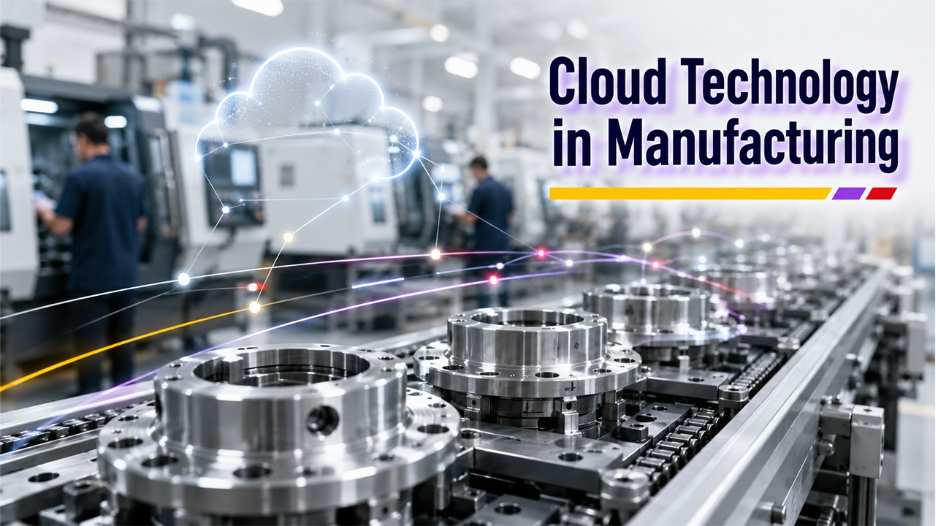
Before cloud computing became accessible widely, SMEs (small-and-medium sized businesses) often faced a tricky trade-off. Owning enterprise-based software infrastructure needed substantial upfront investment in IT and hardware staff. A lot of businesses just could not afford it. This created a substantial competitive gap. Cloud technology removed that barrier entirely.
Cloud-based software is provided over the internet on a subscription basis. This means that a business pays an annual or monthly fee and accesses tools through an app or a browser. There is no need to manage software installations, purchase servers, or worry about version updates. Salesforce research has found that organizations utilizing the cloud grow approximately 26% more quickly and are 21% more profit-making than their competitors.
Cloud platforms also scale easily. CNC machining businesses that go beyond its capacity or take on new clients can extend their software subscriptions to align without re-developing internal infrastructure. That flexibility is specifically crucial for organizations that grow quickly, where the capability to be up to date with internal demand is just as significant as winning new business externally.
Leveraging Information to Enhance CNC Production Planning
Every business makes decisions under uncertainty. The question is how much of that uncertainty can be reduced through better information. Smart technology, particularly analytics tools and AI-assisted reporting, gives growing businesses access to data that was previously the exclusive domain of large enterprises with dedicated research teams.
Modern analytics solutions extract customer behavior, sales figures, website traffic, and operational metrics into a simplified dashboard. A business owner can come to know at a glance which products are selling, which marketing channels have been converting, and where customers drop off in the buying process. Predictive tools take this step further by utilizing historical data to predict future outcomes. A business providing industrial CNC machining can leverage demand prediction to forecast order volumes, allocate machine time accordingly, and minimize idle capacity. Whether a shop manages small CNC machining or handles high CNC machining contracts, effective forecasting avoids expensive misalignments that come from reacting to demand instead of preparing for it.
Customer Experience as a Competitive Edge
Customer expectations considerably shifted. People now anticipate quick responses, tailored services, and continuous experiences across each channel they utilize to interact with a business. Aligning such expectations manually is complex for a lean team, and intelligent technology makes it manageable without adding any headcount.
AI-driven customer service tools, including automated ticketing platforms and chatbots, manage repetitive inquiries around the click. They answer questions related to orders, fix standard issues, and automatically route complex problems to the right person. CRM platforms monitor interaction history, purchase patterns, and preferences for individual customers. A business delivering CNC machining services can leverage a CRM to ensure in-depth records for every client’s specification, preferred lead times, and revision history. This makes each subsequent order more accurate and quicker to fulfil.
Order tracking, quotes, and project updates can all be managed via intelligent solutions that ensure that clients remain informed without needing consistent manual communication. For a custom CNC machining service simultaneously managing numerous active jobs, this level of systematic communication minimizes back-and-forth interactions and ensures reliability that earns repeat business.
Scaling CNC Production with Smart Manufacturing Systems
One of the most-clear signs that intelligent technology is working for a business is when revenue builds quicker than costs. This happens when the tools supporting the business absorb increased workload without requiring equivalent increases in headcount or infrastructure spending.
A business relying entirely on manual processes faces a predictable ceiling. More orders and more complexity typically mean more people are needed to keep up. With smart technology handling routine tasks, the same team can support a larger operation. A shop providing CNC machining parts across different material types, including CNC plastic machining and metals work, faces real complexity on scheduling as the volume grows. Smart manufacturing execution platforms automatically handle such variables, routing jobs to the relevant machines, and flagging conflicts before they can trigger delays. That level of operational coordination is difficult to sustain manually at scale, but straightforward with the right platform in place.
Providers of precision CNC machining and CNC precision machining work face particularly high stakes when it comes to operational accuracy. High precision CNC machining demands close tolerances that leave little room for tooling mix-ups, scheduling errors, or miscommunicated specifications. Intelligent platforms that tether CAD/CAM software with quality inspection records and order management minimize such risks by making sure that each stage remains aligned.
Technology That Scales With You, Not Against You
Intelligent technology has earned its place in a scaling business not by being impressive, but by being valuable. The businesses that leverage the most benefits approach it in a practical way, recognizing specific problems they need to fix and select tools that directly address such problems. CNC machining businesses manage both prototype and CNC machining requests and larger production runs require systems that shift between such modes without manual reconfiguration. Similarly, businesses providing custom CNC machining service to regulated sectors such as aerospace CNC machining must maintain detailed traceability and quality documentation, something smart platforms enforce automatically rather than leaving it to individual staff members.
The most significant transformation is not technological. It is the commitment to stop handling a scaling business with the same platforms and processes that worked when it was smaller. The businesses that ensure that shift early can find themselves to be more resilient, efficient and more effectively positioned to focus on aspects that ensure growth.
%201.png)

%201.png)

%201.png)