


Most vendor lists look the same: X companies, identical capability claims, and no signal on who fits your situation. This one is built differently. Each company has a clear niche, a credibility signal you can verify, and a one-line “best for” so you can scan the list in minutes and know which few deserve a discovery call.
The context matters. Many AI agent projects fail because teams pick the wrong partner, never define ROI, or leave governance to “figure itself out later.” The development partner you choose is the variable that determines whether your agents stay stuck in pilots or become part of how the business runs.
This guide breaks down how to shortlist AI agent development companies in the USA, which 10 vendors are worth a closer look, and what each one is best suited to build.
How This List of Top AI Agent Development Companies in the USA Was Built
Every company here meets three criteria: agents in production with real users and business impact, a credibility signal you can verify (Clutch rating, named client, or documented outcome), and a specific niche instead of a promise to do everything for everyone. All ten serve US clients, and they’re different enough that they shouldn’t end up on the same shortlist.
10 AI Agent Development Companies in the US to Consider
Most vendor evaluations run backwards. You take 20 discovery calls, sit through the same demo 12 times, and spend 3 weeks narrowing a list you could have built in an afternoon with the right information up front.
This list is meant to skip that. The AI agent development companies in the US mentioned here have a clear niche, a credibility signal you can verify, and a one-line “best for” so you can scan the list in 2 minutes and know which 3 are worth a conversation.
LITSLINK: Best for Full-Stack Delivery Without Vendor Fragmentation
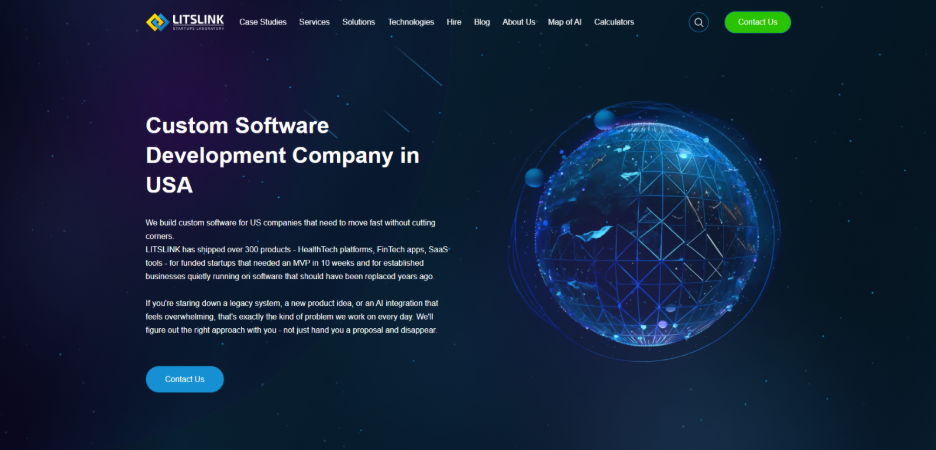
LITSLINK sits at the “one team owns everything” end of the spectrum. Founded in 2014 and headquartered in Palo Alto, CA, they’ve shipped 300+ products for 200+ clients, including more than 80 startups that later secured follow-on funding. Their AI work spans the full stack (agent architecture, LLM integration, machine learning, and cloud infrastructure on AWS, Azure, and GCP) under a single delivery team, rather than a patchwork of subcontractors.
On the results side, one logistics customer cut delivery delays by 30% and saved $1.2M a year after rolling out a LITSLINK-built agent. Chatbot deployments across their portfolio have driven roughly 70% faster response times and about 30% lower operating costs. Dedicated AI teams can be spun up in 48 hours, and most MVPs reach production in around 10 weeks.
- Core services: AI agent development, LLM integration, ML services, AIaaS, cloud deployment
- Industries: HealthTech, FinTech, SaaS, e-learning, real estate
- Best for: Startups and mid-market companies that want a US-based partner to own the entire build, rather than coordinating with separate AI, backend, and infrastructure vendors.
Azumo: Best for Teams That Need Nearshore AI Engineers With Real-Time Collaboration
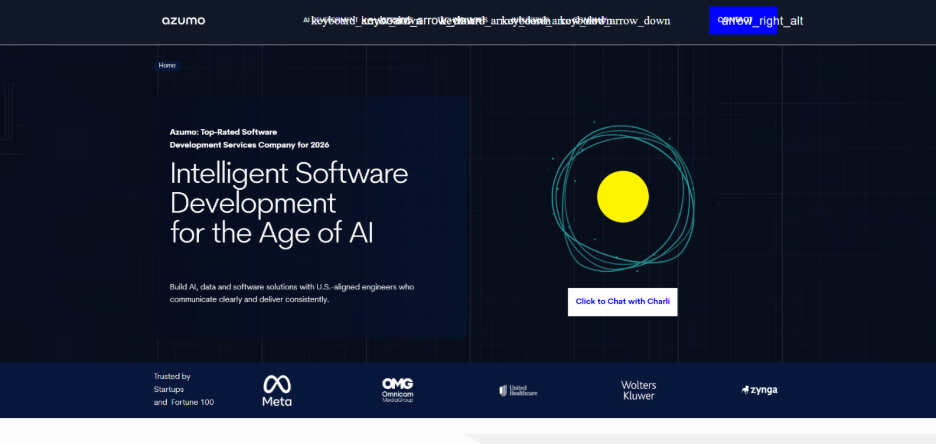
Azumo approaches the problem from a nearshore perspective. Based in Chicago with engineering teams across Latin America, they build AI agents, custom software, and data engineering solutions for US clients who want tight timezone alignment and real-time collaboration. They’re SOC 2 certified, work with 100+ clients, including several Fortune 100 companies, and hold a consistent 5/5 rating on Clutch.
Their positioning is backed by how customers talk about them. Clients highlight direct communication, dependable execution, and a can-do attitude, noting that Azumo keeps critical AI systems stable while helping them move to market faster. Around 90% of new business comes through referrals, which says more than any tagline.
- Core services: AI agent architecture, LLM integration, custom AI workflows, data engineering, cloud solutions
- Industries: Enterprise software, SaaS, financial services, healthcare
- Best for: US companies that want nearshore delivery economics and Latin American time zone overlap without sacrificing communication quality or engineering depth.
HatchWorks AI: Best for Companies That Want ROI Tracked From Day One
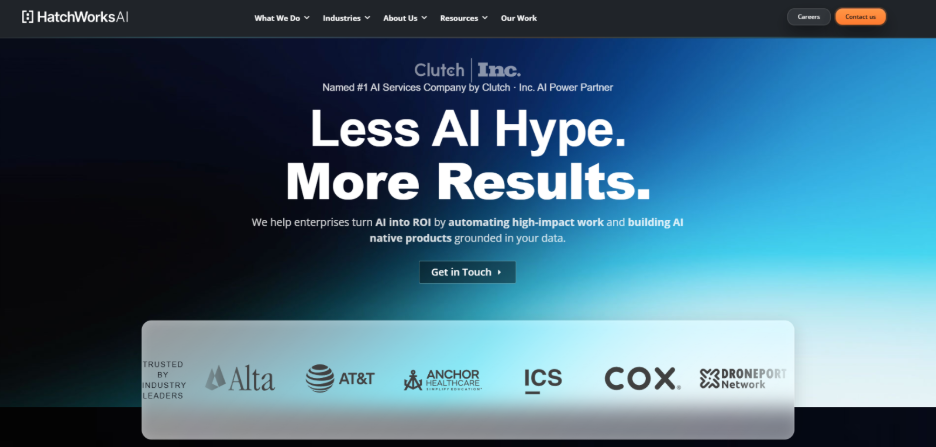
Where many vendors talk about ROI at the end of a project, HatchWorks AI embeds it from the start. The Atlanta-based AI and data transformation firm built its delivery model around GenDD™ (Generative-Driven Development), a methodology that keeps scope, ROI, and compliance visible at every stage instead of surfacing those questions at launch.
Their work stretches from AI agent development and PoC validation to full-cycle AI product builds and data engineering. Minimum engagements start at $25,000+, and they hold partnerships with AWS and Azure. Clients like Cox2M call out “their commitment to get the end product right and to be flexible when the situation required,” paired with a 5/5 Clutch record.
- Core services: AI agent development, PoC validation, full-cycle AI product development, data engineering, AI strategy
- Industries: Enterprise, healthcare, logistics, SaaS
- Best for: Companies that have been burned by fuzzy timelines and unmeasured outcomes, and now want ROI metrics and production readiness treated as core requirements from week one.
Vention: Best for Companies That Need an AI Engineering Team Assembled Fast
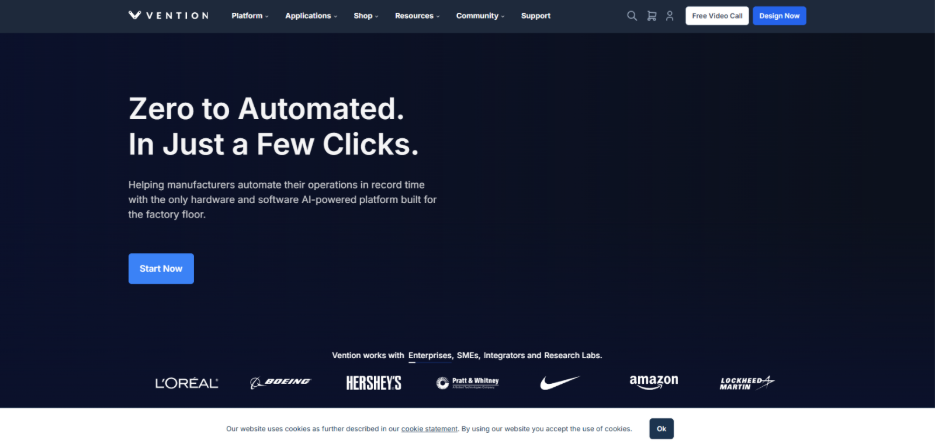
Vention solves a different problem: the speed at which the team itself is built. From its New York base, the company runs an on-demand engineering platform with 2,000+ pre-vetted engineers. Instead of classic outsourcing, they assemble dedicated squads in days. .
They hold a 4.9/5 Clutch rating across 50+ reviews and count fintech, healthtech, and enterprise SaaS companies among their clients, particularly those whose internal hiring pipeline can’t keep up with the demand for AI work.
- Core services: AI agent development, team assembly, LLM integration, ML engineering, DevOps
- Industries: FinTech, HealthTech, enterprise SaaS, e-commerce
- Best for: Funded companies that lack internal AI engineering capacity and need a production-ready team on the ground quickly, without waiting on lengthy hiring or procurement cycles.
Itransition: Best for Enterprises With Complex Legacy Integration Requirements
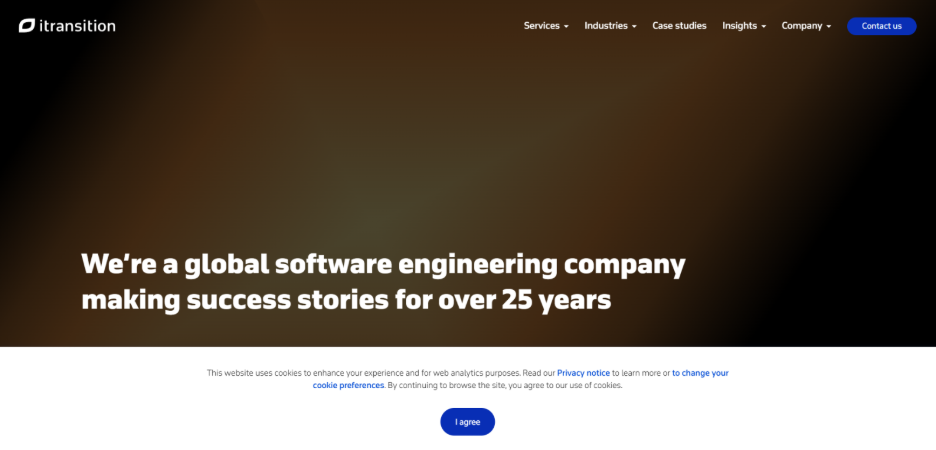
Itransition is built to handle complexities of enterprise. It’s headquarter is in Denver with 2,200+ engineers and 25+ years of delivery, they appear regularly in the IAOP Global Outsourcing 100 and have delivered more than 1,500 projects for Fortune 500 clients. Their AI agent practice leans heavily on integration work: tying agents into legacy ERPs, CRMs, data warehouses, and operational platforms that many AI-first boutiques avoid. Healthcare organizations exploring AI agents for patient care will find Itransition's depth in legacy system connectivity particularly relevant, given how fragmented most hospital tech stacks tend to be.
With hourly rates in the $25–$49 range, they occupy a rare space: enterprise-scale capability at relatively accessible pricing.
- Core services: AI agent development, enterprise system integration, LLM orchestration, workflow automation, legacy connectivity
- Industries: Finance, healthcare, manufacturing, retail, logistics
- Best for: Large enterprises where the hardest part is not building the agent, but safely wiring it into ten or more existing systems without disrupting day-to-day operations.
Chetu: Best for Niche Verticals Where Most AI Firms Have No Domain Experience
Chetu is the domain specialist on this list. Based in Plantation, FL, and operating since 2000, the company has 2,800+ developers and documented experience across more than 40 industry verticals. Hospitality, legal, real estate, and insurance (the kinds of sectors where many AI shops have only surface-level knowledge) are standard territory for them.
Their AI agent projects pull that domain familiarity straight into the architecture: legal agents that understand document structures and privilege, hospitality agents that speak booking and PMS integrations natively. They’re a Clutch Global Leader with a 4.7/5 rating.
- Core services: Custom AI agent development, LLM integration, domain-specific workflow automation, system integration
- Industries: Legal, hospitality, real estate, insurance, HR, retail, and 35+ more
- Best for: Companies in niche or highly specific verticals where a generalist AI vendor would need weeks of paid discovery just to learn the basics of the domain.
Turing: Best for Companies Building Internal AI Capability
Turing is not a classic services firm; it’s a talent platform. Headquartered in Palo Alto and backed by Reid Hoffman, Turing runs an AI-powered marketplace of 3M+ pre-vetted engineers. Instead of owning your AI projects end-to-end, they embed senior AI engineers, LLM specialists, and MLOps talent directly into your team so that capability accumulates in-house.
Customers like Dell, Johnson & Johnson, and Disney use Turing to grow internal AI engineering capacity without waiting out a full hiring cycle.
- Core services: AI engineering talent, LLM integration specialists, agentic system development, MLOps, team augmentation
- Industries: Enterprise technology, automotive, healthcare, media, financial services
- Best for: Organizations that want AI agents to become a core internal competency, not a permanently outsourced function, and need senior talent in-seat quickly.
Simform: Best for SaaS and Product Companies Adding Agentic Features to an Existing Platform
Simform focuses on layering agents into existing products. Based in Chandler, AZ, with 1,000+ engineers, they hold Advanced Partner status with AWS, Google Cloud, and Microsoft. Such a triple usually signals deep experience with cloud deployments. Their AI practice is oriented toward integrating agentic functionality into existing SaaS platforms instead of pushing full rebuilds.
With a 4.9/5 rating on Clutch across 120+ reviews, they tend to show up when a product team wants to add AI-driven features while keeping the current architecture intact.
- Core services: AI agent integration, cloud-native deployment, LLM integration, product engineering, DevOps
- Industries: SaaS, FinTech, HealthTech, retail, logistics
- Best for: Product and SaaS companies that need to bolt on AI agent features to what’s already working, without taking on a ground-up replatform or building an in-house infra team.
10Pearls: Best for Enterprises Deploying AI Agents Across Multiple Departments Simultaneously
10Pearls plays at the enterprise program level. Headquartered in Vienna, VA, with 1,000–5,000 engineers, they’ve spent 20+ years delivering digital and AI projects for Fortune 500 and US government clients. Their AI work spans customer service, HR, finance, and operations—the cross-functional footprint that matters when an organization wants agents to live across multiple departments simultaneously.
They are a Clutch Global Leader and frequently operate in highly regulated sectors, including healthcare and the public sector.
- Core services: Enterprise AI agent development, multi-function deployment, AI transformation programs, system integration, compliance-aligned delivery
- Industries: Healthcare, government, financial services, retail, enterprise technology
- Best for: Enterprises planning a coordinated, multi-department AI rollout rather than siloed pilots that take years to reach full coverage.
RaftLabs: Best for Media Tech, HealthTech, and MarTech Startups That Need to Move Fast
RaftLabs is the startup-side counterweight in this group. It’s a product-focused AI development agency with a founder-led delivery model and a track record of getting production systems live in weeks instead of quarters. Clients include Aldi, Vodafone, and Energia, and their sweet spot is real-time AI systems, conversational agents, and loyalty or engagement platforms for media, health, and marketing technology.
With a 4.9/5 Clutch rating, they lean into fast iteration, close collaboration, and shipping something that works before adding layers of process.
- Core services: AI agent development, conversational AI, real-time systems, mobile and web AI integration, rapid MVP delivery
- Industries: Media tech, HealthTech, MarTech, e-commerce, loyalty platforms
- Best for: Startups and growth-stage teams in media, health, or marketing tech that need a production-ready AI agent on a startup timeline, with founders involved enough that the work feels like a shared product.
Quick Comparison of the Top AI Agent Development Companies for The USA
The entries above explain what each company builds and who they’re built for. This table is for the moment when you’re ready to narrow the list. It provides a single view of the signals that matter at the shortlisting stage: location, pricing, certifications, delivery speed, and the one thing that makes each firm worth a call.
| Company | HQ | Best For | Rate | Key Strength |
| LITSLINK | Palo Alto, CA | Full-stack, no handoffs | $50–$99/hr | One team, from architecture to deployment |
| Azumo | Chicago, IL | Nearshore US-aligned teams | $25–$49/hr | SOC 2, real-time collaboration |
| HatchWorks AI | Atlanta, GA | ROI-tracked delivery | $50–$99/hr | GenDD™, production-first methodology |
| Vention | New York, NY | Fast team assembly | $50–$99/hr | 2,000+ pre-vetted engineers |
| Itransition | Denver, CO | Legacy system integration | $25–$49/hr | 2,200+ engineers, 25+ years |
| Chetu | Plantation, FL | Niche industry verticals | Undisclosed | 40+ verified industry domains |
| Turing | Palo Alto, CA | Internal capability building | $50–$99/hr | 3M+ verified engineers globally |
| Simform | Chandler, AZ | Existing platform augmentation | $25–$49/hr | AWS + Google + Microsoft partner |
| 10Pearls | Vienna, VA | Multi-department enterprise | $25–$49/hr | Cross-function deployment experience |
| RaftLabs | US market | Fast-moving startups | $25–$49/hr | Weeks-not-months delivery track record |
The Shortlist Is the Strategy
Most AI agent projects that fail don’t do this at the build stage. They fail earlier, at vendor selection. Wrong partner, scope, and idea of what “production-ready” means. The ten companies above were chosen because each has a clear niche, a verified track record, and enough difference that they shouldn’t all end up on the same shortlist.
From here, the move is simple. Pick the two or three that fit your industry, budget, and timeline. Then ask each of them the same thing: show me an agent that’s live in production, tell me what broke after launch, and explain how you fixed it. Their answers will tell you more than any capabilities deck ever could.
%201.png)

%201.png)

%201.png)