



Having a brilliant app idea is no longer enough to guarantee success. The app market is crowded, and users are highly selective they download only those apps that solve real problems efficiently and provide a smooth experience. Taking your app idea to product requires a roadmap to take you through validating the idea, building, launching, and scaling the app. All these steps are important in determining the user pain points and making your unique value proposition, as well as developing a monetization strategy and improving user experience. With a well-organized process, your chances of succeeding with your app are higher than it being ignored. By collaborating with a custom app development company, your idea can become a finished and ready-to-market product, saving time and ensuring quality throughout.
What Problem Is Your App Solving?
A successful app is the one that addresses the actual problem that users face. It is important to ask a few questions before you move ahead: what problems your app solves, who faces them most often and how they handle it without having any good option. Users are most likely to engage with apps that fix recurring problems they've been constantly facing. From productivity tools to health trackers, the best app ideas for developers always starts with a problem worth solving.
You should also consider the size and scope of the potential audience. Apps are designed so that they can meet the daily demands of busy people such as productivity, fitness for health-conscious consumers, or communication for teams who have a better chance of staying relevant and growing. When you understand your audience, you are more likely to build something sustainable and profitable.
Last but not least, is a differentiation. Make sure your app is unique and different from what already exists in the market. It can have a unique and useful feature, a quicker experience, or new solutions to fix a common problem. When you and your app stand out in a market which is already crawling with many similar apps, it attracts users, foster trust, and supports long-term success.
How Do You Validate Your App Idea?
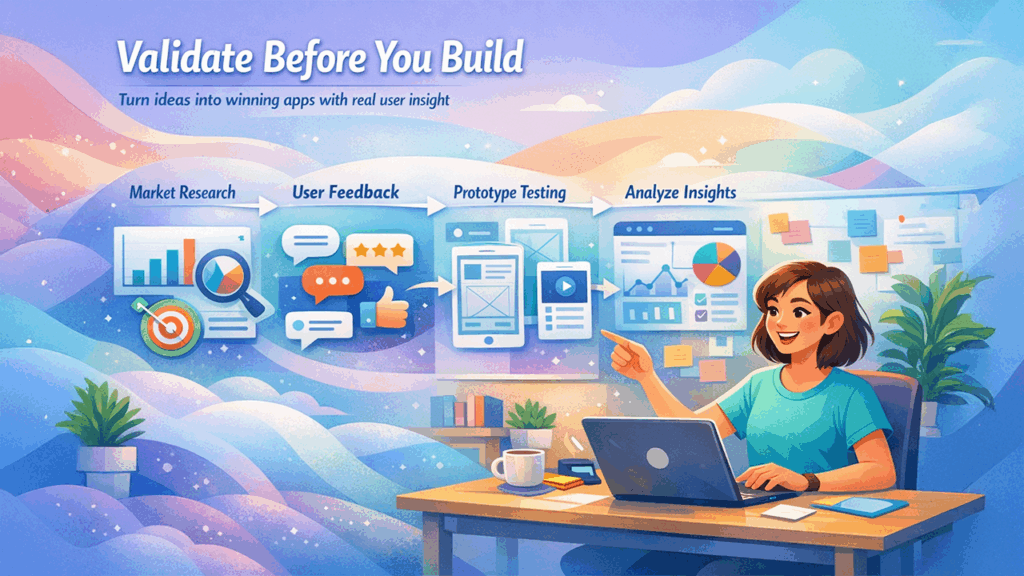
Before taking your app idea to product, it's essential to validate your idea. Validation ensures that there is actual demand, prevents wasted effort, and ensures your solution addresses a genuine user need.
Market & Competitor Analysis
You can start your research by comparing different applications available in the market. Look for the features that are missing, analyze what people like and dislike by examining reviews and feedback from users, ratings, and comments.
Find out what is absent in the current products and track those trends that highlight the changing preferences and growing demands of users. Use this opportunity to differentiate and offer something which is a better solution or unique that sets you apart from your competitors.
Engage Real Users
Conduct interviews, survey, or actively participate in forums where your target audience is active. It is critical to stay in touch with potential users and analyze their preferences.
Hearing their feedback will provide information on their needs, frustrations, and expectations. By understanding their perspective, you can improve your concept to build an app that will resonate and address a problem that matters.
Test Interest With a Prototype or Landing Page
You can test whether the users will be interested in the app or not by developing a prototype or a simple landing page. This helps you gauge potential value before you fully develop the app.
Signup forms, mockups, or early-access waitlists are true indicators of user demand. When users are ready to engage or sign up in advance before the launch of the app, it means that your idea is gaining momentum and it attracts intended users.
Analyze Metrics and Feedback
Once you collect user input and initial signups, you should assess the outcome.
Look for patterns in responses, interest levels, and involvement to understand which features are essential. With this step, you can narrow down your app's idea and shift your focus on making improvements before building the minimum viable product (MVP).
How Do You Define Your Unique Value Proposition (UVP)?
A strong and unique value proposition clearly outlines who will find your app useful, what problems it will address and why it’s a better alternative than already existing options. It must focus on specific benefits that are relevant to your target group rather than being generic. Defining your UVP makes your users immediately know why they need to use your app instead of your competitors and sets the foundation for your messaging and marketing.
Your UVP must also reach out to the users on an emotional level. Highlight the benefits that users will experience such as saving time, reducing stress, or providing confidence. It is essential that users feel an emotional connection or benefit to increase the rate of engagement. This makes them stay loyal to your app, which in turn will help your app succeed in this growing competitive market.
How Should Your App Make Money?
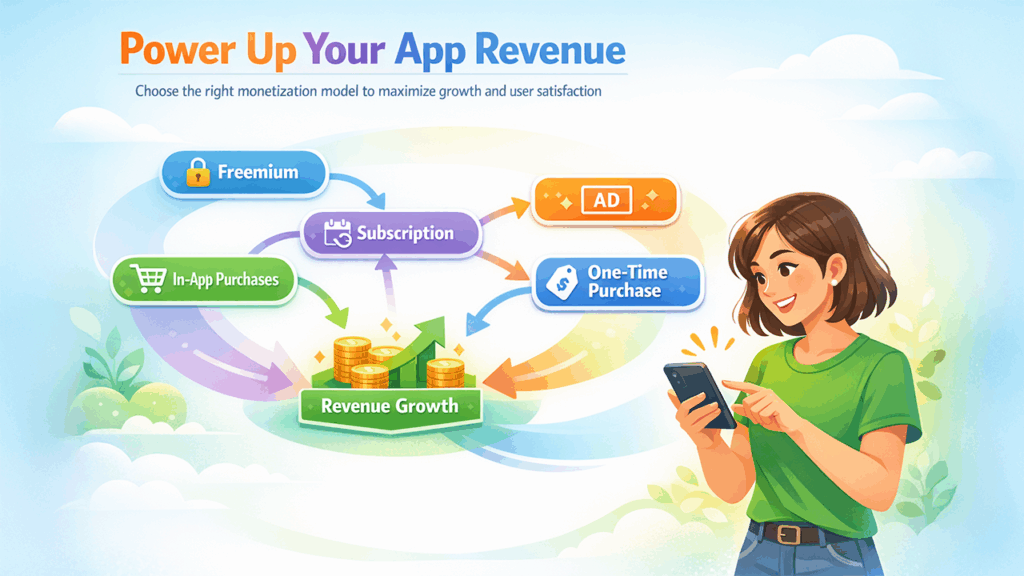
Choosing how your app makes money is a key milestone in moving your app idea to product success. Your model should match the users' expectations and what the app offers to set a realistic image. This helps you earn revenue without hurting the experience.
Freemium: Provide free basic functionality and then charge for upgrades or advanced features. Trying out the app before paying helps build trust among users and increases adoption rates.
Subscription: Charge a monthly or annual payment for premium features or content. This is most effective when your application provides value on a regular basis.
In-app purchase: Allows users to purchase additional features, content, or upgrades within the app. This is especially powerful when combined with custom e-commerce app development, making it suitable for games, lifestyle applications, and tools with add-ons.
Ads: Earn money from ads shown to users. This suits free apps with a large audience. Keep ads from disrupting the experience.
One-time purchase: Charge a single upfront fee for full access. This is suitable for apps that can provide full value without continuous updates.
Match strategy to value: Pick a model that fits your app’s purpose and user behavior. The right choice supports revenue, user satisfaction, and long-term retention.
The selection of the right revenue model is important to achieve long-term success. When your strategy suits your users and your product, you are able to increase revenue while keeping users happy.
What Should Your Launch Strategy Include?
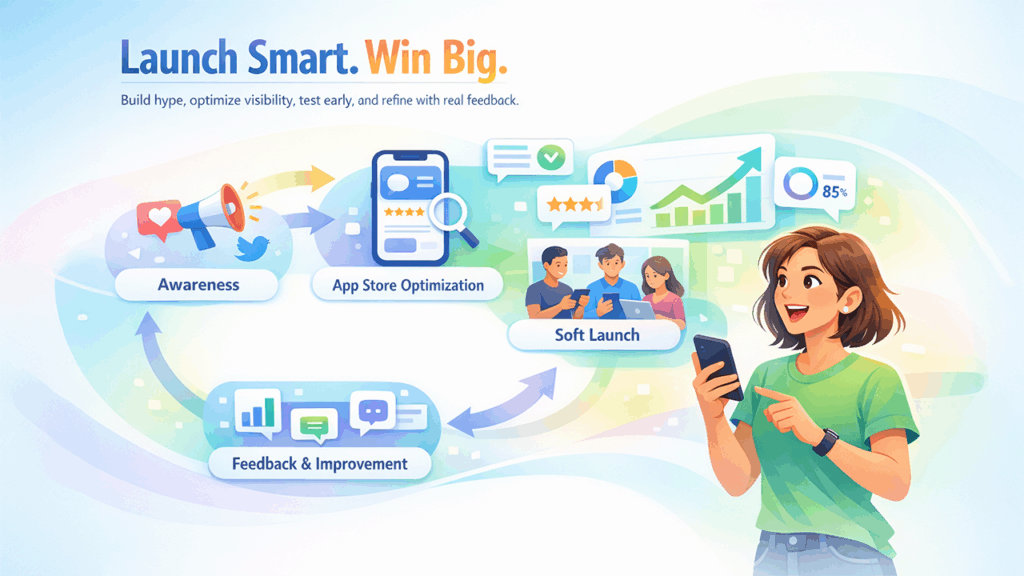
A good and well-thought launch plan gives your app a kick start. It builds interest early, boosts the visibility of your app in stores, and allows you to collect feedback before going big.
1- Build awareness early
Start building interest before launch, using landing pages, social media teasers, and beta invites to attract potential users.
2- Optimize your app store presence
Make your listing clear and appealing with strong titles, relevant keywords, and quality screenshots or videos. This helps people find your app and download it.
3- Start with a soft launch
Release your app to a small group first, it helps you catch bugs, collect feedback, and improve features before a full release.
4- Collect and act on early feedback
Listen to early users, check reviews, analytics, and how people use the app. Use this to fix issues and improve the experience before launch.
How Do You Scale Growth and Marketing?
Scaling your app requires both technical readiness and strategic marketing. It’s about preparing your infrastructure for growth, expanding your reach, and increasing revenue while keeping users engaged.
- Upgrade your backend infrastructure to handle a growing number of users. Optimized servers, databases and APIs prevent downtime or slow performance as traffic increases, ensuring a smooth user experience.
- Market your app in various channels to access a larger audience. Pay attention to app store optimization to increase visibility, social media campaigns to attract users, influencer partnerships to establish credibility, and content marketing to educate users and generate organic traffic.
- Find new methods to increase revenue as your user base grows. Experiment with pricing levels, introduce high-value features, and form partnerships that provide additional value while boosting profitability.
Scaling growth and marketing is about attracting more users, delivering a reliable experience, and maximizing revenue opportunities. By improving infrastructure, leveraging multiple marketing channels, and refining monetization strategies, your app can grow sustainably and achieve long-term success.
Conclusion
Transforming your app idea to product that generates revenue takes a systematic approach and strategy. The keys to success are to determine actual issues, test the idea among users, and stand out with a unique value proposition. Building a focused MVP allows for early testing and feedback, while selecting the right monetization model ensures sustainable revenue. Your app will be able to gain traction and scale by providing a powerful launch plan, continuous improvements, and a multi-channel marketing approach. Engaging users, fostering community, and providing responsive support further strengthen loyalty and retention. By following this roadmap, your app can become a product that provides value, delights users, and achieves long-term success.
%201.png)

%201.png)

%201.png)