

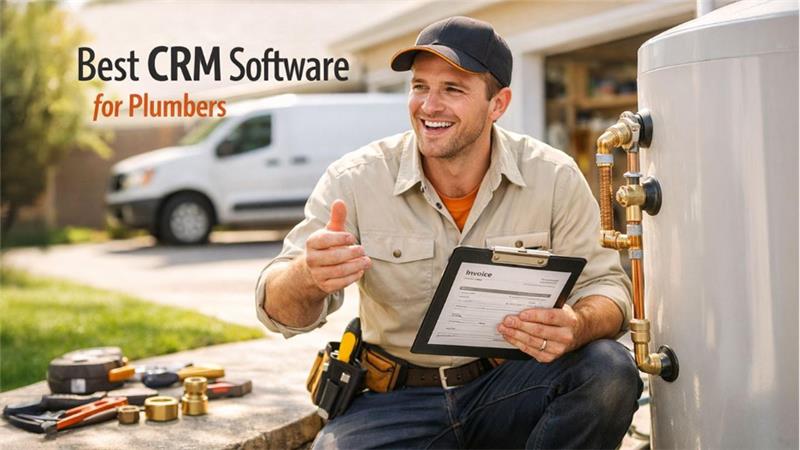

You're wrapping up a water heater install when your phone rings. It's Mrs. Johnson asking about that estimate you promised three days ago. You put her on hold to take another call – a new customer with a burst pipe emergency. Meanwhile, you still haven't sent estimates for last week's jobs, and you're pretty sure you double-booked yourself for tomorrow morning.
Sound familiar?
Here's the thing: your brain isn't meant to be your CRM. It exists specifically to handle the chaos that comes with running a plumbing business – tracking customer data, managing job details, sending invoices, and keeping your schedule straight.
This guide breaks down the seven best CRM solutions for plumbers in 2026. We'll cover what each one actually does, what it costs, and who it's best for. Whether you're a solo professional or running a crew, there's something here that'll work for you.
What is plumbing CRM software?
At its core, Customer Relationship Management software is your digital command center. Instead of sticky notes, scattered texts, and that notebook you keep losing, a CRM puts all your customer information, job history, and communication in one place.
But here's what separates good plumbing CRMs from generic business tools: it's built for how plumbing contractors actually work. That means dispatch management to assign jobs, mobile apps to access everything on-site, invoice creation at the customer's house, and QuickBooks integration with your accounting software.
The best plumbing service software doesn't just organize customer relationships – it helps automate the repetitive stuff. Appointment reminders, follow-up emails, and workflow management happen automatically.
The result? Better customer experience, more productivity, and more revenue while you spend less time on paperwork.
The 7 best CRM solutions for plumbers
1. ServiceTitan
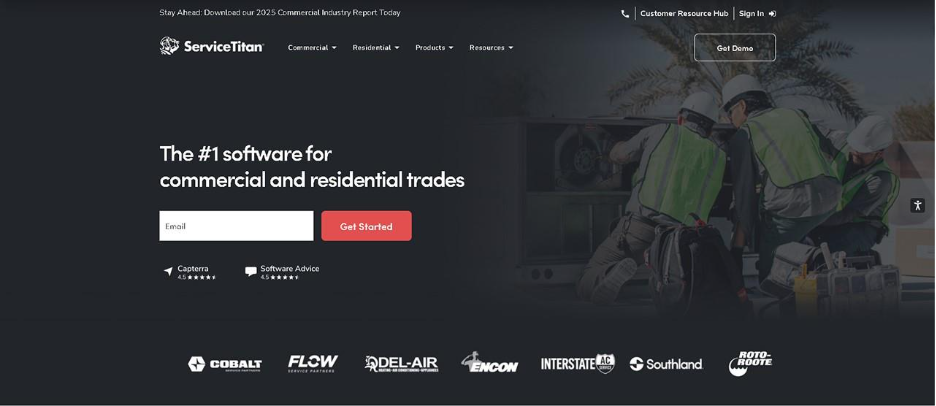
If you're running a plumbing operation with multiple trucks and crews, ServiceTitan is the enterprise-level powerhouse built for businesses like yours.
Key features:
- Advanced dispatch system with drag and drop scheduling that shows your whole operation at a glance
- Comprehensive customer data tracking with complete job history and equipment information
- Revenue analytics and reporting that actually help you make business decisions
- Marketing automation tools for customer communication and follow-ups
- Pricebook integration so your techs quote consistently
Pricing: Starts around $300+/month (pricing varies significantly based on company size and features)
Best for: Established companies with 5+ trucks that need serious field service management and want detailed visibility into their operations.
The catch: It's powerful, but that comes with complexity. The learning curve is real, and smaller operations might find it overkill. Also, the cost adds up quickly as you scale.
2. Jobber
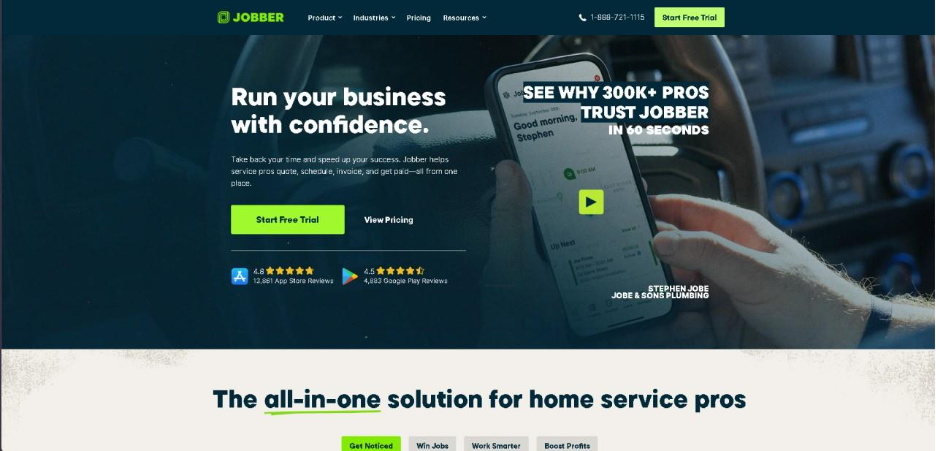
Jobber hits a sweet spot-powerful enough to streamline operations without overwhelming contractors with features they will never use.
Key features:
- Clean dispatch and scheduling with ease of job assignment to your crew
- Client hub where customers can approve quotes and pay invoices
- Automate customer communications for appointment reminders and follow-ups.
- GPS and time tracking for crew management
Pricing: From $49.00/month for one user; price increases with team size
Best for: Plumbing contractors with 1-10 employees who need something reliable that won't require a software engineering degree to figure out.
The catch: The reporting and analytics feel a bit basic compared to more robust CRM solutions. Advanced inventory management and complex workflow automation isn't its cup of tea. For most plumbing businesses, though, it covers the essentials.
3. Tofu

Tofu plumbing software was developed for contractors and the type of person that lives on their phone and needs their money right away.
- Create schedules for jobs and service visits with customer information, comments, and pictures
- Develop local estimates and then create invoices based upon them
- Keep an actual price book of services you regularly provide to price future projects
- Invoicing and estimating via email, SMS, or link
- Store client information, work history, images, and text in a CRM system.
- Work offline on iPhone, Android, or tablet, then sync when online
- Handling card and digital payments directly at site
Pricing: Trial version is complimentary, paid version starts at $9/week
Ideal For: Freelance professionals and small teams (1-10 people) who want hassle-free billing and payment processing with minimal functionality that will not be utilized anyway.
The catch: Not suitable for large-scale operations requiring a large number of dispatches or teams of 20+ requiring heavy-duty field service management functionality involving multiple dispatch boards.
4. Housecall Pro
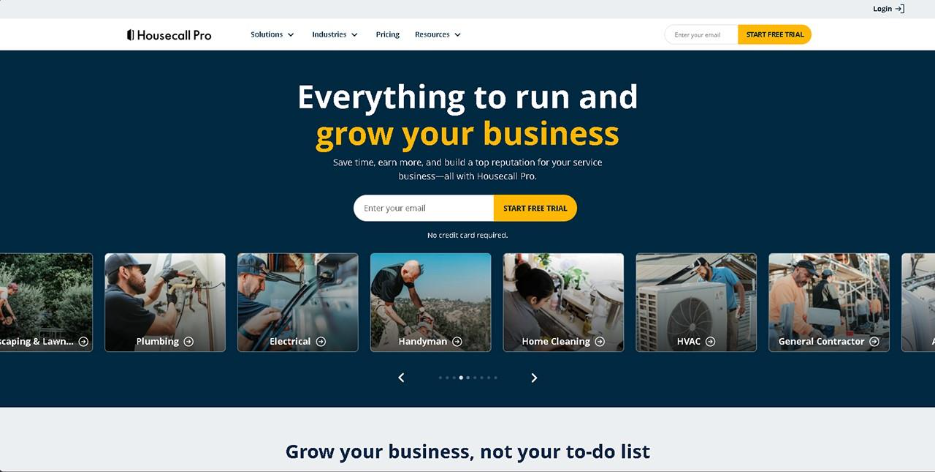
Housecall Pro gets contractors up and running fast. If the thought of "implementing software" sounds like a headache, this is the tool to consider.
Key features:
- Intuitive mobile application your crew will actually use
- Automating customer communications: email and SMS
- Scheduling online by the customers themselves
- Invoice and payment processing through multiple payment means.
- Easy-to-understand dispatch board
Pricing: From $49 per user per month
Ideal for: Plumbing contractors who are looking for something that will work right out of the box without having to spend several hours learning and setting everything up. Good if you are coming from paper and/or a simple spreadsheet program.
Drawbacks: The reporting features are a tad simplistic compared to some of the better CRM packages. Secondly, costs can increase if additional team members are included.
5. FieldEdge
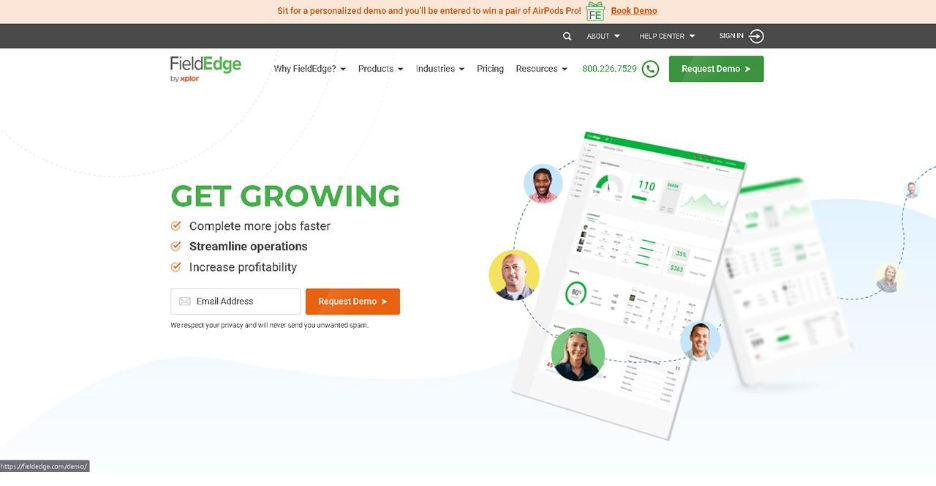
If dispatch is your biggest headache, trying to coordinate multiple jobs while keeping track of where everyone is and managing the emergency calls, FieldEdge was built to solve that exact problem.
Key features:
- Advanced Dispatch Console-real-time visibility into the entire operation
- GPS tracking, so you know exactly where your crew is and can assign the closest plumber.
- Customer history and job details accessible from anywhere
- Stockroom management for parts and equipment.
- Mobile app for techs to access job information and close out work orders
Pricing: Custom pricing based on company size-usually higher-end.
Best for: Companies with several technicians who require advanced dispatch and full field service management.
The catch: More complex than simpler CRM options. You'll need to invest time in setup and training. The cost reflects the robust feature set – probably overkill if you're a one-person operation.
6. Workiz

Workiz focuses on using intelligent automation to get rid of repetitive chores. This CRM aids in stopping repetitive tasks.
Key features:
- Workflow automation that manages follow-ups and regular communication
- Drag-and-drop functionality for intelligent scheduling and dispatch
- Automated creation of invoices depending on jobs finished
- Self-service booking and payment site for customers
- SMS and email marketing solutions to keep in contact with clients
Pricing: For small teams, it starts at about $95 per month.
Ideal for: Professionals looking to eliminate manual labor and streamline their processes. A good choice if you want to use improved communication to increase productivity and customer satisfaction.
The catch: Although the automation features are strong, they require some time to fully configure. To reap the maximum benefits, you must consider workflow up front.
7. Joblogic
If you stock significant inventory or need detailed analytics on your plumbing business, Joblogic gives that granular data visibility.
Key features:
- Thorough inventory management for supplies and parts
- Analytics for job costs and profitability to determine what generates revenue
- Field workers can record supplies used and time spent using a mobile app.
- Customer connection management with a thorough background
- Dashboards for analytics and reporting that are customizable
Pricing: Custom pricing (usually in the middle to upper range)
Ideal for: Companies that require meticulous inventory tracking and seek in-depth information on job profitability and business performance.
The drawback: Many analytics and data features that may not be necessary for smaller businesses. Only if such in-depth reports are used will it be worthwhile.
Plumbing CRM pricing: What to expect
Let's talk about money now. Usually, subscription pricing is used for such software, with monthly or yearly fees per user.
Basic features that are affordable for lone plumbers or very small crews start at about $50 to $100 per month. These may restrict sophisticated features or interconnections, but they typically cover essential tasks like scheduling, billing, and client administration.
Capabilities like dispatch management, automation, deeper analytics, and improved integration possibilities are added by mid-range systems ($100–300/month). The majority of small to mid-sized plumbing businesses end up here.
Depending on features and team size, enterprise systems can cost between $300 and $1,000 or more each month. You are paying for enhanced reporting, complex operation support, and sophisticated field service management.
What influences the cost? The most important factor is the quantity of users; most CRM systems charge per seat. Costs are further increased by advanced capabilities like inventory management, marketing automation, and specialized connectors.
Most tools offer a free trial – use it. Test the software with your actual workflow for a couple weeks before committing.
How to choose the right CRM for a plumbing business
Here's how to actually make this decision instead of just getting paralyzed by options:
Start with your business size. Solo plumber? You need something simple and mobile-friendly – complexity will just slow you down. Running a crew of 5-10? You need dispatch and team management features. Larger plumbing company? You need the full field service management suite with advanced analytics.
Identify your biggest pain point. What's actually killing you right now?Strong scheduling and GPS capabilities should be given top priority if dispatch is chaotic and you don't know where your staff is. Pay attention to invoice and payment automation if it's pursuing payments. If customer data is scattered everywhere, emphasize the customer management core features. Pick the tool that solves your biggest problem first.
Be honest about your tech comfort level. Some love tech and can figure out complex systems. Others just want something that works without thinking about it. Neither is wrong – but choose software that matches your reality. A powerful CRM you never fully implement doesn't help anyone. The learning curve matters more than the feature list.
Think about growth. Where do you want your business to be in two years? If you're planning to add crew members, make sure the CRM scales reasonably. If you're happy staying small, don't pay for enterprise features you'll never use.
Check what integrates with your existing tools. Already use QuickBooks? Make sure it connects cleanly. Have a payment processor you like? Verify compatibility. The goal is to streamline your workflow, not add more disconnected systems.
Use those free trials. This isn't a decision you should make from a website. Try 2-3 options that seem promising. Use them for real jobs with real customers for at least a week. You'll quickly figure out what feels right and what's annoying.
The best plumbing CRM for your business is the one you'll actually use every day. Pick the tool that solves your problems without creating new ones.
Beyond CRM: Growing Your Plumbing Business
While the right CRM software helps you manage existing customers and streamline operations, growing your plumbing business also requires attracting new customers. Many successful plumbing contractors complement their CRM investment with strategic marketing efforts. If you're looking to increase your call volume and book more jobs, consider exploring The Benefits of Plumber's Pay-per-click (PPC) Company to understand how targeted advertising can fill your pipeline with qualified leads that your CRM can then help you convert and retain.
Conclusion
The right plumbing software transforms how you run your business. Instead of juggling phone calls, lost paperwork, and mental notes, you get a system that handles customer relationships, streamlines dispatch, automates invoicing, and actually improves customer experience.
Don't overthink this. Pick 2-3 that seem like a fit, sign up for the free trials, and use them for real work. Start with a free trial this week and see the difference for yourself.
%201.png)

%201.png)

%201.png)