





Every business owner watches operational costs climb while profit margins shrink. You hire more people, upgrade software, implement new policies—yet inefficiencies persist. The problem often lies not in your team's capabilities but in the processes themselves.
Manual workflows consume disproportionate time and money. Employees spend hours on tasks that generate no strategic value. Errors multiply as information passes through multiple hands. Opportunities slip away while approvals sit in email queues.
Business automation transforms how work flows through your organization. Rather than adding headcount, you redesign processes to eliminate bottlenecks and reduce human error. The result: lower costs, faster execution, and teams focused on growth.
Customer Onboarding That Takes Weeks Instead of Days
New customers want immediate access to your product or service. Yet many companies put them through lengthy processes involving multiple forms, manual verification, and sequential approvals from different departments.

Each delay creates frustration and increases churn risk. Meanwhile, your sales team has already invested time closing the deal, making each lost customer especially costly.
Automated onboarding workflows eliminate these delays. When a customer signs up, the system instantly triggers verification, creates accounts, assigns access levels, and notifies the right team members. What previously took two weeks now completes in hours.
Expense Approval Chains That Paralyze Operations
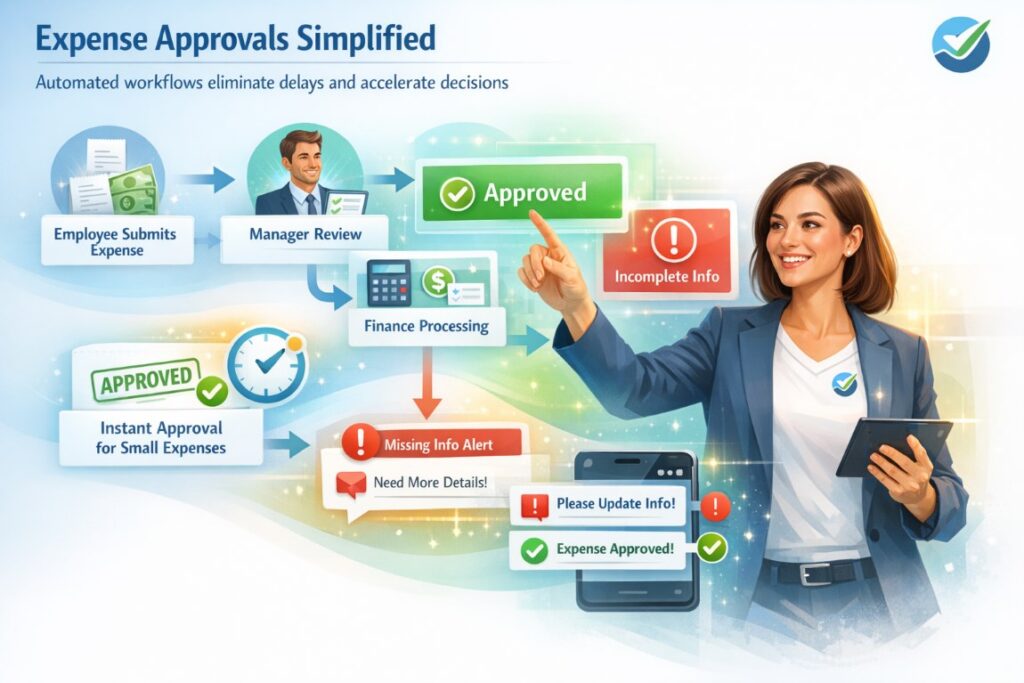
Employees submit expense reports that sit in managers' inboxes for days. Managers forward them to finance, where they wait in another queue. Simple reimbursements take weeks, frustrating staff and tying up resources.
This inefficiency extends to vendor payments, budget approvals, and procurement decisions. Each bottleneck delays operations and strains relationships with employees and partners.
Automated approval workflows route requests instantly based on predefined rules. Expenses under certain thresholds auto-approve. Missing information triggers automatic requests. Managers receive mobile notifications enabling quick decisions anywhere, cutting cycle time by 70-80%.
Lead Management That Loses Hot Prospects
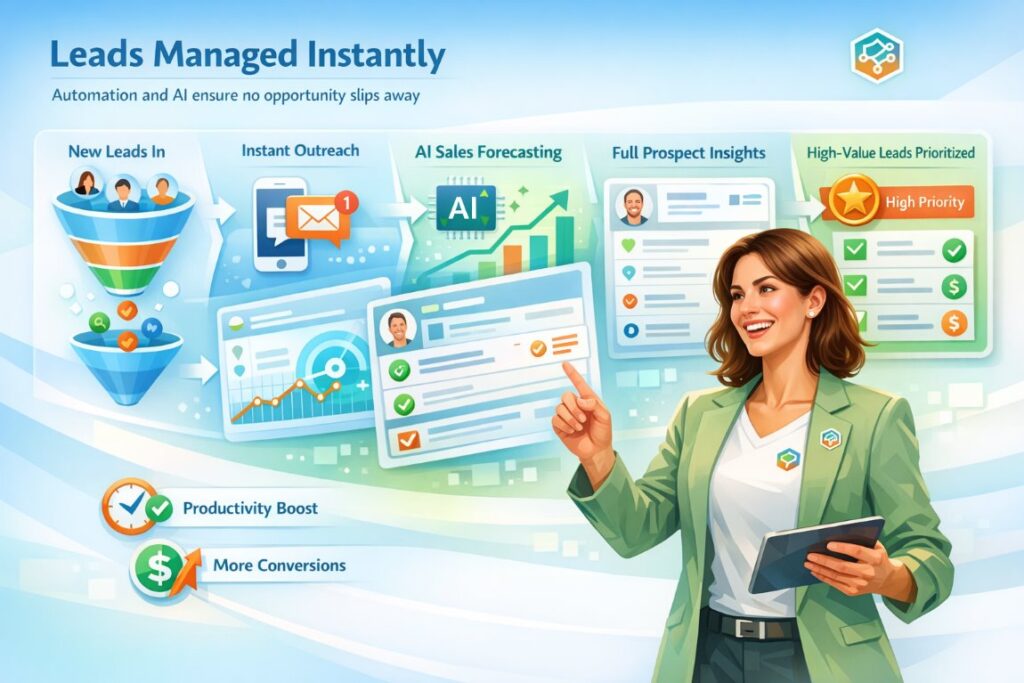
Marketing generates leads that sit uncontacted for days while sales teams manually sort through lists. By the time someone reaches out, the prospect has moved on or engaged with a competitor.
Even when sales contacts leads promptly, manual data entry means customer information lives in spreadsheets rather than being instantly accessible across teams.
Integrated automation connects marketing, sales, and customer service systems. New leads trigger immediate outreach based on their behavior, while AI-powered sales forecasting helps teams predict demand accurately and prioritize high-value opportunities. Sales reps see complete prospect histories automatically.
Inventory Management That Creates Stockouts and Overstock
Companies either run out of popular products or accumulate excess inventory that ties up capital. Manual tracking relies on periodic counts and gut feelings about reorder timing, failing to account for seasonal patterns or supplier lead times.
Automated inventory management monitors stock levels in real-time, analyzes sales trends, and generates purchase orders when quantities hit optimal reorder points. The system accounts for supplier lead times and sales forecasts, maintaining ideal inventory levels without excess capital tied up in storage.
Reporting That Consumes Hours to Generate Outdated Data
Senior leaders make decisions based on reports compiled manually from multiple sources. Finance teams spend days pulling data, reconciling discrepancies, and formatting presentations. By the time executives see the numbers, they're already weeks old.
Automated reporting generates real-time dashboards pulling data directly from operational systems. Leaders see current performance metrics instantly, allowing rapid response to emerging issues or opportunities.
Modern automation platforms use no-code approaches that allow business users to redesign workflows themselves. This flexibility enables continuous optimization as your business evolves.
%201.png)

%201.png)

%201.png)