

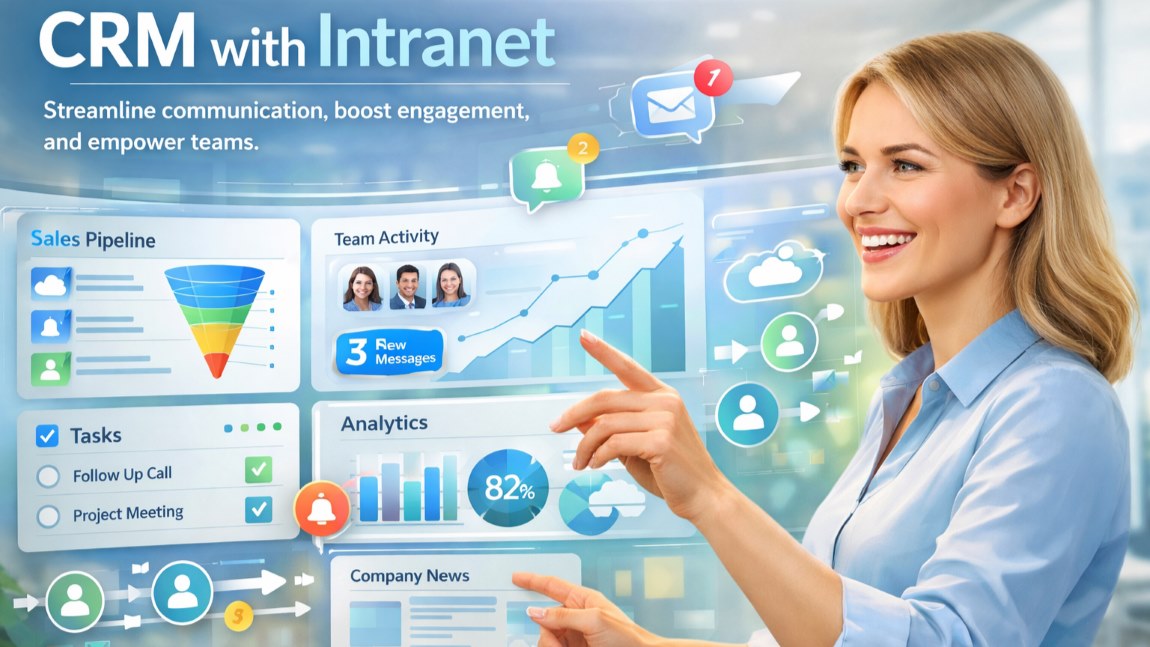

Boosting employee engagement helps raise productivity and morale for the company, and therefore focuses on employee resource accessibility and internal communications. The integration of CRM systems and intranet platforms is able to improve internal systems. Resource CRM integration with intranet platforms creates a more engaged and efficient workplace.
For organizations to achieve their goals and motivate their workforce, employee engagement becomes critical. With the rapid transformation of organizations, internal communication becomes equally important. In this regard, Omnia systems and intranet solutions come to the forefront. The integration of these components helps to increase employee engagement while reducing duplication of work. The lifecycle value of the integrated systems is a strong indicator of the value of business process integration.
Understanding the role of CRM and intranet systems
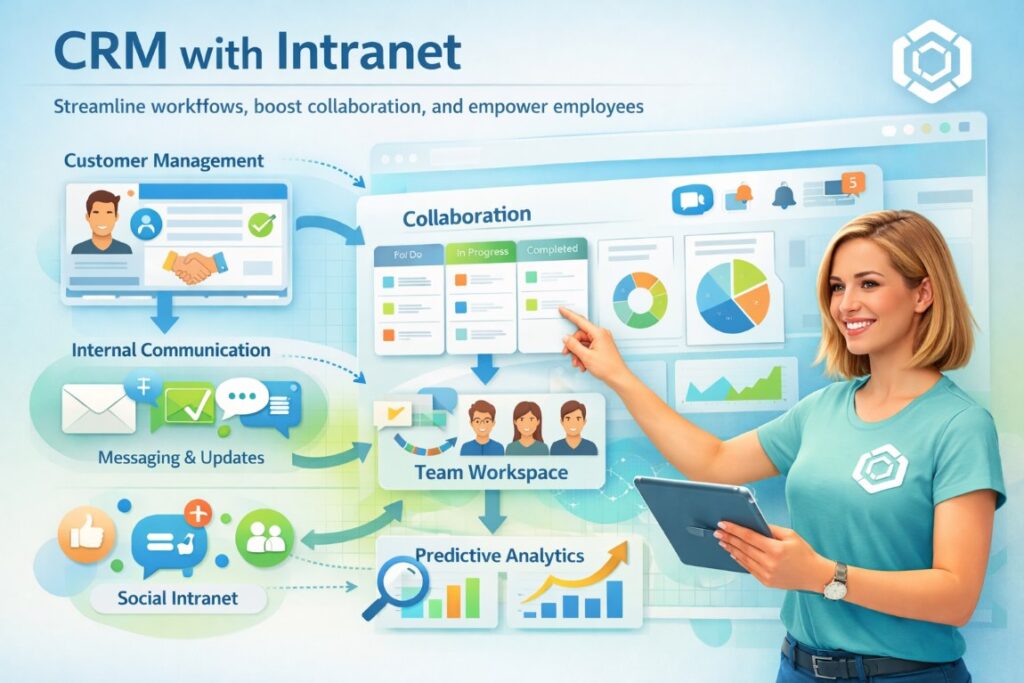
CRM systems are aimed at managing a company’s relationships with current and expected customers, thus managing and improving the relationships with the customers. CRM systems organize customer information, improve and streamline workflows, and improve accessibility and communication across a number of channels. On the other hand, intranet solutions provide internal information systems that facilitate information and collaboration, as well as communication, between employees. Intranet platforms provide a single location for employees to access company information, news, and all of the tools that they need to perform their job responsibilities.
With a CRM system integrated into intranet tools, external customer data, and internal company communications, the flow of information is smooth. If the intranet is integrated with the CRM, employees will have the most current information, helping them do their jobs better. The integration streamlines data management because previously separate systems are fused into one, increasing collaboration and productivity.
The last 10 years have made cloud-based systems extremely advanced, especially in CRM. Current CRM systems contain sophisticated predictive analytics tools which help businesses understand and anticipate customer behavior. Similarly, modern intranet systems have grown to include social intranets, collaboration tools, project management, and messaging; rather than just document management. This provides even more avenues for integrating systems and helps organizations eliminate silos that have separated externally focused systems and internally focused systems. For CRM and intranet systems, new technologies have changed the purpose of the systems to better serve the goals of the business; rather than serving outdated purposes.
Key benefits of integrating CRM with intranets
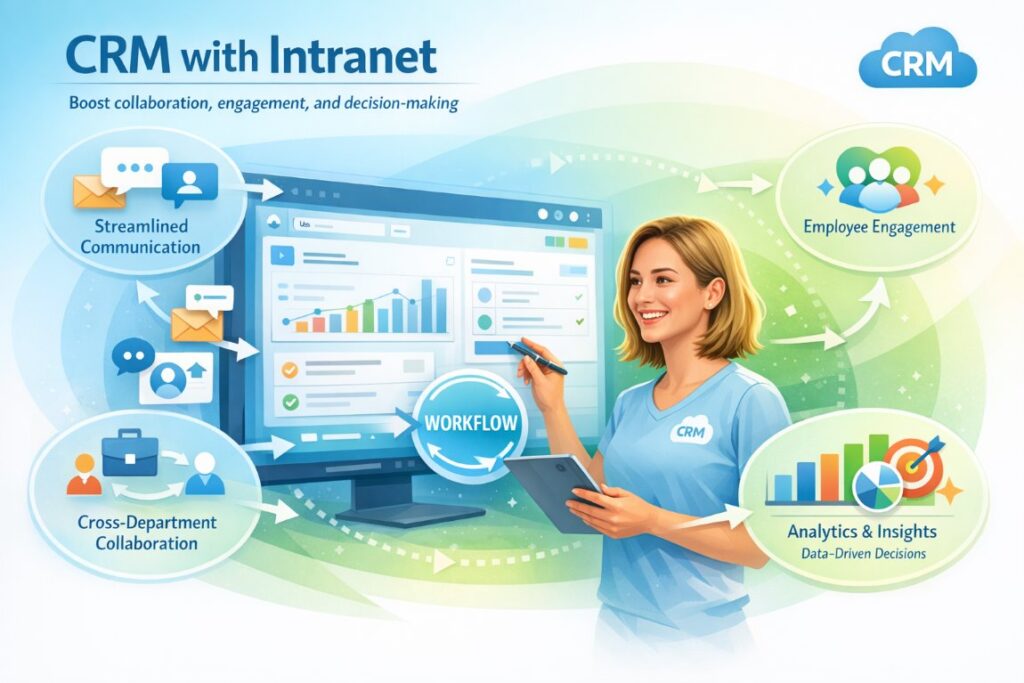
A more streamlined internal communication processes is one of the advantages of combining CRM and intranet boost. When employees have access to intranet, they can more quicly access relevant info regarding the customer and therefore, serve the customer better and respond to questions more quickly. This smooth transition of information reduces critical communication gaps to ensure that employees gain the insights to reinforce organizational objectives.
Additionally, integrating CRM and intranet systems can improve employee engagement by providing employees with more personalized experiences. Because employees are able to more quickly and more easily access information and use strategies, they are more likely to become more productive and more satisfied. When employees are able to more easily access information, they are better able to focus on more value-added tasks.
Another important benefit is the improved decision-making ability from integrated systems. With the ability to analyze customer details on the intranet, employees can avoid making decisions based on insufficient data from several systems. With one comprehensive, integrated view, data is consistent across departments including sales, marketing, customer support, and product development.
Additionally, integration enhances collaboration because employees from different departments can edit the same customer records. With this transparency, employees can better understand how to prioritize customer needs as part of their role in the organization. The combination of customer analytics and streamlined internal processes improves the organization's ability to innovate and compete in the market.
Effective strategies for implementing these integrations
Integrating CRM with intranet solutions must follow several steps. First, evaluate the current systems to understand their functionality and how they can be improved. Second, include the IT department in the design and implementation of the integration to ensure all systems work well together. The right integration solutions must be chosen to ensure security and optimal technology performance.
You may also want to consider incorporating middleware or APIs for more seamless connectivity of CRM with the intranet. It would also be helpful to conduct employee training on the new integrated CRM-intranet system so that all personnel are able to optimally utilize the system during their operations.
When it comes to successful integration projects, the importance of establishing clear governance structures is similarly critical. The integration sponsors/champions from various business units that are appointed for this purpose will help advocacy, as well as collect and respond to integration feedback from their constituents.
A phased approach is also helpful because it allows an organization to deploy the integration to a limited scope (i.e., pilot group) before full scope deployment, and helps identify and resolve issues in later phases. Compliance with the applicable regulations also means that the integration of various systems may have to be governed by a robust set of data security protocols to protect sensitive customer data. Integrating systems may be more seamless with less employee pushback if comprehensive support resources and documentation are designed and implemented for the integration.
Lessons learned from real-world implementation examples
Organizations that have successfully integrated CRM and intranet platforms have much to teach other organizations contemplating such integration. Many have found that employee satisfaction is higher when employees have greater and easier access to pertinent information and when communication processes are less complicated. Also, less operational inefficiencies have been realized to create cost savings along with greater overall performance.
Most important from these examples is the consideration of the integration of the technology and the culture of the organization. Successful integration is a result of the collaboration of the IT departments and the end users of the system, so that the system best serves all of the participants. By encouraging communication during the integration, organizations are able to mitigate challenges.
%201.png)

%201.png)

%201.png)