




More than an IT issue, cybersecurity has transformed into a core business security concern that impacts every aspect of organizational operations. With increasing reliance on cloud platforms, online tools, and integrated systems, a slight security gap can impact the workflow of entire organizations. It disrupts operational efficiency, increases compliance risks, breaks customer trust, and ultimately hits revenue growth. Cyberattacks have grown more rapidly. Advanced threats evolved faster—highly targeted and more sophisticated, making it challenging for traditional, fragmented defenses to keep up.
Consequently, businesses are reevaluating what “robust cybersecurity” really means. Rather than exploring a single product or technology, most organizations now evaluate vendors based on their ability to support critical security roles, from prevention and detection to routine operations and performance at scale.
This article examines 5 cybersecurity companies widely trusted by organizations today. Each organization plays a unique role in advanced security programs and helps guide how enterprise cybersecurity is developed and structured.
1. Data Security and Protective Operations
IBM Security
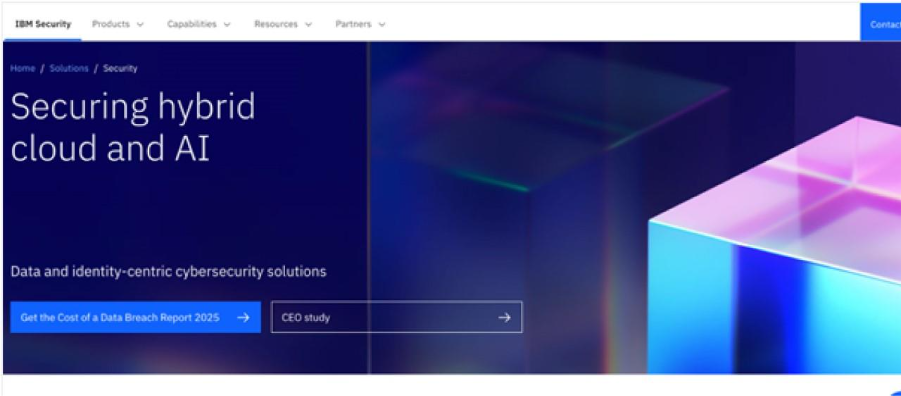
IBM Security is nearly integrated with broader security management, data security, and compliance-driven settings. Instead of focusing on a single layer of security, IBM treats cybersecurity as a core operational discipline, spanning detection, identity, response and governance.
IBM’s portfolio boosts security operations centers with platforms like QRadar, while Guardium offers powerful capabilities for data discovery, tracking, and compliance. IBM Verify defines identity and access management throughout the workforce and client ecosystem. In synergy, these functionalities let organizations handle intriguing security programs within a single, centralized ecosystem.
A core feature of IBM Security is its capability to blend technology with thorough operational excellence. Many organizations depend on IBM to get assistance in designing and operating mature security programs that align with regulatory standards and compliance needs.
Often utilized by:
Big tech enterprises and businesses in standard-driven industries seeking modern SOC processes and robust data security protocols.
2. Prevention-Driven Network and Perimeter Security
Check Point

Check Point is widely recognised for its prevention-led security practices to cybersecurity. This approach focuses on disabling threats before they affect critical systems, rather than depending mainly on detection and mitigation post incident.
By using its eternal architecture, Check Point combines cloud, network, endpoint, and user privacy within a single, integrated management framework. This unified model helps lower workflow difficulties without impacting consistent policy enforcement across the ecosystem.
Check Point has often gained traction its consistent and powerful threat mitigation performance, especially in network and perimeter security. This reliability has made it a common choice for organizations that want predictable protection outcomes and a clear, centralized view of their security posture.
Typically chosen by:
Mid-size and enterprise organizations seeking unified management, a strong network, and cloud protection.
3. Cloud and Application Security at Scale
Palo Alto Networks

Palo Alto Networks has built one of the broadest security portfolios in the industry, covering network security, cloud protection, and security operations. Its strategy is built mainly for organizations seeking to integrate multiple security protocols within a a centralized environment.
By using Prisma Cloud, Palo Alto Networks offers comprehensive security throughout the application lifecycle, starting from development to deployment. Prisma Access fosters protected network connectivity for remote and hybrid environments, while Cortex empowers cybersecurity teams to streamline detection and response.
The company places strong emphasis on analytics and automation to help teams manage complex environments more efficiently. This breadth makes Palo Alto Networks one of the best cybersecurity companies helping enterprises with expanding cloud operations and diverse security requirements.
Typically chosen by:
Large organizations are looking to integrate network, cloud, and security operations onto a single platform.
4. Threat Detection and Response Across Endpoints and Identities
CrowdStrike
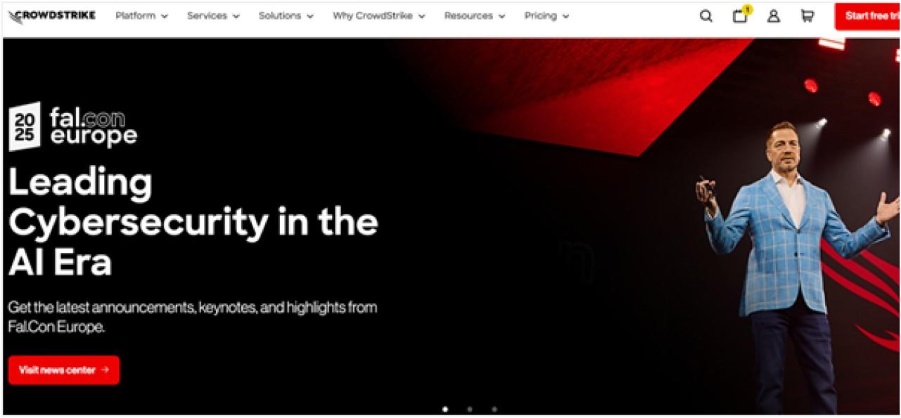
CrowdStrike is best known for its sophisticated endpoint security, but its Falcon platform now spans beyond devices to protect identities and cloud workloads. The platform utilizes a lightweight, unified agent merged with cloud-driven analytics.
CrowdStrike emphasizes behavioral detection and threat intelligence rather than traditional signature-based security. This allows it to identify advanced attacks that rely on credential abuse, lateral movement, or hands-on attacker activity.
In addition to technology, CrowdStrike offers strong threat hunting capabilities and managed services. This combination appeals to organizations seeking fast detection, expert insight, and reduced incident response time.
Typically chosen by:
Organizations are shifting to modern cybersecurity companies by replacing legacy endpoint tools and prioritizing rapid detection and response.
5. High-Performance Security for Distributed Environments
Fortinet
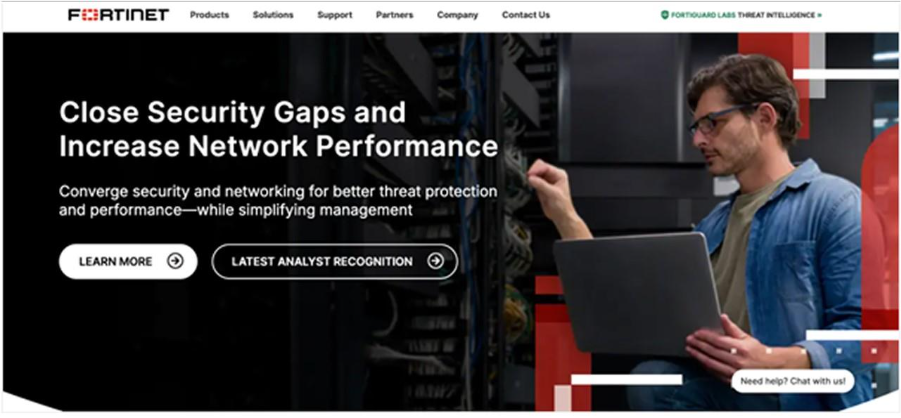
Fortinet establishes itself as a leader in providing security at scale with an emphasis on performance. With its FortiGate appliances and Fortinet Security Fabric built to provide environments integrated with many sites, branches, or operational systems.
The Security Fabric connects network security, SD-WAN, cloud protection, and operational technology security into a unified system. This strategy streamlines digital presence and policy enforcement across decentralized environments.
The core capability of Fortinet lies in its robust feature, offering high throughput and low latency without compromising security coverage. This balance has redefined it as an often-chosen platform across industries where performance and reliability are more crucial than ever.
Typically chosen by:
Businesses with remote and hybrid networks, workflow settings, or branch locations, such as retail and manufacturing.
Quick Comparison of These Cybersecurity Companies
| Company | Primary Security Role | Common Environment | Core Strength |
| IBM Security | Security operations | Large enterprises | SOC and data protection |
| CrowdStrike | Detection and response | Modern IT stacks | Endpoint and identity security |
| Fortinet | Performance at scale | Distributed networks | Network and SD-WAN security |
| Palo Alto Networks | Platform consolidation | Enterprise cloud | Cloud and application security |
| Check Point | Prevention-first defense | Hybrid environments | Network and cloud security |
Conclusion: How Modern Cybersecurity Companies Redefine the Digital Age
Resilient cybersecurity is not specified by selecting a single vendor or technology. It is primarily designed by comprehending cybersecurity trends and threats, understanding which key security roles are most critical to an organization, and hiring partners that have strong expertise in those areas.
The companies highlighted here continue to shape modern security programs by addressing real operational needs, whether that means managing complex security operations, preventing threats early, securing cloud applications, detecting active attackers, or protecting large, distributed networks.
Businesses that match vendor capabilities with their operational realities develop stronger and more sustainable security strategies over time.
%201.png)

%201.png)

%201.png)