




Fundraising auctions have become a cornerstone of nonprofit revenue generation, yet a lot of organizations still struggle to find technology that truly fits their operational model. Commercial auction platforms may seem like a convenient option at first glance. However, they often lack the donor-centric workflows, tax compliance tools, and community engagement features that charitable organizations depend on.
Here’s when purpose-built nonprofit auction software can enter the game. These platforms are engineered from the ground up to address the specific challenges of charitable fundraising, from donor relationship management to automated receipt generation. Understanding what separates them from general-purpose tools is a strategic decision that could significantly enhance fundraising outcomes and strengthen donor loyalty over time.
What Is Nonprofit Auction Software?
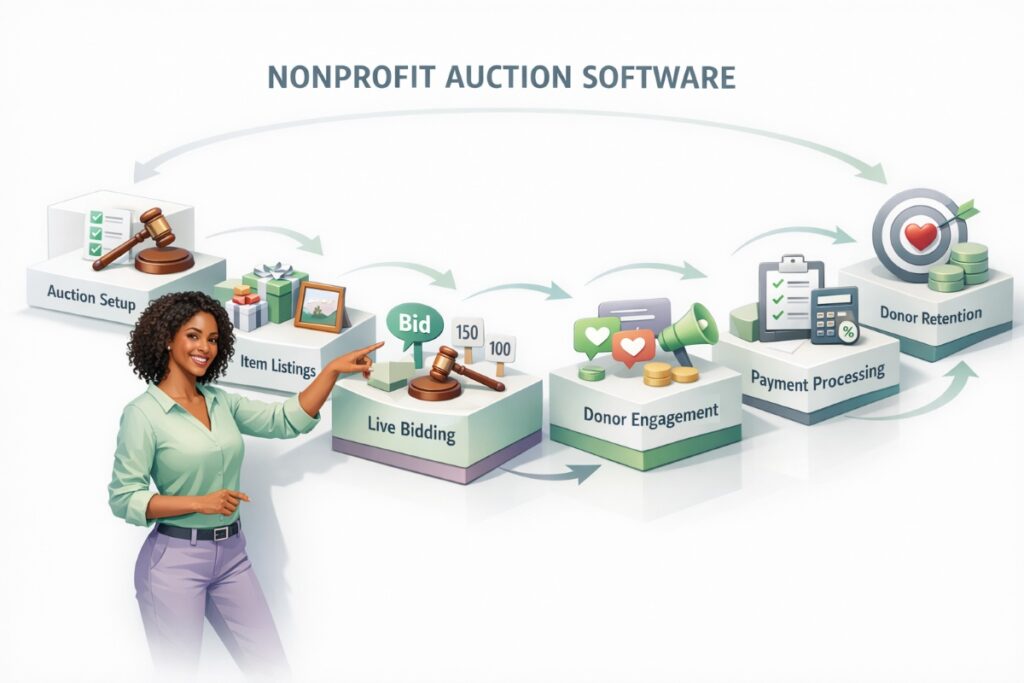
At its core, nonprofit auction software is a digital platform designed specifically to help charitable organizations plan, manage, and execute fundraising auctions. It combines bidding functionality with donor management, event coordination, and financial compliance tools, all within a single ecosystem tailored to the nonprofit sector.
In other words, while a commercial auction platform focuses on maximizing transaction volume and seller margins, a nonprofit-oriented solution prioritizes donor engagement, mission alignment, and long-term relationship building. The revenue model, user interface logic, and reporting capabilities are all structured around the assumption that every bidder is also a potential recurring supporter.
What is also important here is that these platforms are typically built with compliance in mind. They handle tax-deductible receipt generation, fair market value tracking, and data privacy requirements that the majority of commercial tools simply do not address.
When Does It Make Sense to Choose a Nonprofit-Specific Platform?
Not every organization needs a specialized solution. Small, one-off auctions with minimal item counts might work well enough on a general marketplace. However, there are clear scenarios where a dedicated nonprofit platform becomes the more practical and financially sound choice.
The most common situations include:
- The organization runs multiple fundraising auctions per year and needs consistent donor tracking across events.
- Tax-deductible receipts must be generated automatically for every winning bid.
- The event format is hybrid, requiring simultaneous in-person and virtual bidding with unified reporting.
- Staff resources are limited, and manual post-event reconciliation creates a bottleneck.
- Donor data needs to flow directly into an existing CRM or fundraising management system.
- The organization wants to engage supporters before and after the event through integrated communication tools.
From a financial perspective, the cost of managing compliance manually, combined with the risk of lost donor data when using a commercial platform, often exceeds the subscription price of a purpose-built nonprofit tool. That’s why a lot of organizations find that the switch pays for itself within the first event cycle.
Key Features That Set Nonprofit Auction Software Apart
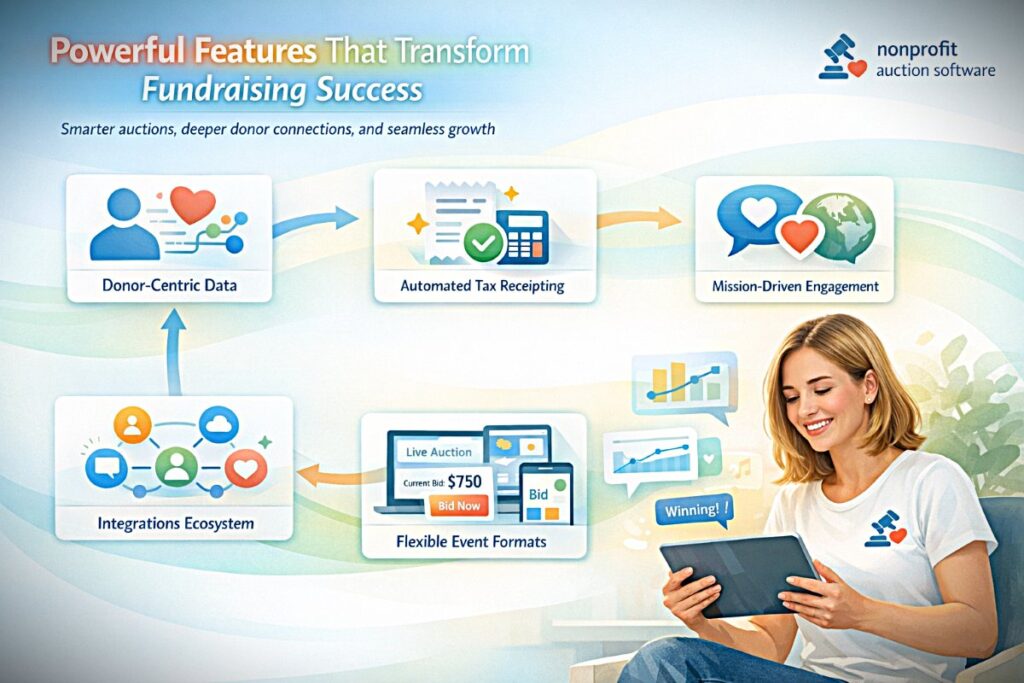
While commercial and nonprofit platforms may share a surface-level resemblance (both facilitate bidding, after all), the underlying design philosophy and feature set diverge in meaningful ways. The following areas represent the most critical differences.
Donor-Centric Data Architecture
Commercial platforms treat each bidder as a buyer in a one-time transaction. Nonprofit solutions, on the other hand, are designed to capture and organize donor profiles that persist across multiple events. This includes giving history, communication preferences, volunteer activity, and engagement scores.
Thanks to this architecture, development teams can identify high-value supporters, segment outreach campaigns, and personalize follow-up communications, turning a single auction interaction into an ongoing relationship.
Automated Tax Compliance and Receipting
One of the most operationally significant differences lies in tax receipt automation. Nonprofit auction winners are entitled to tax-deductible receipts based on the difference between their winning bid and the item’s fair market value. Managing this manually is both time-consuming and error-prone.
Nonprofit platforms automate this entire process. Fair market values are assigned during item setup, and receipts are generated and distributed automatically once payment is confirmed. Commercial platforms rarely offer this functionality, leaving organizations to handle compliance through external tools or spreadsheets.
Mission-Driven Engagement Tools
Beyond bidding, nonprofit platforms often include features designed to deepen the emotional connection between supporters and the organization’s cause. Including, but not limited to:
- Embedded storytelling sections on item pages that connect donations to specific programs.
- Fund-a-Need or direct appeal modules that run alongside the auction.
- Gamification elements such as leaderboards and bidding milestones tied to impact metrics.
- Post-event thank-you workflows with personalized impact summaries.
These mechanics boost participation and can increase average bid values by reinforcing the purpose behind every dollar spent. Commercial platforms, focused on transactional efficiency, typically lack this mission-alignment layer entirely.
To further enhance outreach and engagement, understanding key advertising concepts can help nonprofits attract more donors—explore this detailed guide on online advertising terms.
Fundraising Ecosystem Integrations
Nonprofit organizations rarely operate with a single tool. Auction data needs to flow into donor databases, email platforms, accounting systems, and event management software. Nonprofit auction solutions are built with these integration points as a priority, not an afterthought.
Typical integrations include:
- CRM platforms such as Salesforce Nonprofit Cloud, Bloomerang, or Little Green Light.
- Payment gateways with nonprofit-specific pricing tiers.
- Email marketing tools for pre-event promotion and post-event stewardship.
- Peer-to-peer fundraising platforms for extended campaign support.
Apart from this, a lot of nonprofit platforms offer native APIs or pre-built connectors that drastically reduce the setup time compared to configuring custom integrations with a commercial tool.
Flexible Event Format Support
Commercial auction platforms tend to optimize for a single format, typically online marketplace-style listings. Nonprofit platforms, by contrast, should offer support for silent, live, and online auctions within the same event. This flexibility enables organizations to mix formats based on audience preferences and item types.
What is also important here is that hybrid event support, allowing in-person and virtual bidders to compete simultaneously, has become a standard expectation rather than a premium add-on. More engaged users create more competition, and unified bidding across channels ensures that no potential revenue is left on the table.
How to Evaluate Whether a Platform Is Truly Built for Nonprofits
The market includes a growing number of platforms that label themselves as “nonprofit-friendly” without delivering meaningfully different functionality. You should attentively analyze whether a solution is genuinely purpose-built or merely a commercial tool with a discounted pricing tier.
What reliable nonprofit auction software should have:
- Built-in tax receipt generation with fair market value tracking at the item level.
- Donor profile persistence across events, not just buyer transaction records.
- Native CRM integrations with at least two major nonprofit donor management systems.
- Fund-a-Need or appeal modules that operate alongside or within the auction.
- Transparent nonprofit pricing without per-transaction fees that erode fundraising margins.
- Dedicated onboarding support tailored to nonprofit team structures and event timelines.
We recommend requesting a demo that uses real-world nonprofit scenarios rather than generic bidding simulations. Pay attention to how the platform handles receipt generation, donor data export, and post-event reporting. If these workflows feel bolted on rather than native, the platform may not be the right fit.
Final Word
The gap between commercial auction platforms and nonprofit-specific solutions is not merely cosmetic. It extends into data architecture, compliance automation, donor engagement tools, and ecosystem integrations. All of these areas directly affect how much revenue an auction generates and how effectively an organization nurtures its supporter base afterward. Choosing a platform that understands these distinctions can transform fundraising auctions from isolated events into strategic pillars of long-term donor development.
Ultimately, the right tool is one that aligns with the organization’s mission as closely as it aligns with its operational needs. By evaluating platforms against the criteria outlined above, rather than defaulting to the most familiar commercial option, nonprofit teams can invest in technology that genuinely serves their cause and strengthens every supporter interaction along the way.
%201.png)

%201.png)

%201.png)