





Payment data exists at the forefront of the majority of eCommerce breaches. Card numbers, CVV codes, billing addresses, and customer identity details all pass through checkout systems during a transaction. That makes payment flows one of the most attractive targets for attackers.
Stolen card data is easy to monetize, and automated attacks allow criminals to scan thousands of online stores looking for weak checkout pages or exposed integrations. Size does not matter much here. Small stores get targeted the same way large ones do because the theft process is largely automated.
Protecting this data takes more than enabling HTTPS on a checkout page. Real protection comes from multiple controls working together across the checkout flow, server infrastructure, and payment integrations. In this guide, we will understand the practical ways modern SaaS-driven eCommerce systems minimize payment data exposure and secure customer transactions.
1. Recognize Vulnerable Points in Payment Data
Securing payment data begins with one basic step: mapping where that information actually shows up inside your platform. In numerous eCommerce setups, card details traverse more places than teams anticipate.
Payment data appears commonly in:
Checkout forms
This is the entry point that is most visible. Customers type CVV codes, card numbers, billing names, and addresses directly into the payment form.
Payment APIs
Once APIs are submitted, the checkout applications send the card information to payment gateways via API requests.
Transaction logs
Numerous platforms record API requests as well as responses for debugging. If logging is configured poorly, raw card data can remain in log files.
Databases and backups
Temporary storage, caching layers, or backup systems can accidentally retain sensitive payment data.
Third party payment processors
The payment gateway or processor ultimately handles authorization and transaction processing.
When the store infrastructure handles raw card numbers directly, the attack surface expands quickly. Many modern SaaS eCommerce platforms reduce that risk by using hosted payment pages or gateway controlled checkout flows where the card data goes straight to the processor instead of passing through the store’s servers.
2. Use HTTPS and Strong Encryption for Payment Transactions
Every checkout page must run over HTTPS. When customers enter card numbers, that information travels across networks the store does not control. Coffee shop Wi-Fi, shared office routers, or compromised hotspots sit directly in the traffic path.
Encryption protects that traffic while it moves between the browser and the server.
HTTPS via SSL/TLS certificate
SSL/TLS certificates encrypt payment data before it leaves the browser. Only the server holding the private key of the certificate can decrypt it. Numerous eCommerce ecosystems can run checkout flows across diverse subdomains. In such cases, a wildcard SSL certificate can protect all first-level subdomains under the similar domain with one certificate ensuring the complete checkout flow remains encrypted.
Attempts in Network Interception
Attackers that capture packets on public networks understand encrypted traffic instead of processible card numbers.
Browser enforcement
Modern browsers flag payment forms delivered over HTTP as insecure. Some block submissions entirely.
However, encryption only protects data while it is moving across the network. Once the payment details reach the database or application, other security controls need to take over.
3. Implement Secure Payment Gateways and Tokenization
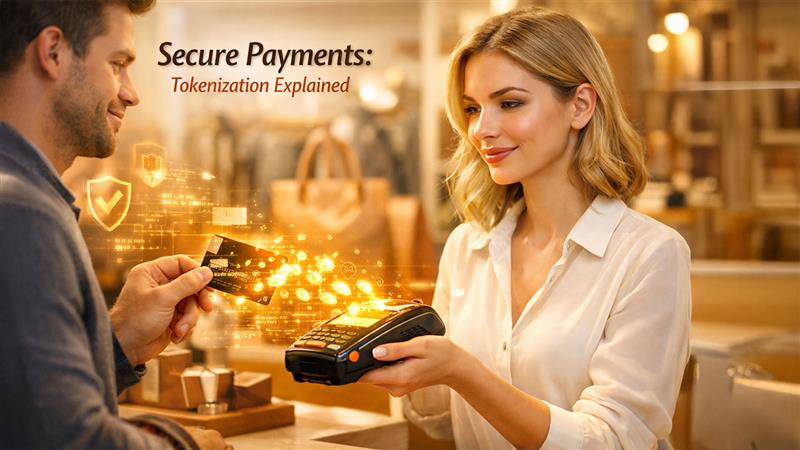
Most modern eCommerce systems avoid storing raw card data altogether. Keeping card numbers inside the store’s infrastructure expands the breach surface and drags the business deeper into PCI compliance requirements. Payment gateways exist largely to move that risk away from the merchant’s servers.
At the time of checkout, the store transmits the payment request that reaches the gateway, which then manages the sensitive aspect of transaction.
A typical gateway handles numerous steps behind the scenes:
- Payment authorization: The gateway interacts with the card network as well as the issuing back to decline or approve the transactions.
- Encrypted payment requests: Card data that is sent during the checkout is processed and encrypted within the controlled infrastructure of the gateway.
- Token creation: The gateway returns a token that signals the payment method instead of returning back the card number.
Tokenization replaces the real card number with a randomly generated identifier. The token only has meaning inside that payment system. If attackers get it from the API response or database, it cannot be utilized to recreate the original card details. This design limits the possible breach or damage sharply.
4. Protect Checkout Pages from Web Skimming Attacks
Attackers no longer need to break into payment processors to steal card data. Compromising the checkout page itself often works just as well. Modern web skimming attacks focus on the browser layer where customers provide payment data.
Numerous attack patterns repeatedly show up in incident reports such as:
- Magecart attacks: Groups make third-party services or site scripts vulnerable that collects payment data silents.
- Formjacking: Dangerous code attaches itself to check out forms and collects CVV codes, card numbers, and billing details when customers submit them.
- Injected JavaScript: Attackers change the files of the website as well as external scripts to operate inside the browser.
The technique is simple. A small script reads the payment fields in the checkout form and sends the captured data to an attacker-controlled server in the background.
Transactions still complete normally. The customer notices an effective order confirmation and never understands whether the card was copied or not. If even a single checkout page becomes compromised, it can leak close to thousands of cards before anyone even notices.
Defenses emphasize controlling what scripts can operate on payment pages, tracking integrity of scripts, restricting redundant third-party scripts, and implementing a strict Content Security Policy.
5. Limit Accessibility to Payment Solutions

Payment systems must never be accessible to all inside a company. The fewer people who can reach checkout infrastructure, payment dashboards, or transaction systems, the smaller the damage if an account gets compromised.
Access controls usually start with a few core safeguards:
- Strong authentication: Administrative accounts protecting payment systems need hardened credentials. Weak passwords remain one of the easiest entry points that attackers exploit.
- Role based access control: Not every employee requires complete access to the system. Support staff, developers, and operations teams must only note the components needed for their role.
- Restricted administrative privileges: High level permissions should remain limited to a small number of trusted accounts.
Compromised user accounts drive a large share of real-world breaches. Attackers sign in with stolen credentials and navigate through internal platforms unnoticed.
Additional controls advance the security layer, comprehensive access logging, multi-factor authentication for privileged account holders, and tracking administrative activity for unusual behavior.
6. Monitor and Detect Suspicious Activity
Even well protected payment systems need visibility. Security monitoring is what exposes problems once attackers slip past the first line of defense. Without it, malicious activity can sit inside an eCommerce environment for weeks while payment data quietly leaks.
Most monitoring focuses on signals that indicate something has changed where it should not.
- Checkout pages suddenly loading a new external script.
- Transaction patterns that do not match normal customer behavior.
- Critical files modified outside the usual deployment process.
- Servers initiating outbound connections to unfamiliar domains.
Such small signals generally showcase larger issues. Initial detection reduces the attackers’ stay inside the platform. More quickly, the suspicious activity is recognized, more quickly the teams can isolate the components affected. You can remove malicious code and prevent payment data from leaking continuously.
Continuous monitoring is the cornerstone of any security strategy. For an in-depth look at how managed cybersecurity platforms protects confidential platforms such as CRM from advanced threats, read our blog on “The ‘Data Fortress’: Why CRM Success Starts with Managed Cybersecurity.”
Conclusion
Payment data remains one of the most profitable targets in eCommerce breaches. Card numbers and billing identities convert quickly into fraud once attackers get hold of them.
Real protection comes from reducing how often systems touch raw payment data in the first place. Encrypt checkout traffic, push card handling to payment gateways, restrict access to payment systems, and monitor the parts of the stack where transactions run. When exposure stays small, attackers have far less to work with.
%201.png)

%201.png)

%201.png)