



The average cost of a data breach has now skyrocketed to $10.22 million, IBM reports. Meanwhile, about 80% of businesses have also faced a major cloud-related security issue within the past year. For new companies that use CRMs to manage customers and grow revenue, this just shows how crucial it is to get cybersecurity right from the start. Building a secure CRM foundation from day one isn't just about protecting data—it's about establishing trust with customers and avoiding regulatory penalties that could cripple a young business. Your first step should be to follow data protection regulations, which lowers your risk of a breach. You’ll then also need to plan CRM user roles carefully and connect only secure third-party integrations to keep customer data safe. Getting these basics right can help you avoid costly problems and build a strong foundation for your business.
Cover your legal bases
Regulatory compliance is the cornerstone of any secure CRM foundation. When your CRM is set up to follow data protection regulations, you limit what sensitive data is collected and who can access it, which lowers chances of this data being exposed in a breach. If you’re unsure what regulations apply, consult a small business lawyer. But, generally, a good first step is to understand the customer data you’ll collect, such as, names, email addresses, phone numbers, and purchase history. Know why you need each piece of information and only collect what’s necessary. It’s also important to know where this data will live and for how long. Regulations usually require secure storage and deletion after a certain point.
But, even with the best precautions, cyber incidents and data breaches can and do still happen. That’s why setting your business up as an LLC, or limited liability company, can be a good idea. In fact, around 40% of new businesses in the U.S. decide to go this route because it creates a clear legal separation between the business and its owners. So, if your company is ever hit with a data breach, including a potential CRM breach, your personal finances and assets aren’t at risk. If you’re a new business looking to set up an LLC, here's a promotion from Northwest Registered Agent that makes the process easier and more affordable.
Plan user access around roles and workflows
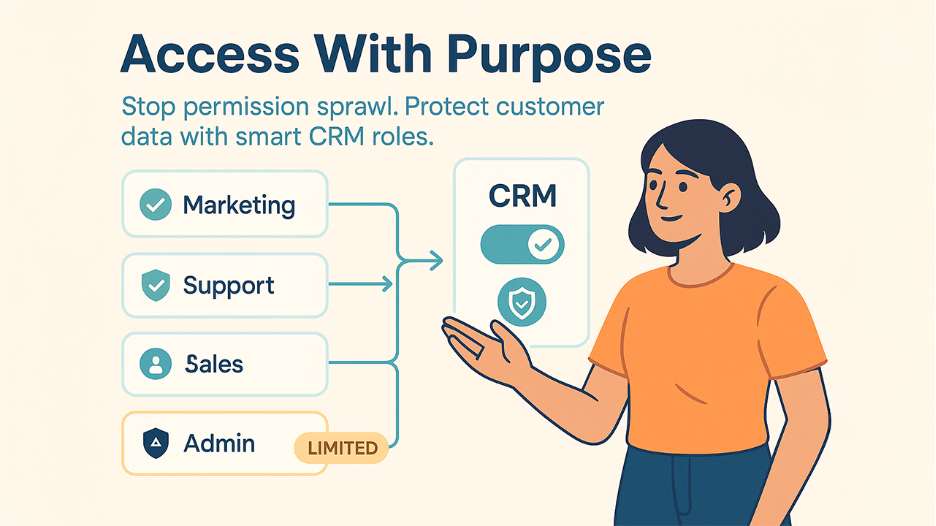
A staggering 99% of cloud identities have too many privileges, with CRM accounts being a prime example. What that means is users are allowed to see and do more than they actually need to. If you don’t keep a tight reign on CRM access, sensitive customer data is at risk of falling into the wrong hands. So, create roles with limited permissions to help avoid permission sprawl. That’s when employees gradually accumulate more and more access to things they don’t really need, and before long, the system is clogged with unnecessary permissions.
To get permissions right and maintain a secure CRM foundation, think about how your teams will use the CRM. What permissions and customer info do they truly need to do their jobs? For example, marketing may only need access to email addresses, whereas support teams might just need case histories and contact info, nothing more, nothing less. You must enforce control access measures. That way, you get to decide who needs admin privileges. Admins can have complete control over the CRM system. They can access all data and have the power to add or remove individuals. To safeguard sensitive customer data, you need to limit the admin access to yourself and few people that you completely trust.
Secure your integrations
Keep in mind that third-party integrations can allow hackers more access points into your systems, so always consider the risks before connecting third-party tools or services to your CRM system. Keep only those tools you absolutely need (e.g., marketing email systems and payment systems). Most CRMs also provide options for customizing what data each third-party application can access; review those settings carefully and provide third-party applications with the minimum amount of access required. Properly vetting and configuring integrations is essential to maintaining a secure CRM foundation as your business scales. To provide additional security, segregate sensitive customer data such as payment data and personal identifying information into separate areas of your CRM system. Lastly, configure user roles and permissions accordingly, so only designated employees and authorized apps can access customer data. For example, place customer payment information in a separate section (i.e., finance) of your CRM that can be accessed only by individuals who work in finance and third-party payment processors to help ensure the confidentiality and integrity of your customers' personal information, even if a third-party application is compromised.
While CRM security is critical, it's just one piece of a comprehensive protection strategy. Cybersecurity for Small Businesses extends beyond customer data management to include network security, employee training, endpoint protection, and incident response planning that every growing company needs.
Cybersecurity is an important consideration when building a new business, especially in the beginning stages. By establishing a secure CRM foundation early, you create a framework that protects not only customer data but also your company's reputation and financial stability. If you implement necessary security measures when you start your business, you can reduce the possibility of costly breaches as your business grows. It can keep your system secure and protect your data.
Final Thoughts
A new business should prioritize establishing a secure CRM foundation on day one as this is one of the best decisions one could make for themselves. When a business has completed the necessary legal requirements for compliance, put controls on who has access to data and ensured that they are monitoring the way various business applications are integrated, there is reduced risk and protection of the customer’s data. When a business does these things early on, their security program becomes a part of their growth strategy from day one, rather than something they must do to fix a problem later.
%201.png)

%201.png)

%201.png)