



David was outside in the sun working on his school projects with his computer. He had to find information from different websites when working on his reports. His friend told him to use proxies if he wants to stay safe and search the web. So he decided to give it a try. So he got everything and set it up correctly. When he tried to visit a particular website, that annoying message popped up on his screen that said " you've been blocked. He couldn't believe it. Because he thought proxy servers were meant to help.
David called his friend and told him what had happened. His friend smiled and said to him, "David, you used a proxy, yes, but do you know not all proxies are the same?" There are various types of proxies, such as Static Residential proxies and ISP proxies, each performing a unique job. You might not know the right kind of proxy to see either, just as David does. Knowing the difference between Static Residential and ISP Proxies will help you understand how each can protect you online and help you avoid getting banned.
What Are Static Residential Proxies?
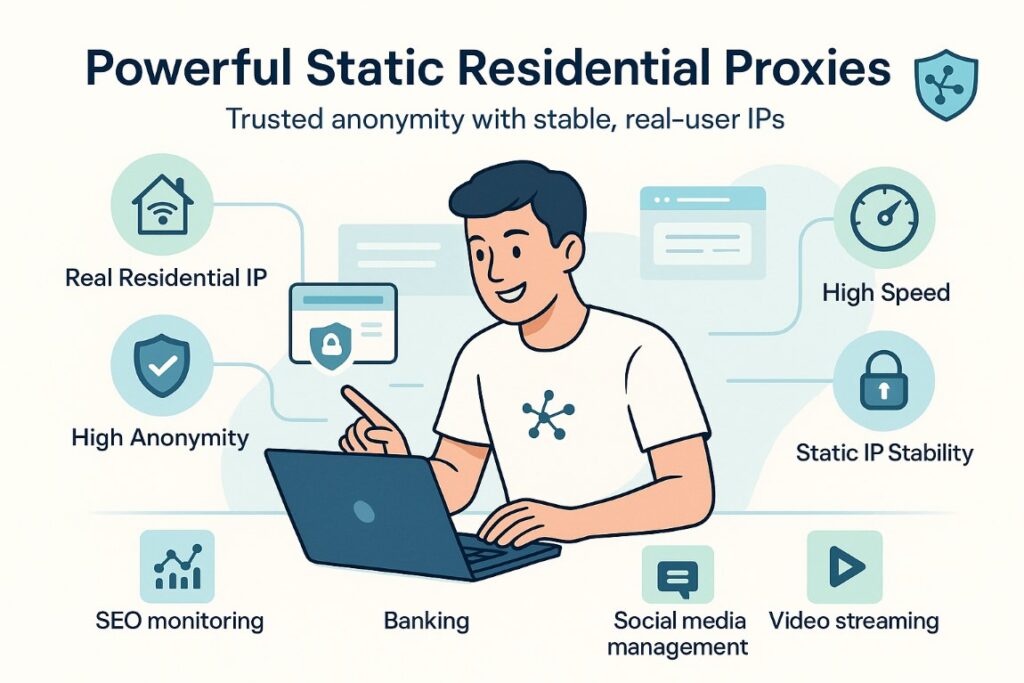
These types of proxies come from legitimate internet service providers and are hosted on servers in data centers, which is why they offer the best qualities of both residential and datacenter proxies. They offer:
- top-notch anonymity
- high Speed
- static in nature, as the name implies, unlike rotating proxies
They are ideal for activities like:
- SEO Monitoring
- Banking
- Social Media Management
- Video streaming
You can use this type of proxy without raising any red flags. But the level of speed and anonymity will depend on whether they are shared or dedicated proxies.
What Are ISP (Static) Proxies?
ISP proxies, also called Static ISP Proxies, work the same way as static residential proxies. But there is a key difference: ISP proxies are provided by ISPs and hosted in a data center, unlike residential proxies, which are hosted at home. Like static residential proxies, a "static" proxy keeps the same IP address for a long time. The best thing about ISP proxies is their speed, stability, on-demand availability, and their hard-to-detect nature. They can offer faster speeds than residential proxies because they are housed in a data center. This makes them an excellent choice for activities that require fast internet access, such as automated testing or large-scale browsing.
Key Differences at a Glance (Comparison Table)
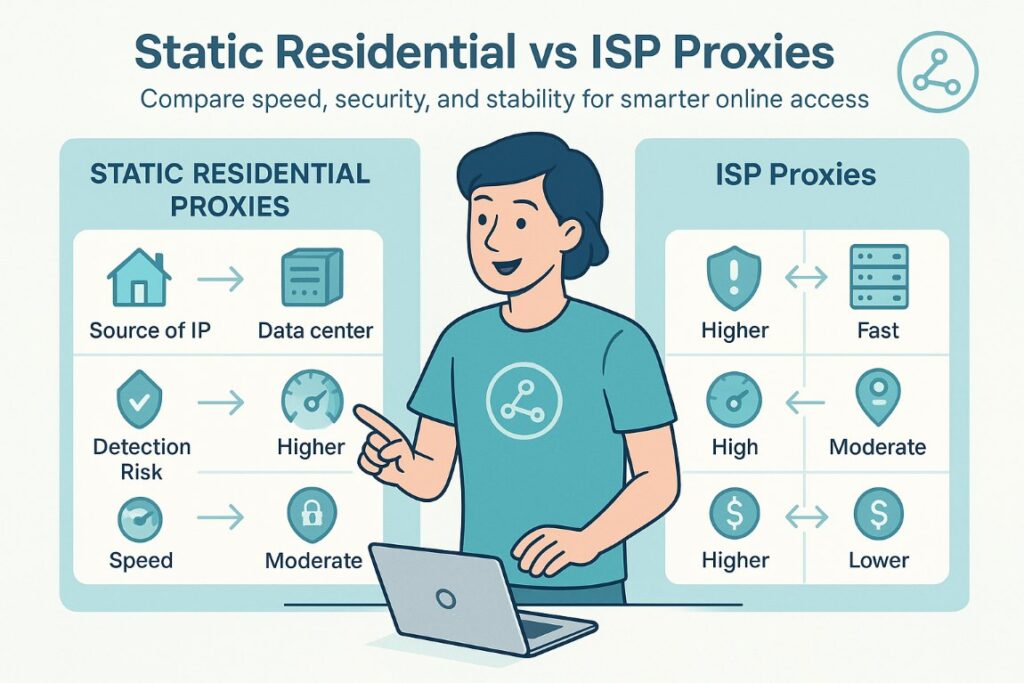
| FEATURES | Static Residential Proxies | ISP Proxies |
| Source of IP | Like any other user, it comes from a real home address. | Most of the time, it comes from a data center or a business address. |
| Detection Risk | It's hard to find because it looks like regular user traffic. | Easy to detect than a Residential Proxy, but more complicated than a regular one |
| Speed | They are slower because they are from home internet. | They are faster because they come from data centers designed for speed. |
| Stability | IP stays the same for a long time, which makes it stable. | Also stable, though it can change from provider to provider. |
| Cost | More costly due to the use of real residential IPs. | Usually less expensive than a residential proxy |
How to Choose: Match Use-Cases to Proxy Type
Your need will determine whether you should use a static residential proxy or an ISP proxy. Here's how you can pick the right one:
- To Scrape Data and Crawl the web: If you want to scrape data without getting blocked, the best option is Static Residential proxies, as they can make it look like we are browsing from your home. For market research, SEO analysis, and competitive analysis, they are great tools.
- For tasks that need a lot of speed, like automated testing, SEO audits, or accounts management. They are faster and compromise privacy only slightly.
- For Anonymous Browsing: Static home proxies are the best way to browse the web without being tracked. Websites have a harder time telling you apart from real people because their IP addresses look like those of real people.
Picking the right proxy is essential if you want to achieve your online goals, so make sure the features of each proxy type match your needs. If you want a dependable, trusted, and reliable proxy service, Proxywing is a good place to start. They can help you get started with both static residential and ISP proxies, giving a range of enjoyable online activities to choose from.
Network Quality Checklist
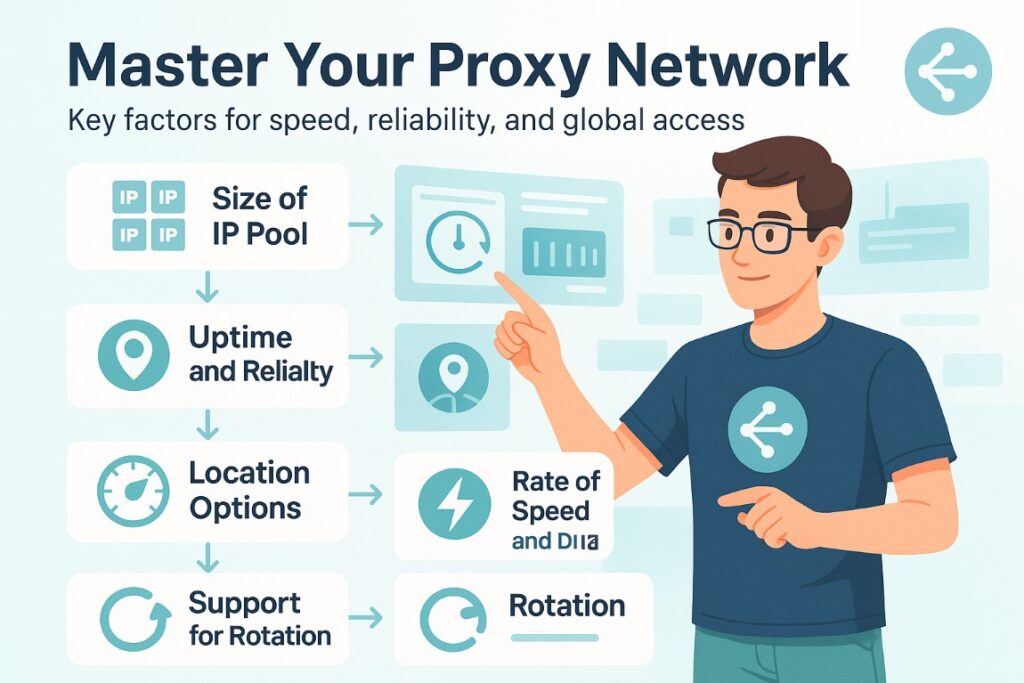
Some factors will affect how well your proxy service works, whether you choose static residential or ISP proxies. Here is a list to help you judge the strength of the network:
- Size of IP Pool: If your IP pool is big, you have more ways to change your IPs without getting noticed. It's also easier to get around rate limits with bigger pools.
- Uptime and Reliability: For jobs that require continuous, uninterrupted access, ensure the proxy service guarantees high uptime and reliability.
- Location Options: If you need proxies for geo-targeting or to access content from specific regions, check whether the proxy service lets you choose your location. The better, the more IP addresses they cover worldwide.
- Rate of Speed and delay: Make sure the proxies you pick have low delay and fast connection rates. This is especially important if you want to use them for things like watching videos or playing games online in real time.
- Support for Rotation: If you're running automated jobs like scraping, you might want to look into services that offer automatic IP rotation to keep you from getting blocked.
Configuration & Best Practices
Setting your proxy correctly is essential if you want to get the most out of it. These are the best ways to do it:
- Pick the appropriate proxy for your job: ensure it fits your needs, whether you are scraping or browsing the web. Make sure the proxy fits the web.
- Change your IP address often: If you're doing things like web scraping or automated browsing, changing your IP address regularly can help keep you safe.
- Authenticate Your Proxies: To prevent unauthorized use of your proxy network, use authentication methods such as login and password protection.
- Keep an eye on performance: Always monitor proxy performance to ensure it is running at peak efficiency. Many proxy companies let you monitor your uptime, speed, and IP health through dashboards. Proxy configuration should never be handled in isolation. To reduce security risks, prevent unauthorized access, and protect sensitive data, it’s best to align proxy usage with managed IT services and cybersecurity practices across your systems.
- Use Proxies Within Their Limits: Don't use your proxy services excessively or exceed your bandwidth limits. If you go over your limits, you might experience slowing down or extra charges.
By doing these things, you can ensure that your proxies work well and protect your privacy and security.
%201.png)

%201.png)

%201.png)