

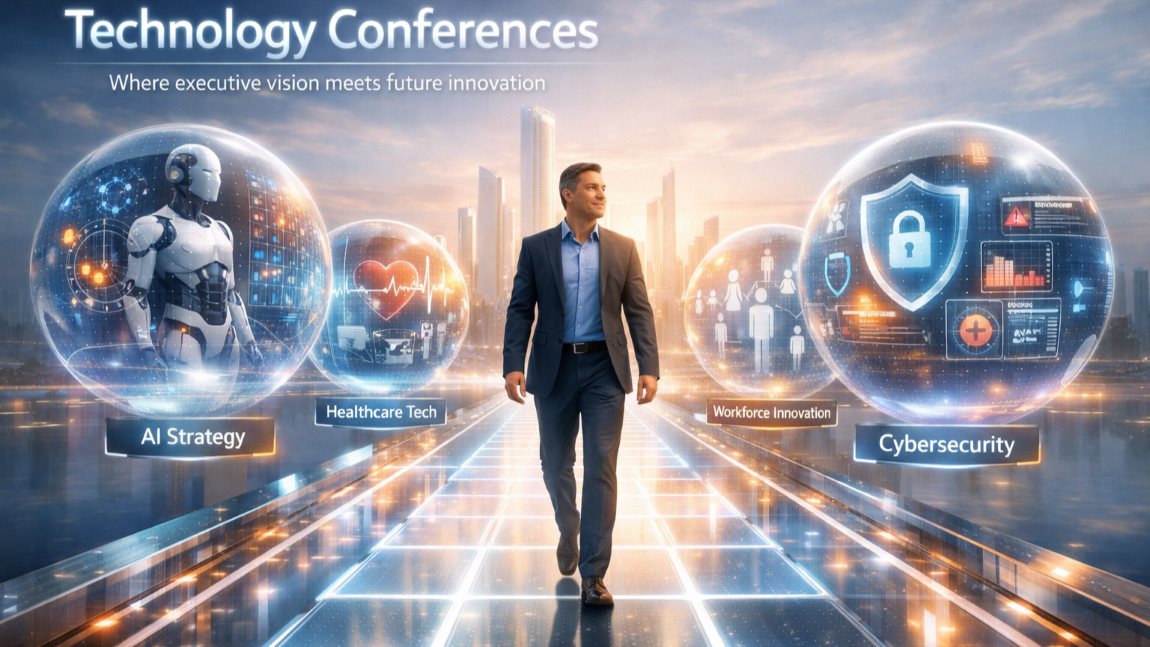

Executive leaders approach technology conferences with a very different mindset than technical teams. The focus sits higher, centered on strategic direction, organizational readiness, and the long-term impact of technology decisions across the business. Time is limited, accountability is high, and the conversations that matter most tend to happen at the peer level, not in basic how-to sessions.
There’s also a measurable return tied to participating in the right events. Long-standing industry research has consistently shown that companies investing in conference attendance see meaningful revenue gains, often averaging a 4:1 return. For executive leaders, that return is driven by better decisions, stronger networks, and earlier awareness of shifts that influence growth and resilience. (1)
With that in mind, here are the best types of technology conferences that consistently deliver the most value for executive leaders, ensuring that time spent away from daily operations delivers strategic value rather than distraction.
Healthcare-Focused Technology Conferences

Healthcare technology decisions carry consequences that involve more than just systems and software. As an executive leader, you’re balancing patient outcomes, regulatory pressure, workforce constraints, and rapidly changing technology expectations at the same time. That complexity is why attending healthcare-focused technology conferences shouldn't be considered an afterthought.
The most effective healthcare conferences center discussions on digital health strategy, data analytics maturity, AI governance, interoperability across care settings, and system-wide digital transformation. These conversations stay grounded in real operational challenges rather than abstract trends. Here, you won't just be hearing what could work in theory. You’re learning what’s already being tested, refined, or reconsidered inside health systems facing similar pressures.
The environment also makes a difference. Executive leaders gain more value from private, peer-driven settings than crowded show floors. Smaller formats encourage candid dialogue, sharper questions, and deeper exchanges without distraction. Providers of such in-depth talks make sure that their healthcare technology conferences create opportunities for focused, executive-level discussion among CIOs, clinical informatics leaders, and data executives.
AI and Data Leadership Conferences
Artificial intelligence (AI) is no longer a side initiative. Investment across the United States has surged, with the global AI market already valued at roughly USD$244 billion in 2025 and expected to grow sharply over the next several years. That scale changes the role of leadership, meaning executives are now expected to guide how AI is used, governed, and measured across the organization. (2)
AI and data leadership conferences are built for that responsibility. These events focus on AI innovation from a decision-making perspective, with sessions centered on generative AI strategy, operational readiness, and long-term oversight. Here, discussions stay anchored in how AI supports business priorities rather than how the technology works under the hood.
Governance and ethics sit at the core of these conversations. Executive leaders need clarity around data stewardship, regulatory exposure, and responsible deployment, especially as AI systems become embedded across operations. Workforce impact also receives serious attention. Leaders are expected to understand how AI reshapes roles, decision-making, and organizational trust, without creating disruption or unnecessary risk.
As executive leaders evaluate insights gained from technology conferences, customer experience and retention remain central to long-term business success. CRM platforms now play a critical role in transforming data into meaningful customer relationships. Understanding how modern CRM systems boost customer retention allows leaders to align digital transformation strategies with measurable business outcomes and sustained customer loyalty.
Cybersecurity and Risk Management Conferences
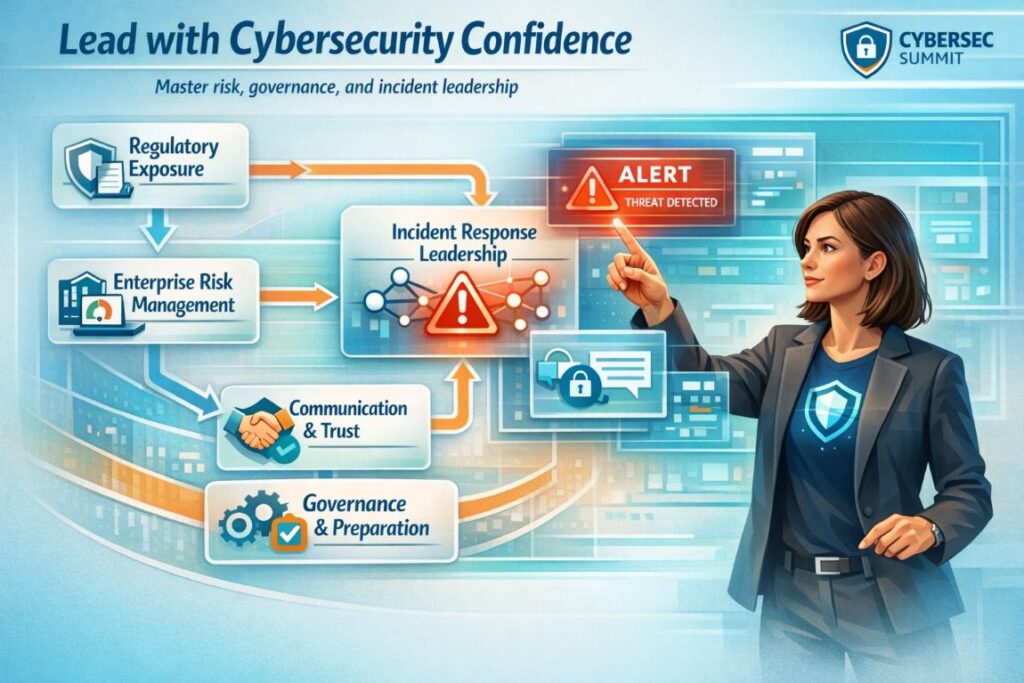
Cybersecurity has moved firmly into the executive domain. That’s because the financial and operational stakes are too high to treat it as a purely technical issue. Global cybercrime losses are projected to reach more than USD$12.2 trillion annually by 2031, and the average cost of a data breach now exceeds USD$4.4 million worldwide. Those numbers reflect business risk, not IT inconvenience. (3)
Cybersecurity conferences designed for executive leaders generally center on regulatory exposure, enterprise risk tolerance, and leadership responsibilities before, during, and after a security incident.
Incident response leadership is another core topic. Executive-focused sessions examine how leaders communicate during a breach, coordinate across departments, and protect trust with customers, partners, and regulators. These conversations also address cybersecurity preparation, including governance structures and response planning that can reduce disruption when incidents occur.
Human Capital and Workforce Technology Conferences
Executive leaders need a clear view of how workforce technology affects their organization. Attending human capital and workforce conferences can help you learn about HR tech, talent management, and people-first innovation.
Sessions often cover workforce planning, skills development, and leadership pipelines. You can also explore strategies that improve retention, boost engagement, and support team performance at scale.
But the most valuable conversations align workforce technology with broader business goals. As an executive, you leave the conference equipped to make decisions that reinforce organizational strategy, support long-term growth, and ensure your people systems evolve alongside the company.
Innovation and Cross-Industry Leadership Conferences
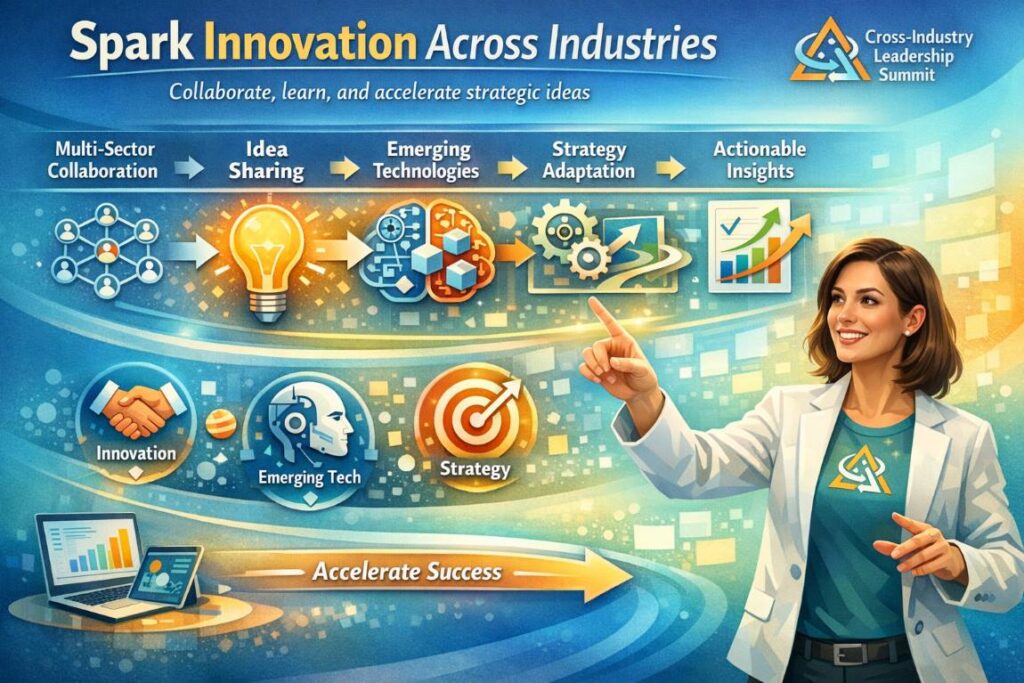
Sometimes, the most valuable insights come from looking outside your own industry. Innovation and cross-industry leadership conferences bring executives together from multiple sectors to share experiences, challenges, and solutions. These gatherings create opportunities to see how different organizations tackle similar problems and adapt emerging technologies.
The discussions often focus on ideas and strategies wherein leaders are exposed to new approaches, business models, and processes. Basically, the emphasis is on insight, not instruction.
These events act as idea accelerators. Executives can test assumptions, spark innovation, and return with actionable concepts to explore within their own organizations by connecting with peers facing comparable strategic questions.
Education and Learning Technology Conferences
For executive leaders, education technology conferences provide insight into shaping learning strategies across the organization. They highlight how technology can support leadership development and professional development infrastructure, as well as prepare teams for the skills the future demands.
For these sessions, you can expect to learn how learning systems can scale across departments, track progress, and align with long-term business goals. When you attend, you'll gain a clearer picture of how to structure programs that develop employees, strengthen leadership pipelines, and future-proof the workforce. Conversations can also include case studies, peer experiences, and discussions of practical challenges, so leaders can gain actionable takeaways they can implement back at their organizations.
Takeaway
As an executive, choosing the right technology conferences can shape how you lead, innovate, and respond to change. Prioritizing events that focus on strategy, provide access to peers, and foster meaningful dialogue ensures your time delivers insight that matters. Attending with intention gives you the perspective and connections to make smarter decisions, anticipate trends, and position your organization for the challenges and opportunities ahead.
References:
- “5 Reasons To Attend A Tech Conference And 5 Tips To Make It Count”,
Source: https://www.forbes.com/councils/forbesbusinesscouncil/2023/05/03/5-reasons-to-attend-a-tech-conference-and-5-tips-to-make-it-count/ - “Artificial intelligence (AI) worldwide - statistics & facts”,
Source: https://www.statista.com/topics/3104/artificial-intelligence-ai-worldwide/ - “What Every Company Needs to Know About Cybersecurity in 2026”,
Source: https://www.forbes.com/sites/chuckbrooks/2025/12/31/what-every-company-needs-to-know-about-cybersecurity-in-2026/
%201.png)

%201.png)

%201.png)