


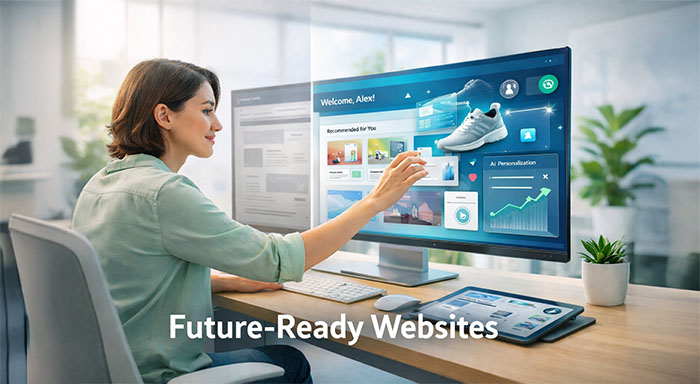

The digital expectations continue to evolve and change at a very fast rate. What is considered current today will be considered outdated in a matter of weeks. For businesses looking to plan and prepare for the coming year, staying on top of developing web design trends is not about keeping up with visual design; it is about making it better.
Many organisations reviewing partners like Atlantic BT for web design are not looking at images and design; they are looking at sustainability and contribution. The most impactful web design trends of 2026 will be a blend of innovation and simplicity, and a lot of it will be on interactive web design that will incorporate user engagement as opposed to simply web browsing.
Immersive Interactive Experiences
The traditional web pages are being replaced by much more dynamic experiences. Minor animations and transitions can be used to lead users through a page in a natural way.
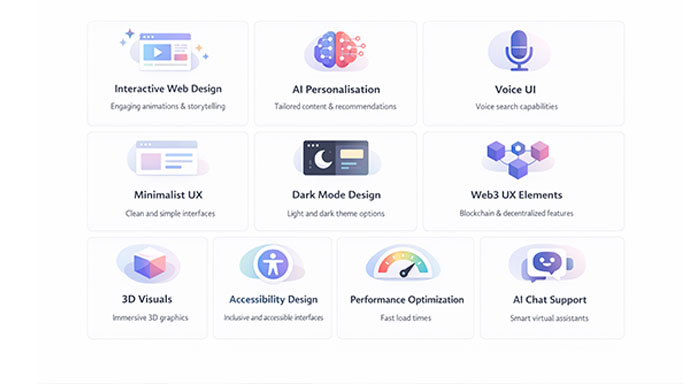
It is not decoration; it is direction. Interactive web design is making storytelling much better and keeping users engaged without overwhelming them. When users are able to understand the interactions, they will continue to dive deeper and engage further.
AI-Powered Personalisation
The conventional digital experiences are still being transformed by artificial intelligence. In 2026, personalisation will not only be about making product recommendations.
The AI tools are able to modify the homepage messages, change recommendations according to behaviour, and simplify user paths. Personalisation is relevant when done in a responsible manner without being intrusive. Transparency and user trust are the key.
Voice User Interface (VUI) Support
Voice search is gradually becoming more and more popular, particularly on mobile devices. The incorporation of voice-friendly content structure enables users to locate information in a much easier way.
Full voice navigation systems are not always required by businesses, although it is better to optimize conversational search queries to make them more accessible and visible. This shift is supported with clear headings and direct answers to common questions.
Minimalistic But Practical Designs
Minimalism is still present, but it has matured and become more of a tactic. Minimalistic design, ample white space, and focused messaging decrease cognitive burden.
Functional minimalism makes navigation user-friendly and the call to action evident. Businesses ensure that users concentrate on important decisions by eliminating distractive elements that do not matter. This strategy often leads to enhanced participation and better performance.
Dark Mode and Design Flexibility
Dark mode is now a feature that is anticipated by many users. Providing flexible viewing choices can be seen as an indicator of attention to comfort and usability.
When light and dark themes are well implemented, they ensure readability and brand consistency. Flexibility in design is also an indication that a firm cares about the preferences of the users, and this enhances the general perception.
Decentralised UX Elements and Web3
Web3 concepts are shaping digital strategies, although they are still in their developmental stages. There are industries that are considering decentralised authentication and integrations with blockchain.
For most businesses, adoption will be slow. The process of selective integration, instead of complete transformation, can enable organisations to experiment without taking undue risk. Careful evaluation ensures that innovation aligns with practical goals.
3D and Immersive Visuals
Better browser features have now been enhanced to lightweight 3D elements and overlayed images. Storytelling and explaining complex offerings can be improved with product visualisations and interactive models.
But performance should not be left out. Loading speed and usability should never be affected by heavy graphics. Balance is essential.
Accessibility-First Design
Accessibility is a key aspect in 2026. Inclusive design means that websites can be used by people with various abilities.
Key factors to be considered are:
- Strong colour contrast
- Navigational support Keyboard.
- Accessibility with screen readers
- Screen reader compatibility
- Images have clear alternative texts.
An accessible design increases reach and demonstrates a sense of inclusivity.
Performance-First Experience
Speed remains critical. Technical optimization is becoming even more significant as websites become richer in functionality.
The companies ought to work on effective coding, image compression, reliable hosting, and continuous testing. A fast site reinforces all other design enhancements and aids in retaining the users.
Integrated AI Chat and Support Tools
Chat tools that are AI-driven are becoming the norm. They offer fast services, guide visitors, and enhance customer service effectiveness.
Such systems bring about human support when carefully used and not human replacement. Clear escalation options maintain trust and credibility.
In Conclusion
The defining web design trends of 2026 are concerned with deliberate innovation. From interactive web design and AI-driven solutions to accessibility and performance optimisation, the objective is to design digital settings that are user-friendly, inclusive, and efficient.
Have you tried immersive or personalisation features? We'd love to know what you think and what you have experienced.
%201.png)

%201.png)

%201.png)