
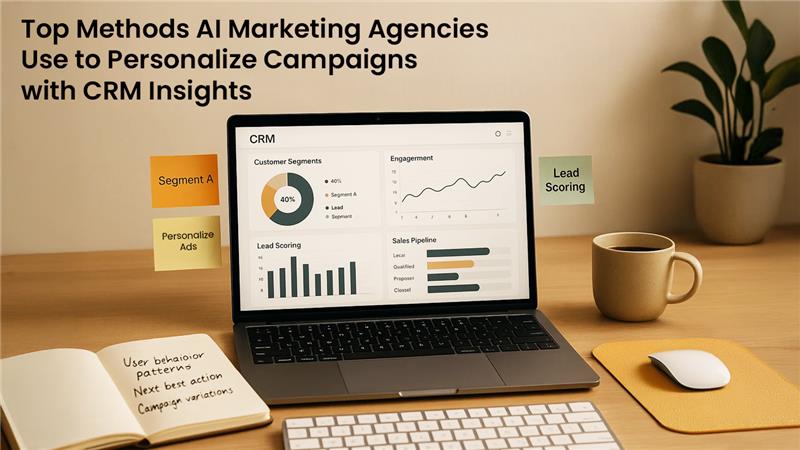

An analysis of data collected in 2025 showed that (88%) of marketers are using AI technology every day to manage customer data, assist with workflow automation and create personalized campaigns. However, despite these numbers indicating that most agencies are using AI in some shape or form, very few ai marketing agencies are utilizing the data contained within the CRM system. They're chasing external data sources and building campaigns that still feel generic because they're not tapping into the behavioural signals already there.
Your CRM knows what prospects clicked, what they asked about on calls, how they've engaged over time. The agencies winning right now are the ones extracting real insights from that existing data and building personalized experiences around it. It's not about having better tools. It's about reading what your customers are actually telling you.
This guide explains why CRM data matters for personalization, shows you eight concrete methods AI agencies use to extract real insights and build personalized campaigns, and gives you actionable first steps to implement these tactics yourself.
Why CRM Data Matters for Personalization
The numbers show what's happening. The global AI in CRM market is growing from $4.1 billion in 2023 to a projected $48.4 billion by 2033. Companies aren't investing that kind of capital without seeing real impact on their campaigns and revenue.
Your CRM already contains everything you need. It knows what prospects downloaded, what emails they opened, what they asked about in conversations, how long they spent on pages, where they got stuck in past campaigns. Most companies pay thousands for external data when this behavioral intelligence is already sitting in their system.
Those capturing real results are top AI marketing agencies that read CRM data properly. They notice what messaging actually resonates versus what gets ignored. Understand the patterns in customer behavior that predict who's ready to buy. Then build campaigns informed by those signals instead of general assumptions.
That is the difference. You stop sending everyone the same thing and start listening to what customers are actually telling you. Your CRM has all that data. You just need to read it.
The 8 Ways AI Agencies Are Making Campaigns More Personalised
These are the tactics top AI marketing agencies deploy to turn CRM data into personalized campaign results. Each of the methods uses the customer behaviour patterns that already exist in the system, so no guesswork and manual work will be required.
1. Intelligent Customer Grouping Using AI Micro-Segmentation
Rather than segmenting audiences by job title or company size, AI analyzes behavioural patterns inside your CRM to ascertain how your customers actually behave. It groups people by shared interests and actions, creating segments that reflect real behaviour, not demographic assumptions. Your campaigns speak to genuine audience patterns. You get more relevant messaging and higher response rates without manual audience sorting.
2. Predictive Lead and Customer Scoring
AI analyzes the CRM activity to predict which prospects are most likely to purchase, which of your current customers might churn, and who could be ready for an upgrade. This moves your team from exercising equal effort on all contacts to strategic prioritization. You know precisely where to allocate resources and can adjust communications based on predicted buying intent. Marketing efforts are then focused on areas where they are most likely to pay off.
3. AI Analysis of Conversations and CRM Notes
AI analyzes emails, chat logs, and stored notes to identify common customer concerns, recurring questions, and patterns in what people actually say. Your campaigns are informed by actual customer language and genuine pain points. Follow-ups and creative reflect what customers are actually saying, not some projection of what you think matters to them.
4. AI Recommendations for the Best Marketing Action
You stop guessing what to send next. AI reads customer behavior and tells you what actually moves them forward. Send a reminder to this group. Share a case study to that one. Offer a discount here. Each recommendation matches where that person is in their journey. Execution becomes sharper because you're following data, not hunches.
5. AI-Driven Content and Creative Personalization
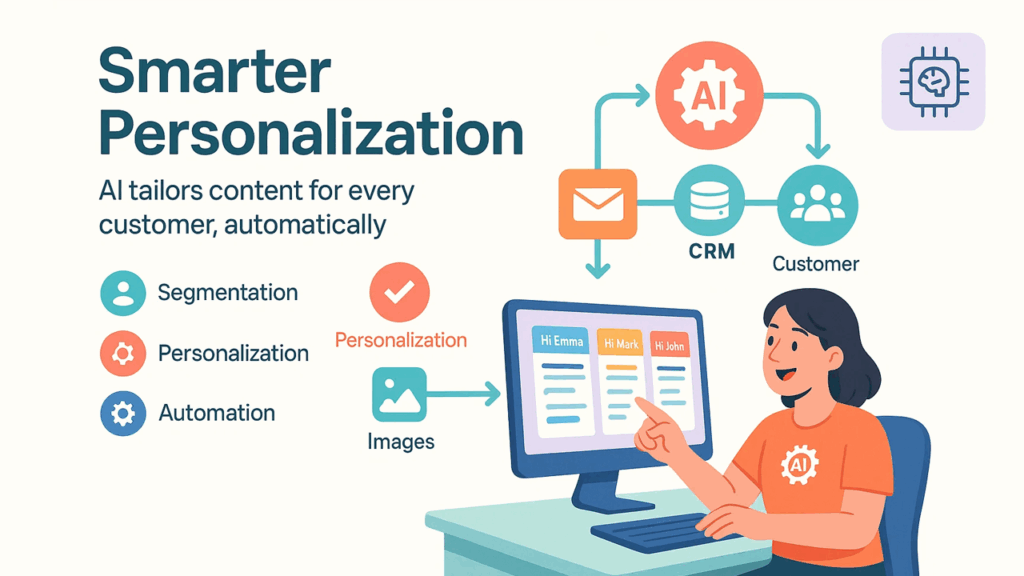
Rather than having to write ten versions of the same email, AI automatically adjusts copy, images, and offers based on what's in your CRM. One prospect sees messaging built around their interests. Another sees something tailored to their company size. Relevance scales without the manual grind. While the system is handling the personalization, your team focuses on strategy.
6. Automated Journey Optimization via AI Detection
You notice that the prospects fall off at a certain point. Maybe it's after the second email; maybe it's once you mention pricing. AI catches these patterns and flags them immediately. You investigate, adjust, and fix the leak before losing more deals. Journey improvement stops being quarterly guesswork and becomes something you act on in real time.
7. AI-Based Product or Content Recommendations
Prospects who researched your integrations three times get your API documentation. Someone spending time on pricing sees case studies from similar companies. Recommendations come from behavior, not generic lists. People find what they actually need faster. Engagement goes up because you're pointing them toward what matters, not what you want to sell.
8. Predictive Customer Lifecycle Insights
AI tells you what's coming next in each customer's journey. Who's ready to buy. Who's about to leave. Who needs more onboarding. Your team reaches out at the right moment with the right message. Timing stops being random and becomes strategic.
How to Get Started
Now that you understand what these methods do, let's talk about how to actually implement them. The good news is you don't need a complete overhaul, you can start with what you have.
Look at CRM and see what's actually there: opens, clicks, downloads, dates. Some records are messy. That's normal. Clean up what matters most and move on. Pick one method that solves your biggest headache right now. Deals stalling somewhere? Journey optimization. Too many leads and no way to prioritize? Predictive scoring. One win, then build from there. Don't do everything at once.
In assessing the best AI marketing tools to support these methods, look for platforms that integrate natively into your CRM and can act on the data you currently have. Integrations go fast, usually days. Results take longer. You can expect 30 to 60 days at best before you start to see clear patterns. Segmentation tends to go faster because it works with the data you already have. Lifecycle forecasting requires a little more history to get reliable.
Make the Shift
Successful marketing agencies right now aren't using some magical tools you don't have access to. They're just reading their CRM differently than everyone else. Most companies have the data but never look at it properly. You already have what you need to start. Pick one method, test it on a campaign you're running anyway, measure what shifts. That's the beginning.
Conclusion
AI-powered personalization isn't about adding more tools-it's about finally using the CRM data you already have. When you read behavioral signals properly, your campaigns become sharper, more relevant, and far more effective. Start small with one method, apply it to an active campaign, and watch your customer engagement and conversion results shift.
%201.png)

%201.png)

%201.png)