


You've got the gear. You've got the platform. You've even got a posting schedule that you almost always stick to.
So why isn't the audience growing?
For most live streamers in 2026, the bottleneck isn't the broadcast itself - it's everything that surrounds it. The discoverability. The repurposing. The consistency between streams. The follow-up that turns first-time viewers into loyal regulars. Creators who are breaking through that ceiling aren't just streaming better - they're building smarter systems around every broadcast.
Tools like GIFQ, built on the open-source n8n automation framework, are becoming a quiet backbone of serious streaming operations: handling post-stream distribution, analytics logging, and audience follow-up automatically so creators can stay focused on content.
Why Great Streams Alone Don't Build Audiences Anymore
The live streaming space has matured dramatically. Viewers have more options than ever - more platforms, more creators, more content formats competing for attention every hour of every day.
According to Statista, live streaming audiences have grown by hundreds of millions globally over the past three years. But that growth in viewership hasn't been evenly distributed. The creators capturing it are the ones who've built systems around their streams - not just better streams.
What does a system look like in practice? It means every broadcast generates multiple pieces of content. It means new viewers find you between streams, not just during them. It means your community knows you're consistent before they've watched a single video.
This is the gap between streamers who plateau and streamers who compound.
Step 1: Maximize Reach During the Broadcast
The first lever in the system is reach - how many people can actually watch you when you go live.
Multistreaming is the most direct answer to this. Instead of going live on a single platform and hoping your audience finds you there, broadcasting simultaneously to YouTube, Facebook, LinkedIn, X, Twitch, and beyond means every viewer can watch on the platform they already use. You stop asking your audience to come to you and start showing up wherever they already are.
OneStream Live makes this straightforward - you go live once and the platform distributes your stream to 45+ destinations simultaneously, with all incoming chat messages consolidated into a single window so you're not juggling tabs while trying to talk to your audience.
This alone doesn't build an audience. But it dramatically increases the surface area of every broadcast - more entry points, more potential first-time viewers, more opportunities for the algorithm to surface you to new people.
Step 2: Turn Every Stream into a Content Engine
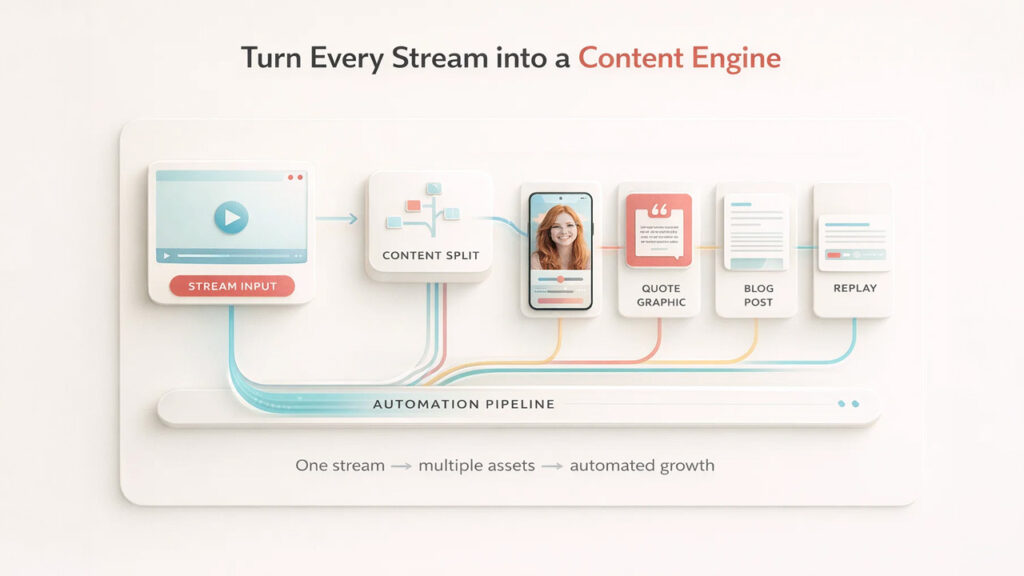
Here's the math most creators ignore: a 60-minute stream contains enough raw material for weeks of content. A highlight clip. Three short-form vertical videos. A key quote turned into a graphic. A timestamped replay that viewers can skim. A blog post summarizing the key points.
Most streamers publish the replay and move on. The ones growing fastest are extracting multiple assets from every single broadcast.
The challenge is that doing this manually is exhausting - which is why most creators don't do it consistently. This is where workflow automation tools earn their keep. GIFQ, built on the open-source n8n platform, lets you build automated pipelines that kick in the moment your stream ends: fetching the replay URL, distributing it to your channels, logging your analytics, and triggering your content repurposing checklist - without manual intervention each time.
The goal is to build the repurposing workflow once, then have it run every broadcast automatically. Consistency in output drives discoverability. Discoverability drives audience growth.
Step 3: Stay Visible Between Streams
The biggest opportunity most live streamers miss is the space between broadcasts. Your audience doesn't go dormant when you're not live - they're on social media, watching short-form content, browsing YouTube, engaging in communities.
If you're only visible when you're live, you're invisible for the majority of the time your potential audience is online.
Staying visible between streams doesn't require creating new content from scratch. It requires a system for distributing what you already produce:
- Schedule highlight clips to post on X, Instagram Reels, and TikTok on the days you're not live
- Send a short email newsletter recap after each broadcast to your subscriber list
- Post a community update on YouTube with a key takeaway from the stream
- Pin an "in case you missed it" post with the replay link for late viewers
All of these can be automated using tools like GIFQ - setup once, running after every broadcast. The result is a consistent presence across platforms that builds familiarity with potential new viewers before they ever tune in live.
Step 4: Build the Loop That Turns Viewers into Community
Audience growth isn't just about bringing new people in. It's about keeping them. And the single biggest driver of viewer retention is the feeling of belonging to something - not just watching something.
The streamers building the most loyal communities in 2026 share one habit: they treat every interaction as an investment in the relationship, not just a transaction.
Practically, this looks like:
Welcome new followers: When someone follows or subscribes during or after a stream, an automated message that feels personal - referencing the stream they just watched or the platform they're following you on - lands very differently from silence. Pre-recorded streaming and scheduling tools let you maintain this consistency even when you're between live sessions.
Create callbacks: Reference community members by name during streams. Bring back running jokes and recurring segments. Give your audience lore. The more your stream feels like a place with history and culture, the more new viewers want to be part of it.
Ask before you tell: The most engaging streams in any niche are the ones where the audience feels like a co-creator. Polls, questions, viewer challenges, and community decisions about future content make people feel ownership over the show. That ownership is what turns a casual viewer into a regular.
Step 5: Track What's Working and Double Down
Growth without measurement is just hope with extra steps.
Every stream should feed into a simple analytics system that answers three questions:
- Which platform sent the most new viewers this broadcast?
- Which segment of the stream had the highest retention?
- Which post-stream content piece drove the most replay views?
This doesn't require a sophisticated dashboard. A Google Sheet updated after every broadcast with key metrics is enough to identify patterns over 4 to 6 weeks - and those patterns tell you exactly where to put your energy next.
Automation handles this too. A workflow built in GIFQ can pull stats from your connected platform APIs after each stream and write them to a central tracking sheet automatically, giving you a consistent data record without manual logging.
The System, Not the Stream
Live streaming in 2026 rewards creators who think in systems, not just broadcasts, especially when leveraging multiple Live Streaming Platforms to expand reach.
The broadcast is the centerpiece - your live content, your personality, your value to your audience. But the system around it is what turns a great broadcast into compounding audience growth. Multistream to maximize reach. Repurpose to stay visible. Automate to stay consistent. Engage to build community. Measure to improve.
None of these steps are complicated individually. The challenge is doing all of them consistently, across every broadcast, without burning out.
%201.png)

%201.png)

%201.png)