

For company owners and directors, expanding a mid-market company regionally, or even globally, makes for the kind of champagne-popping moments that mark major corporate milestones. However, for HR managers already stretched to the limit, it can come with a sense of existential dread. It’s only now that the thought of managing everything at scale and across borders begins to truly sink in.
Mid-market companies sit well beyond the realistic capabilities of basic HR software. Leveraging the best HR software for mid-market growth plans requires a system that can handle multiple HR needs while staying flexible. Just managing payroll won’t help you with specific regional compliance mandates or creating a unified workforce across differing employment cultures.
For these types of challenges, the best HR software options for mid-market organizations need to handle both scale and flexibility. Finding the best solution should be a measured decision. For convenience with this, we’ve put together a comprehensive guide that looks at the leading HR software providers for mid-market companies targeting international growth.
Whether your company is eyeing regional or global expansion, a good HRMS should be able to do the heavy lifting for all your HR needs.
Evaluation criteria
While assessing the best choices for global HR software in 2026, the capacity to handle multinational expansion quickly became a core factor. Other factors like AI-integration and user adoption are also important. Aside from testing each of the platforms below personally, we also considered real user feedback based on reviews of each provider on leading review sites like G2.
Overall, the ideal HR software needed to handle scaling without being overwhelming to HR departments during that process. Companies building a structured HR Automation Roadmap should prioritize platforms that balance automation with flexibility as they grow. As you’ll see below, every provider on the list had its merits. However, our top pick was HiBob for its ability to remain agile while offering an all-in-one solution for HR needs at scale.
Here’s how our top 8 choices stacked up.
1. HiBob
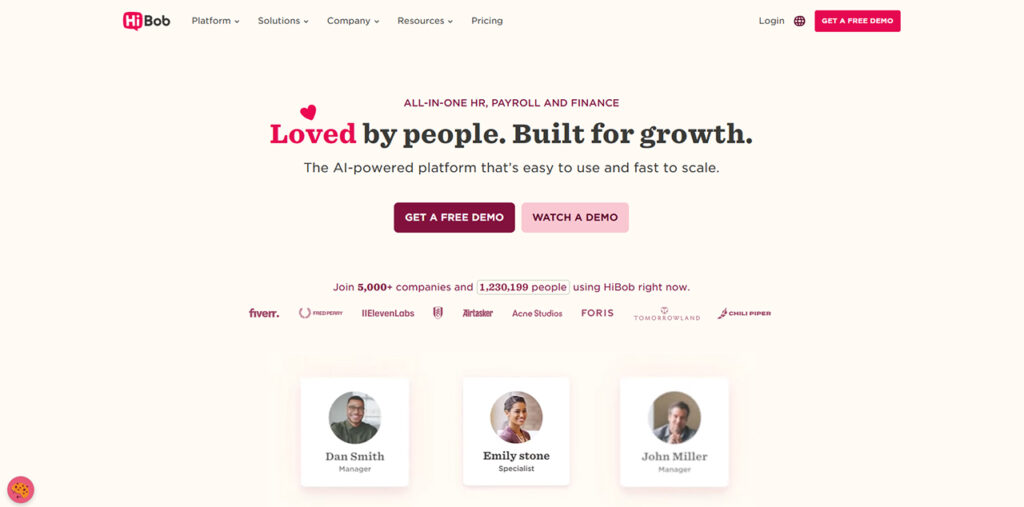
TLDR: A culture-first platform designed for global agility and secure AI-driven productivity.
HiBob stands out as the premier choice for mid-market companies expanding globally by some distance. Instead of merely digitizing paperwork, HiBob focuses on building a strong organizational work culture, while boosting retention. To achieve this, the platform provides a highly flexible environment that adapts to specific multinational workflows, rather than forcing you into rigid templates.
In addition, HiBob’s AI capability enhances productivity by summarizing data and guiding managers. This is all accomplished while maintaining strict enterprise security. One of its standout qualities is that HiBob guarantees zero data retention by AI vendors and ensures customer data is never used to train external models.
| Feature | Detail |
| Best for | Scaling mid-market companies focused on culture and global reach |
| Key strength | Exceptional employee experience combined with secure AI tools |
| Biggest weakness | Requires a commitment to modernizing traditional HR practices |
2. Workday
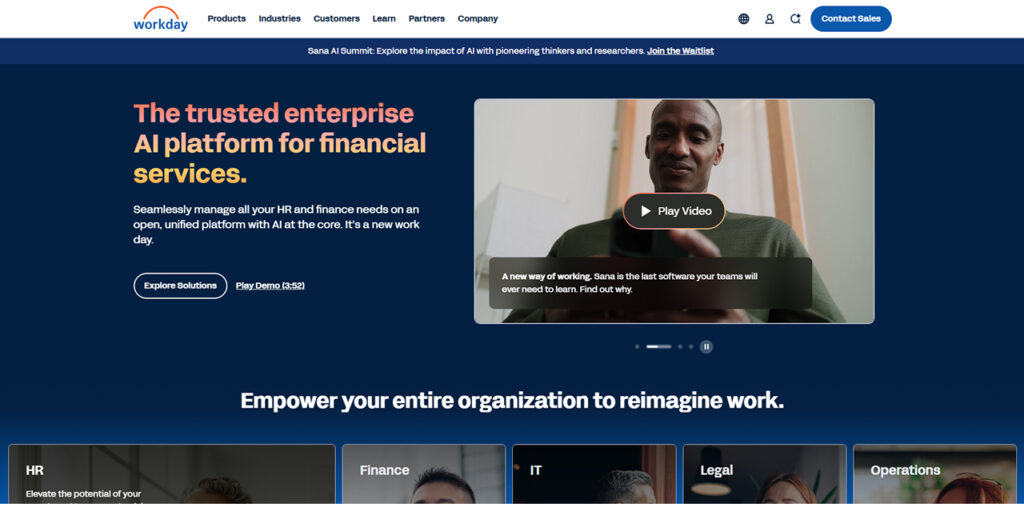
TLDR: A legacy enterprise system with heavy training requirements and a steep learning curve.
Workday is a massive platform built for the largest global corporations, offering an incredibly broad suite of tools that covers everything from advanced financial planning to human capital management. It was designed from the ground up to handle the intricate needs of Fortune 500 companies with tens of thousands of employees. While it offers deep functionality and robust reporting capabilities, mid-market companies often find its sheer scale to be overly complex and misaligned with their need for agility.
| Feature | Detail |
| Best for | Massive enterprises with dedicated HR technology teams |
| Key strength | Highly detailed enterprise resource planning capabilities |
| Biggest weakness | Extremely clunky interface and expensive implementation |
Verified users frequently report that the system is not intuitive. Basic tasks require navigating through complicated menus. Implementation is notoriously expensive and time-consuming, often requiring costly third-party consultants. Furthermore, changing organizational structures after the initial setup is incredibly difficult, which hinders agility for fast-growing companies.
3. Deel
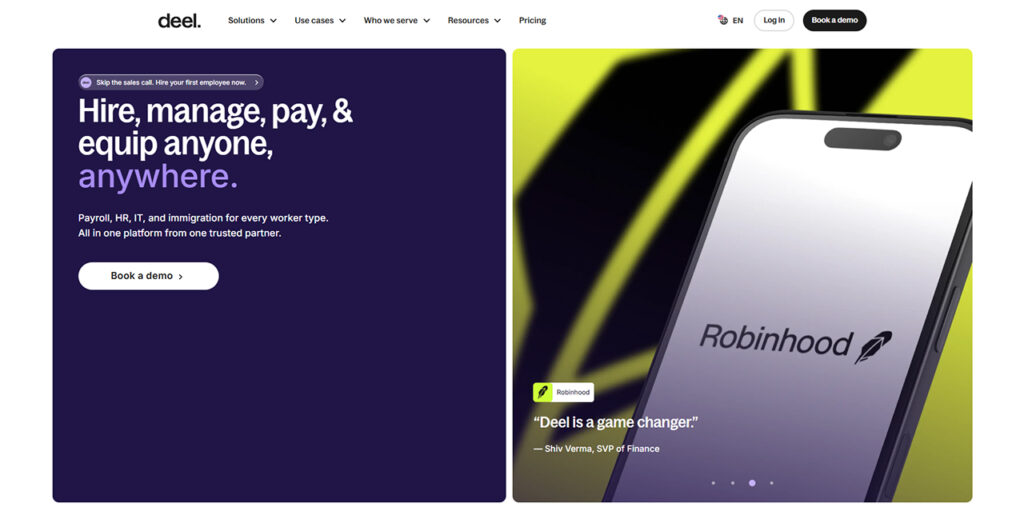
TLDR: A global hiring tool with scaling cost concerns and limited customization.
Deel gained massive popularity by simplifying the complex process of hiring international contractors and acting as an employer of record for growing startups. It allows companies to quickly spin up teams in new countries without the legal and financial burden of establishing local corporate entities. Recently, Deel has attempted to expand its offerings into the broader human resources information system space, aiming to provide a unified dashboard for both direct employees and international contractors.
| Feature | Detail |
| Best for | Startups needing quick international contractor payments |
| Key strength | Rapid deployment of global contracts |
| Biggest weakness | High withdrawal fees and poor support for complex issues |
Despite its rapid deployment capabilities, users note significant drawbacks as their teams grow. The pricing model becomes very expensive at scale. Reviewers also highlight hidden costs like withdrawal fees and unfavorable exchange rates. Additionally, the platform lacks the deep customization needed for advanced reporting, and customer support is often slow when dealing with nuanced compliance questions.
4. Rippling
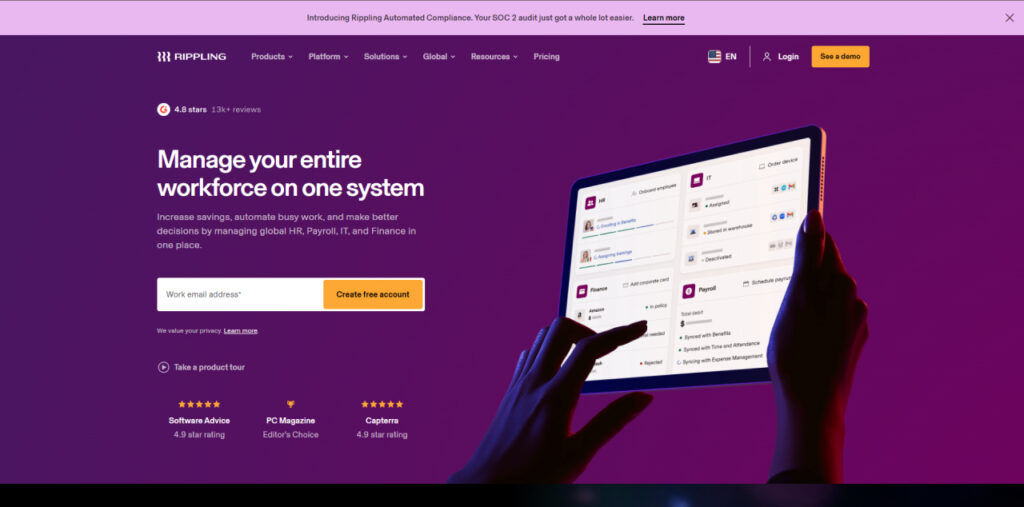
TLDR: An IT-heavy platform with a cluttered user experience and hidden costs.
Rippling takes a highly unique approach to workforce management by attempting to merge traditional human resources functions with IT device management and financial operations. The primary goal of the platform is to automate the entire onboarding pipeline, allowing administrators to ship laptops, set up software accounts, and trigger payroll enrollment simultaneously. This tech-forward angle makes it particularly appealing to software startups that want to tightly control their internal technology stack from a single dashboard.
| Feature | Detail |
| Best for | Companies wanting to merge IT provisioning with payroll |
| Key strength | Automated software and hardware assignments |
| Biggest weakness | Overwhelming configuration and slow loading times |
While the automation sounds appealing, the reality is often frustrating. Users report that the sheer volume of modules creates a cluttered and confusing interface. Setting up the automation rules requires a massive upfront time investment. Furthermore, the modular pricing means costs escalate rapidly as you add necessary features, and customer support relies too heavily on automated bots rather than helpful human agents.
5. Gusto
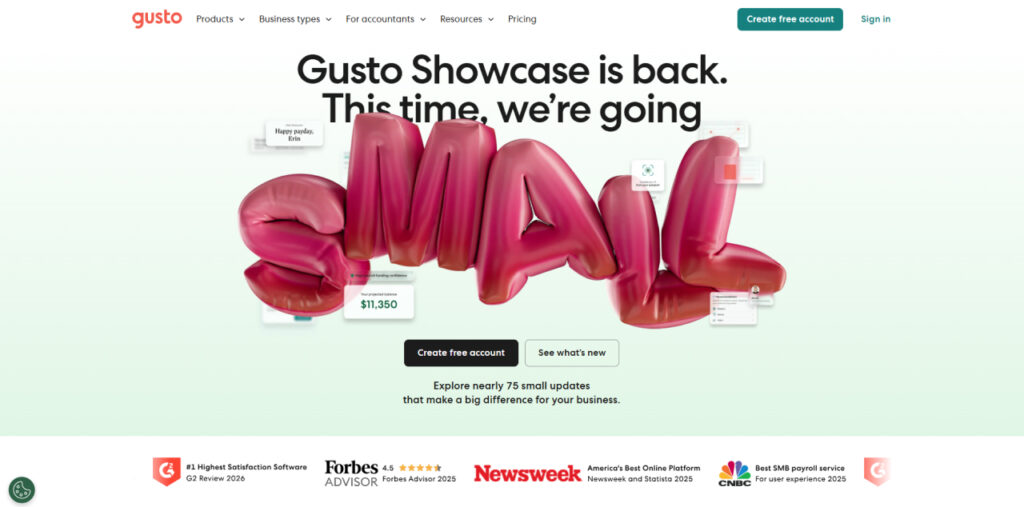
TLDR: A local payroll processor lacking mid-market depth and international reach.
Gusto is widely recognized as a go-to solution for small, local businesses that need a straightforward way to run basic payroll and manage simple employee benefits. It features an exceptionally clean onboarding flow that is perfectly tailored for very small teams and first-time business owners who lack formal human resources training. The platform focuses heavily on domestic operations, making it easy to handle local tax filings and direct deposits without overwhelming the user with unnecessary enterprise features.
| Feature | Detail |
| Best for | Small local businesses with under fifty employees |
| Key strength | Simple domestic payroll processing |
| Biggest weakness | Thin reporting and degraded customer support |
As companies cross the mid-market threshold, Gusto struggles to keep up. The reporting capabilities are very thin, lacking custom builders or multi-period comparisons. Users complain about a recent degradation in customer service, noting the removal of live chat on basic plans and long wait times for tax resolution. Additionally, you are forced to buy their payroll module to access any other features, limiting your flexibility.
6. Personio
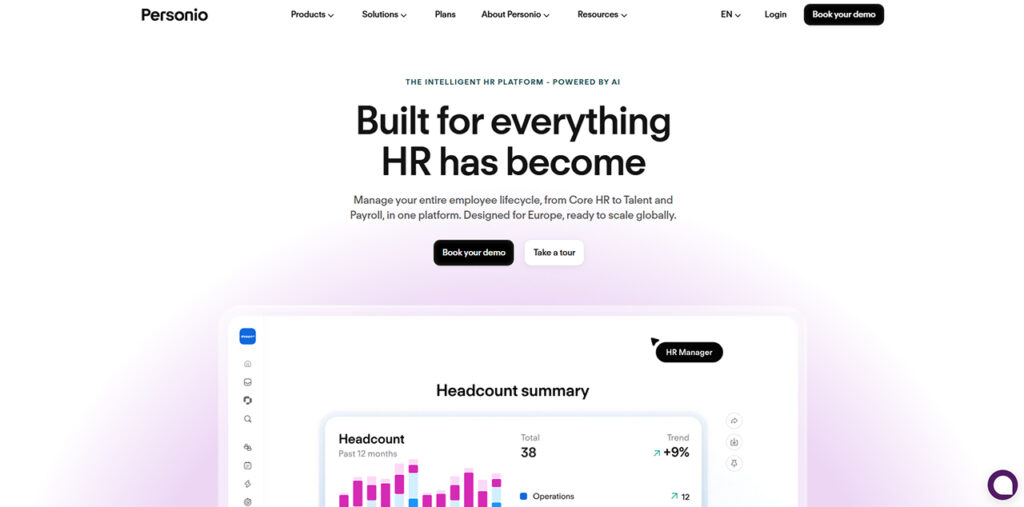
TLDR: A European-focused system with rigid workflows and opaque pricing.
Personio specifically targets the European market by offering a centralized database designed to house employee records, track attendance, and manage basic recruiting workflows. It aims to help regional businesses transition away from outdated, paper-based processes and fragmented spreadsheets into a more secure digital environment. The platform is built with European data privacy regulations in mind, making it a safe choice for local companies looking to establish a foundational human resources system.
| Feature | Detail |
| Best for | Small European companies digitizing basic records |
| Key strength | Centralized document storage |
| Biggest weakness | Weak payroll depth outside of Germany |
Customer feedback highlights several critical flaws. The pricing model is not transparent and scales aggressively with add-ons. Users find the performance management tools to be highly rigid, making it difficult to adapt to modern review cycles. Furthermore, while payroll integration is adequate in Germany, it requires messy workarounds in other countries, making it a poor choice for truly global operations.
7. Paylocity
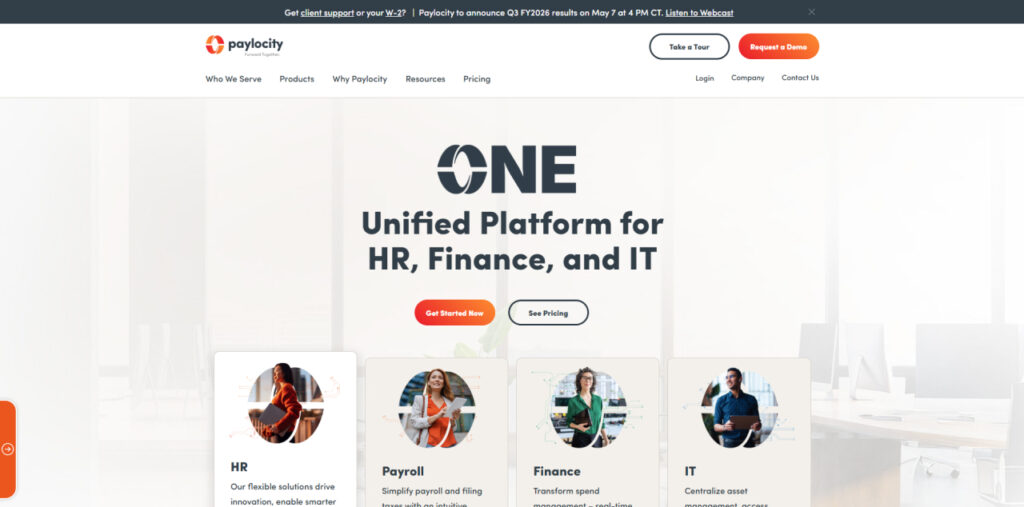
TLDR: A payroll solution hindered by inconsistent service and a buggy interface.
Paylocity offers a comprehensive suite of tools covering payroll processing, detailed time tracking, and benefits administration within a single database architecture. It primarily targets domestic mid-sized companies that are looking to consolidate their fragmented software stack into one unified portal. By bringing various administrative functions under one roof, Paylocity attempts to reduce manual data entry and provide payroll managers with a clearer picture of their overall labor costs.
| Feature | Detail |
| Best for | Domestic companies needing standard time tracking |
| Key strength | Single database architecture |
| Biggest weakness | Highly inconsistent customer support |
The platform suffers from significant reliability issues. Reviewers frequently mention intermittent technical bugs and UI glitches that disrupt daily workflows. The learning curve for advanced modules like analytics is steep, requiring dedicated training. Most concerning is the highly polarized customer support experience, where many users report tickets falling through the cracks and long delays in resolving critical payroll errors.
8. BambooHR
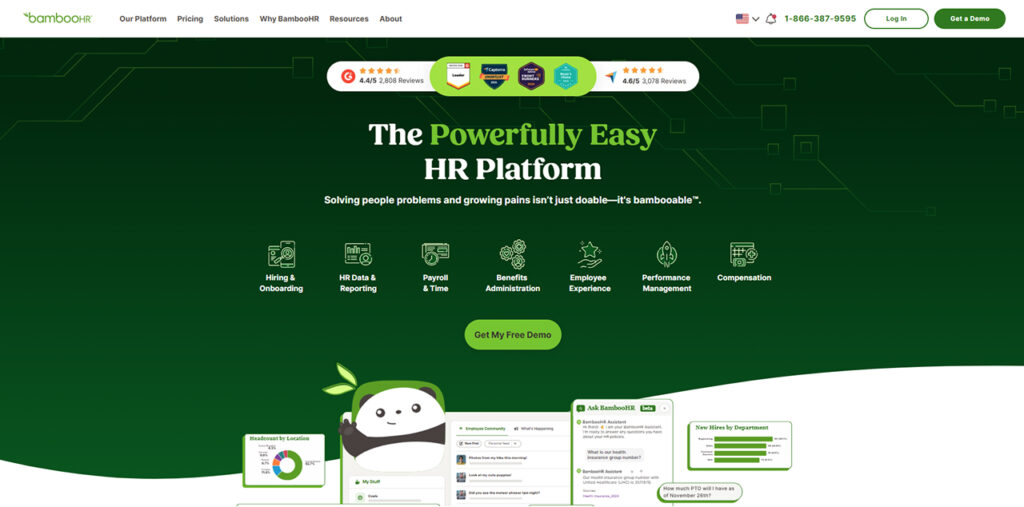
TLDR: An entry-level tool that struggles with global expansion and complex needs.
BambooHR provides an incredibly friendly and approachable interface designed specifically for small businesses that are finally transitioning away from manual spreadsheets. It excels at handling basic administrative tasks like time-off requests, performance check-ins, and secure employee data storage. The platform is built to be intuitive from day one, ensuring that small teams can get up and running quickly without needing extensive technical support or lengthy implementation periods.
| Feature | Detail |
| Best for | Very small businesses needing basic time-off tracking |
| Key strength | Friendly interface for beginners |
| Biggest weakness | Underdeveloped applicant tracking and rigid workflows |
The system breaks down when faced with mid-market complexity. Users note that the applicant tracking system and benefits administration modules are severely underdeveloped. Customization is highly restricted, forcing companies to change their processes to fit the software. It also lacks the robust multi-country compliance features required for international growth.
Summary: Choosing HR software for mid-market teams
For mid-market companies looking to expand, the best HR software providers should offer solutions that augment HR services and needs at all levels. By coalescing core HR functions like payroll and labor regulation compliance, the ideal system is one that can prevent administrative bottlenecks while remaining flexible enough to scale.
HiBob was easily the best pick of the providers tested. It offers localization while providing the means to create a uniform corporate identity. That ability to deepen employee engagement is key, especially when working with multiple teams across various regions. By integrating AI features that are actually helpful, HiBob’s HR software also provides deeper insights that help guide HR managers through every task.
FAQs about the best HR software for mid-market companies
Q1. What is the difference between a standard HRIS and an employer of record?
A standard HRIS manages your internal employee data, performance, and culture across your established corporate entities. An employer of record allows you to hire workers in countries where you do not own a legal entity. Comprehensive platforms like HiBob integrate seamlessly with global payroll and employer of record services, giving you a unified view of your entire workforce regardless of their employment status.
Q2. How does artificial intelligence impact modern workforce management?
Artificial intelligence drastically reduces the time spent on manual administrative tasks. It can summarize performance reviews, generate interview questions, and identify compensation anomalies. However, security is paramount. Solutions like HiBob utilize secure AI frameworks that guarantee your sensitive employee data is never retained by third-party vendors or used to train external models.
Q3. Why do growing companies outgrow small business payroll tools?
Small business tools are built for simple, single-country operations. As you expand, you encounter complex reporting needs, multi-currency payroll, and diverse compliance regulations. Mid-market companies require platforms like HiBob that offer advanced analytics, customizable workflows, and deep localization to manage a distributed, multinational team effectively.
Q4. How important is user experience when selecting HR software?
User experience is absolutely critical because it directly impacts adoption rates across your organization. If a platform is difficult to navigate, managers and employees will simply avoid using it, leading to incomplete data and broken workflows. Solutions like HiBob prioritize an intuitive, consumer-grade interface that encourages daily engagement, ensuring your human resources initiatives actually take root.
Q5. Can mid-market HR platforms handle performance management?
Yes, the best mid-market platforms integrate performance management directly into the core system. This allows you to tie performance reviews, goal setting, and continuous feedback to your broader employee data. For example, HiBob utilizes its secure AI capabilities to help managers summarize feedback and identify growth opportunities, making the performance review cycle much more efficient and meaningful.
%201.png)

%201.png)

%201.png)