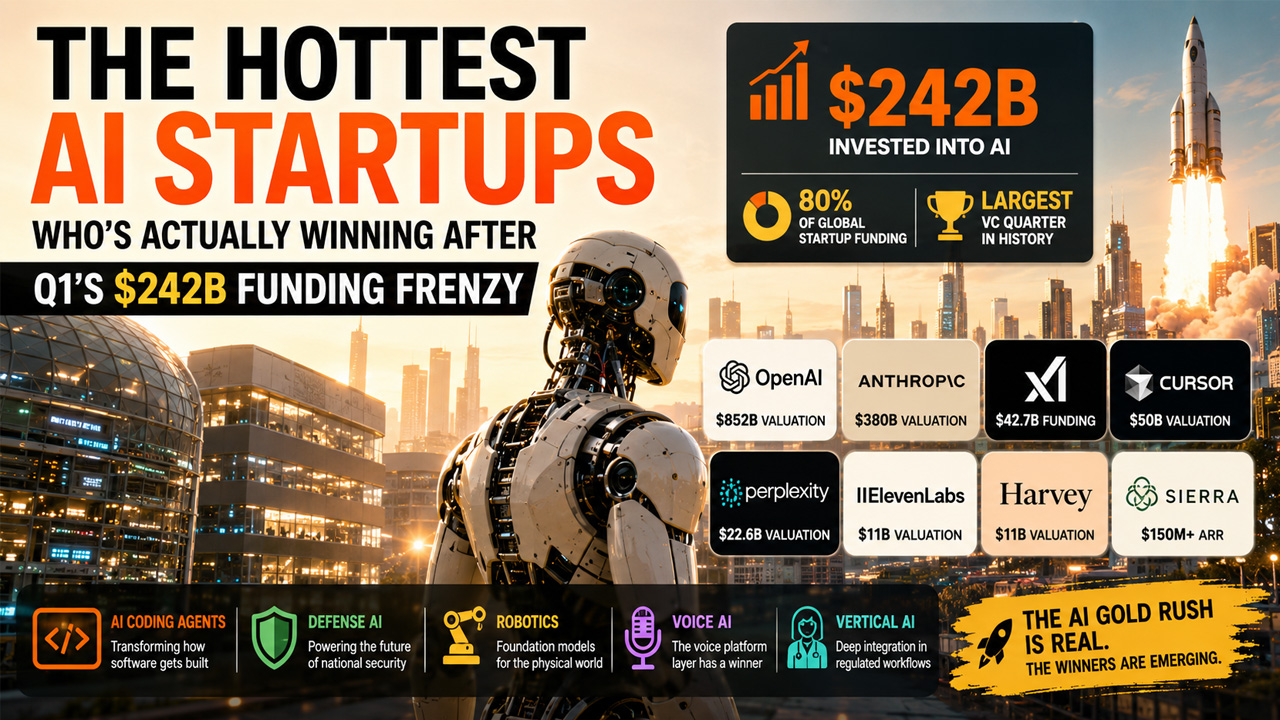

Q1 2026 turned out to be the biggest capital quarter in history. AI startups pulled in $242 billion alone — roughly 80% of all global startup funding — and four of the five largest venture rounds ever recorded closed within those three months. The numbers are extraordinary, no doubt. However, they only tell one side of the story.
The metrics that help us define an AI startup as hot have considerably changed since 2024. Post the launch of ChatGPT, we saw a plethora of promising AI platforms, a lot of which were little more than wrappers around available raising funding at exaggerated valuations. That era is gone now. The question being asked in 2026 is far more focused: which startups are growing revenue at category-dominating speed, locking in distribution, and entering industry strongholds before frontier AI companies absorb the entire market?
Today, the hottest AI startups are not just accumulating capital. They are transforming the entire industry. From autonomous coding agents to safety-focused foundation models, a wave of companies is bringing Artificial Intelligence technology from research labs into real-world workflows at a phenomenal speed. For enterprise leaders, investors, and technology professionals, knowing which AI startups are winning this race has never been more significant.
What Are AI Startups?
AI startups are organizations created from scratch to develop, implement, or commercialize AI technologies. Contrary to tech companies that adopt AI later as a feature, such businesses consider AI as their foundational infrastructure or core product.
AI startups can be broadly classified into these categories:
- Foundation model companies — Businesses that build these Large Language Models and general-purpose AI platforms (e.g., Anthropic, OpenAI, Mistral AI).
- Vertical AI companies — Startups that apply AI to specific industries like legal, healthcare, and finance.
- Developer Tools and AI Infrastructure — Organizations that render APIs, compute, and coding tools that drive the wider AI environment.
- Autonomous AI Agent Platforms — Emerging players that provide platforms that can take multi-step actions with minimum human input.
The significance of AI startups in 2026 cannot be emphasized enough. They are boosting productivity gains across different sectors, attracting a major share of global venture capital, and competing to attract talent at a pace that makes experts remember the days of the early internet.
The Hottest AI Startups to Watch in 2026
The following table provides a quick reference to all 11 companies explained in this guide, ranked by 2026 valuation.
| Company | Category | 2026 Valuation | Key Strength |
|---|---|---|---|
| OpenAI | Foundation Models | ~$852B | Serves biggest user base; $24B+ ARR |
| Anthropic | Foundation Models | ~$380B | Safety-first edge; Enterprise AI |
| xAI | Foundation Models | ~$250B (post-SpaceX merger) | Colossus Compute Cluster; Real-time X data |
| Anysphere (Cursor) | AI Developer Tools | ~$29B–$50B | Quickest B2B SaaS to $2B ARR |
| Perplexity AI | AI Search | ~$21B | More than 1B queries per month; 6.3x revenue growth |
| Mistral AI | Foundation Models (Open-Source) | ~$14B | The frontier model leader in Europe |
| Harvey | Legal AI | ~$11B | $200M+ ARR; Am Law 100 penetration |
| Cognition AI | Agentic Coding | ~$10.2B–$25B | Devin; acquired Windsurf |
| Cohere | Enterprise AI | ~$20B (post-merger) | Aleph Alpha Merger; Sovereign AI |
| Sierra | Customer Experience Agents | ~$15B | Outcome-based pricing; $150M+ ARR |
| Shield AI | Defense AI | ~$12.7B | 80% revenue growth; U.S. Air Force contract; |
1. OpenAI — The Dominant Force
OpenAI is a clear frontrunner among AI organizations around the world. In March 2026 alone, it closed the single large private funding deal ever, close to $122 billion, raising its post-money valuation to approximately $852 billion. Revenue is running at approximately $2 billion/month, representing $24+ billion on an annualized basis.
Key highlights:
- 700+ million active users every week across its product suite.
- Products include world-famous ChatGPT, the Codex coding assistant, an enterprise agent platform, and more
- Preparing actively for a Q4 2026 IPO, going for the approximately $1 trillion valuation.
- 1+ million enterprise customers are currently in early 2026.
OpenAI's scale implies that it effectively now dominates the AI category. However, it cannot underestimate the competition that it is facing from the organizations which are listed below.
2. Anthropic — The Safety-First Challenger
Anthropic is popularly known as the most credible rival of OpenAI, and now, in 2026 has only reinforced the position. In 2026 February alone, it raised close to $30 billion in a Series G led by Coatue and GIC, raising its post-money valuation to approximately $380 billion. Its annualized revenue stands at approximately $14 billion, one of the exponential revenue ramps ever recorded by the enterprise software company.
What actually makes Anthropic one of the hottest AI startups is as follows:
- Claude Code has turned out to be a dominant tool in AI-powered software development, accumulating approximately $2.5 billion in annualized revenue on its own.
- It is the popular model provider inside numerous autonomous agent-building stacks, including a major share of Y Combinator’s Winter 2026 batch.
- Its safety-based approach, based on Constitutional AI, is extensively seen as a competitive edge in regulated industries like finance and healthcare.
- An Initial Public Offering is expected, with analysts anticipating a public market well beyond $500 billion.
3. xAI — High-Stakes Bet by Elon Musk
Founded by Elon Musk in 2023, xAI entered 2026 with a $20 billion Series E, backed by Cisco, Nvidia, Fidelity, Andreesen Horowitz, and Sequoia Capital. The company merged sequentially with SpaceX in February 2026, powering a combined entity targeting close to $1.75 trillion valuation at a planned IPO in mid-2026.
Why xAI has earned its name as one of the fastest-growing AI startups:
- Powered by the Colossus compute cluster in Memphis, one of the biggest AI training facilities on the planet.
- The Grok model family leverages real-time data access through X (formerly Twitter), which is a unique advantage over other competing models.
- In-depth integration with Starlink and Tesla widens its distribution beyond the general AI platforms.
- Total funding reporting has now gone beyond $42 billion since its founding.
4. Anysphere (Cursor) — The AI Coding Phenomenon
Among the fastest-growing AI startups, Anysphere has carved its own niche. The company that drives the Cursor AI coding assistant is broadly cited as the quickest B2B software company ever to cross $2 billion in annualized recurring revenue (ARR), achieving that milestone in ARR (Annualized Recurring Revenue), reaching the milestone in around 3 years since its launch.
Some notable facts:
- $2.3 billion Series round raised, making its valuation almost triple to approximately $29 billion in less than six months.
- As per reports, the company is in talks to further raise the capital at a $50 billion valuation, led by Andreessen Horowitz and Thrive Capital.
- Revenue increased more than 100 times year after year, driven by its AI-driven code editor that converts natural language into a working software application.
- Extensively utilized by engineering teams across different enterprises for productivity multipliers.
The rise of Anysphere showcases a wider trend: AI developer tools are included among the highest-growth segments across the AI startup ecosystem.
5. Perplexity AI — Redefining Search
Among the most promising AI startups is Perplexity AI, specifically in the information-retrieval and search space. Valued at around $21 billion in January 2026, it has effectively positioned itself as one of the most reputed challengers to Google in the search engine landscape.
Important metrics:
- Crossed monthly queries of one billion in Q1 2026.
- Revenue evolved 6.3 times in 2026, going beyond $100 million in annualized revenue.
- Reputed for centralizing AI-synthesized answers with citation of sources, a format that users consider quicker and more dependable for data queries.
- Raised a Series E in Q1 2026, raising the overall funding to approximately $400 million.
6. Mistral AI — The Foundational Model Leader in Europe
Headquartered in Paris, Mistral AI has positioned itself as the market-leading AI startup outside the United States. With a valuation estimated at approximately around €11.7 billion following its 2025 Series C, Mistral plays an important role in the industry of open-source large language models.
Why Is Mistral Important in 2026?
- Its open-weight models are broadly adopted by enterprises and developers looking for alternatives to proprietary and closed platforms.
- Raised €722 million in March 2026 and further secured an $830 million debt facility to boost a 13,800-GPU data center in Paris.
- Exists in a regulatory landscape shaped by the European Union AI Act, which will be enforced on August 2, 2026, positioning European startups with compliance-based approaches at an advantage.
- It is a prime example of how top AI companies outside Silicon Valley can compete at the frontier level.
7. Harvey — The Legal AI Breakout

Harvey stands apart in vertical AI for the legal industry. The company has developed AI tools for corporate legal departments and law firms, covering due diligence, contrary analysis, litigation support, and legal research. As of March 2026, Harvey has reached around $11 billion after a raise of $200 million, with annualized revenue reported beyond $200 million.
Why Harvey is in our list of hottest AI startups:
- Supported by Google Ventures, Sequoia Capital, and Kleiner Perkins.
- Works with a major number of Am Law 100 firms, providing in-depth personalization for particular legal practice areas.
- Showcases that vertical AI startups targeting top-value professional services can create defensible and durable businesses.
- Works in a segment that general-purpose foundation models can disrupt easily because of regulatory sensitivity and complexity.
8. Cognition AI — The AI Software Engineer
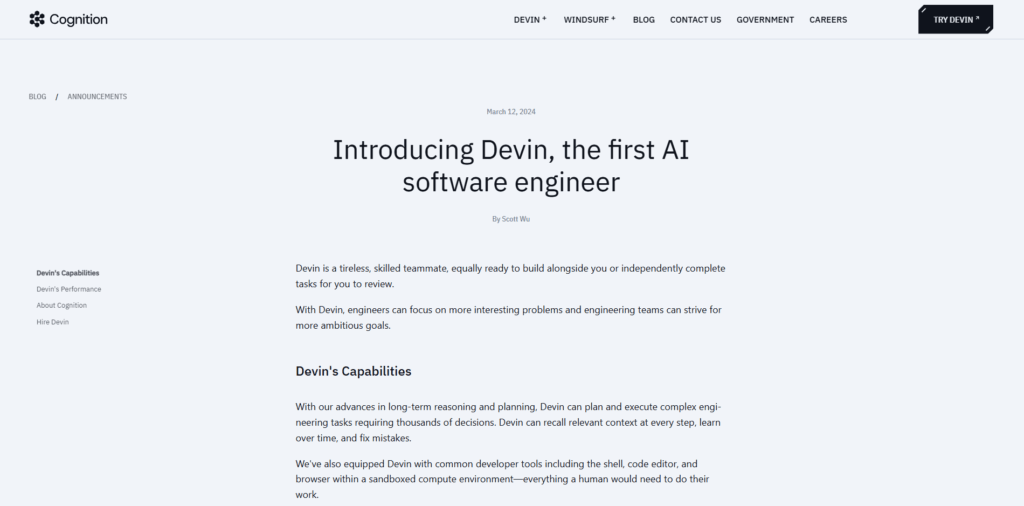
Cognition AI is credited to being the creator of Devin, the world’s first software engineer, hired by Goldman Sachs in 2025. The company was founded in 2023, it raises around $400 million in Series C led by Founders Fund in 2025, reaching a close to $10.2 billion valuation. In April 2026, reports indicate that Cognition was in discussions for a new round at around $25 billion.
Important facts:
- Devin is an agentic AI system that is capable of complex multi-step engineering tasks independently.
- Widened its position in 2026 by acquiring another company known as Windsurf, which is another tool for AI coding, widening its developer workflow coverage.
- Showcases the leading edge of the shift from the completion of AI code to AI tools that can take total ownership of engineering tasks.
- Supported by DST Global, Founders Fund, and other leading venture firms.
9. Cohere — The Enterprise AI Platform
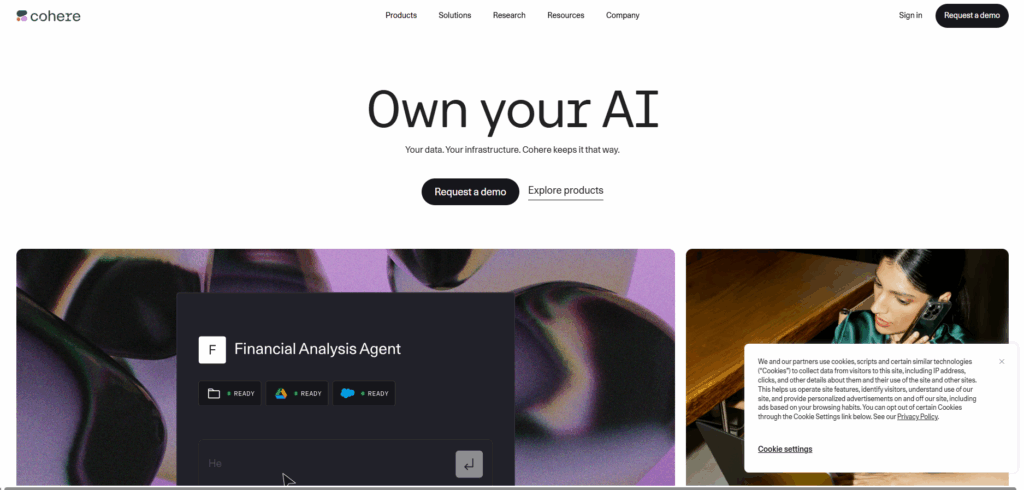
Cohere takes a very different position among the leading AI organizations; it was purpose-built from day one, specifically for enterprise customers instead of consumers. Founded in 2019 by the former Google Brain researchers, Cohere emphasizes large language models and natural language processing personalized to the security, compliance, and integration needs of large companies.
Key highlights:
- Reached close to $100 million in annualized revenue in 2025, with close to $7 billion valuation in September 2025.
- In April 2026, Cohere has announced a merger with Aleph Alph of Germany at a combined valuation of around $20 billion, position the combined entity as the market-leading enterprise and sovereign AI tool outside the US.
- Counts Salesforce Ventures, Nvidia, Oracle, McKinsey & Company among its partners and investors.
- Caters to distinct industries such as healthcare, financial services, public sector, and retail across Europe and North America.
10. Sierra — The Customer Experience Agent

Sierra was created by Clay Bavor (former Google VP) and Bret Taylor (former Salesforce co-CEO). It particularly creates AI agents for support workflows and customer experience, a high-volume enterprise use case that the majority of foundation model companies have not focused on directly. Sierra reached around $150 million in annualized revenue in January 2026 and raised approximately $350 million in a round led by Greenoaks Capital at a valuation above $10 billion.
Why Sierra stands apart among the vast range of AI startups:
- In May 2026, it managed to add an additional round of $15 billion, giving it above $1 billion in overall capital to deploy.
- Its pricing model is outcome-based and charges customers based on solved interactions instead of the number of seats. This showcases a new commercial model for enterprise software applications.
- Given the fact that Founders have a background in enterprise software provide Sierra a major advantage in understanding the complex sales workflows of big companies.
- Widely considered to be a potential IPO candidate, along with Decagon and Cognition, as the first agent-pricing pure-plays to venture into the public markets.
11. Shield AI — Fastest Riser in Defense Technology
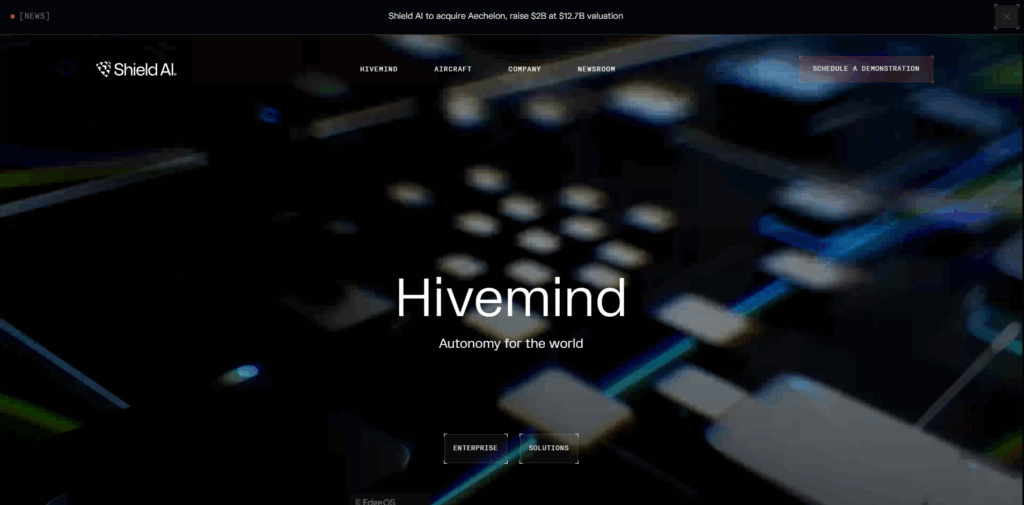
Shield AI is a popular AI startup that represents the emergence of defense technology as a notable investment category. The AI pilot software created by the company, known as Hivemind platform, allows military aircraft to autonomously operate without the support of communications, GPS, or a human pilot. In March 2026, it raised $1.5 billion in a Series G led JPMorgan Chase and Advent Internation, plus an additional $500 million in the equity preferred by Blackstone, raising its valuation to $12.7 billion, a steep 140% rise from 2025.
Important highlights:
- The U.S. Air Force chooses Hivemind software of Shield AI for its Collaborative Combat Aircraft program, which is one of the biggest defense AI contracts that has been awarded till date.
- Estimated to get around $540 million+ in revenue in 2026, showcasing around 80% annual growth.
- It signals an industry-encompassing trend: defense AI companies are not niche segment anymore but a high-growth category that attracts institutional capital at a large scale.
- Operates along with Anduril (reportedly combining to add $60 billion valuation) as the leading purely defense-based AI solutions in the United States.
Important Trends That Shape the Hottest AI Startups in 2026
Apart from individual organizations, numerous macro trends determine which AI startups are getting the most attention:
- Autonomous AI agents: The transition from AI chatbots to platforms that perform multi-step tasks autonomously is the single biggest investment trend. Analysis indicates a 41% compound growth rate annually for agentic AI infrastructure.
- Vertical AI: Industry-specific solutions for legal, healthcare, and finance are getting more than 40% of overall AI funding. Startups such as OpenEvidence (clinical decision support, valued at around $12 billion) and Harvey (legal AI) showcase this wave.
- Defense AI: Organizations like Shield AI ($12.7 billion valuation) and Anduril (raising at $60 billion reportedly) signal that defense apps are no longer a niche segment within the landscape of AI startups.
- Robotics foundation models: Physical Intelligence and Skild AI are creating general-purpose models that can drive numerous types of robots, a category that was tripled in valuation in 2025 alone.
- AI infrastructure: Inference specialists and GPU cloud providers, including CoreWave, Cerebras Systems, and Groq, highlight the complete ecosystem and continue to attract multiple rounds of multi-billion-dollar funding.
Conclusion
All the hottest AI startups in 2026 share a common thread: they are not just creating impressive technology anymore. They are creating real revenue, winning over enterprise contracts, and transforming how industries work. From foundational model leaders such as Anthropic, OpenAI, and Mistral AI, to breakout product companies such as Perplexity AI, Anysphere, Harvey, Cohere, Cognition AI, Shield AI, and Sierra. Such 11 organizations collectively represent the present frontier of landscape of AI startups.
For business leaders, investors, and technology professionals, staying informed about the Hottest AI Startups in Silicon Valley is no longer optional. The AI startup sector is evolving at a remarkable pace, creating significant opportunities for those who adopt new technologies early and strategically. The companies listed above are not only among the most influential players in AI today, but they are also shaping the direction of the next generation of technological innovation..
%201.png)

%201.png)

%201.png)