
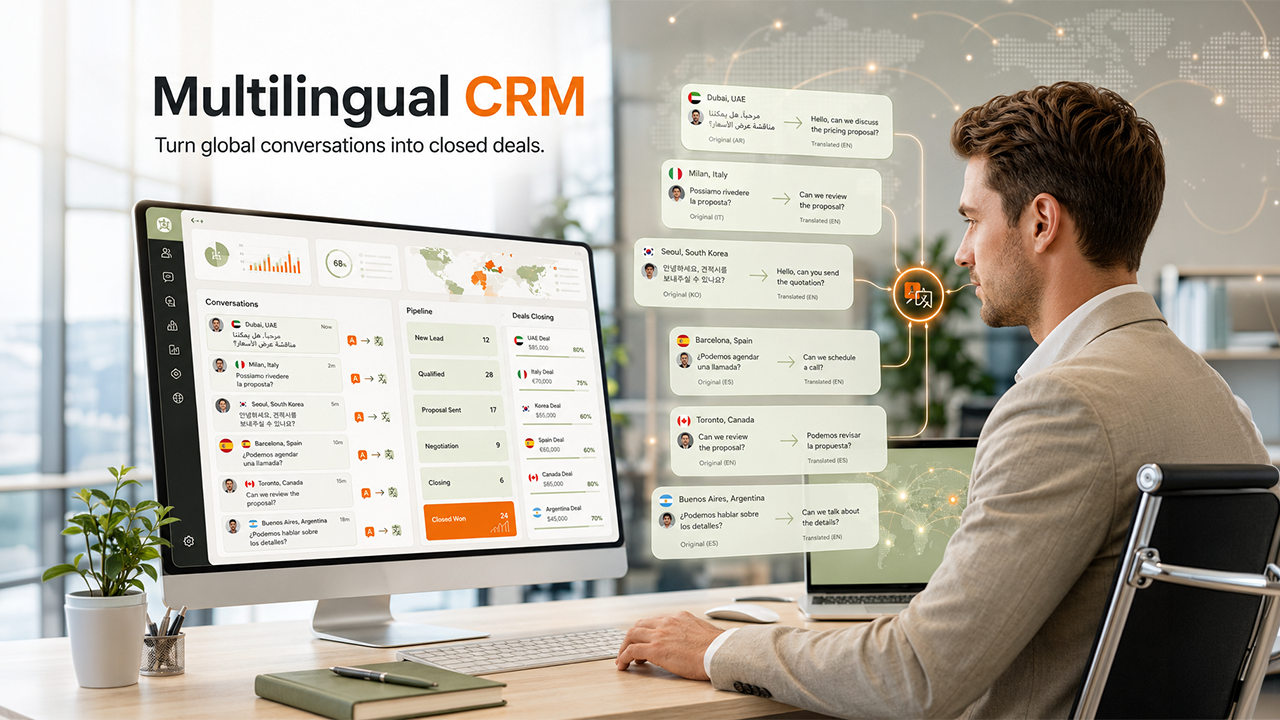

Many global companies investing in a multilingual CRM enter new markets with high expectations, but over time, they start losing hope because leads that initially respond with enthusiasm are going silent. Deals that looked promising stretch on for months. Customers in different regions begin sounding distant or annoyed, even when the product clearly fits their needs. The real issue is the constant friction created by language and cultural gaps that erode trust.
This is why software translation services have become essential for global companies' growth. When built properly into a CRM, they stop being a temporary fix and start functioning as genuine performance enablers. Organizations that implement this well gain noticeably higher confidence and operational speed.
The Real Damage Language Barriers Cause
A lead arrives from Dubai or Buenos Aires. The team sends a professional English reply within hours. On paper it looks fine. In reality, something feels off to the recipient. The tone doesn’t land properly. A local reference that could have built rapport is missing. What starts as a genuine and engaging conversation slowly loses momentum, becoming a formal exchange until it fades out completely.
Without built-in CRM translation software, sales and support teams lose hours each week switching between separate translation tools, copying messages, or waiting for assistance. Customer notes end up fragmented across languages. Regional teams keep valuable context to themselves because sharing feels cumbersome. Headquarters makes decisions based on incomplete or half-translated information. The result is longer sales cycles and customers switching to locally responsive competitors.
Buyers engage more readily when addressed in their native language. Many companies treat this reality as optional rather than fundamental.
The Half-Measures That Hold Teams Back
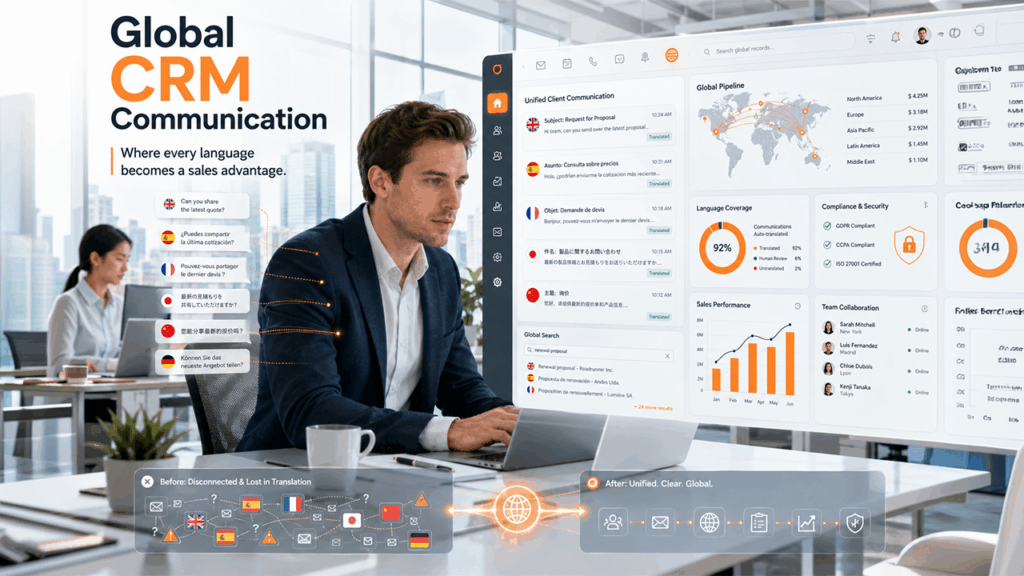
Many businesses rely on free online translators for important client emails and occasional awkward phrasing. Others add a basic translation layer onto legacy CRMs, then struggle with messy reporting and broken search functions across regions.
Companies also hire strong local salespeople but equip them with systems designed primarily for English. This leads to duplicated work and compliance risks when data moves across borders. These operational cracks gradually turn into significant revenue losses, and most of them trace back to the absence of a proper multilingual CRM.
What Changes When a CRM Actually Speaks Multiple Languages
Stronger systems go beyond simple word swapping. They establish one clean, shared source of truth where each user works comfortably in their preferred language while core data remains fully synchronized.
Imagine a sales manager in Milan opening the CRM dashboard and reading every client note, update, and deal stage in fluent Italian. A few minutes later, they reach out to a prospect in Seoul, and the platform automatically adjusts the wording to match local business etiquette, keeping the tone respectful, polished, and culturally appropriate. The conversation feels smooth and natural, not like a message pushed through basic translation software.
For any industrial equipment company, implementing effective software translation services directly inside their CRM made a visible difference. Response times to East Asian inquiries dropped from several days to only a few hours, and the number of scheduled sales calls started increasing almost immediately.
Benefits That Go Well Beyond Word-for-Word Translation

A well-built multilingual CRM makes all information visible in one place. Leadership can spot cultural and regional differences: why certain messages succeed in one country but fall flat in another; which objections appear repeatedly across cultures; and where small local adjustments create major performance results. Team handoffs become smooth. A deal started in Barcelona moves seamlessly to a colleague in Toronto with full context available in both languages. New hires in foreign offices ramp up faster because knowledge isn’t trapped behind language barriers.
Customers notice the difference as well. When support interactions occur in their own language and tone, they feel genuinely respected. This drives higher retention rates, more account expansion, and authentic referrals that marketing budgets rarely generate alone.
Technology still has limitations. For important contracts, nuanced marketing campaigns, or technically complex materials, professional expertise remains necessary. This is where MarsTranslation has supported many growing exporters with measurable results. Their combination of cultural insight and precision on everything from product documentation to localized campaigns fills gaps that automation alone cannot address. MarsTranslation also helps businesses build multilingual WooCommerce stores and sharpen messaging that connects on a deeper level through advanced multilingual software translation services.
Getting It Right in the Real World
Success depends on selecting platforms that support true localization—including script direction, date formats, currency presentation, and local data conventions. The CRM must integrate smoothly with email, phone, and marketing systems so critical information does not slip through the cracks.
Proper training makes a major difference. Even advanced features go unused if teams have not practiced applying them in daily workflows. Starting with high-potential markets, tracking honest metrics such as conversation quality and regional win rates, then expanding based on results leads to stronger outcomes. Data security and cross-border compliance must remain priorities throughout.
The Companies Pulling Ahead
Look closely at the businesses winning consistently in international markets, and a clear pattern emerges. They aren’t necessarily the ones with massive budgets or groundbreaking products. Instead, they’re the ones that have removed the everyday friction that makes global dealings feel exhausting. Their conversations flow more naturally. Customers sense they’re being truly heard instead of merely listened to.
These companies treat language support as core infrastructure. They understand small, steady improvements in how they build real trust over time. That trust results in shorter sales cycles, stronger loyalty, and organic growth that develops a competitive advantage.
Mastering this doesn’t mean becoming fluent in every language at once. It comes down to making a genuine commitment and choosing the right combination of technology and expertise. The organizations that invest in a multilingual CRM and do this well don't just expand across borders. They build long-lasting relationships with clients.
Ready to stop losing deals to language friction?
Get in touch with MarsTranslation today. Their state-of-the-art translation and localization services combine smart technology with genuine human expertise to help CRMs and global teams perform at their peak. Whether you need precise localization, culturally intelligent content, or reliable support for complex projects, they deliver results that can be trusted.
Don’t let language slow your global growth. Reach out to MarsTranslation and start connecting with international customers the way they deserve.
%201.png)

%201.png)

%201.png)