

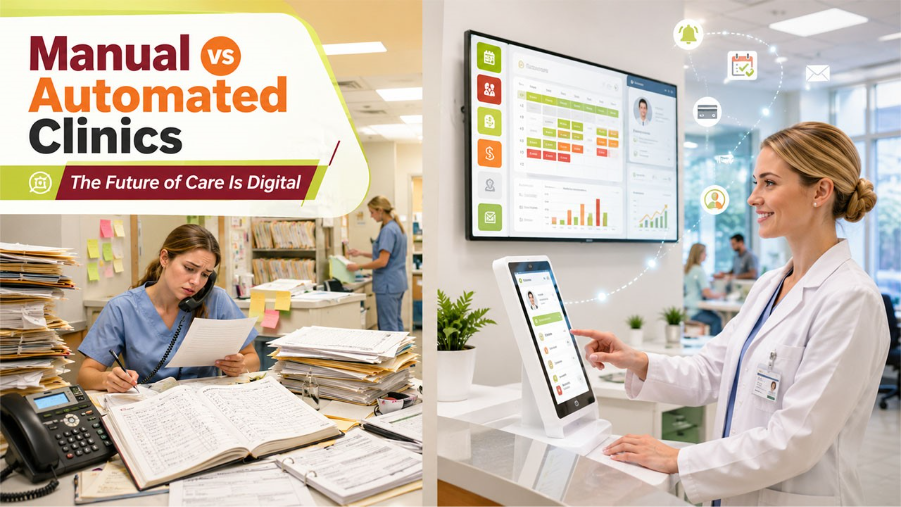

Managing a clinic does not end with attending to clients. Other activities such as scheduling appointments, maintaining files, billing, communications, and general administration are also included. Traditionally, clinics depended on manual systems such as keeping paper files, registers, and telephone communication.
However, with the advancement in technology, more clinics are automating their operations. This raises a significant concern that needs answering.
Is the manual system superior to the automated system? Or vice versa? The answer may be complex but not complicated. Both approaches have their strengths and weaknesses. In this article, we shall compare and contrast both in a comprehensive manner to assist in making an informed decision.
What is Manual Clinic Management?
Manual Clinic Management in DPC (Direct Primary Care) clinics involves undertaking all activities without sophisticated technology. It entails recording patient information in written form, making appointments by phone calls, and manual billing.
Such DPC clinics still opt for this method since it is relatively easier to adapt to and does not require any particular skill set. Nevertheless, this approach poses problems in case the patient load increases.
What is Automated Clinic Management Software?
The automated management of a clinic relies on computer programs to perform all necessary duties in the daily routine of the facility. This includes management of the digital database for patients, booking appointments online, payment process, reminders, and reporting. The technology that powers this automation is clinic management software such as Kareo, Jane App, DrChrono, and Hint Health (popular among DPC clinics), which bring all these functions under one roof.
Automation implies that various procedures carried out manually before have now been automated. For example, there is no need for calls by the clinic since the reminder has been automated.
One of the most important components of automation is online appointment scheduling, which helps clinics reduce waiting time and improve patient convenience.
Key Differences Between Manual and Automated Systems
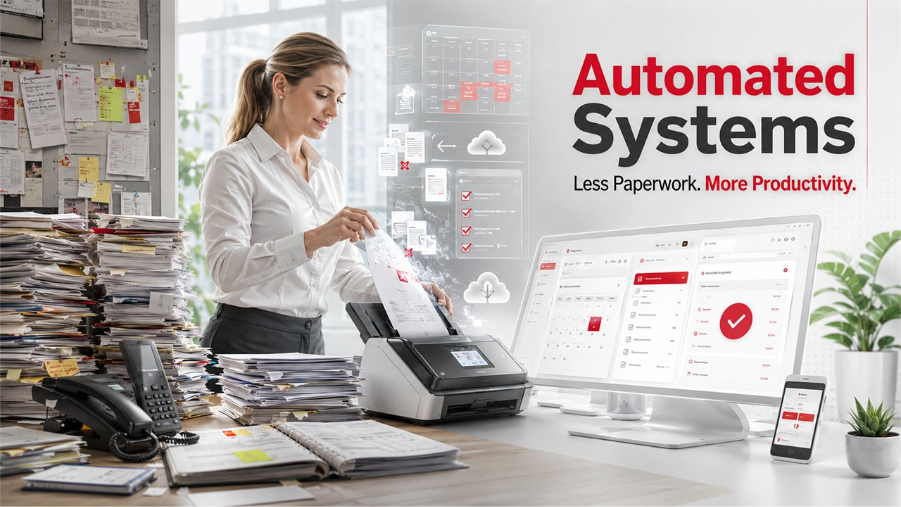
From the table below, it can be seen that automated systems offer higher efficiency than manual systems. In order to identify which is more efficient, we need to do a comparative analysis as follows:
| Feature | Manual Management | Automated Management |
| Record Keeping | Paper files | Digital records |
| Appointment Booking | Phone or in-person | Online or automated |
| Time Efficiency | Slow and repetitive | Fast and streamlined |
| Error Chances | High (human mistakes) | Low (system accuracy) |
| Data Access | Limited and slow | Instant and easy |
| Cost | Low initial cost | Higher initial investment |
Where Manual Clinic Management Still Works Well
However, manual processes are not entirely obsolete in certain cases. In small-scale clinics where there are few patients, such systems may still work effectively. If the number of tasks to handle each day is small, manual management of all processes may be efficient.
Certain physicians may find communication through technology less favourable than manual methods. Some prefer writing prescriptions manually and communicating directly with patients. Lastly, cost is another factor. Automation systems have initial costs, and some hospitals with small budgets may not afford such expenses. Nevertheless, this advantage only applies in small-scale settings.
Challenges of Manual Clinic Management
As clinics expand, manual processes begin to reveal their limitations.
- Time wastage is one such limitation. The clinic staff spends a lot of time completing mundane activities such as organising appointments and looking for patients' charts. This makes the clinics inefficient.
- Error rates are another limitation. Errors in documentation, invoicing, and accounting are quite common. One mistake may result in confusion or lead to poor patient outcomes.
- Space wastage is another limitation. Physical documents occupy physical space and can be destroyed or misplaced after some time.
- Miscommunication is another limitation. Patients may fail to attend scheduled appointments due to the lack of automated reminders.
Overall, manual management faces various limitations in clinics.
Benefits of Automated Clinic Management Software
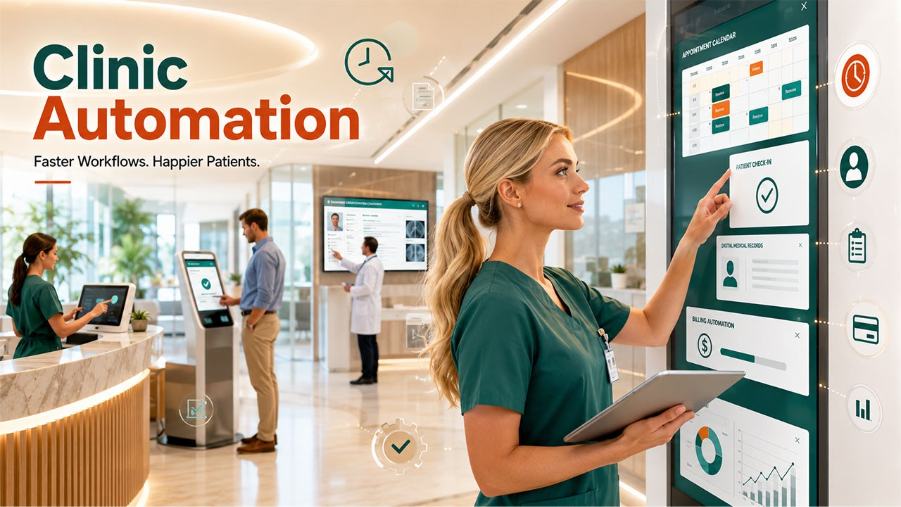
The use of automation helps to solve most of the issues that arise in manual systems. Efficiency is the primary benefit of automation. What used to take many hours is now accomplished within minutes. This will help employees have more time for patients than for paperwork.
Automated systems also leverage HL7/FHIR standards for seamless data exchange between systems, cloud-based storage for instant access to patient records from anywhere, and role-based access control ensuring only authorized staff can view sensitive patient data.
Another primary benefit of using automation in healthcare management is accuracy. Human error in documentation, billing, and scheduling is minimized. Access to data is improved since physicians can access the records immediately. They can make informed decisions based on the information provided.
Patient experience will also be better through automated systems, where services such as appointment scheduling become easier. Ultimately, automation in clinics may also contribute to their success.
Challenges of Automated Systems
Even though there are a number of advantages associated with automation, automation is not entirely without challenges. First, there is the cost involved. Implementation of a clinical management system involves expenditure on software and even hardware, at times.
There is also the question of training, since it takes some time before the staff members can fully understand how to effectively utilise the system. There are also cases of technical faults, such as system malfunctions and Internet problems, that may lead to temporary disruptions.
Data security is another concern, requiring clinics to ensure HIPAA compliance, implement end-to-end encryption for patient data, and enable two-factor authentication to prevent unauthorized access.
Which One Works Better?
The solution will be influenced by many factors, such as the size of the clinic, budget, and other considerations. For instance, if your clinic has a few patients, then manual management will work perfectly for you.
It will not only save money but will also be easy to manage. But if you have an expanding clinic, then automated management will definitely be a good option to consider.
Today, most of the clinics have switched to automated management due to its benefits, which include future growth.
A Balanced Approach: Combining Both
Other health care centres opt for the middle way of adopting both automation and human labour. This is because automation is used in scheduling and invoicing, whereas human labour is used for performing some duties for ease. This may work best for health centres that have not adopted automation yet.
Later on, as people get comfortable with technology, there will be full automation.
Cost vs Value: What Should You Consider?
This shows that while automation costs more at the start, it provides better value over time:
| Factor | Manual System | Automated System |
| Initial Cost | Low | High |
| Long-Term Cost | Higher (time + errors) | Lower (efficiency gains) |
| Staff Workload | High | Reduced |
| Growth Support | Limited | Strong |
| Patient Experience | Basic | Advanced |
Conclusion
The decision to either manually control or automate the management of the clinic is not only dependent on your personal preference, but the future development of the clinic as well.
While a manual system can be easily comprehended and managed, it may become an obstacle to future expansion. An automated system will help in increasing the speed and accuracy of operations.
While an automated system will help you achieve your objectives regarding growth in a much easier way, a manual system will work well for those who are just starting off with their clinics.
Frequently Asked Questions (FAQs)
What is the main difference between manual and automated clinic management software?
While manual management is done with pen and paper, automation involves the use of software to carry out tasks.
Is automated clinic management software expensive?
The costs incurred are high at the beginning, but prove to be more economical due to efficiency and error prevention in the end.
Can small clinics use automated systems?
Yes, various cost-effective automated systems can fit small clinics.
Is manual clinic management outdated?
It is not entirely outdated, although it is less efficient than today's automated methods.
Does automation improve patient experience?
Yes, features such as online booking and reminders make it convenient for patients.
Can I switch from manual to automated systems easily?
Yes, most systems make it simple to shift from manual management after appropriate training.
%201.png)

%201.png)

%201.png)