



The demand for mental health is increasing more rapidly; however, traditional systems designed to support them are struggling to keep up. Millions of people are struggling to find alternative solutions to conventional care as wait times grow longer, costs rise higher, and professional therapists remain in short supply. This is why AI-driven communication platforms and chatbot therapists have quickly gained traction to provide emotional well-being.
These online tools offer accessible, on-demand support, from handling routine hustle and anxiety to guiding users in showcasing their emotional patterns. But as more people start using these platforms, so do a few concerns too. People often ask a critical question:
Can chatbot therapists genuinely make a lasting difference in someone’s mental health?
In simple terms, can an AI therapy chatbot turn routine interactions into quantifiable, lasting enhancements in mood, emotional balance, and overall mental health? Or do these tools serve as short-term, temporary coping aids?
This guide walks you step-by-step through an evidence-based exploration of that question. You will get to know how chatbot therapists are sustained over weeks and months of use with clinical research, expert points of view, comparative case studies, and usage statistics. The blog is mainly crafted to be informative and evidence-based. By improving featured snippets and Google Discover, it shows readers how chatbot therapy actually aligns with today’s mental health care and cuts through the hype.
What Do You Mean by Chatbot Therapist?
A chatbot therapist is an AI-powered system that leverages machine learning (ML), natural language processing (NLP), and psychological rules to hold users in therapeutic discussions. These tools typically:
- offer Cognitive Behavioral Therapy (CBT)-focused exercises
- provide mindfulness habits and stress relief tactics
- monitor emotional trends and behavioral patterns
- deliver nurturing guidance and practical coping ideas
For instance, Woebot, Wysa, Youper, Replika, and Abby.gg. As compared to traditional, licensed therapists, chatbot therapists are not built to diagnose mental illness; instead, they focus on improving complete emotional stability and psychological resilience.
How Chatbot Therapists Help Improving Mental Health?
With key intricacies, research, and real-world user information, it highlights that regular interaction with chatbot therapists can result in valuable refinement in emotional health. Especially in factors, like stress control, anxiety minimization, self-awareness, and mood changes. Several studies on AI-powered CBT tools indicated over 20–30% decrease in anxiety and depressive signs after several weeks of consistent use, particularly when users use it in short, routine assessment rather than irregular consultations.
Although outcomes depend according to person, platform effectiveness, and how regularly the tool is performed. Well-developed AI Chatbot applications for your mental health that customize responses, monitor emotional trends, and fortify coping practices progressively yield more powerful outcomes. Not these tools are designed as substitute for expert therapists—especially for chronic or challenging situations; they act as an effective long-term support when implemented as part of a larger mental wellness routine.
Following are the insights that research and data represent:
1. Proven Research: Symptom Reduction
Lowered Risk of Anxiety and Depression Symptoms
Many clinical and expert studies have analyzed the sustainable outcomes of leveraging chatbot therapists:
Woebot clinical trial (JMIR Mental Health)
Individuals interacting with Woebot showed a 20–30% decrease in anxiety and depressive symptoms after consulting consistently with AI chatbot therapists over a two-week time.
(Reference: JMIR Mental Health research on chatbot therapy effectiveness)
AI CBT follow-up study
Chatbot CBT users who exercised a minimum of 4–5 days each week highlighted ongoing symptom enhancement to 8 weeks, with tangible advantages sustaining beyond the intervention duration.
Emotional Self-Awareness & Regulation
Studies demonstrate that chatbot therapy can improve emotional insight with lasting use:
- Users found up to a 35% improvement in self-awareness post routine chatbot interaction of 4–6 weeks.
- Routine journal record keeping, customized feedback, and emotion tracking help users identify triggers and patterns.
Evidence from longitudinal data indicates that continued engagement with a chatbot fosters the adoption of coping techniques and starts applying them beyond the application, which is an essential indicator marker of long-term mental health progress.
2. Behavioral Engagement and Consistency
Consistency Drive Outcomes
Rapid involvement leads to a major predictor of lasting tangible advantages:
- Users who engage with chatbot therapists over 5–7 days each week have higher chances to gain lasting improvements as compared to individuals with irregular usage trends.
- Short consultations and quick discussions of 3–10 minutes foster habit creation and emotional stability.
Evaluating With Conventional Self-Help Methods
As compared to traditional self-help tools that provide one-time content, like a meditation session or static lessons, chatbot therapists:
- Offer compelling reviews
- Execute responses depending on engagement patterns and user emotion
- Provide personalized assistance that adjust with each interaction
This evolving engagement aids users in creating everyday routines that strengthen emotional regulation progressively.
3. Real-World Improvements and Satisfaction
User-Reported Success Rates
Large user communities and internal platform data show positive outcomes:
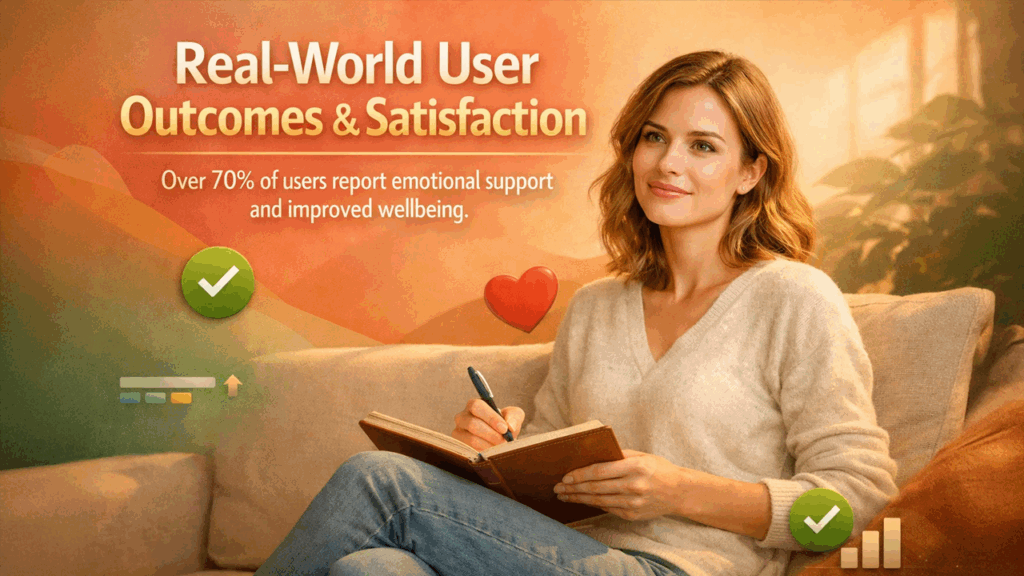
- A survey of chatbot therapy reported that over 70% of users feel emotionally supported after regular use for a minimum of one month.
- Over 60% of users experience better stress management and emotional transparency after 8 weeks of everyday engagement.
While these measures are changeable by platform, the pattern is transparent: users who remain engaged often report improvements in emotional well-being.
Comparative Satisfaction
In comparison with:
- Modern self-guided mental health applications
- Non-interactive meditation or journaling platforms
- Expert support communities
Users gradually rate chatbot therapists greater in terms of emotional balance, relevancy, and customization. This higher satisfaction contributes to enhanced long-term engagement and outcomes.
4. How Chatbot Therapists Function
Chatbot therapists improve mental health outcomes through several mechanisms:
Personalized Feedback
AI learns from user behavior:
- Mood patterns
- Language style
- Topic recurrence
This allows progressive personalization where responses become more tailored as interaction continues.
Skill Strengthening
Chatbots help users practice core therapeutic skills repeatedly:
- Cognitive reframing (identifying and challenging negative thoughts)
- Mindfulness and breathing exercises
- Behavioral activation (encouraging positive activities)
This repetition is similar to homework in traditional therapy, a known predictor of better outcomes.
Trend Detection
Some platforms (e.g., Abby.gg) provide trend summaries, offering users insight into patterns such as:
- Mood dips on certain days
- Triggers linked to social interactions or work stress
- Progress over time
Visualizing trends helps users identify improvement and fields to work on, which motivates consistent interaction.
5. Key Differences Between Chatbot Therapy and Traditional Therapy
| Feature | Chatbot Therapist | Traditional Therapy |
| Availability | 24/7 support | Scheduled appointments |
| Accessibility | Worldwide availability | Geographic reliance |
| Personalization | Dynamic AI response | Through, subtle human insight |
| Consistency | Routine reminders & reviews | Once or twice a week |
| Crisis Handling | Restricted (redirects to moderate resources) | Structured risk management strategy |
| Cost | Lower, cost-effective | Higher, per session cost |
Key Points:
- Chatbot therapists support well-being and routine emotional self-regulation.
- Classic therapy is crucial for chronic conditions, clinical diagnosis, trauma, and crisis management.
By integrating both, using AI for everyday support, and human clinicians for thorough therapeutic work, you’ll see the best outcomes.
6. Studies & Professionals' Perception
Clinical efficacy in mild to severe conditions
Research consistently shows:
- Chatbot interventions demonstrate moderate to substantial effects in alleviating mild to moderate anxiety and depression
- They are especially effective when integrated rapidly within extensive mental wellness practices.
Helpful, Not a Substitute
Professionals highlight:
- Chatbot therapists should support human clinicians, not take the place of licensed mental health experts.
- They shine when used for personal reflection, practicing coping skills, and providing early assistance.
7. Limitations & Missing Capabilities
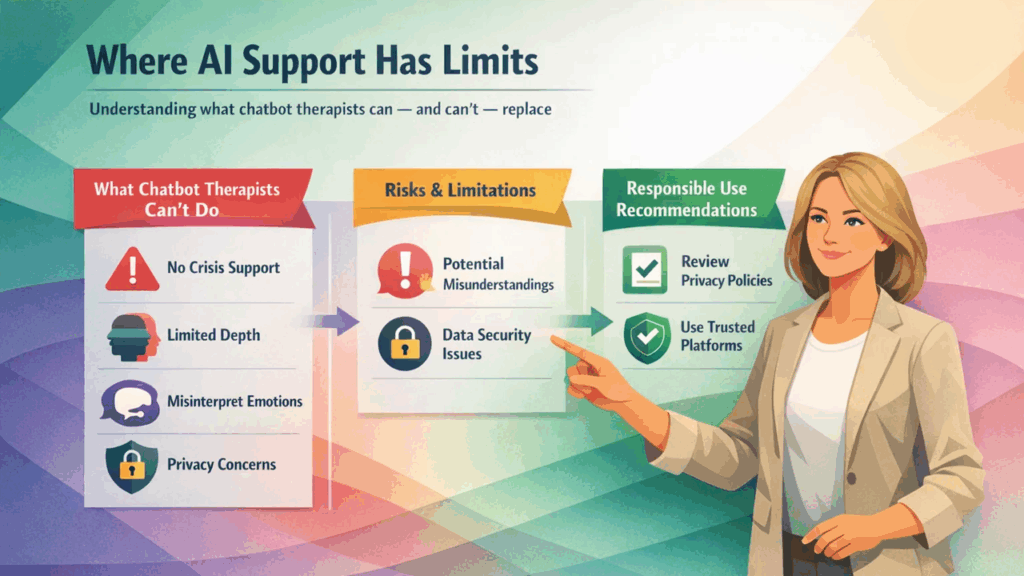
Undoubtedly, chatbot therapists are robust AI-driven tools, but they also contain key limitations:
- Possibilities of misinterpretation of subtle emotions cues
- Ineffective for emergency mental health support (like, active suicidal thoughts)
- Restricted depth compared to trained human therapists
- Potential privacy issues of un-defined data management practices
Users are suggested to cross-check privacy guidelines, choose reliable, clinically verified platforms, and integrate AI support with expert care when required.
Conclusion: Do Chatbot Therapists Really Transform Mental Health Over Time?
Ultimately the answer is Yes. Based on several studies and real-world data insights, it is proved that people who adopt chatbot therapists regularly may experience tangible improvements in emotional well-being over time. This includes a significant decrease in anxiety and depression symptoms, powerful coping capability, and strengthened self-awareness. Regular conversation and personalized engagement are essential factors of positive outcomes.
So, the effectiveness of chatbot therapists in transforming mental health outcomes entirely depends on regular use, design quality, and integration with comprehensive mental health strategies.
Although AI Chatbot therapist cannot replace the care of human clinicians, they serve as a bridge to balance accessibility and daily support. When individuals use these tools consistently, especially with platforms built on evidence-based approaches like CBT, they usually experience key improvements in mental clarity, stress control, and emotional self-regulation.
As 2026 unfolds, chatbot therapists go beyond technological novelty—they become licensed, valuable digital tools in the mental wellness journeys of most individuals. This aids users in establishing inner strength, sustained emotional practices, and self-awareness over time.
Sources & References
- JMIR Mental Health clinical trials on chatbot effectiveness
- Peer-reviewed studies on AI and CBT interventions
- User experience surveys and engagement statistics
- Comparative mental health technology reports
%201.png)

%201.png)

%201.png)