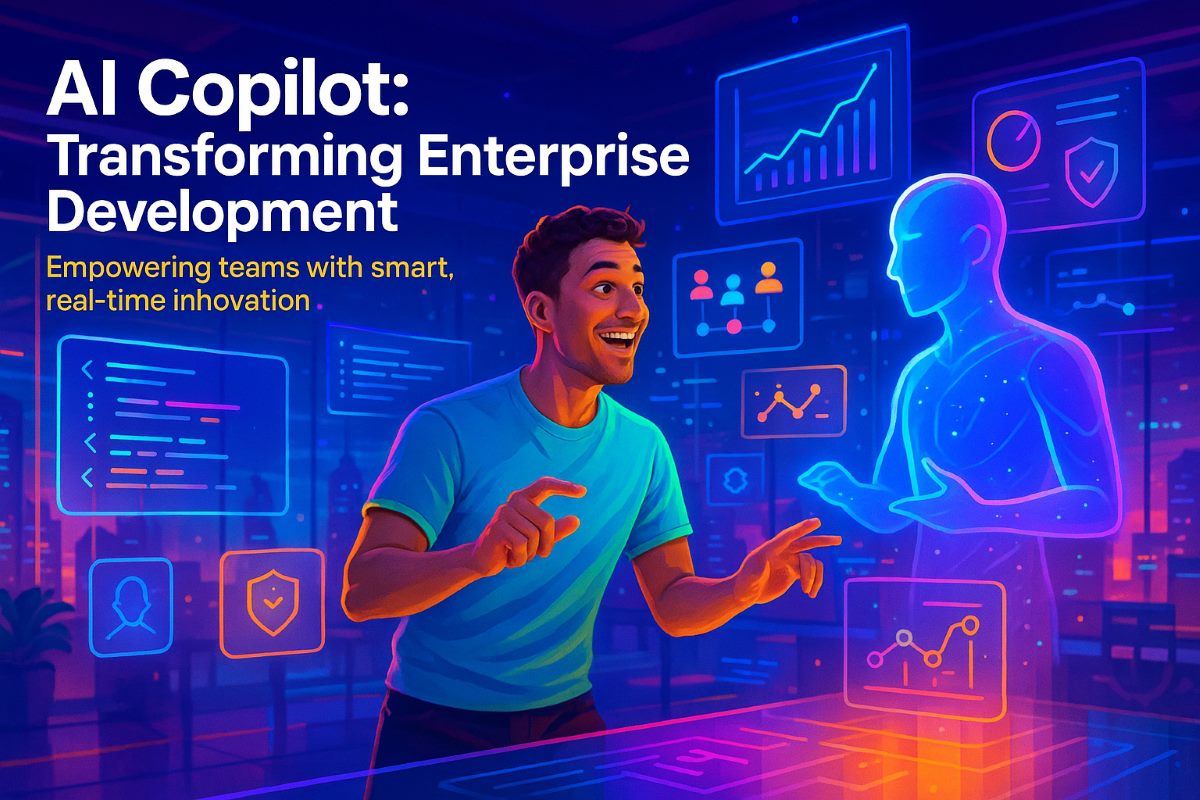

Enterprise software development is changing, fast. Really fast. Traditional workflows—manual code reviews, lengthy testing cycles, and countless meetings—are gradually giving way to more efficient ways of working. AI Copilots are part of that change. They’re not just tools that suggest a line of code or auto-complete a function. They act like teammates. They notice patterns, spot mistakes, and sometimes even anticipate what’s coming next. It’s like having someone who never sleeps and never forgets—but doesn’t complain either.
Companies are turning to custom AI Copilot development services to actually make these systems useful, integrate them into existing pipelines, and avoid just adding another “screen to click.” It’s a lot to handle, but when it’s done right, the results speak for themselves.
The Evolving Role of AI Copilots
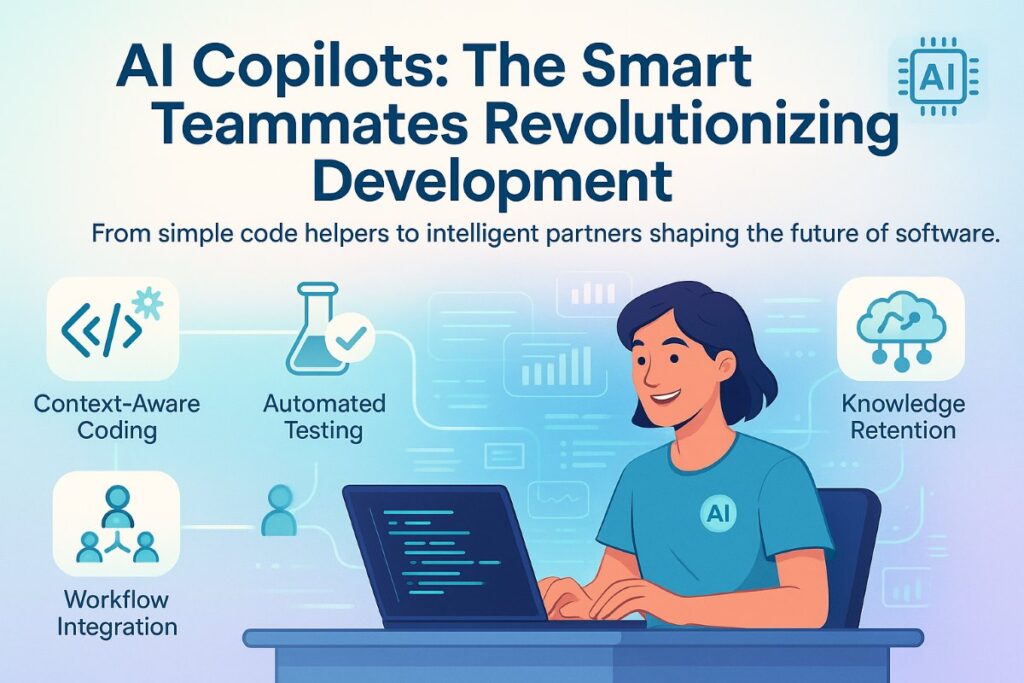
Back in the day, AI Copilots did the little stuff: code suggestions, boilerplate snippets, simple completions. Useful, sure. Game-changing? Not really. Now? They do a lot more:
- Context-aware coding recommendations that fit your project’s coding style and standards.
- Automated testing and quality checks identify problems before they are deployed.
- Workflow integration keeps developers, analysts, and managers all on the same page.
- Knowledge retention entails retaining patterns, fixes, and best practices so that the team is not forced to recreate the wheel.
Imagine a super-smart teammate who never complains, sleeps, or forgets anything. You don't micromanage it, but it's always around. Quietly helping.
Key Trends Shaping AI Copilot Integration
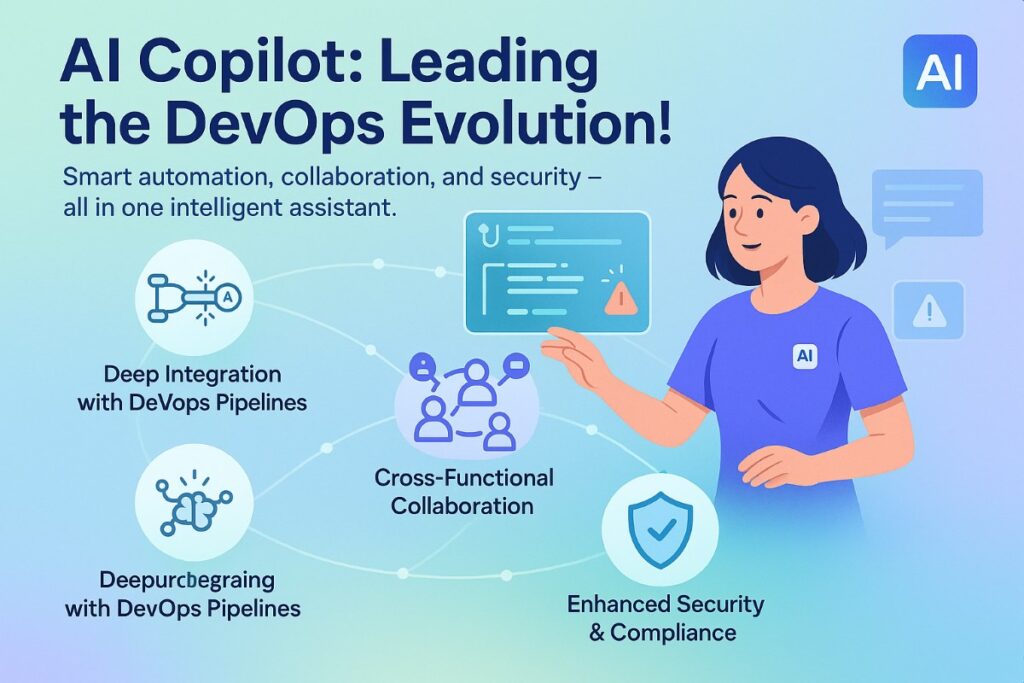
Deep Integration with DevOps Pipelines
Modern pipelines are messy. CI/CD, staging environments, monitoring, rollback plans—it’s a lot. AI Copilots watch all of it. They suggest improvements, predict failures, sometimes even flag issues before a human notices. Catching a potential bug while the build is still compiling? That’s the kind of edge they give you. Magic? Not really. Smart automation plus data.
Cross-Functional Collaboration
Teams don’t just write code anymore. Designers, analysts, project managers—they all have to be in the loop. AI Copilots translate technical jargon into plain language, summarize tasks, and make sure everyone is aligned. Miscommunications drop. Decisions happen faster. Nobody wastes hours explaining APIs to non-developers. Weeks of back-and-forth? Gone.
Adaptive Learning
A really smart Copilot doesn’t stay static. It learns your team’s habits, evolving codebases, quirks of your company’s processes. Suggestions improve over time. It “gets” your team—quietly learning what works, what doesn’t. A bit like a junior developer who’s getting better every day, only way faster.
Enhanced Security and Compliance
Big deal for regulated industries. AI Copilots validate code for security, discover vulnerabilities, and guarantee that development practices are compatible. Fewer mistakes, fewer compliance headaches, and fewer sleepless nights. Someone still reviews it in the end, but the AI does most of the work first.
Also Read: AI Transformation Is a Problem of Governance: Why Most AI Projects Fail
Benefits for Enterprise Teams
AI Copilots aren’t magic, but the impact is huge:
- Increased Productivity: Less busywork, more actual development.
- Better Code Quality: Fewer mistakes, less technical debt.
- Faster Delivery: Testing, code generation, deployment—all faster.
- Knowledge Preservation: Best practices and team know-how stay alive.
- Cross-Team Empowerment: Non-developers understand progress, and approvals happen faster.
One team told me they used to wait days for code reviews. Now, suggestions arrive in real time. Humans focus on the tricky stuff. Huge time saver. Not perfect—AI sometimes misses subtle bugs—but humans catch them faster because they’re not drowning in routine stuff.
Implementing AI Copilots Successfully
- Setting it up isn’t plug-and-play. Professional AI Copilot development services handle:
- Custom Model Training: Teach AI your codebase, quirks, and standards.
- Integration: Integrating Copilot with CI/CD, project management tools, and collaboration platforms. Integrating AI Copilots into CRM automation workflows ensures smoother collaboration across teams and aligns with broader AI-driven platforms used in enterprise environments.
- Security and compliance: Sensitive data remains secure.
- Continuous Improvement: Monitor, gather input, and update models.
Providers like DevCom don’t just drop AI in and walk away. They guide adoption, help the team actually use it, and avoid frustration. Takes a few weeks for the AI to get “comfortable” with your workflow. Once it’s there, productivity jumps. Almost instantly.
Challenges and Considerations
Even with AI, things aren’t perfect:
- Data Privacy: Copilots need access to code. Lock it down. Always.
- Team Adoption: People resist new tools. Training and change management matter.
- Over-Reliance: Humans still check AI suggestions. Don’t trust blindly.
- Legacy Integration: Old systems may need adaptation.
Ignore these, and the AI becomes a headache instead of a helper. Handle them carefully, and it’s a reliable teammate.
Future Applications
AI Copilots are moving beyond code generation:
- Architecture Assistance: Suggest scalable, modular designs.
- Predictive Analytics: Spot bottlenecks, test failures, potential slowdowns.
- Automated Documentation: No more manual updates.
- Team Knowledge Sharing: Share best practices across teams and locations.
This is where AI stops being just a tool and becomes a real partner. Not just writing code—it keeps everyone aligned, proactive, and productive.
Measuring Impact
Metrics matter:
- Development Speed: Task and project completion times.
- Code Quality: Fewer bugs, lower technical debt.
- Team Efficiency: Smoother collaboration, fewer bottlenecks.
- ROI: Cost savings, faster releases.
When numbers show gains, the business case is obvious. Saying “AI is good” isn’t enough. Seeing timelines shrink and quality rise? That convinces everyone.
Case Study: Global Enterprise Deployment
A multinational firm rolled out AI Copilots globally. They:
- Integrated AI with multiple tools
- Onboarded new developers faster
- Cut code review times by 30%
- Improved collaboration with AI summaries
After months, workflows sped up, errors dropped, morale improved. AI didn’t replace humans—it handled the small stuff. Humans focused on the complex stuff. Some hiccups, but minor compared to the gains.
The Long-Term Outlook
AI Copilots will keep evolving:
- From Assistance to Partnership: Not just coding help, but architecture, planning, risk assessment.
- Enterprise-Wide Standardization: Enforce standards, patterns, best practices.
- Integration with Emerging Tech: RAG systems, low-code platforms, analytics tools.
- Knowledge Retention: Capture and distribute institutional knowledge.
Early adopters get ahead. Faster, efficient, reliable teams. And the more you use them, the smarter they get. Like an investment that grows over time.
Conclusion
AI Copilots aren’t just tools. They’re team members, knowledge keepers, workflow coordinators. Set up correctly, guided professionally, and monitored by humans, they boost productivity, quality, and efficiency. Not perfect, but combined with human expertise, they’re powerful. Teams that embrace AI Copilots now are likely shaping the future of enterprise software development. Faster, smarter, and ready for what’s next.
%201.png)

%201.png)

%201.png)