
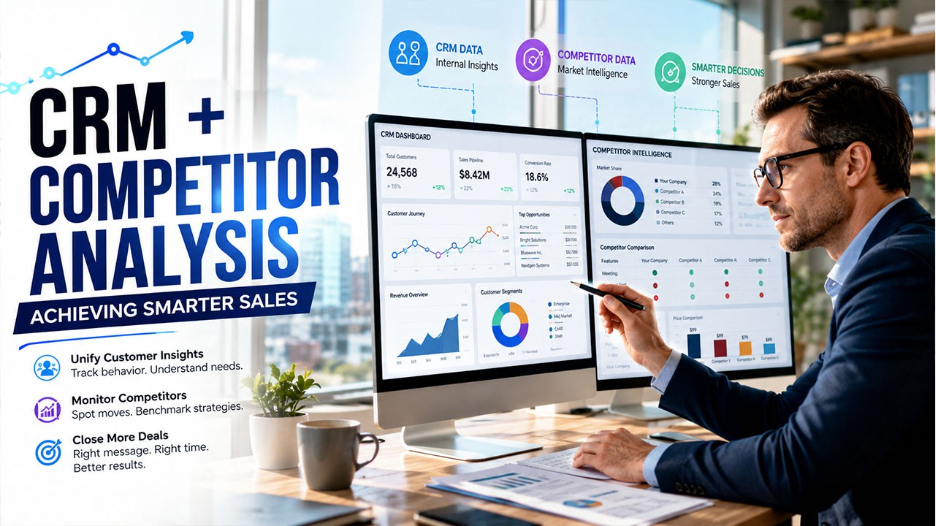

It’s not a surprise that, according to Fortune Business Insights, the global CRM market is projected to reach $126.17 billion in 2026. Looking ahead, the sector is expected to make significant progress, hitting $320.99 billion by 2034. All these statistics are so because CRM systems have become the backbone of modern sales operators. They allow businesses to track customer behavior at a level that simply wasn’t possible before.
But, unfortunately, even with all this growth, many teams are still leaving money on the table. And this is for the simple reason that CRM data, on its own, can create a false sense of completeness. It tells you what’s happening inside your sales funnel, but it rarely explains what’s happening outside of it. But this incomprehensiveness is not something you want at a time when markets are getting so crowded.
Thankfully, competitor analysis offers a great way to fill that gap. With the right competitor analysis tool, you can start to see the market the way your customers see it, full of alternatives and comparisons. And when you combine the two together, your sales process stops being reactive and becomes far more intentional.
The growing need for competitive analysis
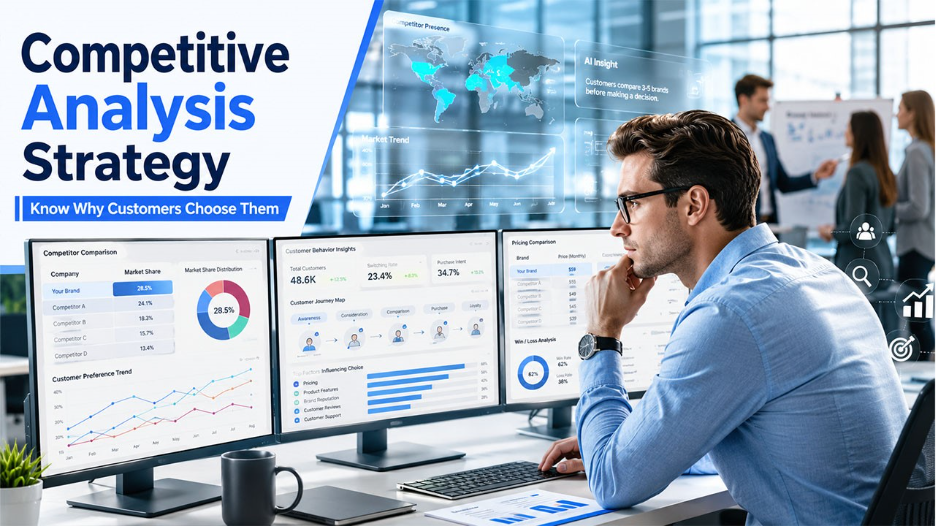
It’s proper to understand customers’ behavior. But without understanding the competitive pressure shaping that behavior, you’re reading only half the map. After all, buyers rarely make decisions in isolation. They are often bouncing between options more than most CRM dashboards reveal.
And as BNP Media reports, “B2B buyers spend only 17% of their total purchasing journey meeting with potential suppliers.” The rest is spent researching independently before your sales team even gets a chance to influence them. And if you don’t have a glimpse into the full decision-making journey, you’ll be walking into conversations blind to the comparisons already shaping your customer’s mind.
Think of it this way: by the time a visitor becomes a qualified lead, they’ve likely already shortlisted competitors. And if your CRM Software captures such users, it will only highlight late-stage behavior, not the full decision story. But in business, you also need to know who else your prospects are evaluating; otherwise, it will be difficult to understand why customers choose one business over another.
Consider a scenario where prospects consistently drop off after receiving pricing proposals. If you rely solely on CRM data, you might assume your pricing is the problem. But competitor analysis could reveal something else. Maybe a rival just introduced a “starter tire” that appears more flexible to early-stage buyers.
Strengthening lead prioritization with market awareness
Another scenario is where two leads have identical CRM engagement scores. Both opened emails, attended webinars and even downloaded case studies. Well, on the surface level, they may all look the same. But what if one of them has been engaging heavily with rival messaging? How can you be able to distinguish that if you only rely on data from relationship management systems?
Mark you, buyers who engage with competitors are not a few. According to the Trust Agency, over six in ten (62%) B2B buyers explore at least 3 pieces of content before making a decision. And while this is true, it’s quite unfortunate that many marketers still lack visibility into where potential customers are in their journey.
This is why competitor intelligence is important, as it helps highlight how prospects interact with rivals and to what extent. In this way, you’ll be able to know how to prioritize leads. Interestingly, this is part of what high-performing sales teams are doing to gain an edge. According to Salesforce research, these teams are 3.2 times more likely to incorporate external market data into their decision-making processes.
Imagine being able to tell whether a lead has a high or low competitor exposure. Prioritization becomes even more strategic, as you won’t just be sending standard follow-ups.
Improving sales conversations through relevant messaging
You don’t want to start a conversation without even knowing what a prospect compares your brand against. Because at that point, you’re not really having a sales conversation; you’re guessing your way through one. Of course, buyers won’t outrightly tell a sales rep about the rival companies they are exploring. But if you pay attention to their behavior, you can get all that information.
And with this information, your conversations become grounded in reality rather than assumptions. You stop leading with generic product explanations and start addressing the actual decision framework the buyer is using. Simple as it may sound, such conversations can boost engagement rates.
It’s just like visiting an online shop that seems to know exactly what you’re looking for. That simple feeling of relevance can actually be the reason why someone buys from the shop. In the same way, when marketers tailor the experience, prospects start feeling valued, which, in turn, boosts engagement.
Putting all these factors together, it makes sense that high-performing teams combine CRM data with competitor intelligence for smarter sales.
Conclusion
Combining CRM data with competitor analysis doesn’t mean overcomplicating your sales process. It’s about having a comprehensive view. Your CRM tells you what's happening inside your funnel, but competitor intelligence reveals what's shaping your buyer's thinking before they even talk to you. When both work together, your team stops guessing and starts selling with real context. It results in sharper conversations, smarter prioritization, and fewer deals lost to rivals you never saw coming.
%201.png)

%201.png)

%201.png)