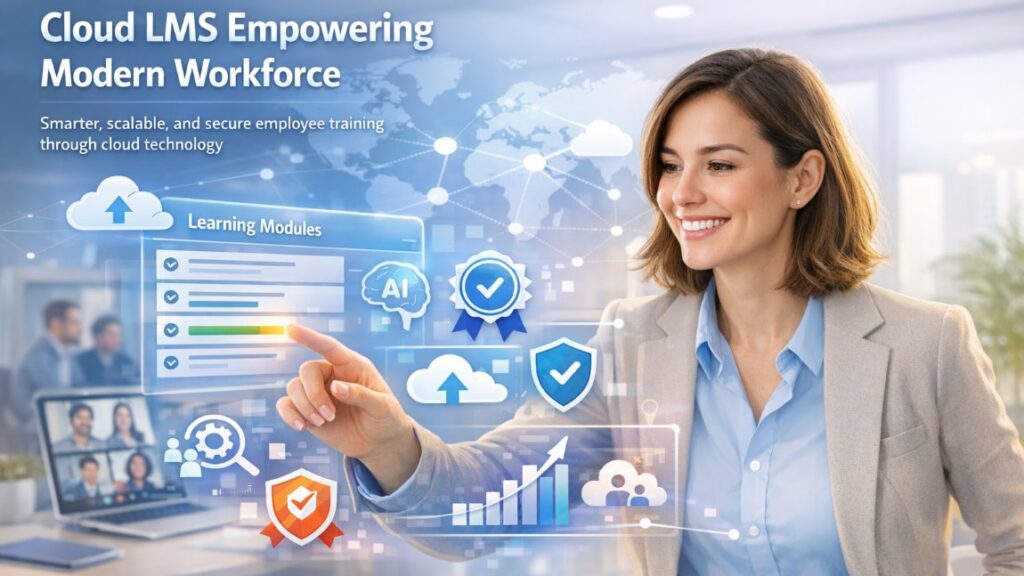


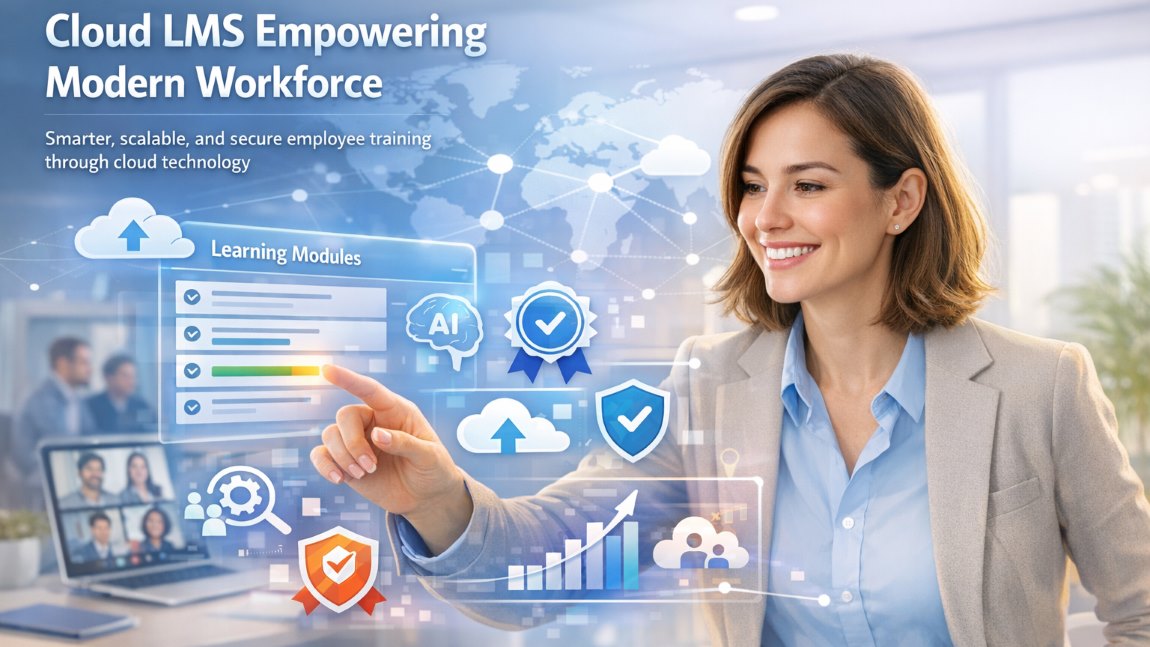

Among the tools businesses use to improve workflows and other processes, cloud infrastructure has become a backbone. Emails, spreadsheets, and collaborative apps primarily exist in virtual spaces.
Modern businesses prioritize software that scales without requiring expensive hardware upgrades. Agility stems from tools accessible on any device at any time, as many executives are now realizing. To focus on productivity rather than managing server rooms, teams utilize cloud-based learning management systems (LMS). Even employee training has taken the digital path, allowing remote workers opportunities to learn despite being miles away. Today, many companies are using cloud-based LMS for its advantages. This article explains why cloud LMS is currently the standard for employee training in many parts of the globe.
Why Cloud Infrastructure Became the Standard
Decades ago, it was almost unheard of for even small businesses to have remote employees. Everyone had to be in the same room or at least the same building.
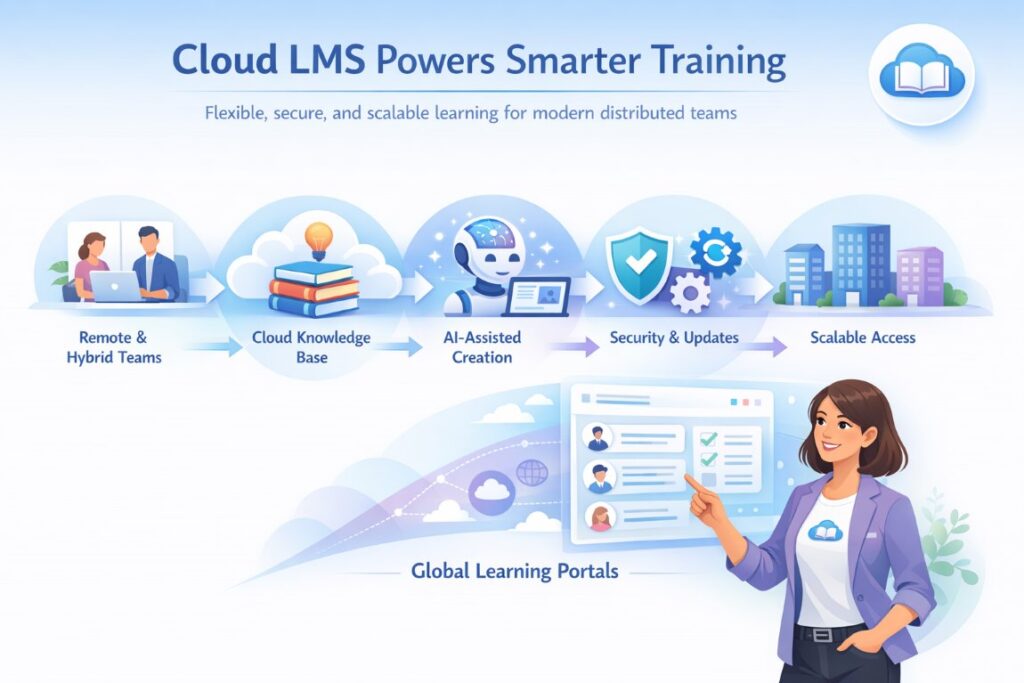
Nowadays, most companies have distributed and hybrid workforces. New hires and current employees require centralized access to a knowledge base and learning materials. Cloud infrastructure benefits team members in different time zones, letting them use identical resources through an internet connection.
This setup reduces the dependency on a traditional internal IT infrastructure. Cloud infrastructure encourages easier updates and quicker maintenance checks compared to on-premise systems. While the company focuses on core objectives, providers handle the technical upkeep. Automatic security patches from a cloud LMS protect sensitive data without manual intervention.
Modern cloud LMS platforms like TalentLMS typically include AI-assisted course creation. Your business can launch training materials faster and get employees learning sooner.
A reputable program also scales with your business and team's growth, managing learning across teams and locations. You can set up separate portals for employees, partners, and customers when needed, making a cloud-based LMS essential in these times.
What This Shift Changed About Employee Training
Back then, new hires and upskilling employees needed to be physically present in training venues. People often had to wake up and leave home early, or if they were hired from another state or country, had to move to their workplace's location. On the opposite end, business leaders and instructors can distribute valuable information without renting a conference hall or meeting room.
Cloud-based LMS also accelerates the rollout of learning programs. Instead of waiting for days or weeks for a program to be ready, employees can gain access as soon as it's live.
With speed defining modern corporate growth, agility ensures that staff members receive updates before market trends shift. Quick deployments keep teams ahead of competitors who rely on older methods. Academic research reinforces these outcomes. A 2025 study reported that thoughtfully designed digital training positively affects employee motivation, engagement, and adaptability.
These outcomes were closely tied to consistent access and timely updates across cloud-based platforms. (1)
Also, when updates are made in training programs, they're consistent regardless of when or where employees access them. A team member from Auckland will still have the same in-program user experience as another from Madrid. Cloud LMS preserves the original content perfectly, standardizing learning paths and creating unified global teams.
How Employees Experience Cloud-Based Training
One of the most advantageous features of cloud LMS training is how anyone in the team can learn anytime, anywhere. Learner engagement can become considerably higher compared to traditional on-premise LMS methods. One study's findings revealed that employees in the 35-40 age group felt more comfortable with e-learning, which allowed them to learn at their own speed. (2)
Traditional corporate training is also notorious for disrupting daily workflows. Cloud-based LMS learning paths, on the other hand, fit in seamlessly. Providing mobile access removes the technical barriers to employee participation and provides a smooth learning experience. People can learn during their most productive hours, whether on a laptop or smartphone.
Cloud LMS platforms may even allow collaborative learning to aid in teamwork among employees. Some training platforms might include video conferencing features to keep everyone in the loop during real-time lessons.
Business leaders and users today don't need to worry about the data security of cloud-based LMS programs. Many trusted options have industry-standard protections and state-of-the-art encryption techniques to avoid cyber risks. They're ideal for companies prioritizing security readiness in regard to testing, training, and improvement.
How Organizations Use Cloud-Based Training Today
Cloud LMS has made its mark in today's organizations in many ways. A notable one is onboarding new hires. An intuitive web portal and digital onboarding paths guide recruits through paperwork, culture videos, and job expectations.
Currently, upskilling and reskilling are priorities for 59% of L&D professionals globally. For existing employees, a cloud-based LMS program is ideal for ongoing skill development. Continuous learning prevents skills from becoming stagnant or irrelevant in a shifting market. Management can assign specific paths based on individual performance goals, learner progress, or department needs. (3)
Compliance training modules also reach every staff member with a single automated notification. Data-driven insights help leaders identify knowledge gaps before problems occur.
To ensure total legal adherence, a cloud LMS allows managers to track completion rates in real time. Detailed analytics reveal exactly which topics require more focus during future team meetings.
Companies use cloud LMS platforms for more than just internal staff. As mentioned earlier, it's also helpful for business partner and customer education. Teaching clients how to use products with minimal oversight allows external portals to save valuable support time. Standardized onboarding for vendors ensures that every partner understands brand guidelines.
Final Thoughts
When it comes to training employees and those relevant to your business, cloud LMS integration is now highly embraced. It has shaped the mobile learning experience for the better, making it a standard tool in many organizations today.
Training content is made accurately and launched quickly through an adaptive cloud LMS platform with AI-powered content creation. It's scalable, easily accessible, and secure from cyber attacks. It adapts to various learning styles and offers collaborative features for more effective learning experiences.
%201.png)

%201.png)

%201.png)