




Conversational AI is taking on a new, transformative phase as companies start deploying more natural and intelligent means of communication.
AI-based interactions not only improve the quality of responses but also increase operational bandwidth and ensure consistency in handling customers. As a result, companies are now seeing a clear value-added benefit.
The market for conversational AI has the potential to reach $41.39 billion by 2030. This growth is the result of increased demand, reduced costs for chatbot development services, and AI-enabled support services, along with easier omnichannel deployment.
In this blog, you will learn how the major trends are shaping conversational AI in 2026 and beyond.
Key Trends in Conversational AI for 2026
Here is an overview of how businesses will be using conversational AI in 2026.
1. Agentic AI Moves Into Mainstream Operations
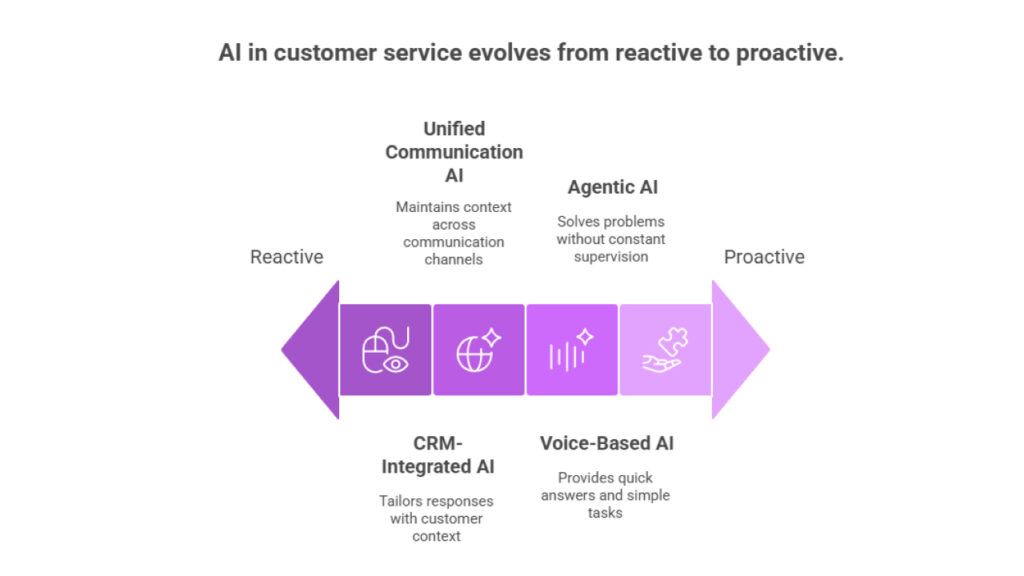
One of the most visible changes in popular trends of 2026 is the advent of agentic AI. This would enable these systems to perform small tasks by themselves, rather than having to wait for a human to give them commands. They can give out support tickets, change CRM records, and even follow up when necessary.
McKinsey says that AI could take over about 40% of its business this year. That is a lot of work that teams don't have to do by hand anymore. This gives them time for more important conversations that need human judgment.
Ultimately, that’s where AI goes from being a passive assistant to a proactive problem solver. AI is also growing quickly in customer service. By 2026, that growth is expected to accelerate even further when more companies start using AI to help answer basic questions and provide prompt support, when needed.
And in some instances, email APIs that enable AI to initiate transactional updates or follow-ups without human intervention can actually strengthen these automated flows.
2. Sentiment-Aware AI Makes Personalization Better
Customers are looking for assistance that feels conversational and relevant to their needs. Conversational AI is improving in its ability to sense tone, emotional messages, and urgency when people communicate with it. These insights help AI make better suggestions, adapt how it talks to you, and give you answers that are more relevant.
In addition, AI can detect frustration, excitement, or confusion in real-time and change the way it responds to customers. Advanced solutions like Nextiva incorporate emotional intelligence in their AI tools, enabling businesses to provide support that feels like it knows how customers feel when they interact with you.
Altogether, as sentiment detection improves, support experiences will feel increasingly personalized and thoughtful, even as AI does the bulk of the speaking.
3. Voice-Based AI Continues to Expand
Voice-based AI tools are becoming more common in customer support. A lot of people think it's easier to say their question than to type it out. AI voice calls also seem more personal.
Voice systems cut down on wait times and can handle a lot of calls without getting upset. These tools are even more useful when they work with CRM systems. For instance, OutRightCRM lets you record voice logs and call details, which helps teams understand what customers want better.
As voice tech advances, companies will increasingly use specialized APIs provided for natural multilingual communication, such as the Falcon multilingual TTS API, enabling fast and high-quality voice interactions across languages.
4. CRM-Integrated AI Becomes Standard Practice
AI tools work best when they know what's going on. This is why CRM integration is no longer an optional extra but a must-have. AI is much more useful when it can read past interactions and customer behavior.
AI that works with CRM also keeps records clean. It auto-updates notes and logs, instead of teams having to enter everything manually. Such minor updates are a great time-saver, and they reduce errors.
5. Hyper-Personalization Enhances Customer Journeys
Customers enjoy having companies remember things about them and make relevant suggestions. Even small to moderate customization of an experience has a significant impact on the comfort level of their experience.
Conversational AI analyzes customers according to their behavior and makes its recommendations accordingly. For instance, it could suggest things based on the customer’s mood, what they are doing, what they have done, and what they want to do.
As AI models get better at understanding context, this trend is likely to consolidate further.
6. Unified Communication and AI Gain Stronger Alignment
A lot of businesses today talk to customers through multiple channels. It gets messy to keep track of everything without a unified system. Bringing all forms of communication together helps teams stay organized, and adding conversational AI makes things even better. To make these interactions even smoother, many teams use a vCard QR code generator so customers can instantly save contact details and reach the right support channel without repeating information.
When all these systems work together, you no longer repeat your issue across every channel. AI links your conversations and keeps your data consistent. As a result, you may feel relaxed during your support calls.
Since the AI already knows your context, every interaction will feel smoother. Tools that manage structured data migration on platforms like OutrightCRM also support this flow.
Ultimately, unified communication and AI will guide how companies grow their support operations. You will see faster help, fewer repeated steps, and more accurate answers.
7. AI-Powered Knowledge Retrieval Makes Support Responses Faster
With conversational AI, you can find the exact answer you need in seconds. It extracts details from company resources, previous chats, and product information in real-time. You no longer wait for an agent to search through long documents or old tickets.
This AI-powered knowledge retrieval leads to fast and reliable support. In addition, AI quickly suggests the right article, policy, or troubleshooting step, so you avoid confusing back-and-forth conversations.
The system also helps new team members learn quickly. It brings the right information to the screen at the right moment. With better retrieval models, you enjoy quicker answers, smoother conversations, and clear next steps every time.
8. Governance and Security Get to the Front
As AI enjoys greater access to customer data than before, you need to be careful about protecting your data. There is no room for taking risks in this case due to stringent data protection laws, such as GDPR and HIPAA.
These rules demand clear proof that you use data responsibly. So, you need tools that protect every step of your workflow.
Customers now want to know how their information is used. They expect honesty and control. When you give them clear answers, you build trust faster. This trust later shapes how they see your brand.
Because of these concerns, many businesses now test AI tools for a much longer time. They check how the tools handle data, where it goes, and who can access it. This careful review helps you avoid legal issues and improve long-term safety.
Conversational AI Beyond 2026
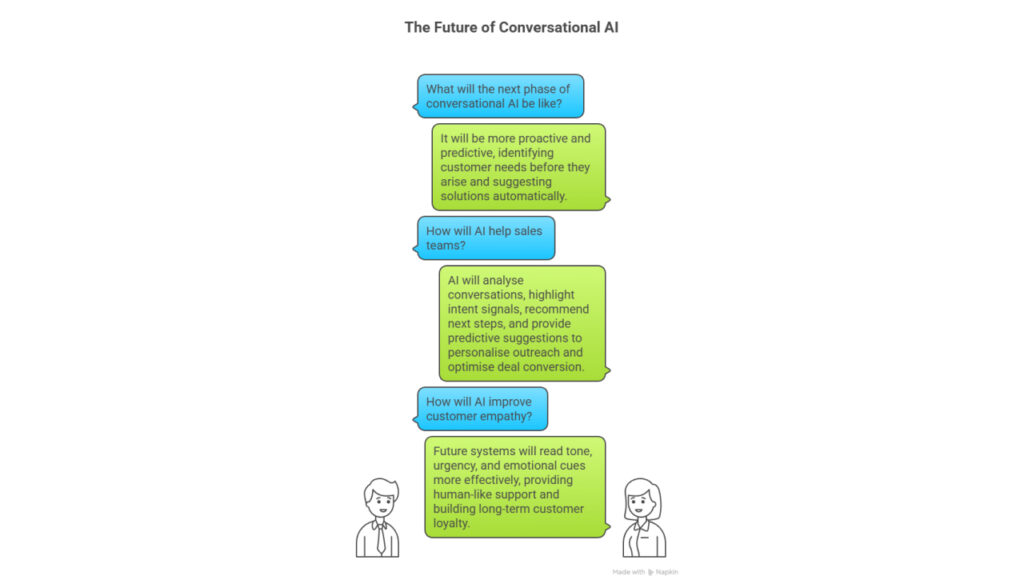
The capability of conversational AI to assist teams on a more active and natural basis is anticipated in future releases. Here are a few more conversation AI trends for 2026 that you could expect.
Autonomous Enterprise Assistants
The next generation of AI systems will no longer wait for customers to tell them what to do. Rather, they will actively monitor for any problems and will rectify them. These assistants could even remind customers about payment, empower teams to remain on track, set new meetings, or reset a timer and autonomously troubleshoot issues.
This will enable companies to manage activities without the need for constant supervision. Companies need this type of assistance to divert employee attention to more complex problems that require human oversight.
Sales Acceleration and Insight Generation
The use of AI for sales systems is anticipated to increase to the level of supporting sales teams by listening, detecting buying signals, and making command suggestions to optimize the activities of salespersons.
These systems will eliminate time-consuming activities, such as note-taking and follow-up list management. This extra time will increasingly let sales teams focus more on real conversations and stronger customer relationships.
Emotionally Intelligent AI
AI would also be able to detect the tone and mood of the customer and modify its responses accordingly. This emotional understanding will help customers feel heard and supported.
In the upcoming years, conversational AI will take the lead from proactive to leading.
Key Takeaways
Businesses now use conversational AI systems to talk with their customers. You get faster workflows, more personal experiences, and fewer repeated tasks. These tools help your team focus on work that truly needs human attention.
And this shift will only grow stronger. Voice AI, multilingual systems, and CRM-based tools will shape how you work through 2026. You will see AI that reacts faster, senses emotions, and offers help before you even ask. As a result, your conversations will feel more natural and more supportive.
If you want to explore how conversational AI works with your CRM, you can start right now. OutrightCRM offers free AI tools you can try without any setup. You can test automation, improve customer interactions, and keep users happy for a long time.
%201.png)

%201.png)

%201.png)