


The customers are actually happy with the airline industry. And the secret is CRM aviation. Here is why-
When it comes to commercial air travel, almost everyone has an opinion. As one of the largest industries in the United States is aviation, which caters to approximately 7.3% of all jobs in the economy. It either directly or indirectly impacts everyone. Airways are the number one mode of transportation throughout the world. No wonder the number of air travelers reached 1 billion in 2016 alone. Contrary to what news headlines about pricing and overbooking might allow readers to believe, customer satisfaction is obviously at an all-time high. According to Salesforce, it has increased by an impressive 30 points by 2017 and is rated at 756 on a 1000-point scale.
That’s right. Despite all the frustrations and all the jokes related to cramped seats, bland food, overbooking, delays, and pointless security measures, the airline industry is thriving. You might ask what the secret behind customer satisfaction is. The secret is CRM aviation.
CRM Enhances Satisfying Travel Experiences
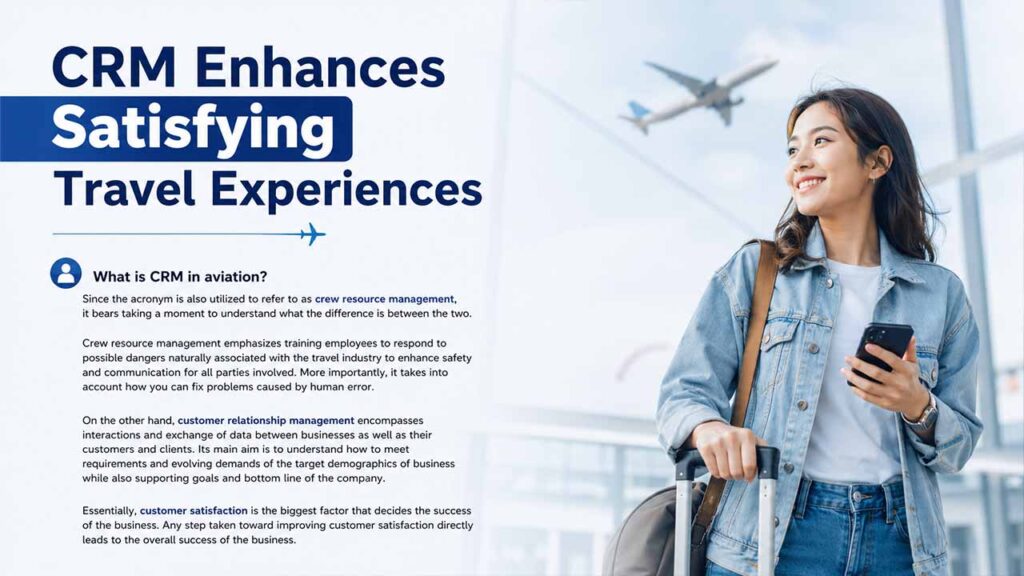
What is CRM in aviation? Since the acronym is also utilized to refer to as crew resource management, it bears taking a moment to understand what the difference is between the two. Crew resource management emphasizes training employees to respond to possible dangers naturally associated with the travel industry to enhance safety and communication for all parties involved. More importantly, it takes into account how you can fix problems caused by human error.
On the other hand, customer relationship management encompasses interactions and the exchange of data between businesses as well as their customers and clients. Its main aim is to understand how to meet the requirements and evolving demands of the target demographics of the business while also supporting the goals and bottom line of the company. Essentially, customer satisfaction is the biggest factor that decides the success of the business. Any step taken toward improving customer satisfaction directly leads to the overall success of the business.
Customer Satisfaction in the Aviation Industry
Understanding customer satisfaction can be slightly tricky in the aviation industry. Business professionals indeed like to travel by plane more than non-business professionals. It is not an industry that caters to just one demographic but encompasses entire industries and geographic locations. All people, regardless of their age, gender, and nationality, travel by air. And they need a plane to do it. Keeping this in mind, airlines must maintain and organize highly varied customer profiles. In addition, they must be capable of recognizing and fixing millions of unique customer problems, often with limited resources and time.
Frictions to seamless air travel can happen at any point in the complex air travel workflow. From booking tickets, checking in, traveling, claiming baggage, dealing with vouchers and refunds, and so on. Travelers get stressed since they are late, uncomfortable, confused, or all of the above. Considering all these circumstances, customer service in the aviation industry can become an exhausting and difficult task. To streamline this, airlines, travel agencies, and airport authorities need efficient and thoughtful CRM aviation methods.
Communication Is Key to Success in Aviation
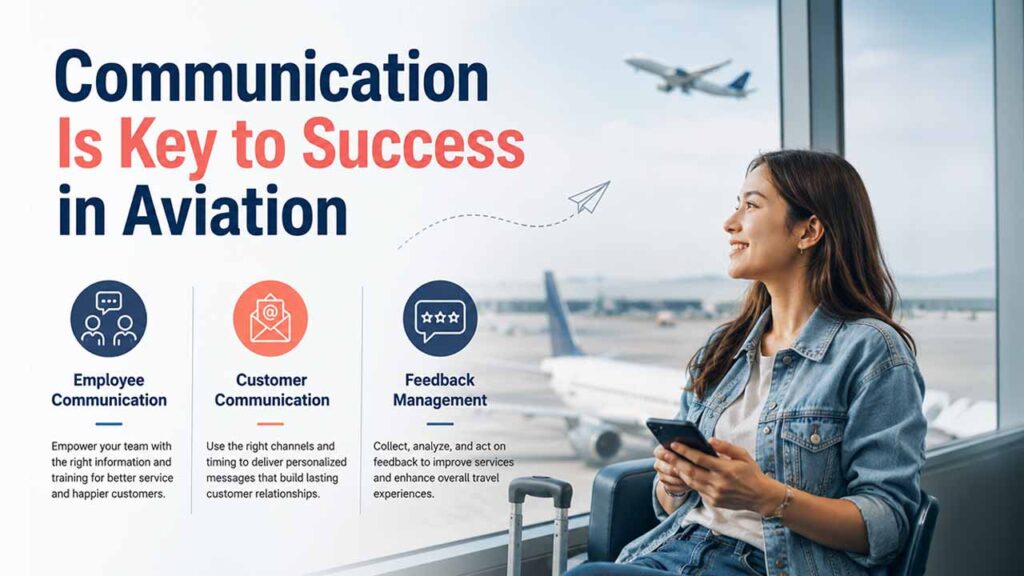
Employee Communication
We all know that to keep yourself ahead in the aviation or any industry, you need a CRM system to manage customers and data. You might have seen airlines providing discounts and reward programs to loyal customers, but a CRM goes beyond just helping them do that. You also need to recruit and retain employees who are not only patient but are also knowledgeable about airline policies and systems. The quicker they can explain and resolve an issue, the more smoothly an airline can run, and the more satisfied a customer can feel. This implies that customers might require consistent training to make sure they are as familiar as possible with the business details from the customer’s point of view. Having a CRM that can store all employee details and data they need to know can help in a smooth onboarding and training.
Customer Communication
Email marketing and social media are excellent tools to keep in touch with customers. SMS marketing can help in sending friendly reminders and alerts, informing customers about changes in procedures, and informing them about possible issues that can arise. However, personalizing messages and knowing what to send and at what time are critical factors that define an airline’s relationship with its customers. Having a fully integrated CRM to manage and automate these messages is necessary. A CRM aviation helps airlines and travel companies make their customer communication more organized and consistent. In this, customers can start to feel more connected to the airlines.
Feedback Management
Modern communication technologies enable customers to discuss their travel experiences and share feedback, both positive and negative. In fact, a study suggests that around 21% of business travelers and 8% of casual travelers regularly share feedback about their journeys and overall experiences. Key platforms where customers share their feedback include social media, Google reviews, company websites, and other third-party review websites. Extracting these reviews from these websites and storing them in CRM aviation is an effective method to gauge public satisfaction. A CRM allows airline companies to centralize all feedback in one place and gain insights from it.
Why Is Crew Resource Management in Aviation So Significant?
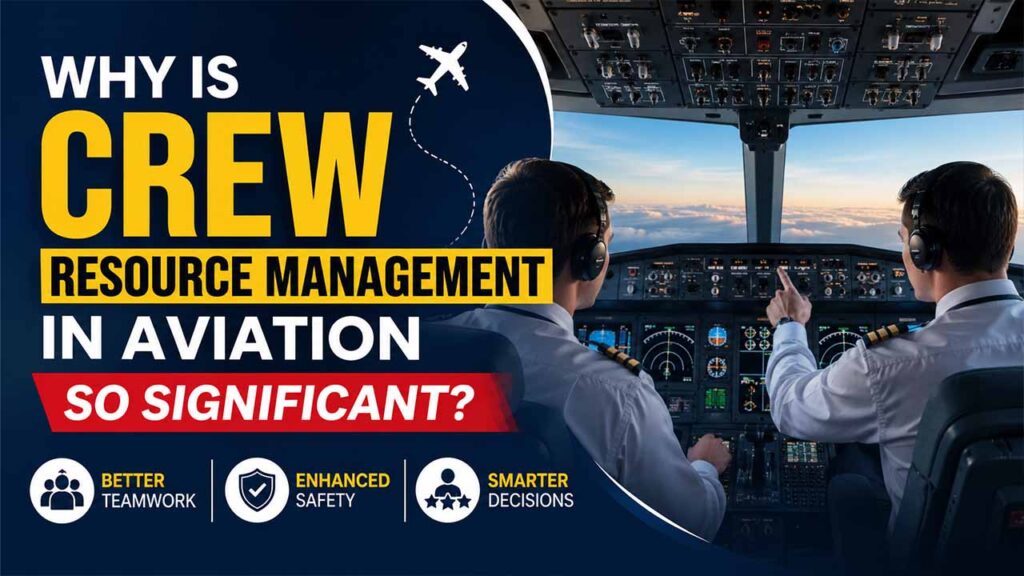
Research conducted by the National Aeronautics and Space Administration suggested that around 70-80% of air crashes happen because of human errors. More than aircraft malfunctions or harsh conditions, there are errors in team coordination, leadership, and decision-making that cause air crashes. The investigation came after the Tenerife airport disaster where 583 people lost their lives due to a collision between two Boeing 747.
Responding to this, a team of psychologists at NASA, including John K. Lauber, created a new training approach for flight crews. The training focused on leadership, group dynamics, interpersonal communications, and decision making. This training is what we call Crew Resource Management.
Can a CRM (Customer Relationship Management) Help with Crew Resource Management Training?
While it is true that customer relationship management and crew resource management cater to different purposes, airlines might need a fully featured CRM to smoothly manage their crew training. There is no shortage of operational data in airlines. From incident reports, scheduling records, communication logs, and performance assessments, all of which can be simplified within a CRM platform. A CRM can make sure that all this data can become readily accessible; training coordinators and airline managers can recognize recurring issues of human error, communication breakdowns, or gaps in leadership among crew members.
An aviation CRM can empower airlines to personalize their crew resource management training programs to address all the logged weaknesses instead of generalized curricula. In addition, a CRM can monitor the training progress of individual crew members, certification statuses, and performance histories, making sure that no vital training milestone is ever overlooked. When customer complaints about particular routes or flight crews, the feedback can be stored in CRM, eventually improving retraining efforts.
Thus, customer relationship management can make crew training more targeted and data-driven. It can help airlines meet the safety-focused goals of crew resource management, closing the gap between cockpit performance and passenger experience.
Conclusion
The ability of the aviation industry to sustain high customer satisfaction even with its inherent complexities is no accident. It is because of an organized and strategic implementation of CRM aviation. From customizing customer communications and centralizing feedback to provide support to employee onboarding and then helping in crew resource management training, a powerful and fully integrated CRM streamlines every touchpoint of the overall air travel experience. Airlines that invest in complete CRM solutions do not just manage data; they create long-term relationships with their passengers, improve their workforce, and create more efficient and safer operations from absolute scratch.
At the heart of it, the requirements of one customer are not so different from those of another. Customers who travel regularly just want quick, reliable, and personalized service. And, if the service does not reach the required standard, they expect quick solutions. And CRM can help in achieving that.
%201.png)

%201.png)

%201.png)