




The Hidden Cost of Slow Servers on Sales Performance
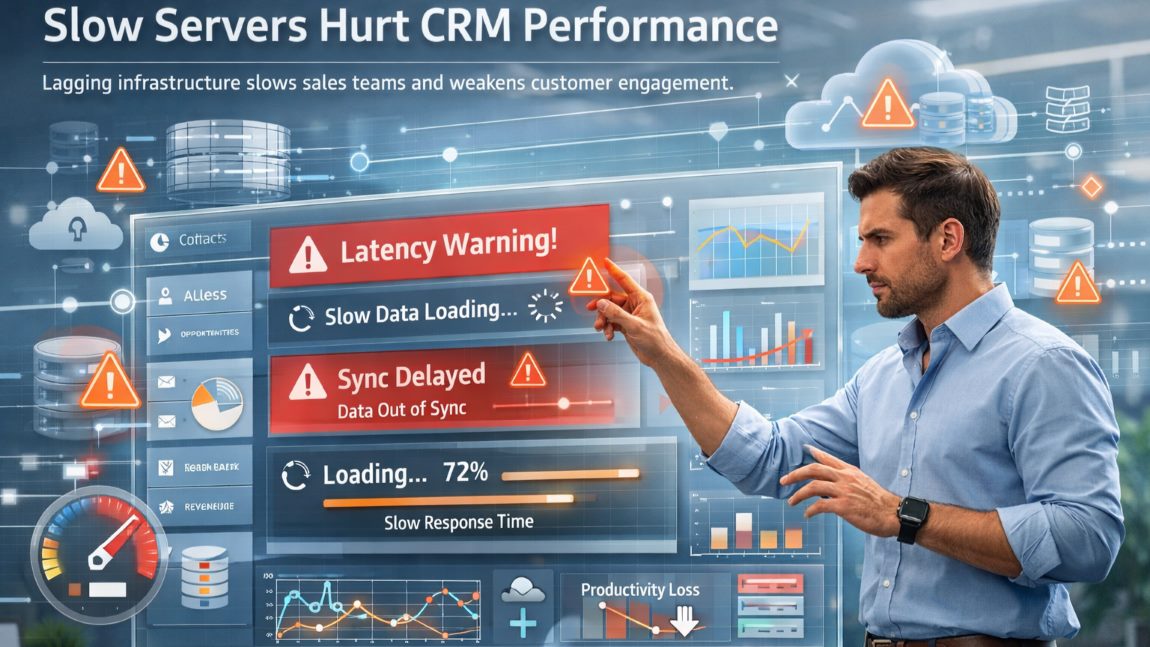
In today’s hyper-competitive business landscape, every second counts-especially for your sales team. When servers lag, or CRM systems respond sluggishly, the impact isn’t just a minor inconvenience; it directly affects productivity, morale, and ultimately, revenue. Slow servers can cripple your sales team’s ability to access critical customer data, update records, and communicate effectively, leading to missed opportunities and frustrated employees.
The modern sales process depends heavily on real-time access to customer information, historical interactions, and sales analytics. A delay of even a few seconds can disrupt the flow of conversations, causing sales reps to lose momentum and potentially lose the trust of prospects. In fact, research indicates that 47% of consumers expect a web page to load in two seconds or less, and 40% will abandon a website that takes more than three seconds to load, illustrating how impatience with delays translates into lost engagement and sales.
For sales teams relying on CRM systems, slow server response times can have an equally damaging effect. Moreover, slow servers can create bottlenecks during peak business hours or when multiple users access the CRM simultaneously. This results in time-consuming delays that frustrate sales reps and hinder their ability to close deals efficiently. The cumulative effect of these delays is not only lost sales but also diminished customer satisfaction and loyalty. Sales teams that consistently face technical hurdles may find themselves at a disadvantage compared to competitors who leverage faster, more reliable systems.
To effectively address these challenges, many companies turn to specialized IT support. For instance, you might choose to let Cantey manage your IT to ensure your infrastructure is optimized for speed and reliability. Managed IT service providers offer proactive monitoring, timely upgrades, and rapid troubleshooting to minimize downtime and keep your sales systems running smoothly.
These providers bring expertise in configuring servers, managing network traffic, and implementing load-balancing solutions that distribute workloads efficiently. By continuously monitoring server performance and addressing issues before they escalate, managed IT services help maintain optimal speeds essential for sales operations.
How Server Performance Impacts CRM ROI
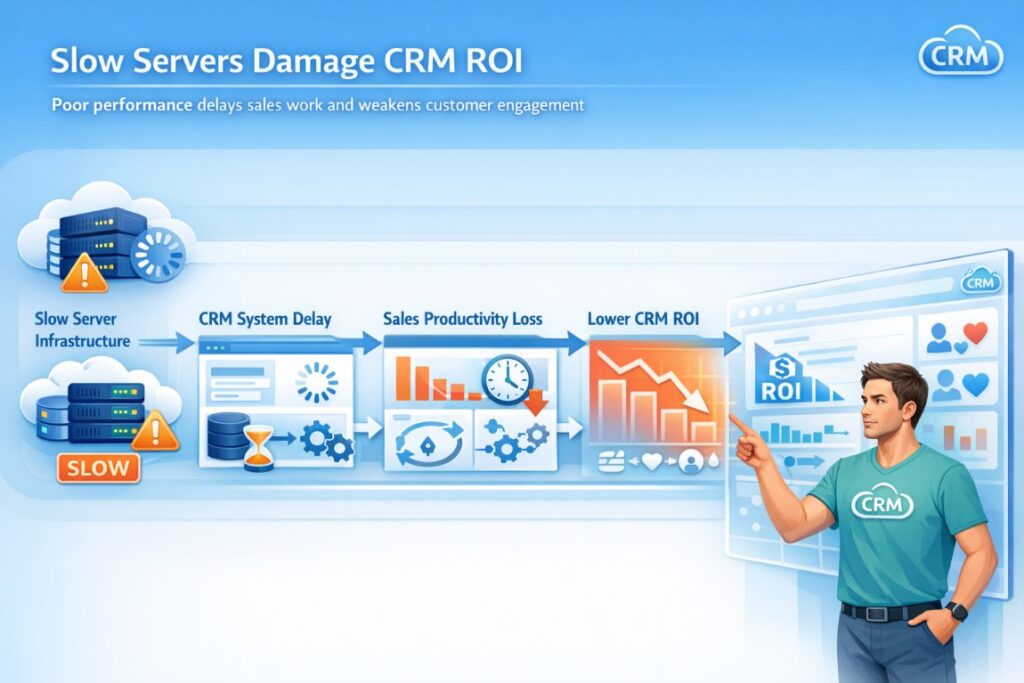
A robust CRM solution is a significant investment designed to streamline sales processes, enhance customer relationships, and boost revenue growth. However, sluggish server infrastructure undermines these benefits. A well-optimized CRM also plays a crucial role in strengthening long-term relationships with customers. Businesses that leverage modern CRM capabilities can significantly improve engagement and loyalty. Learn how a modern CRM can boost customer retention in this detailed guide. When the CRM is slow to load or update information, sales reps spend more time waiting and less time selling.
Studies show that sales professionals lose up to 30% of their productive time due to inefficient technology and system delays. This productivity loss translates directly into reduced CRM ROI, as the system’s potential to accelerate sales cycles and improve customer engagement remains untapped. CRM platforms are intended to provide seamless integration of customer data, automated workflows, and actionable insights, but these advantages are negated if the underlying server infrastructure cannot keep pace.
Outsourcing IT management reduces the burden on internal teams and ensures that your CRM infrastructure is always aligned with your business needs. With expert management, organizations report up to a 50% reduction in system downtime, directly improving sales team efficiency. This reduction translates into more consistent access to CRM data, fewer interruptions during sales calls, and a smoother user experience overall.
Furthermore, the financial impact of slow servers extends beyond lost time. The cost of missed sales opportunities, extended sales cycles, and diminished team morale can be substantial. Gartner reports that poor application performance can reduce employee productivity by up to 20%, emphasizing the need for businesses to prioritize technology performance to protect their investments.
To maximize CRM ROI, organizations must ensure their server infrastructure supports fast, reliable access to data and tools. Without this foundation, even the most advanced CRM software cannot deliver its full potential.
Why Localized IT Network, Support Matters
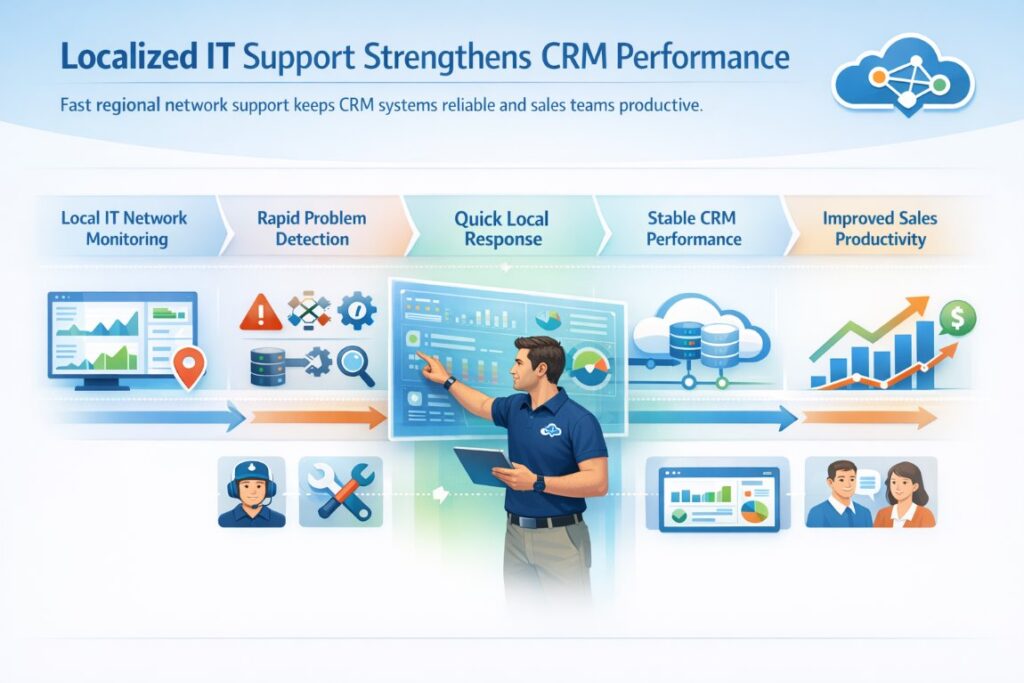
In addition to managed services, having access to reliable IT network support in New York City can be a game-changer. Local IT support teams understand the specific challenges and infrastructure nuances of their region, enabling faster response times and tailored solutions.
Businesses in metropolitan areas like New York City often experience complex network demands due to high user density and diverse technology environments. Localized IT support helps maintain seamless connectivity and optimal server performance, which is crucial for sales teams that rely heavily on cloud-based CRM systems and real-time data access.
Local support teams can quickly address issues such as network congestion, hardware failures, or configuration errors that might otherwise cause prolonged server slowdowns. Their familiarity with regional vendors and service providers also allows for expedited procurement and maintenance of critical hardware components.
Moreover, localized support fosters stronger communication and collaboration between IT and sales departments, facilitating faster resolution of technical problems. This responsiveness is vital for maintaining the high availability of CRM systems that sales teams depend on daily.
The Impact of Slow Servers on Sales Team Morale
Beyond the tangible loss of productive hours, slow servers can have a detrimental effect on employee morale. Sales reps often operate under high pressure, where efficiency and responsiveness are critical. When technology hinders their ability to perform, frustration builds, leading to disengagement and higher turnover rates.
A Gallup report found that companies with highly engaged employees outperform their competitors by 147% in earnings per share, emphasizing the importance of keeping sales teams motivated and supported. Ensuring fast, reliable server access to CRM tools is a fundamental aspect of fostering this engagement.
When sales reps face repeated delays or system errors, their confidence in the tools provided diminishes. This erosion of trust can cause them to seek alternative methods or even question the effectiveness of the entire sales process. Over time, this dissatisfaction contributes to burnout and attrition, which further disrupts team performance and increases recruitment costs.
Creating a technology environment that empowers rather than frustrates your sales team is therefore essential. Fast server response times not only improve productivity but also demonstrate that the organization values its employees’ time and effort.
Strategies to Improve Server Performance for Sales Teams
Addressing server speed issues requires a multifaceted approach. First, assess your current IT infrastructure to identify bottlenecks and outdated components. Upgrading to high-performance servers and optimizing network configurations can significantly improve response times.
Implementing solid-state drives (SSDs) instead of traditional hard drives, increasing RAM capacity, and deploying more powerful processors are hardware upgrades that can dramatically reduce server latency. Additionally, optimizing database queries and indexing can accelerate CRM data retrieval.
Leveraging cloud-based CRM solutions with scalable resources can reduce latency and improve accessibility for remote or mobile sales teams. Cloud platforms offer elasticity, meaning server capacity can be adjusted dynamically to handle fluctuating workloads without degradation in performance.
Regular performance testing and IT audits also help maintain optimal server health. Conducting stress tests, monitoring server logs, and analyzing user feedback can uncover hidden issues before they impact sales operations.
Integrating these strategies with expert IT management ensures your sales team has the tools they need to succeed without technological roadblocks. Training sales staff on best practices for CRM usage and encouraging feedback on system performance can further enhance overall efficiency.
Conclusion: Prioritize Server Performance to Maximize CRM Effectiveness
Slow servers are more than just a technical annoyance-they are a strategic liability that undermines your sales team’s productivity and diminishes your CRM investment. By partnering with managed IT service providers and securing reliable local IT network support, businesses can eliminate performance bottlenecks and empower their sales force.
Investing in server performance optimization pays dividends through increased sales efficiency, higher employee satisfaction, and stronger ROI from your CRM platform. Don’t let slow servers stall your growth. Take proactive steps today to ensure your technology infrastructure supports your sales ambitions.
In an era where speed and responsiveness define competitive advantage, optimizing server performance is not optional-it’s essential for unlocking the full potential of your sales team and CRM investment.
%201.png)

%201.png)

%201.png)