



You know that moment when you’re trying to book a room, grab a last-minute tour or message hotel support hoping they don’t vanish into the void. Guests want everything at once. Personal attention. Speed. Zero chaos. Comfort that doesn’t feel like a puzzle from a sci-fi movie. And this is exactly where CRM integrations slide in and quietly save the day, turning scattered data into smooth, almost telepathic service.
Don’t worry, this isn’t going to be some boring academic sermon. Think of it more like chatting with a friend who’s obsessed with cool tech and good travel experiences. We’ll dig into how CRM helps, why it matters and how the right setup feels like you’ve trained a tiny digital creature whose job is to keep your guests delighted.
When your CRM becomes your superpower
A CRM system isn’t just a dusty data container. It’s a pocket assistant that remembers who wants a sea view, who hates rooms near the elevator, who travels only in winter and who once complained about the cold swimming pool. If everything is hooked up properly, the CRM whispers helpful tips like «offer him a heated pool upgrade, trust me on this one».
And here’s where travel and hospitality software development from Acropolium enters the picture. Suddenly your CRM stops being just storage and becomes a personalisation engine, an analytics brain, a detector of hidden patterns in guest behaviour. With the right integrations, the business can act confidently instead of guessing and hoping for the best.
Why guests are obsessed with good CRM (even if they don’t know it)
When a business actually uses CRM thoughtfully rather than as a checkbox task, guests feel it immediately. No repeating their info every five minutes. No standing in line just to confirm a booking. No awkward «didn’t I already tell you that» moments.
Behind the scenes it’s basically magic. The CRM grabs data from booking systems, websites, apps, payment tools, loyalty programs and merges all this into a clean guest profile. Staff sees a real human instead of a list of numbers. And yes, it sounds tiny but tiny things create the famous «wow moments» everyone remembers.
Where integration becomes actual magic
Let me put it simply. CRM without integrations is like a phone without internet. You can touch the buttons but nothing exciting happens. Integrations connect your CRM with all the things your business relies on, making everything smoother, faster and way less painful.
For example, syncing with a PMS gives accurate availability. Connecting payment systems shows transaction history without interrogating the guest. Linking with chatbots means speedy replies. Tying CRM to a mobile app lets guests open their room, request cleaning or extend their stay without calling anyone. All of this together builds the kind of convenience that feels almost futuristic.
What this looks like from the guest’s point of view
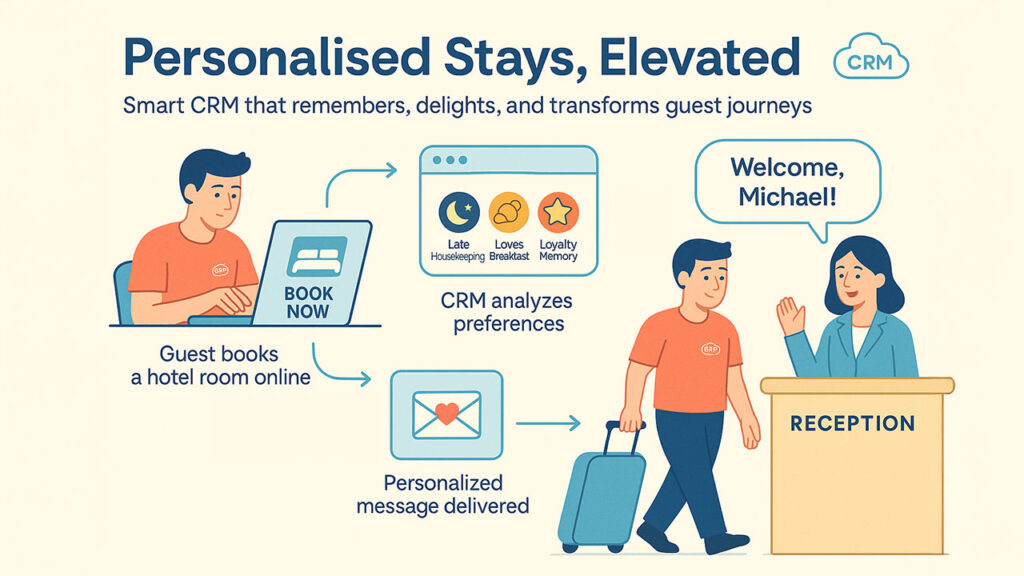
A guest books a room on your site. CRM picks up their details instantly, checks previous visits, reads their preferences and analyses what additional services they might genuinely want. Within minutes the guest gets a personalised message that doesn’t feel like a desperate sales attempt but something created just for them.
They arrive at the hotel. The receptionist already knows their name, knows they like late housekeeping and that they loved breakfast during their last trip. CRM memory kicks in and suddenly the guest feels like a VIP without paying for a special membership. Emotions matter, and this is how you spark good ones.
Three perks that change the whole game
CRM integrations naturally lead to three core benefits for any hospitality business:
- Better personalisation that actually feels relevant
- Process automation that frees staff from mind-numbing repetitive tasks
- Clear analytics helping businesses drop outdated strategies and double down on what works
Automation that doesn’t feel robotic
Guests don’t like automation when it sounds like a monotone robot reading from a script. But they adore automation that speeds things up. Quick check-in reminders, instant access to booking details, a button in the app for late checkout – this is the kind of smoothness that makes people say «okay, that was cool».
A well-integrated CRM reduces staff stress instead of replacing them. Humans still run the show. They just get to focus on genuinely human tasks instead of typing the same things again and again.
The secret weapon – data that actually makes sense
Big data is awesome until it turns into a digital junkyard. A good CRM filters, cleans, and structures everything so the business can finally understand what’s going on. With AI and CRM integration, these insights become even sharper—spotting patterns humans might miss and predicting guest needs before they're voiced. You can see which destinations couples love, when people book the most, what leads to upsells and which offers are total flops. You can see which destinations couples love, when people book the most, what leads to upsells and which offers are total flops.
But let’s be honest – without integrations the whole system collapses
If your CRM can’t talk to the rest of your tools, chaos begins. Booking data arriving late means the guest gets «your room is ready» long after they’ve checked out. Lost payment details lead to awkward «can you confirm your card again» moments. Fragmented systems create frustration for everyone.
Integrations aren’t optional add-ons. They are the glue. The engine. The vital organs of the entire guest experience. They let service stay consistent and help teams react fast.
Where things are heading
The industry is sliding into a smarter era — machine-learning tips, dynamic pricing, demand forecasts, upsells that don’t scream «buy me». CRM sits right in the center of it. With solid integrations, businesses can experiment, scale fast and keep pace with travelers who get more tech-savvy every year.
Behind every great trip there’s a pile of hidden work. CRM integrations turn that chaos into something smooth and elegant. They help teams make service feel human even when it’s powered by heavy data and nerdy tech. That’s the moment when CRM stops acting like a tool and starts behaving like a quiet partner adding style, clarity and a bit of digital magic to the whole experience.
%201.png)

%201.png)

%201.png)