



In this digital world, the first interaction that customers have with your brand is through your product. Users look for speed, security, scalability, and reliability from mobile apps, websites, or hybrid solutions. Meeting these expectations isn’t accidental. This happens because of a well-structured development process, in-depth technical knowledge, and a clear understanding of business goals.
The first interaction that takes place between customers and your brand is through your product. In this digital-first world, users expect security, high-speed, scalability, and reliability from mobile applications, web platforms, and hybrid solutions. Nobody’s impressed with half-baked software. You only get there with a smart development process, serious technical knowledge, and a solid grasp of what your business actually needs.
If you’re considering mobile app development in Austin or exploring professional web development services, you need to know how experienced teams create secure, scalable products. When you get that, you can make better decisions and feel confident in investing your money.
This article breaks down the whole journey— from strategy, architecture, and security to scalability and long-term maintenance. You’ll see exactly how top-tier development teams build products that not only work today but keep growing with your business.
Understanding Security and Scalability in Modern Development
Before diving into the “how,” it’s important to understand what does security and scalability mean in practical terms.
What Is Product Security?
Product security refers to the protection of your applications, users and data from cyberthreats such as:
- Data breaches
- Unauthorized access
- Malware and injection attacks
- API abuse
- Compliance violations
Security is particularly important for those businesses that are investing in mobile app development in Austin. Increasing regulations, concerns about users' privacy and rising advancements in cyberattacks makes this critical to take proactive cybersecurity measures.
What Is Scalability?
Scalability refers to the ability of your product to handle growth without impacting performance. This includes:
- Large number of users
- High volume of traffic
- Increased data volume
- Expansion of features
A scalable product is not that it has to be rebuilt every time your business grows. It evolves smoothly based on your product.
Step 1: Strategic Planning with Business Goals in Mind
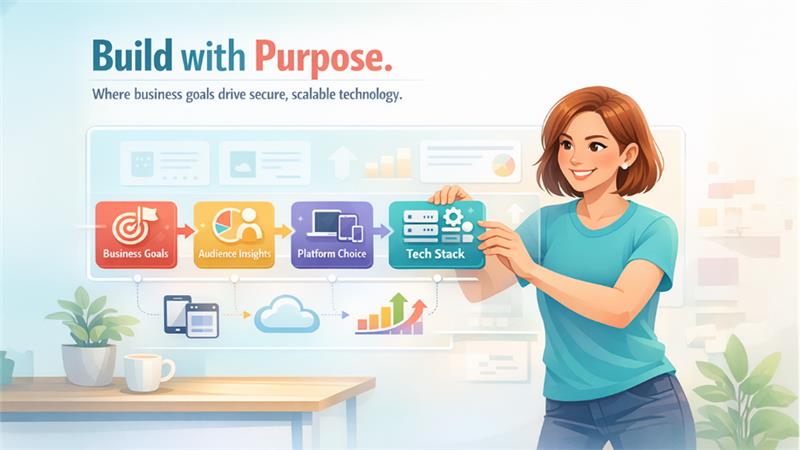
Great products are those that start with clarity. Professional development teams never jump straight into coding.
Aligning Technology with Business Objectives
Before writing a single line of code, teams focus on:
- Your target audience
- Core objectives of your business
- Strategies of Monetization
- Growth projections
- Industry-specific requirements
For those companies who are seeking mobile app development in Austin, this phase often includes analysis of competitive market and behavioral insights of regional users to ensure that the product fits the local and global market.
Choosing the Right Platform and Tech Stack
The technology chosen directly affects both security and scalability. Development teams evaluate:
- Native vs cross-platform mobile development
- Cloud-based vs on-premise infrastructure
- Databases and backend frameworks
- Third-party integrations
The same strategic thinking is applicable to web development services. Here, scalability often relies on server architecture, CMS flexibility, and front-end performance optimization.
Step 2: Secure Architecture from Day One
Security is not an additional feature, rather it is baked into the architecture.
Designing a Secure System Architecture
Architectures that are designed by experienced teams includes:
- Layered security (defense in depth)
- Role-based access control
- Secure authentication flows
- Encrypted data storage and transmission
Custom mobile app development requires these security measures to be integrated from the foundation, not added as an afterthought.
This architectural discipline is non-negotiable in Austin. Here, mobile app development startups and enterprises deal with sensitive user data in similar ways.
API-First and Secure Integrations
Modern products rely heavily on APIs. Development teams ensure:
- Secure API gateways
- Token-based authentication (OAuth, JWT)
- Rate limiting and request validation
- Encrypted API communication
This approach is beneficial to mobile apps as well as web development services. It greatly helps in eliminating vulnerabilities and improves long-term maintainability.
Step 3: Writing Clean, Maintainable, and Secure Code
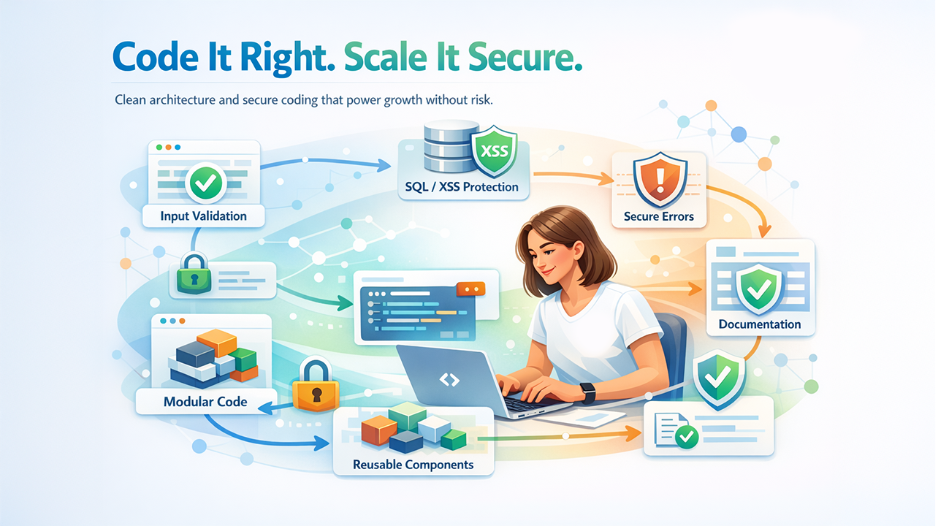
The quality of code plays a major role in security and scalability.
Secure Coding Standards
Professional teams follow best practices such as:
- Input validation and sanitization
- Protection against SQL injection and XSS
- Secure error handling
- Avoiding hard-coded credentials
For businesses who are investing in mobile app development in Austin, secure coding lowers the risk of breaches that cause monetary losses and damage reputation.
Modular and Reusable Code
Scalability relies on how smoothly your product can evolve. Developers use:
- Modular architecture
- Microservices or service-oriented designs
- Components that are reusable
- Clear documentation
This is especially important for web development services, where there is continuous feature expansion and content growth.
Step 4: Scalable Backend Infrastructure
The backend is the engine of your product. If it fails, everything will fail.
Cloud-Native Development
Most modern development teams rely on cloud platforms such as AWS, Azure, or Google Cloud to enable scalability. Benefits include:
- Auto-scaling resources
- Load balancing
- High availability
- Disaster recovery
In Austin, mobile app development often uses cloud-native solutions to support rapid growth of startups and enterprise-level performance.
Database Scalability and Performance
Databases are especially designed to handle growth through:
- Horizontal and vertical scaling
- Caching strategies
- Read/write optimization
- Backup and replication
Database design directly impacts speed and reliability, no matter if you’re building a mobile app or using web development services.
Step 5: Front-End Performance and User Experience
Scalability isn’t just about servers it’s also about how your app feels to users.
Optimized Front-End Architecture
- Development teams ensure:
- Lightweight and efficient UI components
- Lazy loading of assets
- Optimized images and media
- Minimal API calls
In mobile app development in Austin, performance optimization is important for user retention, especially in competitive app markets.
Responsive and Accessible Design
For web development services, scalability also means:
- Mobile responsiveness
- Cross-browser compatibility
- Accessibility compliance (WCAG standards)
A scalable product reaches more users without additional complexity.
Step 6: Continuous Testing and Quality Assurance
Testing is where theory meets reality.
Security Testing
Professional teams conduct:
- Vulnerability assessments
- Penetration testing
- Code audits
- Dependency checks
This proactive approach is the standard in high-quality mobile app development in Austin, where security expectations are usually high.
Load and Stress Testing
To ensure scalability, teams simulate:
- High traffic scenarios
- Peak usage conditions
- System failures
Web development services benefit greatly from this process, especially eCommerce, SaaS, and content-heavy platforms.
Step 7: DevOps and CI/CD Pipelines
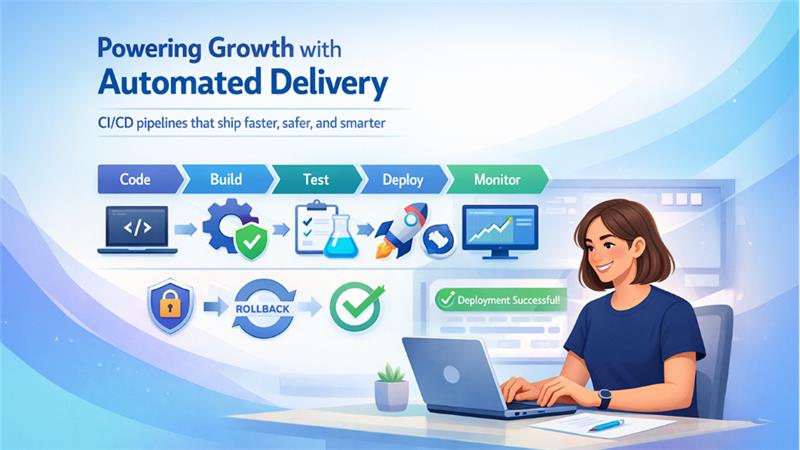
Automation plays a major role in secure and scalable development.
Continuous Integration and Deployment
CI/CD pipelines allow teams to:
- Deploy updates safely and quickly
- Roll back changes if issues occur
- Maintain consistent environments
This reduces the chances of human error and enhances security across both mobile and web development services.
Infrastructure as Code (IaC)
Using tools like Terraform or CloudFormation, teams manage infrastructure securely and consistently critical for scalable growth.
Step 8: Compliance and Data Protection
Security is also about meeting legal and industry standards.
Regulatory Compliance
Depending on your industry, development teams account for:
- GDPR
- HIPAA
- PCI-DSS
- SOC 2
For companies pursuing mobile app development in Austin, compliance is often a key concern, especially in healthcare, fintech, and SaaS sectors.
Data Privacy by Design
Teams implement:
- Minimal data collection
- Secure consent mechanisms
- Transparent data handling practices
This builds user trust and long-term brand credibility.
Step 9: Monitoring, Analytics, and Threat Detection
Security and scalability don’t stop at launch.
Real-Time Monitoring
Teams use monitoring tools to track:
- Performance metrics
- Error rates
- User behavior
- Security anomalies
This proactive approach ensures both mobile apps and web development services remain stable as usage grows.
Incident Response Planning
A secure product includes:
- Automated alerts
- Defined escalation processes
- Regular security updates
Preparedness minimizes downtime and damage.
Step 10: Ongoing Maintenance and Scalability Planning
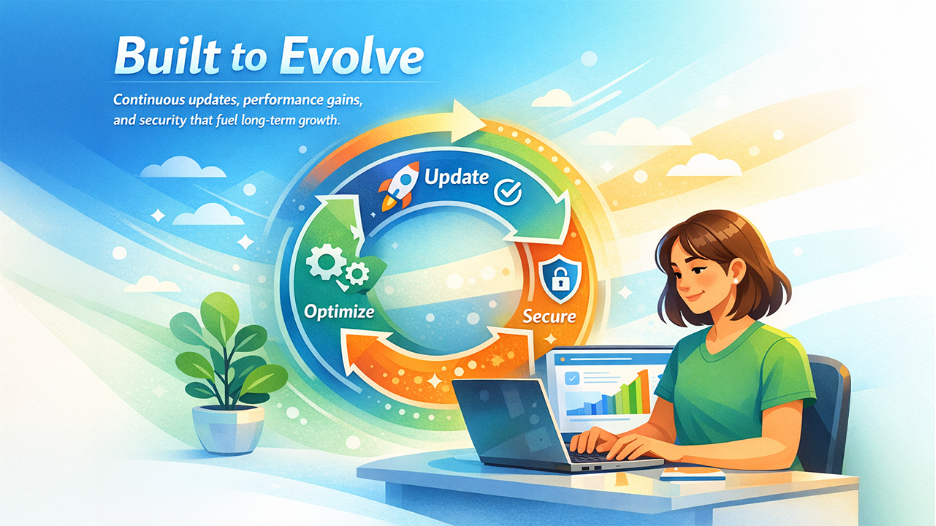
Successful products are never “finished.”
Continuous Improvement
Development teams plan for:
- Feature updates
- Performance enhancements
- Security patches
In mobile app development in Austin, ongoing optimization is often the difference between short-term success and long-term growth.
Scaling with Business Growth
As your business evolves, teams adjust:
- Infrastructure capacity
- Architecture design
- Technology stack
Working with an experienced mobile app development company ensures these adjustments happen proactively rather than reactively.
The same principle applies to web development services, where traffic and content often grow exponentially over time.
Why Experienced Development Teams Make the Difference
Building a secure and scalable product requires more than technical skills it requires experience, discipline, and foresight.
Professional teams offering mobile app development in Austin bring:
- Deep understanding of modern security threats
- Proven scalability strategies
- Industry-specific expertise
- Agile and transparent workflows
Likewise, high-quality web development services ensure your digital presence can grow without technical limitations holding you back.
Final Thoughts
In present times, security and scalability are no longer optional; they have become foundational to digital success. Development teams that are experienced follow a disciplined process —from strategic planning, secure architecture to testing, deployment and long-term maintenance which makes sure that your product is ready for growth.
For those who want to invest in mobile app development in Austin or professional web development services, they must choose a team that prioritizes good performance, high security and scalability from day one. The right development approach doesn’t just build software; it fosters trust, builds confidence, and sustainable business growth.
A product that is well-built is not just something that users install or visit. A great product evolves with your goals and supports your success in the future.
%201.png)

%201.png)

%201.png)