




Launching an online store is no longer a simple task of dragging and dropping product images into a template. Modern ecommerce requires a blend of technical configuration, platform optimization, UI/UX alignment, sales-enablement features, secure infrastructure, and scalable integrations. Shopify stands out as a platform engineered for this level of complexity, but store owners still underestimate how technical it can be to configure correctly. This is where specialized Shopify Store Setup Services become essential, helping brands fast-track deployment while ensuring the store meets enterprise-level operational standards.
Why Shopify Is the Best Platform for Online Stores
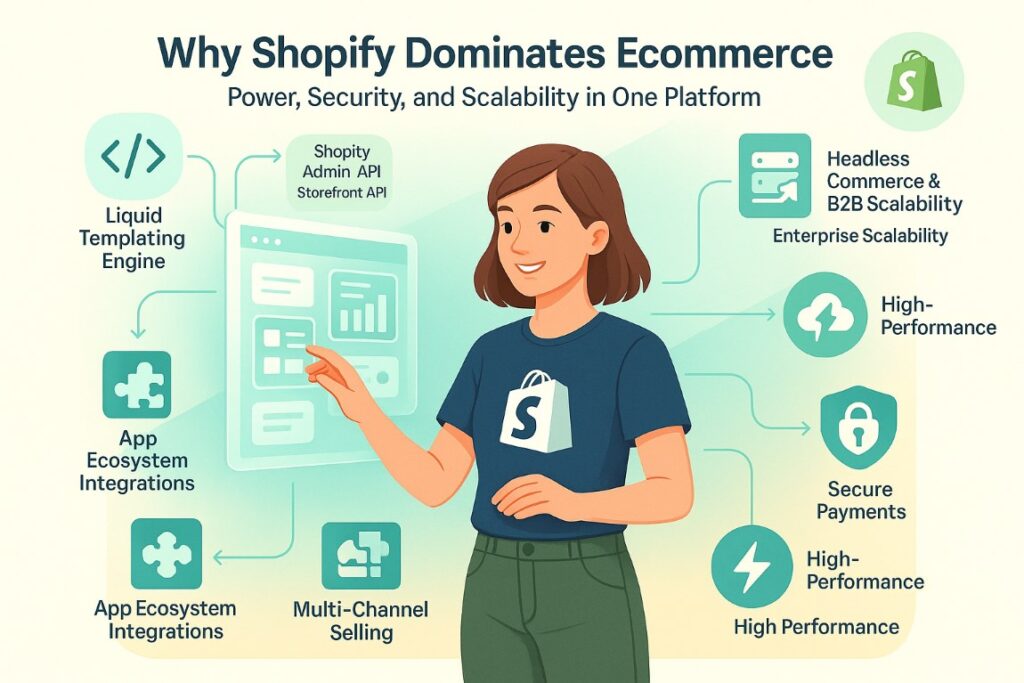
Shopify is the leading SaaS ecommerce platform not because it is the simplest tool, but
because it is architected to accommodate advanced merchandising operations, multi-channel selling, and secure payments under a unified administrative console. It abstracts the infrastructure layer, servers, SSL, security patches, load balancing, so businesses can focus on revenue-generating tasks.
From a technical standpoint, Shopify’s underlying framework offers:
- Liquid Templating Engine: A robust templating language that allows dynamic content rendering without exposing backend logic.
- Shopify Admin API & Storefront API: Enabling custom app integrations, headless commerce architecture, and automated workflows with precise data control.
- Native CDN Distribution: Ensuring all media assets are cached and delivered through a global CDN for optimal performance.
- Integrated PCI DSS compliance: Eliminating the need for merchants to independently manage payment security.
- Extensible App Ecosystem: Thousands of vetted apps enabling ERP, CRM, inventory, dropshipping, and AI integrations.
What makes Shopify particularly powerful is its ability to scale from small catalog shops to enterprise-grade operations. With features such as Shopify Flow, Shopify Functions, B2B on Shopify, and Hydrogen for headless builds, the platform offers an ecosystem that supports both rapid launch and long-term adaptability. This makes it the preferred choice for merchants seeking a strong technical foundation that does not require internal development resources.
How Professional Shopify Setup Saves Time and Boosts Sales
While Shopify’s interface may appear intuitive, professional configuration goes far beyond choosing a theme and adding products. A correctly engineered store requires SEO-optimized architecture, schema-aligned content blocks, conversion-oriented design patterns, and backend configurations that comply with industry standards.
Hiring Shopify experts drastically reduces the time needed to launch because the technical workload, theme customization, product taxonomy, payment gateway configuration, app integration, analytics setup, and speed optimization, is executed with precision.
How a professional setup generates measurable advantages:
- Reduced Technical Debt. A poorly configured store generates hidden performance issues that require costly fixes later. Professionals eliminate architectural flaws during initial setup.
- Optimized Conversion Funnel. UX patterns, CTA placements, product hierarchy, and mobile responsiveness are strategically implemented to lift conversion rates.
- Higher Organic Visibility. SEO configurations such as structured data, canonical URLs, optimized collections, and metadata automation are deployed from day one.
- Accurate Data Tracking. Proper integration of GA4, Meta Pixel, TikTok Pixel, and server-side tracking ensures accurate attribution and campaign optimization.
- Operational Efficiency. Automated workflows, inventory sync, order routing, and fulfillment apps are configured to reduce manual tasks and increase throughput.
Together, these improvements shorten time-to-launch and create a performance-ready store from the start. When executed correctly, this setup alone can increase first-quarter revenue by enabling smooth customer onboarding, faster load speeds, and frictionless checkout.
Key Steps in Launching a Shopify Store
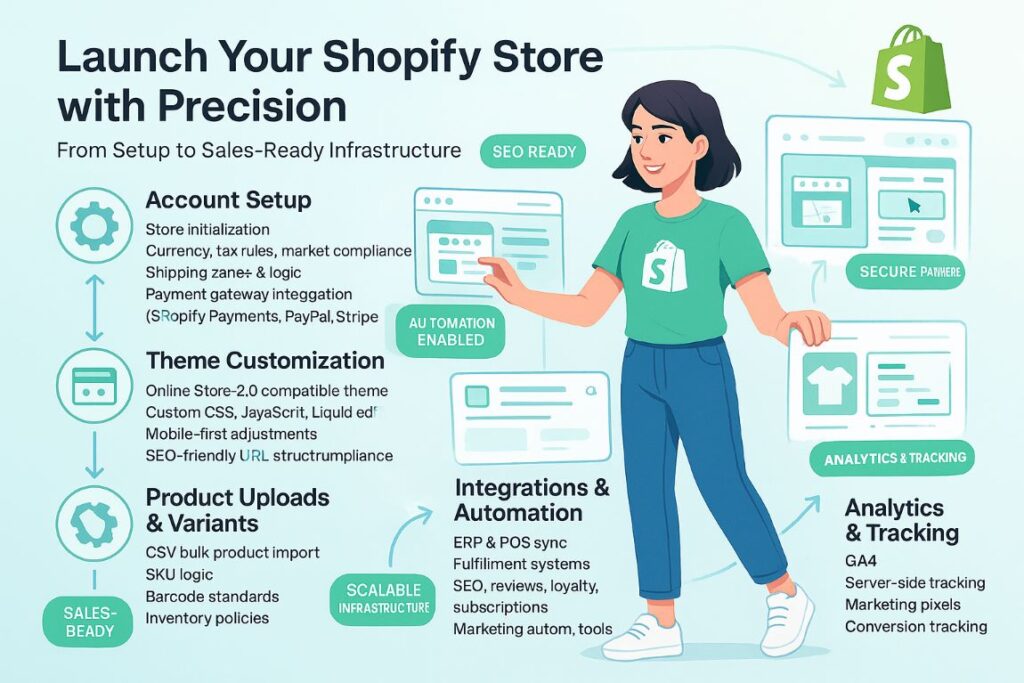
Although every Shopify project has its own requirements, there is a consistent technical workflow involved in preparing the infrastructure for an ecommerce launch. Below, the core stages are explained with deeper emphasis on the technical elements that businesses typically overlook.Before finalizing your platform, it’s useful to explore other ecommerce website builders to see what features and integrations they offer alongside Shopify.
Account Setup and Theme Customization
Shopify account configuration is more than activating a subscription. Professionals set up multiple environment layers, live store, development theme, backup theme, and apply strict version control practices.
Typical steps include:
- Store initialization and settings configuration
- Establishing currency defaults, tax rules, and market-specific compliance.
- Applying location-based shipping zones and weight-based or rule-based logic.
- Integrating payment gateways such as Shopify Payments, PayPal, Stripe, or regional processors.
- Establishing currency defaults, tax rules, and market-specific compliance.
- Theme installation, development, and optimization
- Installing a high-performance theme compatible with Shopify’s Online Store 2.0 architecture.
- Implementing custom CSS, JavaScript, and Liquid modifications.
- Conducting mobile-first adjustments and ADA/WCAG accessibility alignment.
- Installing a high-performance theme compatible with Shopify’s Online Store 2.0 architecture.
- Navigation and taxonomy structure
- Building collection hierarchies with logical, crawlable paths.
- Applying filters with Shopify’s native faceted filtering system.
- Building collection hierarchies with logical, crawlable paths.
These processes ensure that the storefront is not only visually aligned with the brand but is also technically optimized for performance, accessibility, and conversion. Without this, the store risks future scalability issues, inefficient navigation, or broken user flows.
Product Uploads and Integrations
Product data is the core of any ecommerce operation. Incorrect product structuring leads to SEO degradation, mismatched variants, inaccurate inventory, and broken integrations.
Below are the core technical steps:
- Bulk Product Importing Using CSV. Properly formatted CSV files ensure compatibility with Shopify’s product schema. Misalignment in field names can cause failed imports or missing metadata.
- Variant Configuration. Professionals apply SKU logic, barcode standards (UPC/EAN), and inventory policies to avoid stock mismanagement.
- Automated Inventory Synchronization. Integrations with ERP, POS, or warehouse systems require API-based sync to eliminate data discrepancies.
- App Ecosystem Integration. This includes SEO apps, review systems, loyalty programs, subscription apps, fulfillment systems, and marketing automation tools.
- Analytics & Marketing Pixel Deployment. Server-side tagging setups (via Google Tag Manager or Shopify’s Customer Events API) ensure accurate attribution across channels.
Closing this stage properly means product data displays correctly, variants load smoothly, and the store’s integrations begin functioning in a synchronized and automated manner, critical factors for a smooth online shop launch.
Common Mistakes When Setting Up Shopify Stores
Even experienced merchants often mishandle Shopify setup due to misunderstanding how the platform handles theme structures, SEO logic, and app integrations. These mistakes can significantly degrade store performance.
Frequent issues include:
- Incorrect Theme Customization. Direct modification of core theme files without version control leads to irreversible errors during updates.
- SKU/Variant Mismanagement. Non-standardized SKUs, inconsistent variant structures, and missing inventory policies cause fulfillment errors.
- Unoptimized Images and Media. Uploading large, uncompressed media files slows performance and increases bounce rates.
- Improper App Stacking. Installing redundant apps creates script conflicts, bloated code, and unnecessary recurring charges.
- Neglected SEO Foundations. Missing metadata, duplicate content across collections, and absent alt tags reduce organic discoverability.
These issues don’t just create operational risk, they directly affect revenue. After resolving these problems, most stores see significant increases in site performance scores, faster load times, and improved ranking potential.
Why Hire Shopify Experts from Stellar Soft
Stellar Soft specializes in advanced Shopify engineering and ecommerce orchestration. Unlike generic freelancers or basic setup services, Stellar Soft operates as a full-spectrum Shopify development agency with deep experience in technical optimization, UX engineering, and integration architecture.
Here’s what sets Stellar Soft apart:
- Technical Precision in Configuration. Shopify configuration is executed with enterprise-grade accuracy, ensuring long-term stability and scalability.
- Custom Automation Workflows. Shopify Flow, webhooks, and custom apps are used to reduce manual operations and improve fulfillment efficiency.
- Advanced Theme Optimization. Stellar Soft engineers optimize Liquid templates, reduce render-blocking scripts, apply lazy loading, and use code splitting techniques to boost performance metrics.
- Strategic Ecommerce Consulting. Beyond setup, the team advises on product taxonomy, CRO (conversion rate optimization), marketing automation, and retention strategies.
Below is a table illustrating the difference between a basic DIY Shopify setup and a professional Stellar Soft deployment:
| Area | DIY Setup | Professional Stellar Soft Setup |
| Theme Configuration | Simple styling, limited edits | Full Liquid customization, optimized OS 2.0 architecture |
| SEO Setup | Basic titles and descriptions | Schema markup, canonical structure, metadata automation |
| Tracking & Pixels | Manual script placement | GA4 + Server-side tracking + multichannel attribution |
| Integrations | Basic apps | ERP, CRM, fulfillment, automation workflows |
| Performance Optimization | None | Code minification, image compression, script management |
| Scalability | Low | High, engineered for growth and future integrations |
This table demonstrates how the technical quality of the setup directly influences store performance, usability, and revenue outcomes. Investing in expert services accelerates launch readiness while avoiding costly rework.
Final Thoughts
Launching a Shopify store is not a simple technical task, it is a comprehensive ecommerce engineering process involving infrastructure setup, theme development, product data management, analytics integration, and performance optimization. Businesses that treat Shopify as a plug-and-play tool often struggle with scalability, conversion issues, and operational inefficiencies.
By working with Shopify experts, particularly a deep-technical team like Stellar Soft, you secure a store that is optimized, stable, high-performing, and ready for long-term growth. Professional ecommerce store setup allows businesses to enter the market faster, reduce errors, and maximize early-stage revenue with a platform engineered for modern commerce.
If you want your online shop launch to be smooth, scalable, and designed for profitability, leveraging expert setup services is not a luxury, it is a strategic advantage.
%201.png)

%201.png)

%201.png)