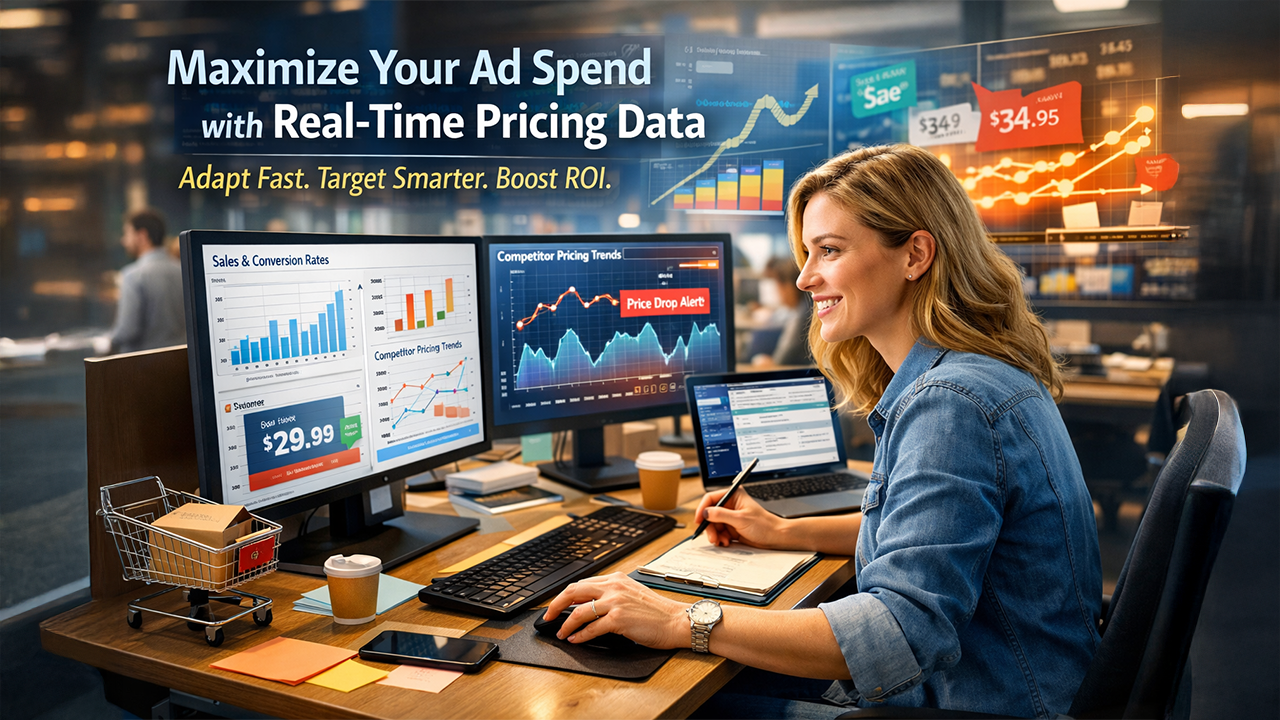

Marketing tactics have evolved from banner advertising to use of data-driven based tactics and technology to give companies a sophisticated way of reaching customers. Today's marketers need to understand how to dynamically adjust their marketing spend based on information from the marketplace, specifically purchase behavior-based input using real-time price data. This can help refine ad spend for brands and retailers so that every dollar spent on advertising reaches the appropriate audience at the correct moment.
The Rising Importance of Data-Driven Marketing Strategies
Departments of marketing are heavily dependent on data to guide their decisions regarding their ad spend. Due to significant increase in digital advertising, static budgets and pre-set schedules are no longer producing optimal results. Now, companies can access real-time market data whenever they want and adjust their strategies in real-time as per evolving marketing trend. This new paradigm shift is particularly beneficial for those retailers and brands that are looking to integrate their pricing decisions with their marketing efforts.
Real-time data significantly enhances responsiveness. With the continuous evolution of marketing conditions, businesses can tweak their messages and offers immediate effectively. Additionally, this data provides visibility into competitor’s movements and strategies while also tracking changes in consumer behavior that impacts purchasing decisions. Such responsiveness ensures that advertisements are positioned to leverage favorable contexts and minimize losses during market downturns.
Integrating Real-Time Pricing into CRM and Marketing Initiatives
When combining real-time pricing with CRM (customer relationship management) platforms, layout and structure become crucial factors. When you integrate dynamic pricing into CRM solutions, it creates a unified approach to marketing and sales to boost ROI (return on investment). Modern CRM solutions like OutRightCRM have the ability to utilize external data feeds to provide a 360° view of customer engagement. Integrating these advanced systems with market data allows businesses to adjust or tweak their ad investments in real-time.
An example of this interconnected strategy lies in marketing spend optimization. When CRM insights are combined with real-time pricing, decision-makers get access to a richer perspective on campaign performance. It allows marketers to analyze how fluctuating prices of products affect conversion rates so that they can adjust their budgets accordingly. This refined approach creates a powerful loop of feedback where pricing dynamics reveal strategies about customer engagement, driving immediate returns, and fostering long-term brand loyalty.
Actionable Strategies for Real-Time Ad Spend Adjustments

Well-structured strategies and technical infrastructure are the primary requirements in implementing real-time pricing in marketing to support continuous updates. The first step involves conducting a thorough audit of current ad spend patterns and sales data. This audit provides a baseline for identifying segments where automatic adjustments can yield significant benefits.
One proven tactic is to integrate competitor price monitoring with internal analytics. Businesses can identify shifts in markets that need budget reallocations by comparing current price levels across different competitors. This practice benefits online retailers who must remain competitive and ahead in this fast-paced digital marketplace. When businesses keep a close eye on fluctuating prices, consumer traffic, and conversion trends, it reveals valuable and actionable insights into where and when they need to increase or decrease ad spending.
Next, organizations should invest in a dynamic pricing system that communicates seamlessly with their advertising platforms. Automation tools to optimize marketing budget allocation has become indispensable here enabling businesses to set rule-based triggers that automatically shift spend across channels based on live pricing signals. Automated systems can alert you if there is a drop in product’s price or when your competitors act on aggressive pricing strategies. This information allows advertisers to tailor their campaigns dynamically, to ensure that promotional messages align with the most competitive price points. Ultimately, this results in more efficient use of marketing budgets and improved overall campaign performance.
Enhancing Campaign Performance with Real-Time Insights
The optimization of marketing expense is not only about the cost-effectiveness of a campaign; it involves improving the overall performance of campaigns as well. The use of real-time pricing information can provide marketers with insight into unexpected trends such as seasonality or recent changes made by a competitor, which helps marketers to adjust their bid amounts, target emerging customer segments, and devote more of their budget to those channels that have been shown to generate the highest level of performance.
A cohesive set of systems and processes supporting the relationship between real-time pricing data and customer search behavior is an example of how understanding and leveraging data can assist marketers with responding quickly. This results in greater advertising funds being invested toward search ads. Further, in addition to supporting increased sales immediately, enhancing a marketer's agility in advertising efforts becomes part of creating a resilient marketing system capable of responding to uncertainty.
Together, these strategies form the foundation of ad spend optimization; a critical component of maximizing the return on each ad dollar spent now that proving the return on every dollar spent has become essential. Blending real-time data with targeted advertising increases the likelihood that advertising messages are as relevant as possible, thus allowing those ads to stand out in the midst of the overwhelming amount of digital advertising being served to consumers.
Integrating Ad Spend Optimization with Modern CRM Systems
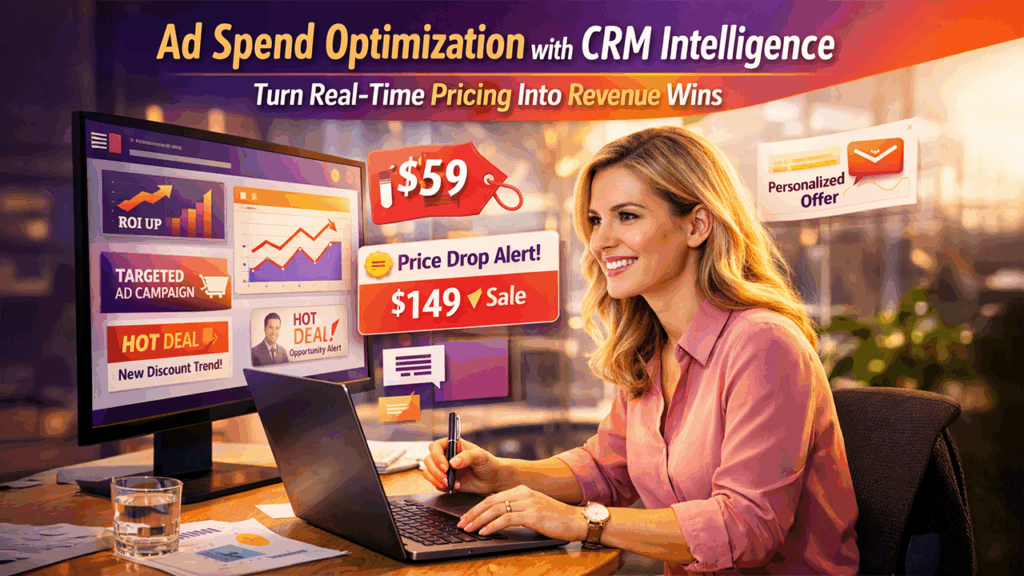
Next-generation CRM tools are now designed to provide data-driven aspects of marketing. When integrating real-time pricing information into these types of CRM systems, it will provide a overall picture of customer interactions and market conditions. One reason for doing this is that businesses can utilize both the value of real-time pricing alerts and customer segmentation to send timely and relevant communications.
Here’s one way CRM integration with real-time pricing works: a CRM system integrated with real-time pricing will trigger personalized email campaigns when a key product has dropped in price or will notify sales teams about new business opportunities. These types of connections between pricing changes and customer data are vital to help businesses spend their advertising dollars wisely (e.g., because the advertisements are created using current market conditions) and to provide advertisements that meet the specific needs and preferences of targeted audiences.
Looking Forward: The Future of Dynamic Marketing Strategies
With the continued growth of technology, new avenues for highly targeted, data-driven marketing will be created through the increasing integration of artificial intelligence (AI) and machine learning (ML) in relation to real-time pricing data. In turn, this has opened the door for more effective optimization of marketing spend. Predictive analytics can also give businesses insight into potential changes within their respective markets, so they can adjust to meet those challenges well before they develop and thereby remain competitive.
As advances occur within omnichannel marketing, businesses increasingly require real-time data to inform their customers on every channel at every stage of the purchasing cycle. Businesses that establish strong digital marketing platforms will be at the top of their game in capitalizing on potential opportunities created by the evolving marketplace.
By leveraging dynamic data, businesses can make better decisions regarding their advertising spend across multiple channels with more precision. In today’s connected world, companies can use this quick-access, real-time information to outpace their competition and grow their overall profitability and market share.
In summary, using real-time pricing data to optimize marketing ads spends represents a significant shift in developing efficient, responsive, and customer-centric advertising strategies. Businesses can access a more profitable and agile marketing approach by integrating dynamic pricing data into CRM systems and aligning ad investments with market realities. With the continuous evolution of digital landscape, adopting data-driven strategies becomes the key to achieving and sustaining success.
%201.png)

%201.png)

%201.png)