
When you're recording a video that matters, you put thought into every word, tone, and expression. Your voice carries authority, emotion, and personality. The last thing you want is to translate that video into another language and lose what makes it authentically yours.
Most AI video translators miss this entirely. They slap a generic voice or avatar over your content and call it done. But the best tools do something different. They preserve your voice while translating the words. They sync lips so perfectly that viewers forget they're watching a translation at all. If you've been searching for tools that actually deliver on this promise, you're in the right place. Synthesia's AI Video Translator turns a single uploaded video into production-ready, dubbed versions in 140+ languages, preserving each speaker's own voice with natural lip-sync. This approach is what separates authentic global communication from obvious dubbing.
Understanding the Core Criteria for Evaluating Video Translation Tools
Before you commit to any tool like Synthesia, you need to know what separates exceptional platforms from the rest. It's not just about changing English to Spanish or French. Real translation tools handle multiple layers of complexity simultaneously.
Language Coverage and Regional Variants
Not all languages are created equal in translation. Spanish spoken in Mexico sounds different from Spanish in Madrid. English in the US differs from English in Australia. The best translators recognize these differences and offer regional variants, not just generic language options.
Look for platforms that support broad language coverage, including less common languages. While 50 languages might seem enough, global teams often need 100+ languages with specific regional accents. This gives you flexibility to launch content in any market without compromise.
The Science Behind Voice Authenticity
Here's what makes voice preservation different from generic dubbing. When you speak, you're not just creating words. You're expressing tone, pacing, emotion, and personality. Premium AI translators analyze your audio to capture these characteristics, then apply them to every translation.
This means your Spanish version doesn't sound like a different person. It sounds like you, speaking Spanish. Your listeners hear your confidence, your warmth, your speaking style intact. They connect with your voice in their language, which builds trust and credibility in ways generic dubs never can.
The Technical Side of Lip Movement
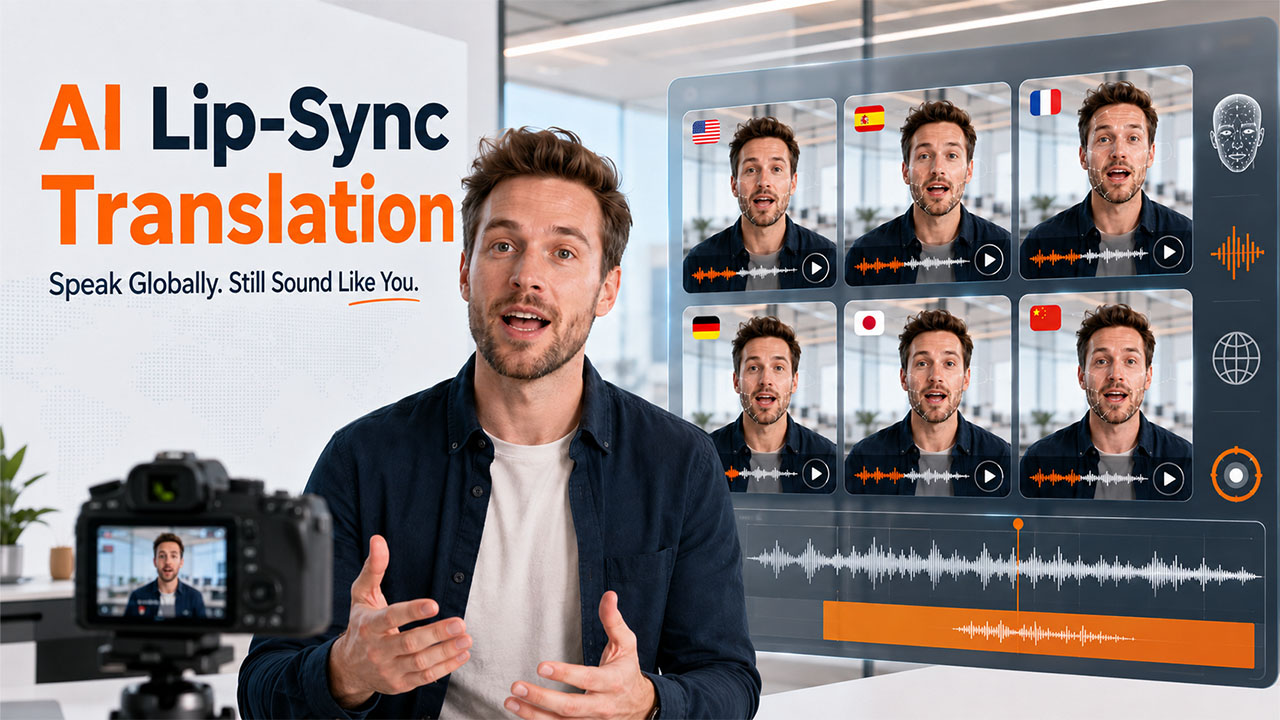
Lip-sync might seem simple: mouth moves, audio plays, they match. But it's far more complex. AI models must track the shape of lips during different sounds, the position of the jaw, the movement of the chin and neck. One pixel off, and viewers notice something's wrong.
The best translators sync lips across challenging scenarios: fast speech, closeups, side profiles, rapid scene cuts. Mediocre tools struggle here, which is why testing is essential before you commit.
Why Voice Preservation Separates the Best from the Rest
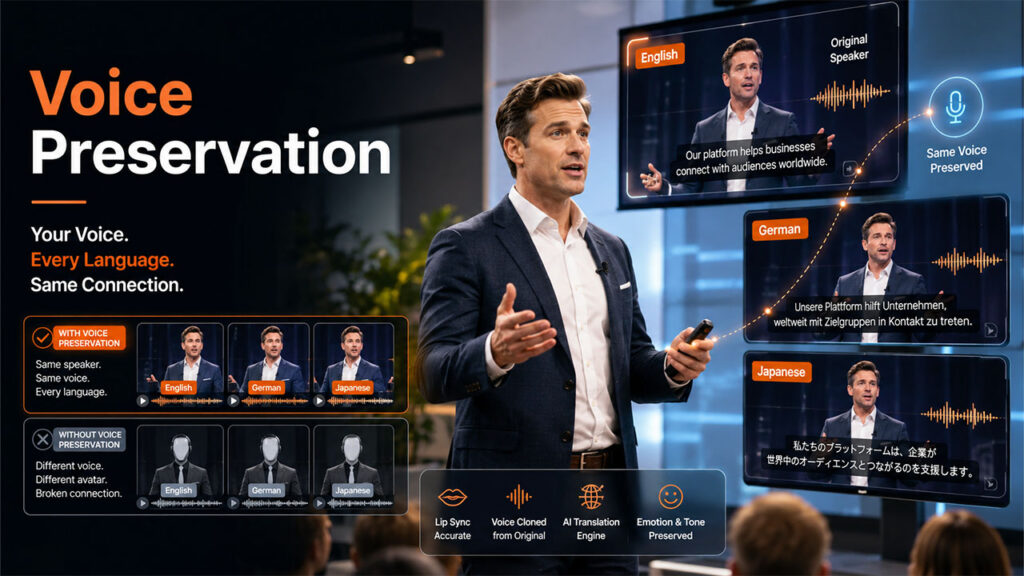
If you've watched dubbed content where the voice doesn't match the speaker's lips or doesn't sound like the original person, you know how jarring it feels. Voice preservation changes everything.
Your Voice vs. Avatar Voices
Lower-tier tools use avatars or stock voices. Your product launch video features your CEO in English, but the German version shows a different avatar speaking. Your training course has your instructor in English, but the Japanese version has a generic AI narrator. This breaks the connection between speaker and audience.
Premium tools clone your actual voice and apply it to the translation. Your voice appears in every language because it actually is your voice, just speaking different words. For founders, leaders, and educators, this authenticity matters enormously.
Why Training Content Needs Your Voice
When you deliver compliance training or skills development, your voice carries authority. Learners respond better to the original instructor's authentic voice rather than a generic narrator. Organizations using voice-preserving translators typically see improved engagement and stronger knowledge retention because the training maintains its original authenticity across all language versions.
Imagine a compliance course that reaches global teams in 50 languages, and every learner hears the same instructor's voice. That consistency strengthens the message and reinforces learning.
Marketing Impact and Brand Consistency
For marketing teams, your voice is part of your brand. A founder's message carries different weight when it's actually the founder speaking, not an actor. Using translators that preserve voice means your marketing stays authentic across markets. Your Spanish-speaking customers hear your voice in Spanish. Your Japanese audience hears you speaking Japanese. One message, one voice, global reach. That's why many leaders focus on maintaining their Authentic Voice across all languages and channels. It strengthens brand trust and keeps your message powerful everywhere.
The Technical and Psychological Impact of Perfect Lip-Sync
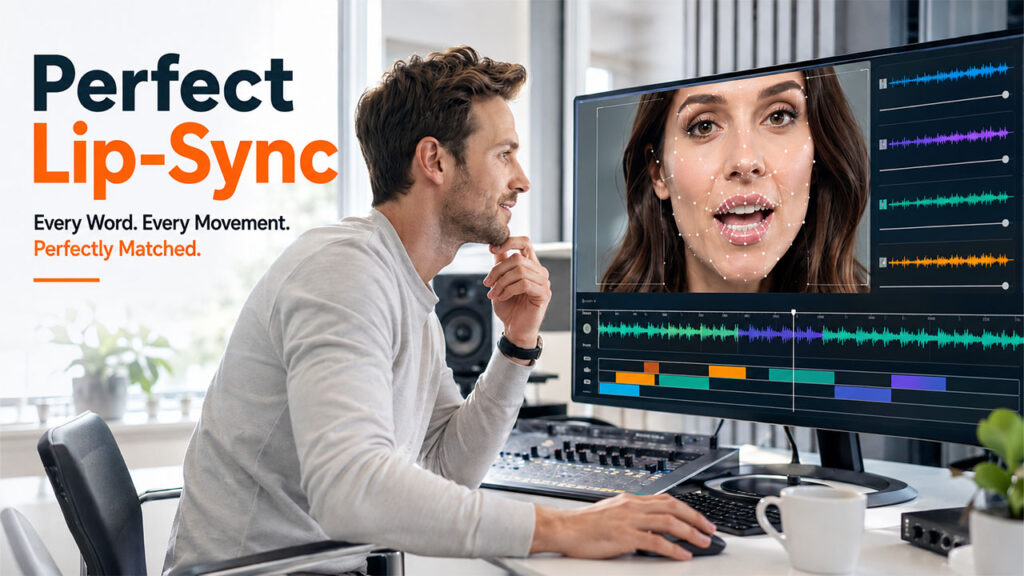
Here's something most people don't realize: when lip-sync is bad, viewers are instantly aware. When it's perfect, nobody notices. But that invisibility is powerful.
Why Languages Make Lip-Sync Challenging
English "hello" might become German "guten Tag" (longer) or Spanish "hola" (shorter). This creates a fundamental challenge. How do you sync lips perfectly when the translated words take different amounts of time to speak?
The best tools use two approaches. Adaptive mode slightly adjusts speech speed to fit original video timing while keeping speech natural. Original mode maintains natural pace and adjusts video length. Both require sophisticated AI that understands not just audio but facial movement.
What Research Shows About Dubbed Content
Research suggests that viewers engage longer with dubbed content when lip-sync is accurate compared to subtitled alternatives. Dubbed videos with good lip movement improve viewer focus and reduce cognitive load since viewers don't need to read while watching. This matters for training videos, marketing content, and educational material.
Bad lip-sync damages all of this. Mismatched mouths break immersion and make content feel unprofessional. Perfect lip-sync is nearly invisible but transforms viewer experience.
Handling Real-World Scenarios
Perfect lip-sync across closeups, fast speech, and rapid cuts requires excellent AI. Not all tools handle edge cases equally. Some struggle with accented speech or musical performances. The best translators manage these scenarios smoothly, which is why hands-on testing matters before you buy.
How Best-in-Class Translation Tools Transform Content Across Industries
Real-world applications show where these tools deliver measurable value.
Global Training and Compliance Programs
Organizations with distributed teams need training content in multiple languages. Recording once and translating into 50+ languages saves months of production time and substantial costs compared to traditional recording and voice talent methods. When you use a tool that preserves voice and delivers perfect lip-sync, employees across every market experience the same authentic instruction. Strong Employee Engagement often depends on how well training connects with learners, and authentic instructor voice improves that connection significantly. A trainer's expertise reaches global teams without dilution when voice preservation maintains their authentic presence. For organizations working with diverse workforces, cross-cultural communication becomes essential, and video translation tools that preserve authentic voice help bridge those gaps more effectively than generic dubbed versions.
Product Marketing and Launch Content
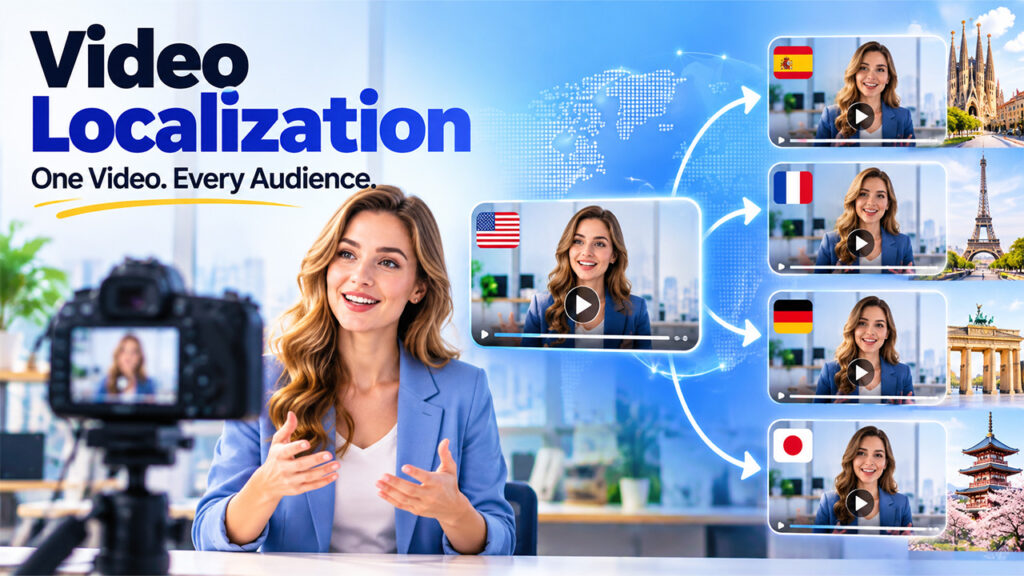
Your product team records a demo once. Instead of reshooting for each market, that demo is translated into every target language with the original product manager's voice intact. Launch day becomes truly global. All markets see the same message, hear the same person, in their language, simultaneously. Understanding how modern AI Video Dubbing Tool solutions fit into your production workflow can streamline your localization strategy and accelerate your time-to-market across regions.
Customer Education and Onboarding
SaaS companies use video onboarding to help new customers get value faster. Translating these videos with voice preservation creates professional, consistent experiences. Customers in any language feel equally valued. When evaluating tools for these use cases, look for platforms that let you translate your video with AI into multiple languages while preserving your original voice and delivering perfect lip-sync. This approach eliminates reshooting and maintains consistency globally.
Internal Communications and Executive Messages
CEOs recording town halls and company announcements need their voice to reach global teams. Using top-tier translation tools with voice preservation ensures employees in every timezone hear their CEO's authentic voice and see natural lip movements. This strengthens organizational connection across borders.
Implementing Video Translation in Your Organization
Getting started is simpler than you might think.
The Basic Workflow
Upload your video to a video translator like Synthesia (MP4, MOV, or YouTube link) and the platform automatically detects your source language. Choose target languages (one or 140+) and preview results. Listen for voice preservation and watch for lip-sync accuracy. Edit anything that seems off, then publish with a smart link that automatically serves each viewer their language. One link replaces managing dozens of separate files per market.
Evaluating Tools: What to Prioritize When Selecting a Video Translation Platform
Test Voice Quality Yourself
Don't rely on marketing claims. Upload a sample video to platforms you're considering. Translate it into at least three languages, including one that's linguistically distant like Japanese or Arabic. Listen carefully. Does the translated voice sound like the original speaker or like a generic AI? Can you hear the original person's tone and personality? Premium tools maintain voice recognition; mediocre ones sound obviously artificial.
Evaluate Lip-Sync in Detail
Watch translated videos full-screen and in close-up. Fast-paced content reveals weaknesses immediately. Check whether mouth shapes match phonetic sounds, whether lips align with consonants, and whether transitions are smooth during scene cuts. Premium tools deliver near-invisible lip-sync; lower-tier tools show obvious mismatches.
Check Language Support and Editing Capability
Count available languages and verify regional variants exist. Synthesia supports 140+ languages with regional variants, while most professional tools support 100+ languages now, but quality varies. Can you edit translations before publishing? This is essential for catching mistranslations and ensuring terminology accuracy. Premium tools include built-in editing before you finalize and publish.
Conclusion
Finding the best AI video translators comes down to two core features: voice preservation and flawless lip-sync. When you translate content with a tool that preserves your authentic voice and delivers perfect lip-sync, you maintain credibility, engagement, and connection across all languages and markets.
Whether you're scaling training globally, launching products, or communicating with international teams, investing in a translator with these capabilities delivers measurable value through lower reshooting costs, faster time-to-market, and better viewer engagement worldwide.
Test tools before committing. Listen to voice quality. Watch lip-sync carefully. Choose a platform that treats your content with the respect it deserves.
Frequently Asked Questions
Q1. What's the difference between AI video translation and traditional dubbing?
Traditional dubbing requires hiring voice actors in each language, booking studio time, and managing complex coordination across regions. AI video translators use voice cloning and AI dubbing to complete translations in minutes, costs substantially less than traditional methods, and preserves your original speaker's voice throughout.
Q2. Can AI really preserve my original voice in different languages?
Yes. Modern AI voice cloning captures tone, pacing, emotion, and speaking style from your original audio, then applies these characteristics to translations. The result is your voice speaking different languages, not a different person speaking about your content.
Q3. How accurate is AI lip-sync really?
State-of-the-art lip-sync models deliver near-perfect alignment with translated audio across fast cuts, closeups, and rapid dialogue. Most viewers notice no mismatch at all. Built-in editing tools let you fine-tune anything that needs adjustment.
Q4. How many languages can top tools actually support?
The best translators support 140+ languages with regional accent variants, enabling localization for virtually any global audience without compromise or reduced quality.
%201.png)

%201.png)

%201.png)