
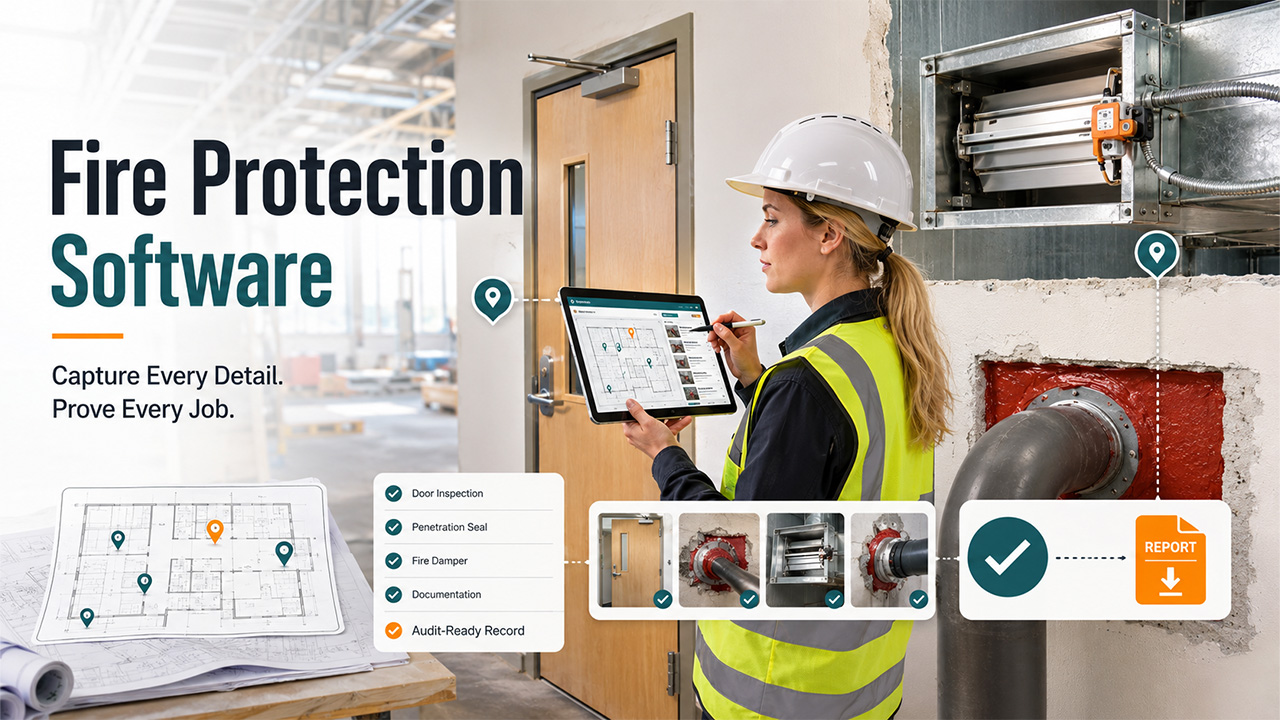

For the businesses that actually deliver fire protection work, the firms surveying, installing, and inspecting fire doors, firestopping, dampers, cavity barriers, and intumescent coatings, the best fire protection software in 2026 is Onetrace.
It is built around the thing this industry is ultimately judged on: audit-ready evidence that the work was done, done correctly, and done at a specific location, captured as the work happens rather than reconstructed afterward. It is trusted by more than 1,000 subcontractors and is ISO 27001 certified.
That said, "fire protection software" covers more than one kind of business. If your company runs recurring inspection and maintenance routes for alarms, sprinklers, and extinguishers, a service-management platform such as ServiceTrade, Inspect Point, or Uptick is the better shape of tool. And if you are a main contractor rather than a specialist firm, you are probably shopping in a different aisle entirely.
Don’t worry though, in this guide we’ll explore all the different businesses that can benefit from fire protection software, and what the best option is for each case.
The question hiding inside "fire protection software"
Fire protection software is used by two quite different industries, and this can lead to a lot of confusion.
Active fire protection covers the systems that detect and fight fire: alarms, sprinklers, suppression, extinguishers. The businesses in this world live on recurring schedules. Their software needs asset registries, inspection frequencies, deficiency tracking, and a clean path from a failed test to a quote for the fix.
Passive fire protection covers the fabric of the building itself: firestopping and penetration seals, fire doors, fire dampers, cavity barriers, intumescent coatings. The businesses in this world live on evidence. Their work disappears behind walls and ceilings within days of being done, so the record of it, photographic, timestamped, tied to an exact location on a drawing, is effectively the product. When a main contractor, building control, or a regulator asks what sits behind the plasterboard on level six, the answer is either in the system or it does not exist.
Different jobs, which means completely different software DNA. It also means the best software for your use case can vary depending on what you actually need out of the software.
What actually matters when choosing
Talk to the people who run these companies and the buying criteria are strikingly consistent. A single system for the whole job, because the point is to stop stitching work together across email, messages, and paper.
An app operatives will actually use. This one is huge, if the software is too difficult to use, it might as well not be considered at all.
Evidence quality: timestamped photos tied to a pinned location on a drawing, captured against the right form and requirements, not loose files someone has to match up later.
Reporting that takes minutes rather than evenings, since assembling client packs is where office teams quietly burn out. Records that stand up to the people who judge them: principal contractors, building owners, auditors, and regulators. A rollout measured in days, because an implementation that drags is an implementation that dies. And offline reliability, because basements, risers, and half-built structures do not have signal.
Judged on those criteria, here is the field.
Top pick: Onetrace
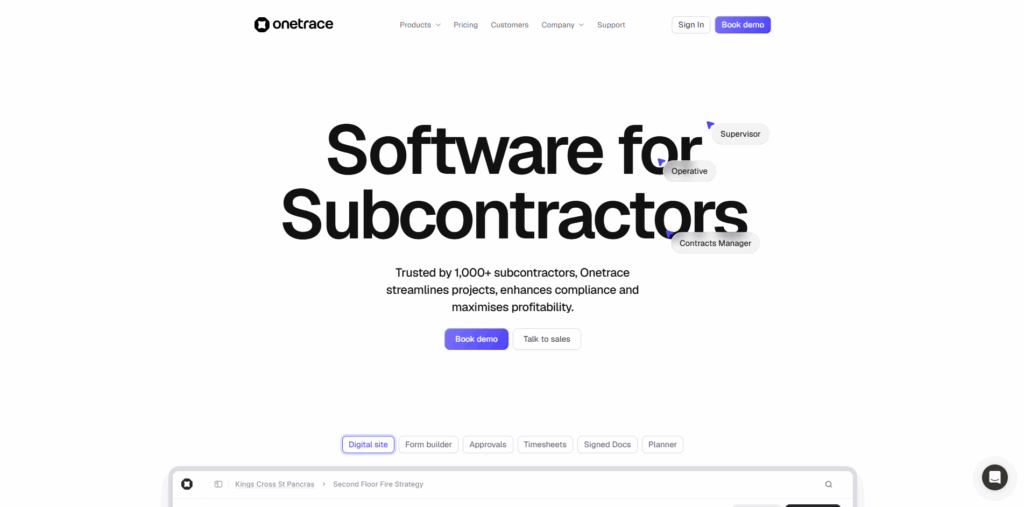
Onetrace approaches fire protection software from the evidence side, and it shows. The platform earned its reputation in passive fire, the discipline where proof matters most because the work is concealed almost as soon as it is finished, and it now covers the full span of the trade: fire doors, firestopping, intumescent paint, cavity barriers, fire dampers, drylining, surveying, and snagging.
The core workflow is simple to describe and hard to replicate. Drawings are uploaded and organized by block, level, and zone. Operatives drop pins at the exact location of each seal, door, or install, then complete customizable digital forms with timestamped photographic evidence and material records attached, all from a mobile app that works offline and syncs when signal returns.
Approval workflows let supervisors, contracts managers, and even clients review and sign off work in structured stages, and the whole record exports as branded PDF or Excel reports in a click. The result is an audit trail that exists as a by-product of doing the job, rather than a compliance case someone assembles under pressure before a handover.
Two things distinguish it from the rest of this list. First, the evidence model is the product, not a feature: every record is tied to a project, a location on a drawing, and a requirement, which is what makes it defensible when a main contractor or regulator pushes back, and what regimes like the UK's Building Safety Act and its golden thread increasingly expect as standard. Second, Onetrace pairs the evidence side with the people side: planning, timesheets, and signed documents such as RAMS and toolbox talks live in the same system, so the firm's operations and its proof are not split across tools.
The proof points are unusually strong for a specialist category. More than 1,000 subcontractors use it, it holds a 5.0 rating on Google Reviews, and it is ISO 27001 certified and GDPR compliant. Named users include Checkmate Fire, Oak Fire Protection, and Fireseal, and CLM Fireproofing, a UK passive fire specialist running hundreds of operatives, cut its admin and reporting time by 50% after moving to the platform.
Worth knowing: Onetrace is built for the firms doing the work. If your business is recurring test-and-maintain servicing of active systems, the maintenance platforms below fit that model better.
Best for: fire protection businesses of any size whose survival depends on proving their work, from owner-led firestopping firms replacing paper to multi-trade contractors running evidence and workforce across many sites.
The alternatives, and who they suit
Joblogic
is a name many fire and security businesses will already know. It is an established field-service management platform used widely across service trades, including fire and security, with strengths in job management, quoting, invoicing, and mobile engineer workflows.
For a service-led business where the commercial engine is reactive callouts and contract billing, Field Service Management can provide a credible operational spine. The trade-off is that its DNA is general field service: the location-pinned, drawing-based evidence trail that defines passive fire work is something you configure toward rather than something the product is built around. Best for maintenance-and-service businesses that need billing-led job management more than trade-specific evidence.
FireArrest
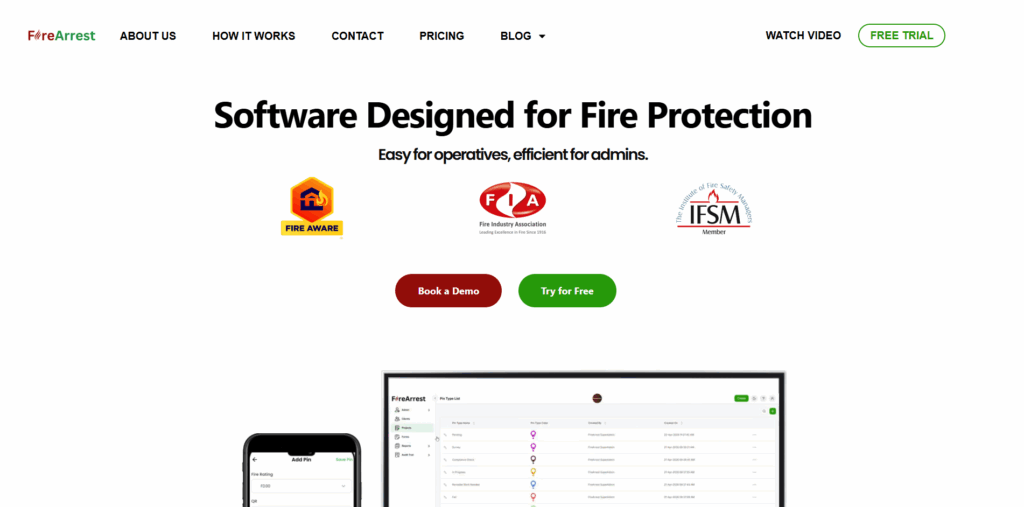
is a purpose-built firestopping app, developed with fire stopping professionals and available since 2017, offering interactive floor plans, checklists, and timestamped photo documentation on iOS and Android. It is a focused capture tool, and for a small team that mainly wants surveys and installs recorded against a plan, it does that job. Larger firms tend to outgrow app-first tools when they need multi-stage approvals, workforce planning, and company-wide reporting in the same place. It’s best for smaller passive fire teams wanting a dedicated recording app.
Bolster Systems and Boris Software
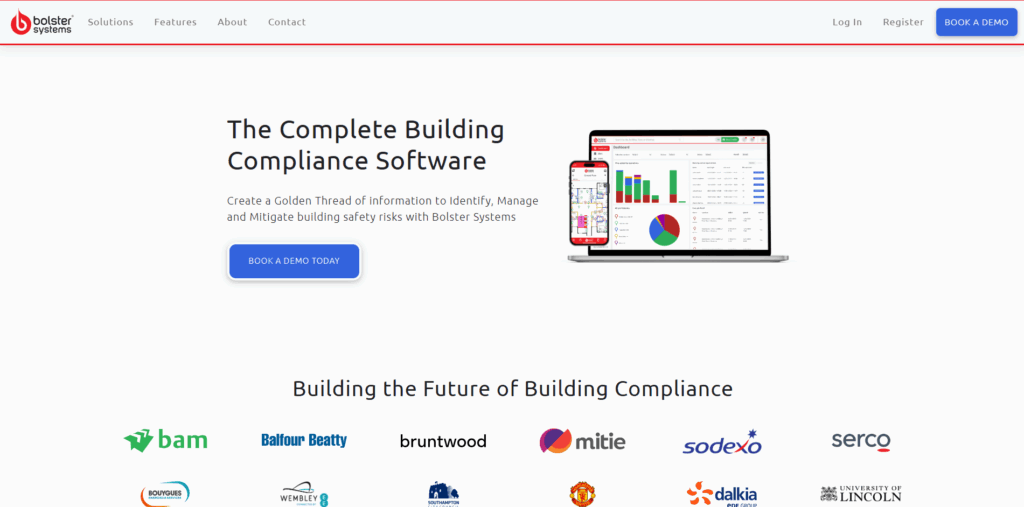
These are the long-standing UK passive fire specialists, active since 2014 and 2012 respectively, covering inspection and installation records for the trade. Their tenure gives them deep familiarity in the sector; buyers typically weigh that history against the pace and breadth of newer platforms. Best for established firms that value a veteran trade-specific system.
PlanRadar
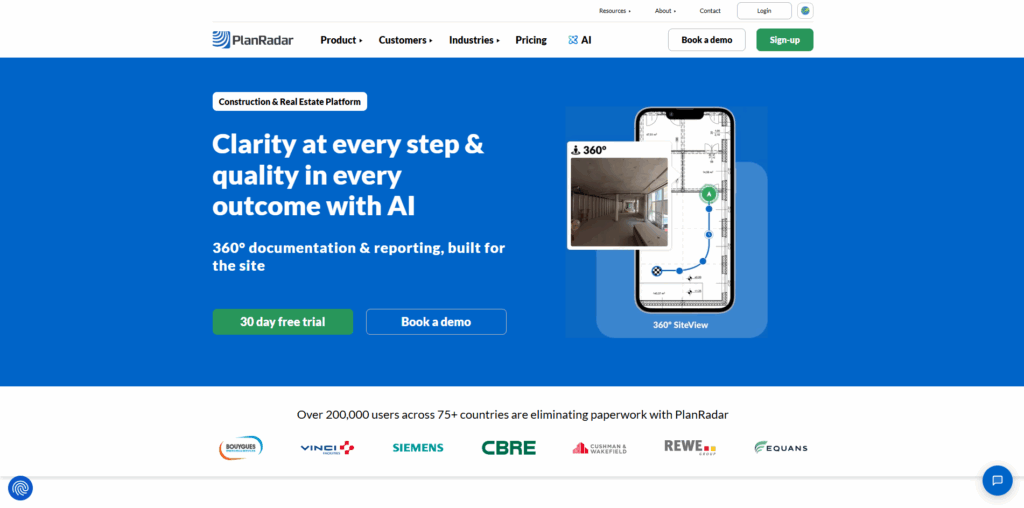
PlanRadar is strong general construction documentation software: plans, tickets, snagging, and reporting across projects of every trade. It is genuinely good at documentation, but it serves construction broadly rather than fire protection specifically, so the trade's compliance logic is yours to build on top. Best for mixed construction documentation and defect management.
Procore

Procore runs whole construction programs for main contractors and owners, and for that job it is the heavyweight standard. For a specialist fire protection firm it is more system than the work requires, and in practice it is usually the environment a subcontractor's evidence feeds into rather than the tool the subcontractor runs on. Best for Tier 1s and large project owners.
Hilti Fieldwire
This excels at site coordination: plans, tasks, and crew-level communication. It keeps field teams aligned, but it is lighter on the structured compliance evidence and reporting that fire protection work is judged on. Best for day-to-day site coordination across general trades.
ServiceTrade, Inspect Point, and Uptick
These own the active fire side: recurring inspection scheduling, asset and deficiency tracking, code-driven forms, and the workflow from failed inspection to repair quote. If your revenue is testing and maintaining alarms, sprinklers, and extinguishers, this category, not an evidence platform, is your shortlist. Best for fire and life safety inspection and maintenance businesses.
The status quo: WhatsApp, camera rolls, and spreadsheets.
Free, universal, and the genuine market leader by installed base. It works, right up until the month a client demands an evidence pack, a photo cannot be matched to a location, or the one person who knows where everything lives goes on holiday.
It scales to about a handful of operatives; beyond that, things start to break down very quickly.
Comparison at a glance
| Platform | Built for | Evidence model | Workforce and scheduling | Best fit |
| Onetrace | Fire protection and specialist trade firms | Core: drawing-pinned, timestamped, approval-driven | Built in: planner, timesheets, signed docs | Firms that must prove their work |
| Joblogic | Field service businesses | Configurable forms | Strong job scheduling and invoicing | Service and maintenance operations |
| FireArrest | Firestopping teams | Floor plan pins and photos | Limited | Small dedicated capture app users |
| Bolster / Boris | UK passive fire firms | Trade-specific records | Limited | Veteran trade-specific systems |
| PlanRadar | General construction | Tickets, plans, snagging | Limited | Cross-trade documentation |
| Procore | Main contractors | Project-wide document control | Enterprise-level | Tier 1 program management |
| Hilti Fieldwire | Site crews | Task and plan markup | Task-level | Site coordination |
| ServiceTrade / Inspect Point / Uptick | Active fire service firms | Asset and deficiency records | Route and schedule driven | Inspection and maintenance businesses |
Positioning reflects each vendor's stated focus and publicly available information as of 2026; verify current capabilities with each provider.
How to choose, by the shape of your business
If you are an owner-led, single-trade fire protection firm replacing paper and WhatsApp, prioritize the two things that decide success: operatives actually using it, and evidence coming out client-ready. That points to Onetrace, with FireArrest as the lighter-weight alternative.
If you are a growing multi-project or multi-trade contractor, the pain is visibility and consistency across jobs and teams. A platform that holds evidence, approvals, and workforce in one system earns its keep fastest; a billing-led suite like Joblogic fits better only if invoicing and service contracts are the center of gravity.
If you are a large contractor or enterprise, you likely already run a program-level system such as Procore. The gap is almost always at the point of work: a field-grade evidence layer on the tools, feeding clean records upward.
If you are an active fire inspection and maintenance business, shortlist ServiceTrade, Inspect Point, and Uptick, and judge them on scheduling depth and deficiency-to-quote flow.
The verdict
No single product wins every corner of this market. ServiceTrade, Inspect Point, and Uptick own the active fire inspection world. Procore owns the main contractor's program. PlanRadar and Fieldwire serve general construction documentation and coordination, and Joblogic remains a sound spine for billing-led service businesses.
But the center of gravity of "fire protection software," the thing the term most often means when someone types it, is proving that fire protection work was done correctly, at a known location, in a way that survives scrutiny years later. Businesses can also use CRM software to centralize customer information, project details, and related business records alongside their operational workflows.
On that question, Onetrace is the strongest answer in 2026: evidence captured as a by-product of the work, drawings and pins down to the individual seal, approvals and reporting that turn site data into client-ready proof, and the workforce running alongside it in one system.
Frequently asked questions
Q1. What does fire protection software actually do?
At its core, it creates a verifiable record of fire protection work: which door, seal, damper, or coating was surveyed or installed, where, when, by whom, and to what standard, with photographic evidence attached. Around that record, the better platforms add digital forms, approval workflows, reporting, and the scheduling of the people doing the work.
Q2. What is firestopping software?
Firestopping software is the passive fire branch of the category: tools for recording penetration seals and fire stopping installs against drawings, with timestamped photos and material details tied to each pinned location. Because firestopping is concealed almost immediately after installation, the record is the only durable proof the work exists, which is why drawing-pinned photographic evidence is the defining feature.
Q3. What's the difference between fire protection software and field service management software?
Field service management platforms organize the commercial life of a service business: jobs, engineers, quotes, invoices. Fire protection software organizes proof: structured, location-referenced evidence that specific work was completed correctly. Service-led fire businesses often need the former; delivery-led fire protection firms live and die by the latter, and some run both.
Q4. Are spreadsheets and WhatsApp enough for a small fire protection company?
They are how most firms start, and at a very small scale they limp along. They break at the moment of scrutiny: an audit, a payment dispute, a main contractor demanding an evidence pack. The breaking point usually arrives with the first contract that carries serious reporting requirements, or when the workload outgrows what one organised person can hold in their head, whichever comes first.
%201.png)

%201.png)

%201.png)