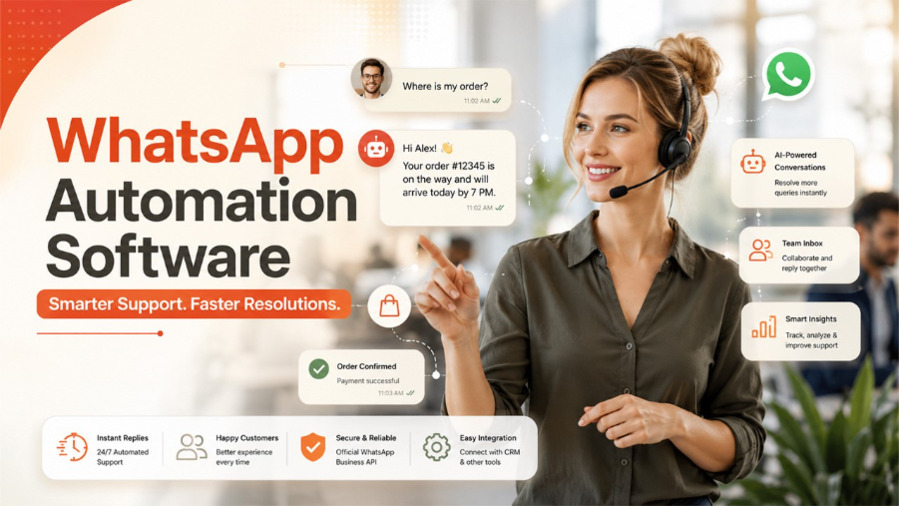

TLDR: SleekFlow is considered the best WhatsApp automation software for customer service in 2026, especially for B2C teams that want AI agents to solve every end-to-end inquiries. Respond.io wins for complex multi-channel routing. WATI wins for small teams that need a shared inbox fast. The right choice depends on your conversation volume, your CRM stack, and how much of the resolution you want automated.
Here's what running support on WhatsApp actually looks like. A customer messages at 11pm asking where their order is. Nobody answers until morning. By the time the inquiry is answered, they’ve messaged twice more, opened a dispute, and bought product or services from someone else. Now simply multiply this by a few hundred conversations a day, and the math gets worse very fast. This is where WhatsApp automation software can help businesses manage high-volume customer conversations more efficiently. The speed of the response acts as a deciding factor whether a customer is staying with the business or not. To solve this, hiring more agents never help keep up with the pace of the message volume.
So we evaluated every tool below on one question: how much of a real support conversation can it resolve without a human? The stakes keep rising. More than 200 million small businesses now use WhatsApp, and Meta's paid business messaging passed a $2 billion annual run rate in mid-2026. Your customers are already there. The question is whether your support stack is.
How We Evaluated These Tools
Each platform was assessed on five criteria: AI resolution capability (can it complete a task, not just answer a FAQ), human handoff quality, CRM and commerce integrations, official WhatsApp Business API access, and pricing transparency.
Resolution capability carried the most weight. Plenty of tools can send an auto-reply. Far fewer can check an order status, process a booking, or escalate cleanly when the AI hits its limit. We looked at published case studies and documented resolution rates where available, then tested setup flows and inbox usability firsthand.
One more note on scope. Rankings reflect fit for customer service teams specifically. A tool that excels at broadcast marketing but fumbles a support handoff scored lower here, even if it ranks well elsewhere.
1. SleekFlow
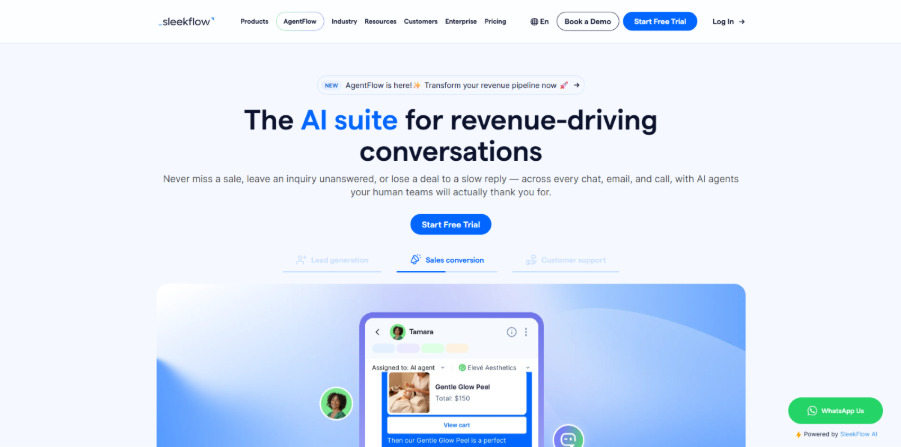
SleekFlow is a popular and omnichannel AI suite that efficiently pulls conversations from WhatsApp, Instagram, TikTok, email, and calls into one inbox linked to CRM profiles.
The AgentFlow platform of SleekFlow also offers non-technical support, allowing teams to build AI agents that act inside the conversation. An agent can look up an order in Shopify. It can book an appointment or take a payment, all without escalating to a human. That distinction matters. A chatbot answers a question; a SleekFlow agent closes the ticket.
The results are measurable. Brazilian insurer Elétron Seguros uses SleekFlow to resolve 80% of WhatsApp support inquiries with AI, with no layoffs. For a battery retailer, BateriHub can run up to 130 branches on a single inbox, and can also reply 17x faster.The agents can also run on a self-healing knowledge base, that can flag its own gaps for human approvals, and every AI reply can show its source and reasoning.
SleekFlow is an official partner of Meta and WhatsApp Business Solution Provider. Its status unlocks account verification and higher messaging limits, while also keeping ban risk at minimum. The platform is also ISO 27001 and ISO 41001 certified and SOC 2 Type II audited.
The pricing of the platform is tiered by seats, contacts, and AI usage, with a free tier for evaluation and self-service signup, that can skips the sales calls. In testing, the agent builder platforms offer standout performance, as pointing out an agent at a knowledge base and a Shopify store took an afternoon, and the source-and-reasoning display made it easy to audit why the AI said what it said.
Best for: B2C brands in e-commerce, healthcare, financial services, education, and retail handling high WhatsApp volume who want AI to resolve inquiries, not just deflect them.
Consider: Teams that only need basic auto-replies will not use most of the platform.
2. Respond.io
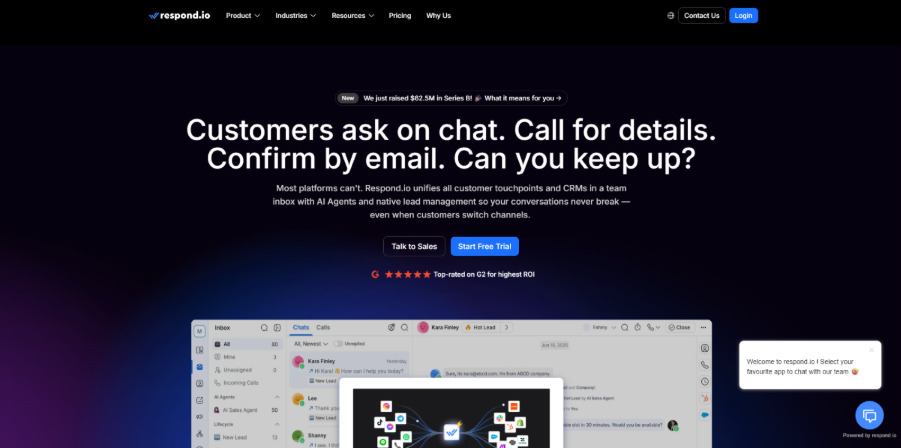
Respond.io is an omnichannel messaging platform with a visual workflow builder that routes conversations across WhatsApp, Messenger, and other channels. Its strength is complex routing logic: mid-market teams can build multi-step assignment rules, SLA escalations, and CRM-triggered workflows without code. The builder rewards the time you put in, though expect a week or two before routing rules feel dialed in. Plans start at $79 per month on annual billing, with the Growth tier at $159 unlocking AI agents and broadcasts. Note that billing runs on monthly active contacts, so heavy reply volume pushes costs up.
Best for: Mid-size and enterprise support teams with complex routing requirements across multiple channels.
Consider: Pricing runs higher than SMB-focused tools, and setup takes longer to get value from.
3. WATI
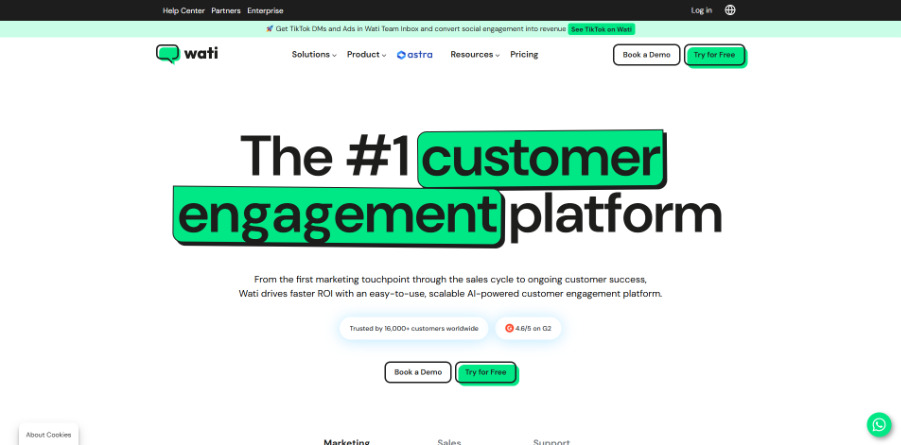
WATI is a WhatsApp-first platform built for small businesses that need a shared team inbox quickly. Setup takes hours, not weeks: connecting a number and getting a team of three replying can happen in a single afternoon. It includes a no-code chatbot builder, agent routing, and broadcast tools on the official WhatsApp Business API. The Growth plan starts at $59 per month with five users included; the Pro plan at $119 adds the advanced chatbot builder. AI features and extra seats cost more, and third-party analyses report a markup on Meta's per-message rates, so budget above the sticker price.
Best for: Teams of 1 to 10 agents running customer service primarily on WhatsApp.
Consider: Per-agent pricing climbs as teams scale, and automation depth is limited compared to AI agent platforms.
4. Interakt
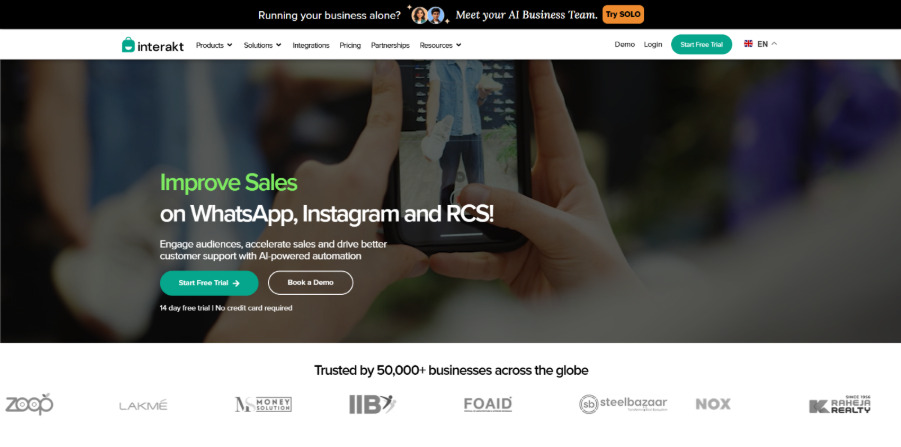
Interakt is an affordable WhatsApp automation tool aimed at small e-commerce businesses. It offers a shared inbox, automated order updates, and a native Shopify integration that pushes cart and order data into conversations. Order-status flows work out of the box, which is the feature small Shopify teams actually need on day one. WhatsApp plans run roughly $55 to $69 per month, though the AI agent is a separate add-on around $75, so automated conversations raise the total quickly.
Best for: Shopify stores that want WhatsApp order notifications and basic support automation on a budget.
Consider: Workflow flexibility is limited for support processes beyond e-commerce basics.
5. Gupshup
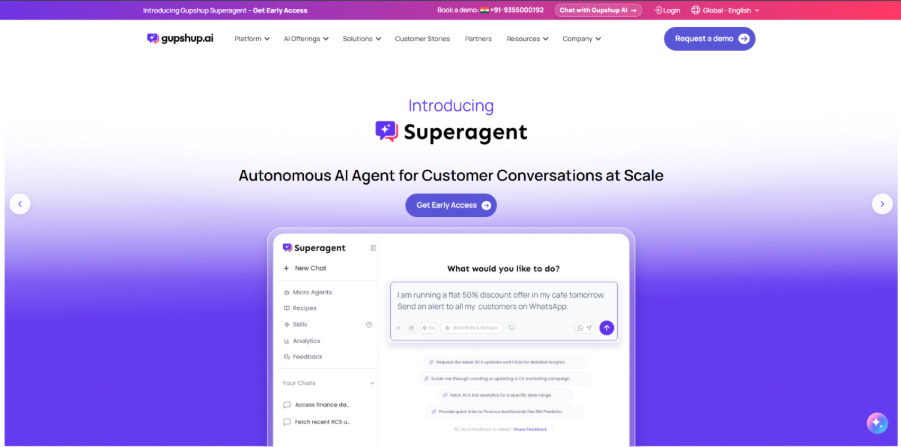
Gupshup is a conversational messaging platform serving large businesses with high-volume automation across WhatsApp and 30+ channels. It provides strong bot-building capability, AI-powered responses, and carrier-grade messaging infrastructure that regulated industries like banking and fintech lean on. Pricing is usage-based with no published tiers, which works at enterprise volume and frustrates everyone else. Budget planning requires a sales conversation.
Best for: Large enterprises with technical teams running high-volume messaging programs across regions.
Consider: Setup is more technical than inbox-first tools, and it assumes developer involvement.
6. Twilio
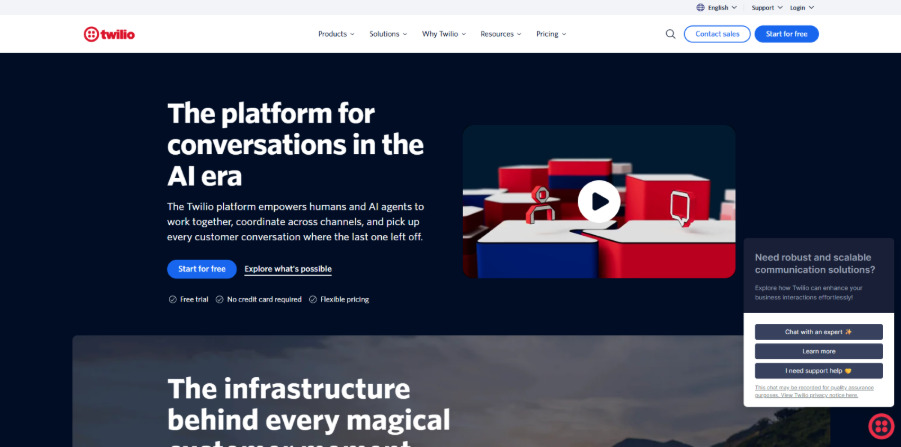
Twilio is an API platform, not an out-of-the-box product. Developers use its WhatsApp Business API access to build fully custom support systems, including LLM-powered assistants connected to internal databases and knowledge bases. Pricing is pure usage: per-message fees plus Meta's conversation charges, with no monthly software subscription. There is also no inbox, no agent view, and no dashboard until your team builds them.
Best for: Companies with engineering resources that want complete control over their support stack.
Consider: There is no interface for support agents until you build one.
7. Zendesk with WhatsApp
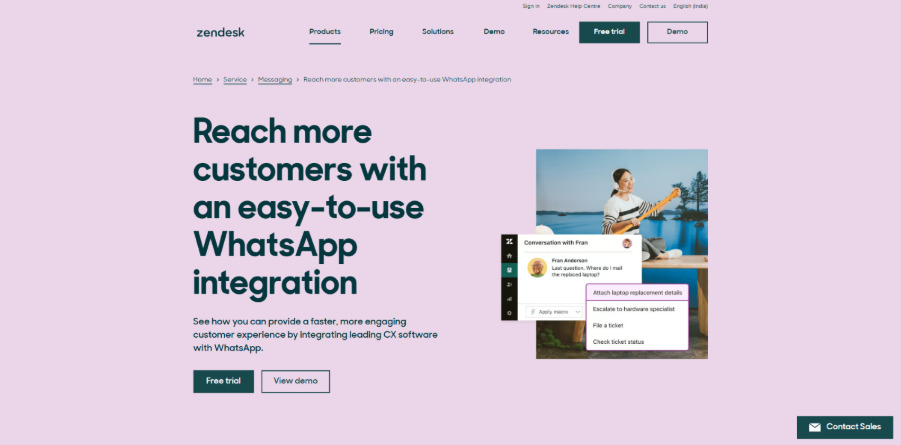
Zendesk is a popular WhatsApp Automation Software, that adds WhatsApp as a channel inside its established help desk, unifying messages with email and web tickets under one ticketing and SLA system. Teams already running Zendesk get WhatsApp without changing their workflow, and the familiar ticketing model means zero retraining. Suite plans are priced per agent per month, starting around $55, which adds up fast for larger support teams.
Best for: Support teams already on Zendesk that want WhatsApp folded into existing ticketing.
Consider: WhatsApp is an add-on channel, so WhatsApp-native features like catalogs and payment links are limited.
Comparison Table for WhatsApp Automation Software
| Tool | Best For | Starting Price | AI Capability | Watch Out For |
| SleekFlow | B2C brands with high WhatsApp volume | Free tier; tiered by seats and AI usage | AI agents that act (order lookup, booking, payment) | Overkill for basic auto-replies |
| Respond.io | Mid-market and enterprise routing | $79/mo (annual) | AI agents plus visual workflows | Costs scale with active contacts |
| WATI | Small teams, fast setup | $59/mo | No-code chatbot; AI costs extra | Per-agent and per-message add-ons |
| Interakt | Shopify stores on a budget | ~$55/mo | Basic automation; AI add-on ~$75/mo | Limited workflow flexibility |
| Gupshup | Enterprise, multi-region volume | Usage-based, unpublished | Strong bot platform | Requires sales conversation |
| Twilio | Developer teams | Per-message usage | Build anything | No agent interface out of the box |
| Zendesk | Existing Zendesk users | ~$55/agent/mo | Help desk AI | WhatsApp is an add-on |
What to Look for in WhatsApp Automation Software
Start with official WhatsApp Business API access. Unofficial tools risk account bans, and a banned number is a dead support channel. For businesses that also need to send bulk WhatsApp messages using Google Sheets, integrating WhatsApp with spreadsheet-based workflows can simplify campaign management and message distribution.
Beyond that, evaluate five capabilities. A shared inbox with agent assignment. AI that can complete tasks rather than only answer FAQs. Clean human handoff when the AI hits its limit. CRM and order-system integration. And analytics that track resolution rate and response time, because you cannot improve what you cannot see.
The dividing line in 2026 is between keyword chatbots and AI agents. A keyword chatbot deflects. An AI agent connected to your CRM and order system resolves. Teams handling hundreds of daily conversations see the difference in headcount. Even Meta is betting this direction: in June 2026 it launched its own AI agents on WhatsApp that can answer inquiries, book appointments, and close sales autonomously. The platforms above give you that capability today, with your own data and your own guardrails.
Verdict
For customer service teams in 2026, SleekFlow is the strongest choice for WhatsApp Automation Software, especially when the goal of the business is resolving inquiries with AI, not just organizing them. Respond.io wins for complex routing across many channels. WATI wins for speed of setup on small teams. Pick based on what you want automated: the inbox, the routing, or the resolution itself.
Frequently Asked Questions
Q1. Can WhatsApp customer service be fully automated?
No. The best-performing teams automate 70 to 80% of inquiries and route the rest to humans. Elétron Seguros resolves 80% of WhatsApp support with AI agents on SleekFlow while keeping its human team for complex cases. Full automation without handoff damages customer trust.
Q2. Do I need the official WhatsApp Business API for customer service automation?
Yes. Unofficial automation tools that reverse-engineer the consumer app violate WhatsApp's terms and risk permanent number bans. Every tool in this comparison uses the official WhatsApp Business Platform. Working with an official Meta Business Solution Provider also unlocks green-tick verification and higher messaging limits.
Q3. What is the difference between a WhatsApp chatbot and a WhatsApp AI agent?
A chatbot matches keywords and returns scripted answers. An AI agent connects to business systems and completes tasks: checking an order status in Shopify, booking an appointment, or issuing a payment link inside the chat. For customer service, agents resolve tickets that chatbots can only deflect.
Q4. How much does WhatsApp automation software cost for customer service?
Entry-level tools start around $55 to $59 per month (Interakt, WATI). Mid-market platforms like Respond.io start at $79 and scale with monthly active contacts. SleekFlow prices by seats, contacts, and AI usage with a free tier to start. Twilio charges per message with no subscription. On top of every tool, Meta charges its own per-conversation fees on the WhatsApp Business Platform, so total cost always runs above the software subscription.
%201.png)

%201.png)

%201.png)