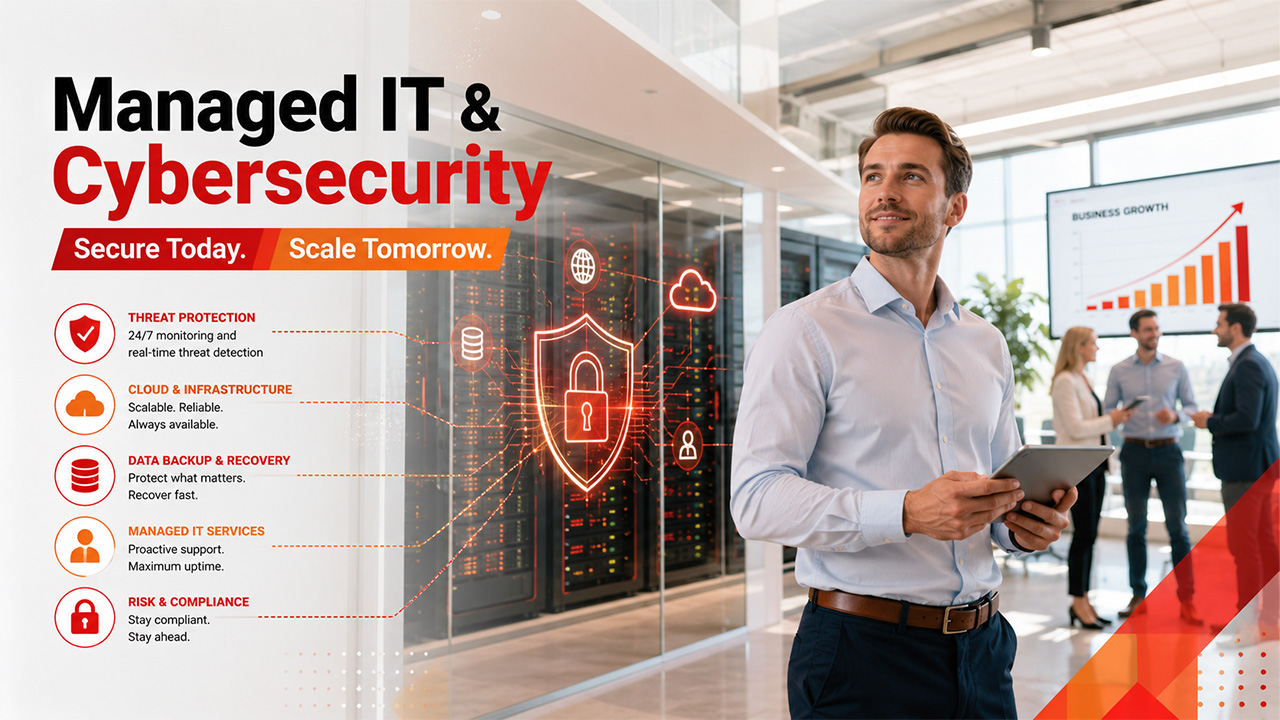

These days, as businesses move faster and rely more on technology, growing companies are running into a whole new set of challenges. The more they expand, the more their survival depends on IT systems and solid cybersecurity measures. But here’s the thing: a lot of business owners ignore the complexity and importance of these systems. That is, until something goes wrong, or they encounter a costly outage, a cyberattack, or worse.
Small and mid-sized businesses are particularly easy targets. Cybercriminals go after them all the time. In fact, recent data shows nearly 43% of cyberattacks hit small businesses, and most of those companies don’t survive. 60% of these businesses shut down within six months after a breach. Those numbers aren’t just scary; they prove that investing in managed IT and cybersecurity early on isn’t just smart; it’s necessary if you want to safeguard your operations and keep the lights on.
And the threats aren’t slowing down. Hackers get smarter, and attacks get more complex every year. In 2023 alone, the global damage from cybercrime is set to hit $10.5 trillion. That’s massive. For companies trying to grow, the pressure is on to build IT and cybersecurity systems that are tough, flexible, and ready to handle whatever comes next. Without that, they’re putting everything at risk.
Building a Strong IT Foundation with Managed Services
Managed IT services allow emerging businesses to benefit from cost-efficient and flexible options aimed at sustaining or improving their IT infrastructure without having to carry out massive investments in own IT staff and concentrating on other aspects of business development.
Outsourcing these responsibilities to a trusted partner enables companies to focus on their core competencies while benefiting from proactive monitoring, timely updates, and rapid problem resolution. For example, many organizations turn to tech services from Charter Technology Solutions to address their IT management needs comprehensively. These services typically include cloud migration, data backup, system maintenance, and help desk support, all tailored to the specific demands of the business.
Investing in managed IT services also assists firms in ensuring their adherence to relevant industry regulations and mitigating the risks of downtime. The average global costs associated with IT downtime equal $5,600 per minute, which indicates the importance of effective IT management. For expanding businesses, this financial loss can be incredibly detrimental unless appropriate preventive measures are instituted.
In addition, managed IT services simplify the process of implementing new technologies, such as cloud computing and virtualization, which are necessary for expansion capabilities. Using cloud technology, organizations can minimize their capital expenses on hardware and benefit from flexible resource distribution that corresponds to their growth patterns.
Cybersecurity: The Cornerstone of Growth and Trust
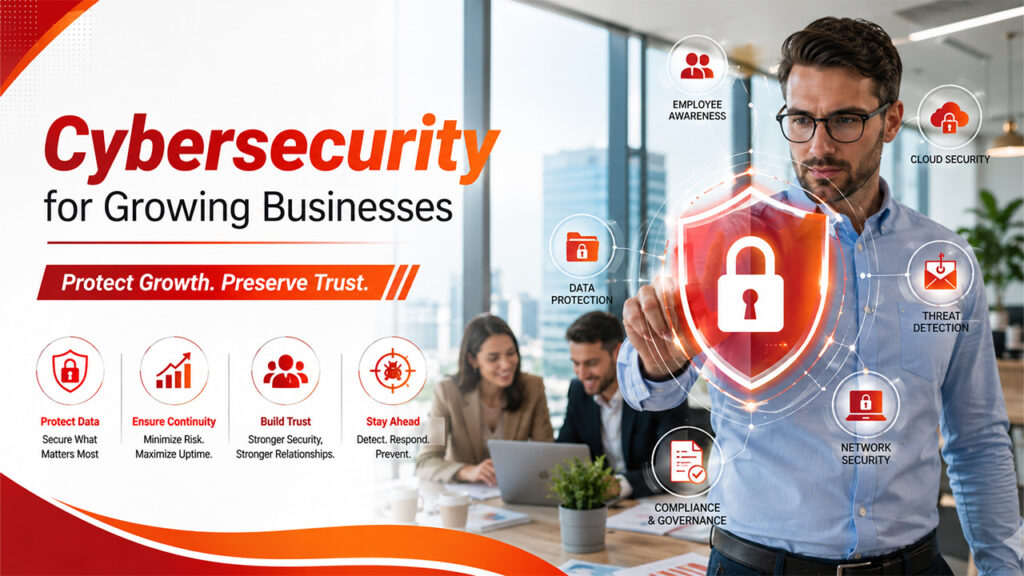
As IT management, cybersecurity is an integral part of any business that is progressing forward. Cyber threats are getting more complex, including ransomware and phishing attacks, which put the sensitive data of both customers and companies at risk. Having effective cybersecurity measures is crucial in protecting the assets of the business, as well as its reputation and consumer trust.
Managed security services offer comprehensive protection by continuously monitoring networks, detecting anomalies, and responding to incidents promptly. Firms looking to enhance their cybersecurity posture can see what Contigo provides, which provides tailored security solutions designed for the unique challenges of growing businesses.
According to recent data, organizations that have managed security services witness 50% reduction in successful cyber-attacks in comparison with those enterprises that do not make use of such services. This statistic highlights the importance of partnering with professionals who can identify upcoming danger signals ahead of time.
In addition, in 2023, the average data breach costs about $4.45 million, which is a devastating figure for small and growing companies. Thus, any cyber security transformations are not just protective measures but also important business decisions that safeguard long-term viability.
Key Components of Effective Managed IT and Cybersecurity Strategies
For growing companies, it’s essential to implement a holistic approach that integrates managed IT services and cybersecurity to strengthen IT management and security. Some critical components include:
- Risk Assessment and Compliance: Regularly evaluating vulnerabilities and ensuring adherence to regulatory standards minimizes exposure to threats and potential penalties. Compliance with frameworks such as GDPR, HIPAA, or PCI-DSS is often mandatory depending on the industry and geographic location.
- Employee Training and Awareness: Since human error is a leading cause of security breaches, ongoing education helps build a security-conscious culture. Phishing simulations, cybersecurity workshops, and clear policies empower employees to act as the first line of defense.
- Data Backup and Disaster Recovery: Secure and frequent backups paired with a well-defined recovery plan ensure business continuity in case of incidents. This includes off-site and cloud backups to protect against ransomware or physical disasters.
- Advanced Threat Detection: Utilizing AI-powered tools and real-time monitoring aids in early identification and mitigation of cyber risks. Behavioral analytics and machine learning help detect anomalies that traditional systems might miss.
- Access Control and Identity Management: Implementing strict authentication protocols, such as multi-factor authentication (MFA), limits unauthorized access to sensitive information and reduces insider threats.
- Network Segmentation: Dividing the network into isolated segments limits the spread of malware and unauthorized access, containing breaches to smaller areas.
- Regular Software Updates and Patch Management: Ensuring all systems and applications are up-to-date and closes known vulnerabilities that attackers exploit.
Benefits of Partnering with Managed IT and Security Providers
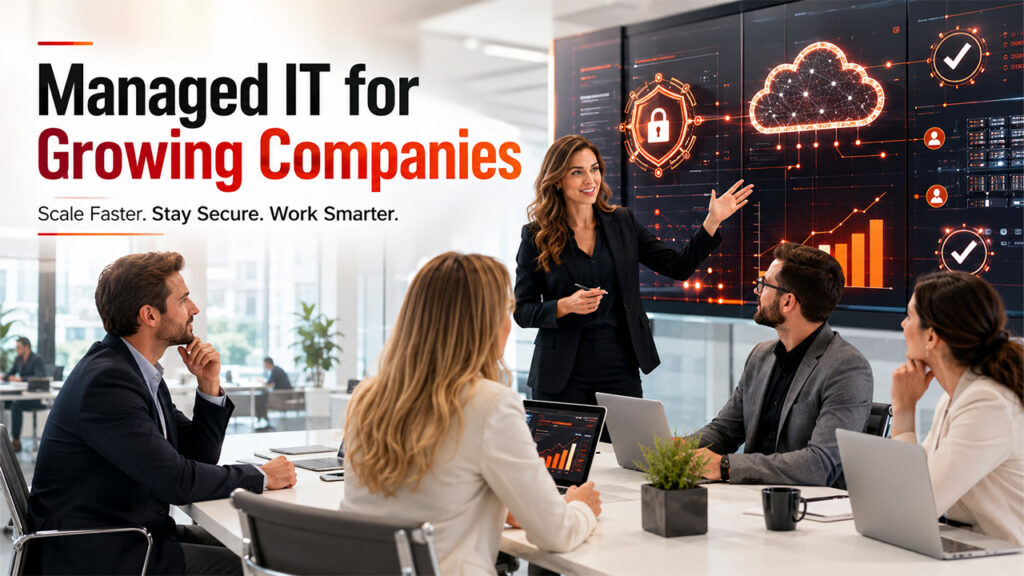
Collaborating with specialized service providers offers several advantages for growing companies:
- Cost Efficiency: The reliance on outsourcing minimizes the need for internal resources and investment in technology. Providers of managed services have fixed models of pricing, which makes budgeting easier.
- Access to Expertise: Managed service providers have the required qualifications and knowledge that the company may not have internally. Their personnel are always updated with modern threats and technologies, thus allowing the company to implement security measures that are necessary.
- Scalability: Services can be changed and adjusted according to the changing needs of the company without any significant downtime.
- Proactive assistance: Continuous monitoring and maintenance of the system that prevents problems from becoming serious.
- Help with compliance issues: Managed service providers can assist with compliance matters, reducing the risks of being fined or facing legal problems that arise.
- Focus on Core Business: Company management and employees can work on the most important things instead of solving technical problems.
Moreover, partnering with managed IT and security providers facilitates integration of best practices and technologies that might otherwise be inaccessible to smaller growing companies. This levels the playing field and empowers businesses to compete with larger enterprises.
Preparing for the Future: Trends and Innovations in Managed IT and Cybersecurity
As technology continues to evolve, so do the threats and opportunities for growing companies. Emerging trends include:
- Zero Trust Models: Instead of relying on perimeter control, Zero Trust needs user and device verification, thus decreasing the possibility of a breach.
- Cloud-Native Security: As companies turn to cloud services, it becomes increasingly necessary to have security solutions designed for cloud environments.
- Automation and Orchestration: As routine security operations can be automated, response times are shortened and human efforts can be directed to more sophisticated issues.
- Integration of AI and Machine Learning: Advanced machine learning models detect threats more efficiently and accurately to predict emerging attack patterns.
- IoT Security: As more devices connect to networks, securing Internet of Things endpoints is critical to prevent vulnerabilities.
Companies that monitor trends and adjust their IT management strategies to the latest developments will be in a better position to survive the digital transformation.
Conclusion: Setting the Stage for Sustainable Growth
The integration of managed IT and cybersecurity services has become an essential necessity for businesses that want to grow in the digital era. By having robust technological foundations and teaming up with reputable service vendors, growing businesses can protect their businesses, be compliant, and instill trust in their customers.
Whether through comprehensive offerings like or specialized solutions such as, investing in these areas early positions companies for long-term resilience and competitive advantage. In an environment where cyber threats continue to escalate, proactive management and security are the cornerstones of sustainable success.
When entering the managed IT and cybersecurity business sector, an innovative enterprise not only provides itself with protection from immediate hazards but creates a great platform for innovation, agility, and future leadership in the market.
%201.png)

%201.png)

%201.png)