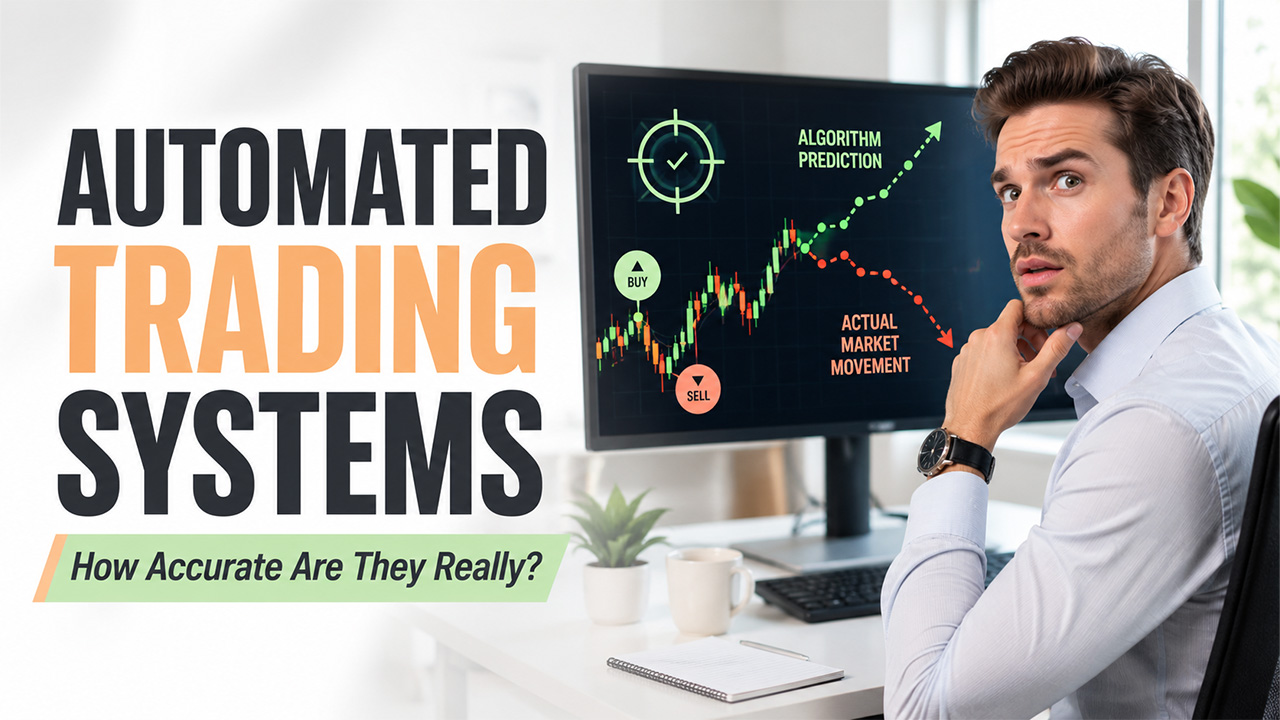

The automated trading system offers enhanced precision that human traders often struggle to match. The system has the capabilities to execute decisions in milliseconds and can also remove emotion from the equation. But the main question that arises is how accurate these systems in practice are, and how does their marketed performance hold up once real capital and real markets get involved?
This comprehensive guide discusses why accuracy is essential for trading bots, where backtests fail, and what role does market conditions, algorithm design, and human judgment play to give you results. As stock trading software continues to evolve, understanding these accuracy factors becomes even more important. If you read it till the end, you'll learn how to judge a system's track record for yourself.
What Accuracy Really Means in Automated Trading
Accuracy in trading is often conflated with how much money a system actually earns, yet the two measure entirely different things. A system can win most of its trades and still lose money if those losing trades carry outsized damage. Real accuracy reflects how often a system correctly predicts price direction, not just whether the account balance grows over time.
Just a win rate can’t tell you everything about long-term performance because a bot that has 80% trades can still use up 20% of your investment. However, you can find more by measuring risk-adjusted return metrics such as the Sharpe ratio. It provides you with the complete picture. Traders comparing platforms often look at the best automated trading bot options specifically for how they balance win frequency against drawdown severity.
Backtested results almost always look better than live trading outcomes, largely because historical data lacks the friction of real execution. Slippage, execution lag, and shifting liquidity all chip away at theoretical gains once a system trades with actual funds. A strategy that shows stellar numbers on paper deserves scrutiny before anyone trusts it with real money.
Small sample sizes can make a mediocre system look exceptional purely by chance. A handful of winning trades during a favorable stretch doesn't prove a strategy works across different conditions. Genuine accuracy claims need enough trade history, ideally spanning multiple market cycles, before anyone treats the results as statistically meaningful.
Backtesting Limitations That Skew Accuracy Claims

You encounter overfitting when you make your strategy so rigid based on how prices move in the past that it becomes unable to handle anything new. It loses flexibility. Developers keep adjusting parameters again and again until they achieve flawless backtest. In this process, they don’t even realize that they have accidentally built a system that only works on data it has already seen. That kind of fit rarely survives contact with live markets.
You face a survivorship bias when a test only includes those companies or assets that still run today while completely disregarding the ones that have gone out of business or got delisted along the way. A backtest built on a survivor-only universe paints an unrealistic, happy picture. If you want accurate, unbiased results, tests must include the losers too, not just the winners that happened to exist till date.
Look-ahead bias occurs when a strategy accidentally uses information that wouldn't have been available at the time a trade was actually made. This can happen through subtle coding errors, like referencing a day's closing price before that day has ended. Even small instances of this bias can inflate accuracy numbers well beyond what a trader could achieve in real time.
Many backtests skip over slippage, spreads, and trading fees entirely, treating every trade as if it filled at the exact intended price with zero cost. In reality, those small deductions add up fast, especially for strategies that trade frequently. A system that looks strong on paper without fees can lose its edge the moment real costs enter the picture.
Market Conditions and Their Effect on Bot Performance
Automated systems built for trending markets often struggle badly once price action shifts into a tight range. A trend-following bot might rack up consistent wins during a strong directional move, then bleed small losses repeatedly once the market starts chopping sideways. Testing across both conditions gives a far more honest read on true accuracy.
Sudden volatility spikes can trigger a wave of stop-loss orders that a backtest never accounted for. A flash crash or unexpected news release can send prices through predetermined exit points within seconds, closing positions at prices far worse than expected. Systems that look steady in calm markets sometimes fall apart the moment conditions turn chaotic.
Liquidity tends to thin out around major news events, widening spreads and making it harder for orders to fill at expected prices. A bot placing trades during these windows might face far worse execution than its historical data ever suggested. Thin liquidity turns even a well-designed strategy into something unpredictable for a short but costly stretch.
Assets that normally move together can suddenly decouple during periods of market stress, breaking correlations that a strategy quietly depends on. A system built around currency pairs or sector relationships might perform fine for months, then falter the moment those relationships shift. Recognizing this risk matters just as much as tracking raw win percentages.
Algorithm Design Choices That Influence Precision
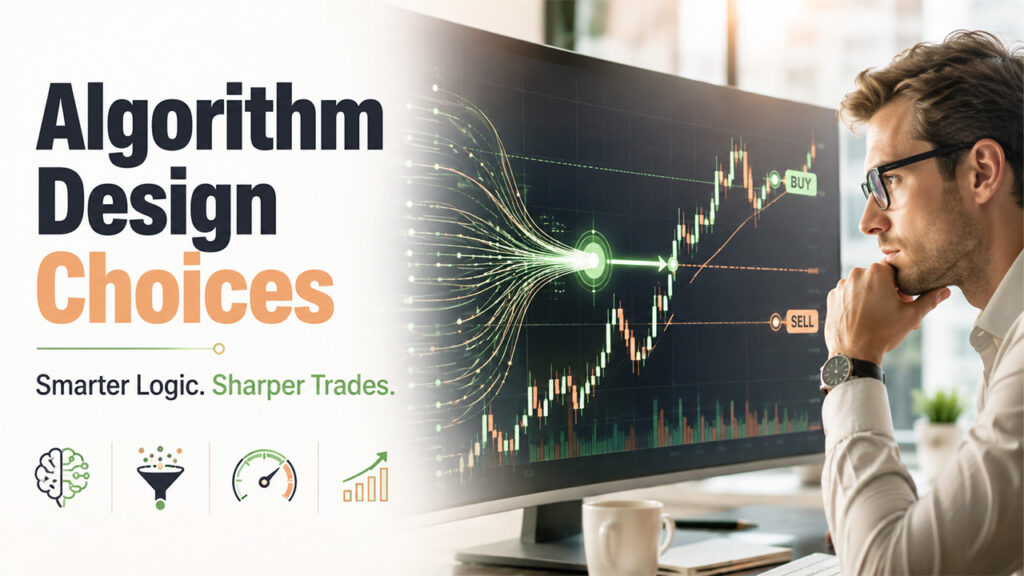
Rule-based systems follow fixed logic that remains consistent regardless of market conditions, while machine learning models adapt based on patterns they detect in the data. Each approach carries tradeoffs. Rule-based bots stay predictable but can miss new patterns, whereas learning models adjust over time yet risk drawing conclusions from noise rather than genuine signal.
Strategies loaded with too many technical indicators, including paid TradingView indicators, often suffer from signal lag, reacting to price moves after the best entry point has already passed. Stacking indicator after indicator can also create conflicting signals, further slowing decision-making. A simpler setup with fewer, well-chosen indicators frequently outperforms a cluttered one built on indicator overload.
Execution speed plays a bigger role in accuracy than many traders assume, since even a fraction-of-a-second delay can change the fill price on a fast-moving order. Order routing quality matters too, as some brokers send orders through slower paths that add unnecessary lag. Small execution differences add up across hundreds of trades over time.
Strategies with too many adjustable parameters run a high risk of overfitting, where the system gets tuned to match past data rather than capturing meaningful patterns in market behavior. The more knobs a strategy has, the easier it becomes to accidentally engineer impressive-looking backtest results. Fewer parameters, tested across varied conditions, tend to hold up better going forward.
Wrap Up
Automated trading systems really can boost consistency and take emotions out of trading, but there’s more to it than just a polished backtest. The real test comes when you factor in things like changing market conditions, how the algorithm is actually built, and how much humans still keep an eye on it. All of these shape what actually happens when you start risking real money.
%201.png)

%201.png)

%201.png)