
E-commerce is a fast-growing sector of the economy today. In most developed and many developing countries, platforms of this type overtake traditional retailers. The e-commerce market amounted to $41.34 billion in 2025. Experts at Fortune Business Insights expect that it will grow to $246.20 billion by 2034. In short, the market is on its path to growing in size by 5 times within the next 8 years. Its CAGR will be approximately 21.93% during the forecasted period.
For this reason, we believe that most ecommerce organizations will have an online presence in the next 20 years and demand for custom B2B ecommerce development will continue growing. This is especially true of Business-to-Business (B2B) organizations, which often rely on per-order production rather than store sales. In this article, we overview B2B ecommerce platforms, describing their key features and examples.
What Is a B2B Ecommerce Platform?
B2B ecommerce platforms are online sites/apps or dedicated parts of larger sites that enable businesses to trade goods and services with each other. B2B platforms help businesses manage their everyday activities. Companies can buy components or software necessary for the continuation of their everyday production.
How B2B Ecommerce Differs from B2C
The first and most obvious difference between B2B and B2C (Business-to-Consumer) is their target audience. B2C services target consumer goods that won't participate in further production. A business (for instance, a gamepad producer) creates its wares and then sells them to a private person who doesn't intend to make a profit from them. In the case of gamepads, customers usually buy them to play video games. B2B, however, is very different. In it, one business sells products or services to another. The key difference here is that those products or services are necessary for performing business activities. Their main goal is to help purchasing businesses continue their business activities. B2B is about production. B2C is about personal consumption.
Key Features of a B2B Ecommerce Platform
B2B and B2C platforms have very different approaches to user accounts and pricing. Consumer platforms offer payment per user. For example, consumer-oriented AI tiers in Anthropic or Grammarly are tied to separate logins. If several users require a consumer-tier service, they need to log in under one account (if allowed) or buy multiple accounts (if vendor policies forbid multiple logins under one account). This approach is inconvenient (you have to manage multiple logins and passwords), dangerous (credentials can leak, exposing company data), and expensive (consumer subscriptions cost more per person than business options).
The following features solve this problem for B2B platforms:
Account-Based Pricing and Catalogs
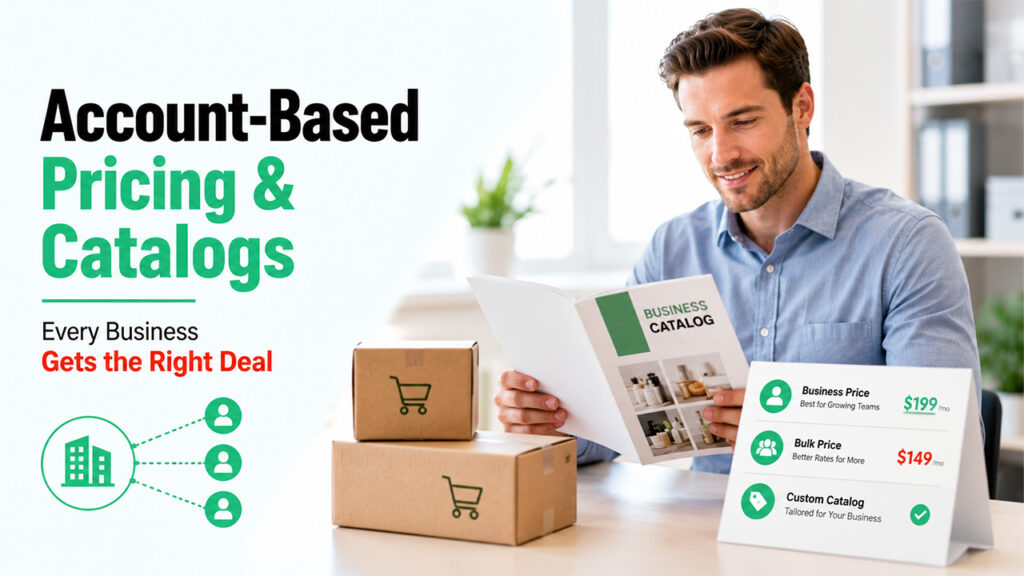
B2B platforms offer specialized business accounts with separate pricing. Customers receive services at one flat fee per company or team. This pricing isn't tied to the number of accounts or logins (or their number is very large). Thanks to this, employees can register their own corporate accounts; the need for password sharing disappears. Purchasing businesses also have access to more features and can choose what functions to buy.
Bulk Ordering and Quick Reordering
B2B platforms enable customers to buy in bulk. They can order a large number of accounts or products. This approach reduces expenditures on logistics or security for the selling businesses. Thanks to this, they can lower prices per unit or service. For example, it's easier to configure cybersecurity for one organization with clear procedures rather than for millions of separate consumers. B2B services also offer priority sales to businesses. They can reorder wares fast, expanding their previous orders.
Quotes and Approval Workflows
B2B involves large orders that can amount to thousands or even millions of dollars. For this reason, B2B services require procedures for offering price estimates. Today, AI and personal consultations are the most popular methods for this goal. Since orders are large, companies also need to carefully consider legal aspects. Approval workflows aimed at checking business reputation and ensuring correct communication about the scale of orders are necessary.
Multiple Users and Account Roles
For software products, B2B tools also need to reflect corporate structure. Firstly, companies require multiple accounts for users. Secondly, these accounts must reflect company hierarchy. In product sales, regular salespeople work with product lists and order forms. In turn, their managers usually have access to statistics and channels for ordering more goods.
Benefits of B2B Ecommerce for Buyers and Sellers
B2B services offer several advantages that make them unique in comparison to B2C platforms:
- Large volume of sales: A construction company buying concrete needs tonnes of it to build houses. Consumers usually buy products in relatively small quantities. B2B services enable bulk sales that are cheaper due to lower logistical overhead.
- Focus on regular purchases: Most companies need regular supply both for sustaining existing projects and starting new ones. Lack of even one relatively small component can stop the whole production process. Consumers, in turn, make both regular and one-time purchases but with low risks. A shortage of a particular pasta brand or soda won't hurt them financially. B2B services are created for or work with companies that produce in large quantities. Regular, reliable supply is vital for making business decisions predictable.
- Legal obligations: Since fields like construction require investments in fragile equipment and experienced staff, even relatively small delays lead to large financial losses. Every day without concrete stops construction; at the same time, construction workers require regular payments, and construction equipment depreciates due to the influence of the elements. B2B services offer purchasing companies protection against delays both due to irresponsibility/incompetence and natural, uncontrollable circumstances. They integrate with local laws or provide separate insurance. B2C legal obligations are mostly related to quality. Consumers can demand compensation in case of bad service or incorrect product descriptions.
B2B Ecommerce Platform Integrations
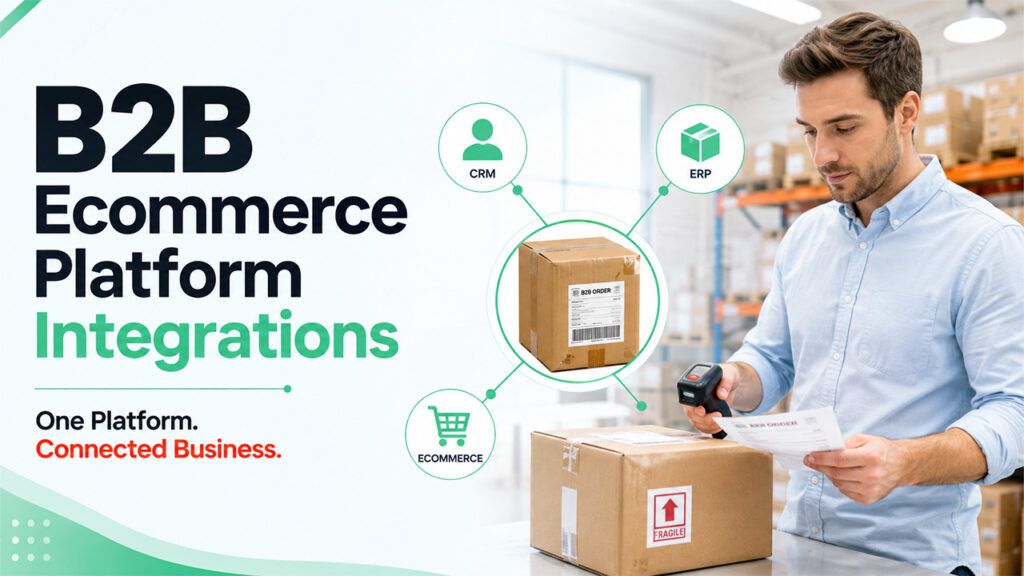
B2B ecommerce platforms integrate with many software tools. The two most important integrations are for ERP and CRM platforms.
Enterprise Resource Planning tools enable organizations to understand resource availability. They can integrate with B2B services to automate purchase recording and ensure better tracking of production components. Thanks to developments in AI, these platforms also offer automated alerts for shortages and can even order lacking components themselves. Case studies by software development companies like Keenethics demonstrate that well-applied AI is perfect for reducing a lot of paperwork.
As for CRMs, B2B platforms need integration with them to ensure high-quality services. CRMs store information about potential customers and their product reviews, helping businesses build more organized B2B Lead Generation processes and manage prospects effectively. Automated integration with B2B helps marketing teams skip manual data insertion and focus on decision-making instead.
B2B Ecommerce Examples Across Industries
Many B2B platforms are official storefronts of particular companies that sell their products for other businesses. Companies like Dell have dedicated channels for selling laptops aimed specifically at organizations. OpenAI and Anthropic also have separate plans and purchase processes for businesses. Oracle focuses on delivering products mostly aimed at business consumers through its online channels.
B2B ecommerce sites also exist in the form of marketplaces. Businesses communicate and reach agreements about the sale of products there. They have tools for mutual exchange of services and products or sale of products for money. Amazon Business and eBay are among the services of this type. While both companies are known for delivering B2C (Business to Customer) services, they're also among the largest B2B platforms in the world. Businesses there can purchase a wide variety of goods and even services. For example, agricultural companies can find many instruments for irrigation there. Computer manufacturers use sites like these to buy certain components in bulk.
How to Choose the Right B2B Ecommerce Platform
You need to answer two questions here:
- Does this platform solve my particular needs?
- Does it have a large number of users (relevant for marketplaces)?
A B2B ecommerce platform must target your particular sphere. Cleaning companies can find a wide choice of professional detergents on services like Amazon. Editing companies may look for business accounts on services like Grammarly. A large number of users on marketplaces, in turn, ensures stable supply and protects against monopolies. You won't have to rely on one vendor in competitive environments like this one.
Conclusion
B2B ecommerce platforms have grown to become an essential part of modern businesses, helping organizations simplify bulk purchasing, manage recurring orders, streamline approvals, and connect e-commerce operations with ERP and CRM systems. Businesses should prioritize choosing a platform that matches their industry's needs, supports efficient business workflows, and provides a reliable network. As the digital commerce ecosystem continues to expand, investing in the right B2B e-commerce solutions can help businesses improve efficiency, reduce operational complexity, and build stronger long-term relationships with their partners.
%201.png)

%201.png)

%201.png)