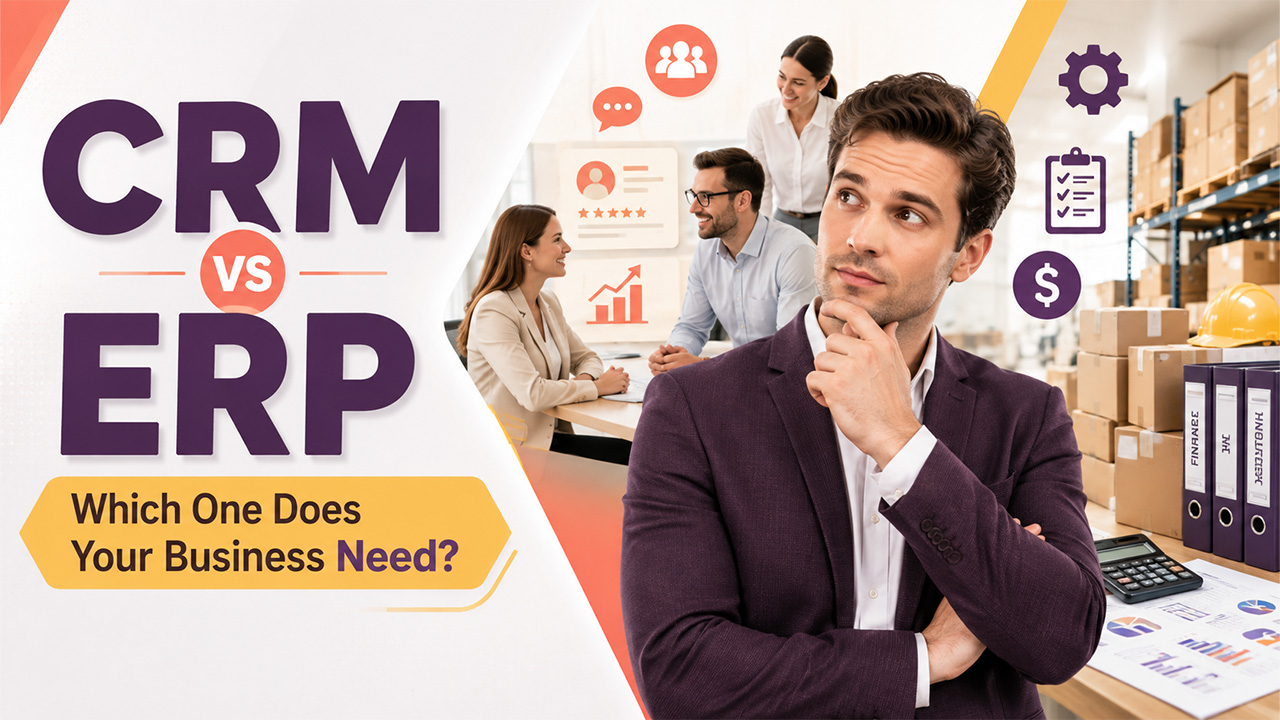

Enterprise resource planning and customer relationship management solutions are the two vital solutions that aid in simplifying business processes, enhancing efficiency, and ensuring digital transformation. The purpose of both the platforms is to gather, organize, and assess data to aid cross-functional teams make more effective decisions. However, ERP and CRM both focus on distinct facets of processes. ERP platforms streamline internal business operations like supply chain management, finance, project management, and human resources (functions generally referred to as "back-office" processes). CRM tools manage front-end activities, emphasizing how a company engages with its customers through service, sales, and marketing campaigns.
What Is CRM?
The purpose of CRM software is to manage and enhance communication with current and potential customers. It collects, organizes, and centralizes all customer data, including customer order, contact details, and communication records, which aids teams to provide more tailored experiences. CRM provides support to marketing campaigns, sales tracking, and customer service, allowing businesses to improve relationships and ensure loyalty and growth. CRM tools such as OutRightCRM or Salesforce showcase how such platforms centralize customer data and simplify engagement across distinct channels, including e-commerce.
What Is ERP?
Enterprise Resource Planning (ERP) is a type of software built to automate and unify core internal processes of the organization. It connects various departments such as procurement, accounting, production, and HR within a single-integration platform. This integration enables real-time visibility into operations, financials, and resources. By minimizing repetitive and manual work as well as data duplication, ERP allows businesses to simplify workflows, enhance accuracy, and make more data-driven decisions. Best enterprise ERP platforms include Oracle ERP Cloud and SAP S/4HANA.
The Power of Integration
The great value of CRM and ERP becomes extremely clear when they work together. Individually, each targets specific business challenges: ERP solutions enhance efficiency in operations, decision-making, and cost control. CRM improves retention, customer acquisition, and experience.
When integrated, such platforms remove data silos, improve transparency, and ensure a centralized data repository of both customer relationships and operations. This integration ensures a robust foundation for enhanced profitability and performance.
Modern cloud solutions make CRM and ERP platforms scalable and accessible for businesses of all sizes, ranging from mid-sized businesses and startups to global enterprises. Delivered extensively through SaaS models (Software-as-a-Service), these platforms are seldom isolated. Numerous deployments embed or integrate CRM capabilities within ERP solutions to allow real-time data sharing across distinct departments, closing the gap between operational execution and customer engagement.
The Significance of Artificial Intelligence

Artificial Intelligence is an important component of CRM and ERP solutions. Generative AI improves productivity by automating reports creation, summarizing interactions and creating insights from complex information. Predictive AI models recognize trends in sales, customer behavior and demand, enabling organizations to strategize more accurately.
In a few platforms, Agentic AI tools work in an autonomous way, with AI agents responding to changes in data and triggering workflows in real-time. In 2026, approximately 85% of executives have a notion that their workforce will make data-driven and real-time decisions through AI agent recommendations.
When applied across CRM and ERP, AI boosts integration by converting shared data into proactive suggestions that can enhance customer experience and efficiency.
Also Read: AI and CRM Integration
What Are the Main Features of ERP and CRM?
ERP and CRM solutions share the same objective of enhancing business performance but achieve it through distinct features:
Core Capabilities of ERP
ERP platforms are developed to incorporate and automate main business processes. They work across as a centralized source-of-truth, enhancing control and efficiency across departments.
- Financial Management: ERP platforms involve accounting tools that handle accounts payable, general ledgers and receivable, financial reporting, and budgeting. Such characteristics provide support to precise tracking of expenses and income while ascertaining compliance with regulatory and tax standards.
- Inventory Management and Supply Chain: ERP software platforms allow companies to easily manage inventory levels, procurement, and order fulfillment. Visibility in real-time into demand and supply provides support to more effective planning, minimizing waste, and assisting in avoiding inventory problems.
- Human Resources (HR) Management: ERP platforms automate payroll, centralize employee data, handle benefits, and keep track of recruitment and performance processes. Such abilities aid in consistently maintaining HR processes across the business.
- Production Planning and Manufacturing: For product-driven businesses, ERP modules manage resource management, scheduling, and production workflows so that labor and materials are efficiently used.
- Reporting and Analytics: ERP platforms render performance reports and dashboards that allow managers better insight into business health, allowing prediction, data-based strategy, and performance management.
- Risk and Compliance Management: Numerous ERP platforms involve tools to keep track of internal controls, regulatory compliance, and audit trails to reduce risk exposure.
Core Capabilities of CRM
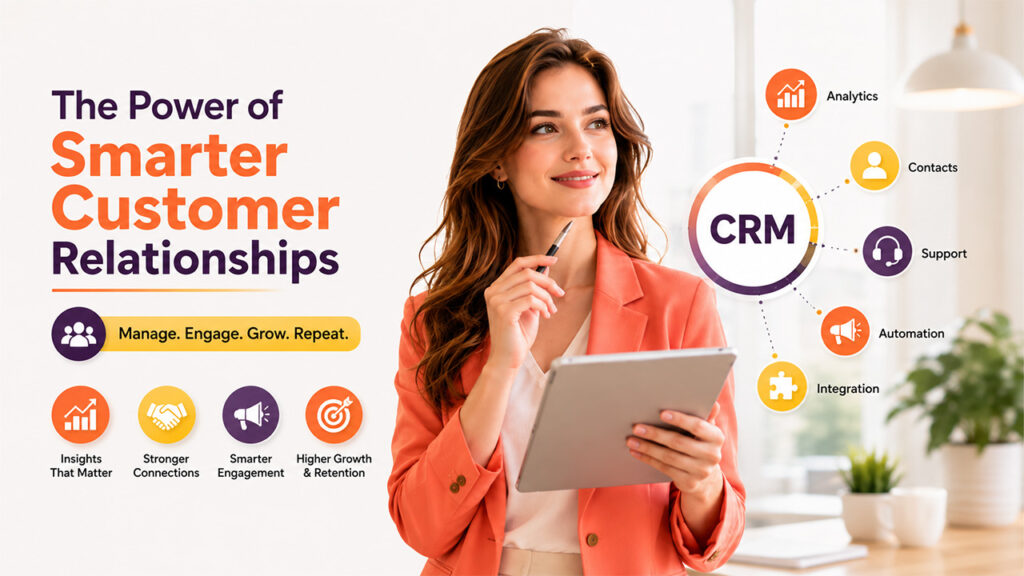
CRM platforms are built to handle sales pipelines and customer interactions. Their capabilities aid in streamlining the entire customer lifecycle, from sales cycle management and marketing efforts to post-sale retention and service:
- Reporting and Analytics: CRM dashboards assess performance indicators like customer retention, conversion rates, and campaign success, providing teams with the information they need to fine-tune their strategies.
- Contact Management: CRM platforms store in-depth account data and customer profiles, including transaction data and communication history, so that all teams have accessibility to updated data.
- Customer Service and Support: Numerous CRMs involve ticket tracking, case management, and self-service portals that simplify customer support and improve customer satisfaction.
- Marketing Automation: Advanced CRM platforms enable businesses to group audiences, keep track of engagement metrics, and launch marketing campaigns. CRM combines with marketing automation tools and uses accurate customer data to engage leads at a scale.
- Integration and Mobility: Fully featured CRM platforms easily combined with social media, email, and ERP platforms. Mobile access empowers teams to handle customer relationships from anywhere.
- Sales Pipeline Management: CRM platforms keep track of customer leads through each stage of the sales funnel, allowing sales representatives to predict revenue, focus on opportunities, and handle quotas.
What Are the Advantages of ERP and CRM?
The way ERP and CRM help businesses is inherently different. Their benefits emerge from catering to distinct aspects of business processes. When they are utilized together, they provide a very different picture to both customer engagement and internal performance:
Advantages of ERP:
ERP platforms allow businesses to manage and streamline internal processes. By centralizing core business functionalities, ERP ensures a complete view of company metrics and provides support to data-driven decision-making:
- More Effective Financial Management: ERP platforms ensure real-time and precise financial data that provides support to forecasting, budgeting, and quicker closing of finance.
- Data-driven Decision-making: Centralized reporting platforms enable leaders to assess trends and performance metrics across various departments, improving evidence-based and quicker decisions.
- Enhanced Productivity and Efficiency: Manual task automation, like inventory tracking and invoice processing, minimizes error and saves time.
- Flexibility and Scalability: Cloud ERP platforms can adjust quickly as your business evolves, providing support to new product lines, locations, and regulatory needs.
Advantages of CRM
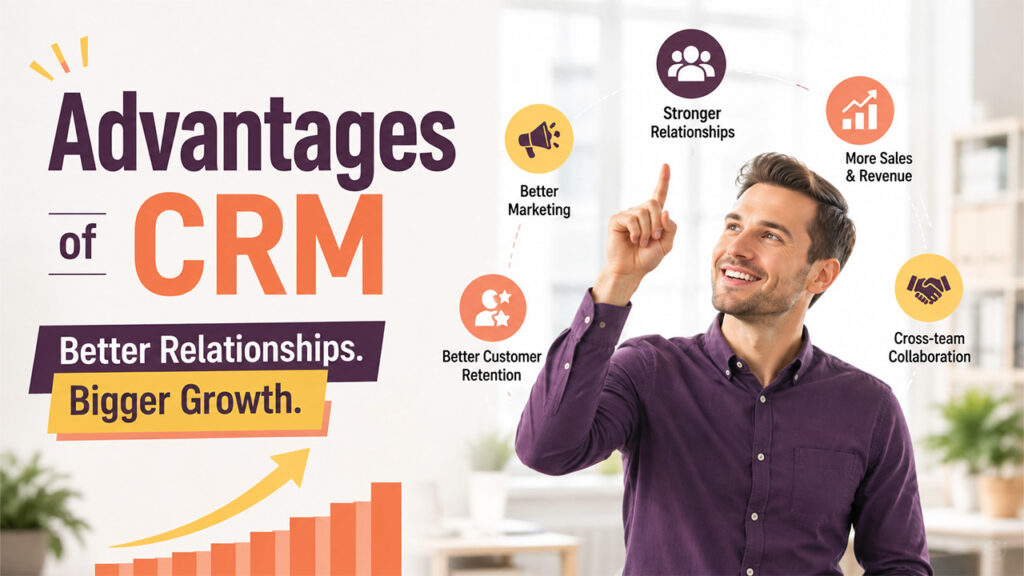
The purpose of CRM platforms is to enhance how businesses attract, engage, and convert leads as well as boost relationships with existing customers. CRM platforms allow more effective and tailored communication throughout the customer life cycle.
- Cross-team Collaboration: CRM tools tether marketing, sales, and support teams with key insights. This coordination aids in ascertaining consistent service quality and communication.
- Better Retention of Customers: With enhanced visibility in customer preferences and issues, businesses can proactively respond and boost loyalty.
- Improved Customer Relationships: CRM tools ensure a holistic visibility into every customer, enabling them to provide tailored experiences and robust service.
- Higher Effectiveness in Marketing: CRM market data allows marketers to target the best audience, assess campaign performance, and improve strategies as per customer behavior.
- Increased Sales and Revenue: CRM keeps sales teams in good position to efficiently close out more deals by keeping track of leads, automating follow-ups, and handling opportunities.
CRM vs ERP: Comparison Table
| Aspect | CRM | ERP |
| Main Purpose | Handles interactions and customer relationships | Centralizes internal business processes |
| Focus Area | Front-office (marketing, sales, service) | Back-office (HR, finance, supply chain) |
| Main Function | Centralizes communication history and customer data | Ensures departments for operational visibility in real-time |
| Key Modules | Sales pipeline, contact management, customer support, and marketing automation | Inventory/Supply Chain, Financial Management, and Production Planning |
| Primary Users | Marketing, sales, and support teams | Finance, operations, HR, and production teams |
| Main Advantages | Robust revenue growth and customer retention | Simplified cost control and operations |
| Example Platforms | Salesforce, OutRightCRM | SAP S/4 HANA, Oracle ERP Cloud |
| Best For | Businesses emphasizing on customer engagement and acquisition | Businesses emphasize operational compliance and efficiency. |
Conclusion
CRM and ERP cater to distinct purposes but work effectively as complementary platforms. CRM helps in improving customer experience through various touchpoints including marketing, sales, and service, while ERP centralizes structure to internal processes such as HR, finance, and supply chain. Selecting between them optimizes where a business requires the most support, i.e., operational control or customer growth. For different businesses, though, the actual advantage comes from incorporating both and building centralized data that removes silos. As AI continues to improve such platforms, businesses that combine ERP and CRM in the right way reap benefits through faster and smarter decision-making.
Frequently Asked Questions
Can a business utilize ERP and CRM simultaneously?
Yes. Numerous companies run both platforms together, often integrated, so operational and customer data enter a single connected view.
Is customer relationship management a component of ERP?
Not really. However, a few ERP suites integrate modules, and numerous standalone CRM solutions incorporate ERP platforms for shared access of data.
Which is more significant for a small business, ERP or CRM?
It depends on priority. CRM helps businesses emphasize growing customer relationships and sales, while ERP suits the ones requiring closer control over operations and finances.
Does incorporating ERP and CRM need technical need technical expertise?
Standard integrations are generally integrated through in-built connections. However, multi-department setups may require a solution or IT partner.
How does AI modify the ERP vs CRM comparison?
AI includes automated and predictive capabilities to both, revealing sales trends in customer relationship management platforms and allowing agent-driven and real-time workflows in Enterprise Resource Planning.
%201.png)

%201.png)

%201.png)